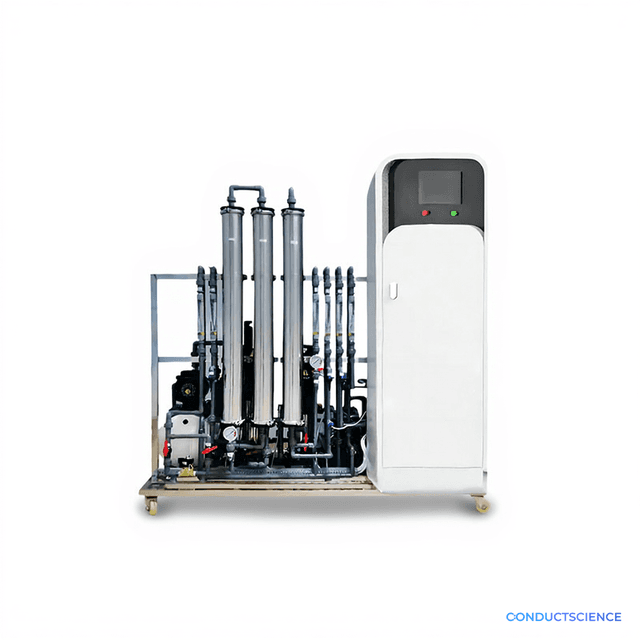
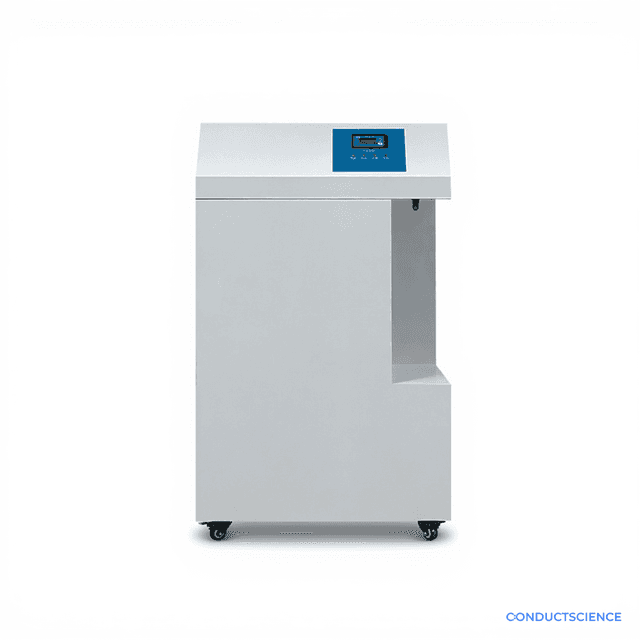
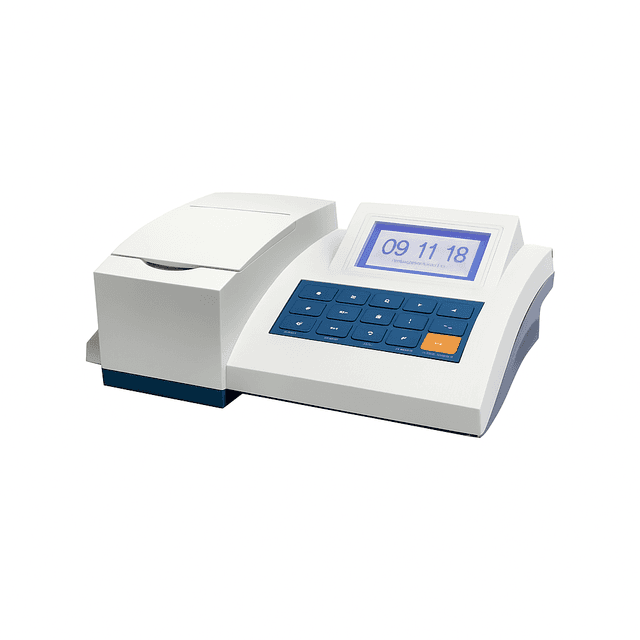
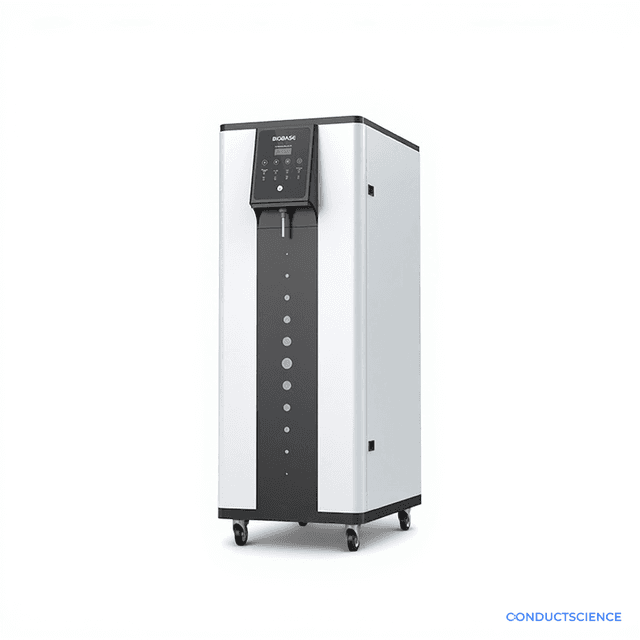
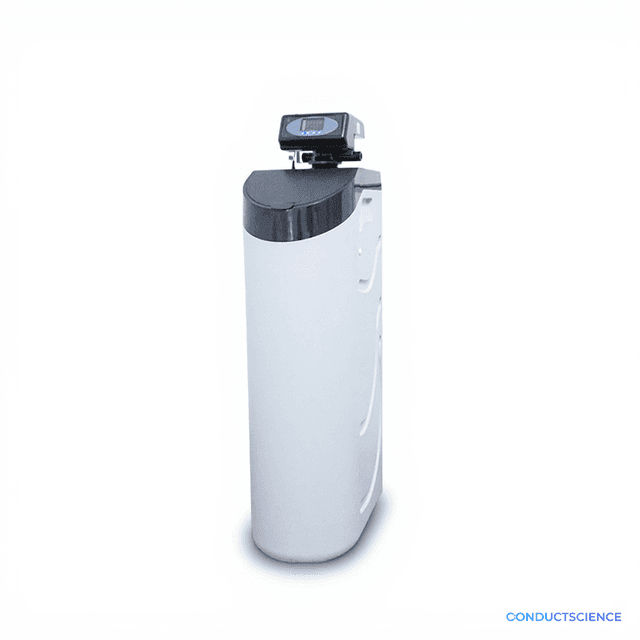
Laboratory Pure Water System BKSROEZ-300 BKSROEZ-500 BKSROEZ-750 BKSROEZ-1000
Laboratory reverse osmosis water purification system producing high-purity water with conductivity ≤0.01ms/m and ≥99% ion removal rate, available in capacities from 300-1000L/H.

Louise Corscadden, PhD
Director of Science · ConductScience
Ask Louise about Laboratory Pure Water System BKSROEZ-300 BKSROEZ-500 BKSROEZ-750 BKSROEZ-1000 fit, setup, configuration, or quote prep.
Already working with us? Sign in to connect this with My Scientist.
Key Specifications
Full details →- Model fit
- Configured during quote
- SKU family
- BIO-0718
- Shipping box
- 42.0 x 43.6 x 38.0 cm
- Ordering
- Online checkout and quote request available
- Category
- Water Purifiers
- Build notes
- Confirm accessories, station layout, and support needs before purchase
The Laboratory Pure Water System BKSROEZ series delivers high-purity water for laboratory applications requiring low conductivity water. This reverse osmosis system processes city tap water through multiple purification stages to achieve purified water with conductivity ≤0.01ms/m and ion removal rate ≥99%. The system accommodates various laboratory scales with capacities ranging from 300L/H to 1000L/H, operating with standard municipal water supplies within specified temperature and pressure parameters.
The system produces water meeting stringent purity specifications including low absorbance at 254nm (≤0.001) and minimal soluble silicon content (≤0.01mg/L as silica). These specifications support analytical chemistry procedures, equipment rinsing protocols, and buffer preparation where trace contaminants could interfere with experimental results. The system operates on AC380V power supply and functions within ambient temperatures from 2-45°C.
How It Works
The system employs reverse osmosis membrane technology to remove dissolved ions, organic compounds, and particulate matter from municipal water supplies. Feed water passes through multiple filtration stages where applied pressure forces water molecules through semi-permeable membranes while rejecting larger contaminants. The reverse osmosis process physically separates ions and molecules based on size exclusion, achieving the specified ≥99% ion removal rate.
Pre-filtration stages remove chlorine and particulates that could damage the RO membranes, while the membrane assembly provides the primary purification step. The system monitors conductivity continuously to verify water quality, with the final product meeting specifications for conductivity (≤0.01ms/m), UV absorbance (≤0.001 at 254nm), and soluble silicon content (≤0.01mg/L). Temperature and pressure controls maintain optimal operating conditions for consistent performance across the specified ambient temperature range of 2-45°C.
Features & Benefits
Automation Level
- semi-automated
BKSROEZ-500
- BKSROEZ-750
Pure Water Capacity
- 300L/H
500L/H
- 750L/H
Supply Water
- City tap water, water temperature 2~45℃, water pressure 0.2~0.5Mpa, TDS<300ppm
Ambient Temp.
- 2~45℃
Purified Water Conductivity
- ≤0.01ms/m
Absorbance(254mm, 1cm optical path)
- ≤0.001
Soluble Silicon(Expressed as silica)
- ≤0.01mg/L
Ion Removal Rate
- ≥99%
Brand
- ConductScience
Research Domain
- Analytical Chemistry
- Cell Biology
- Environmental Monitoring
- Materials Science
- Microbiology
- Pharmaceutical QC
Power/Voltage
- AC380V, 50Hz
Shipping weight
- 29.98 lb
Shipping box
- L: 42.0 cm
- W: 43.6 cm
- H: 38.0 cm
| Feature | This Product | Typical Alternative | Advantage |
|---|---|---|---|
| Ion Removal Efficiency | ≥99% ion removal rate with conductivity ≤0.01ms/m | Entry-level systems often achieve 95-98% removal rates | Higher purity levels reduce interference in trace analytical procedures and extend equipment life |
| Organic Contaminant Removal | UV absorbance ≤0.001 at 254nm pathway | Basic RO systems may not specify organic removal metrics | Quantified organic removal ensures compatibility with UV spectrophotometry and HPLC applications |
| Capacity Range | Four models from 300L/H to 1000L/H | Limited capacity options in single-model offerings | Allows precise matching of system capacity to laboratory consumption patterns without oversizing |
| Feed Water Compatibility | Operates with TDS up to 300ppm municipal water | Some systems require pre-treatment for TDS >200ppm | Broader feed water compatibility reduces installation complexity and pre-treatment costs |
This system provides high-purity water production with quantified specifications for conductivity, organic content, and silicon levels. The multiple capacity options and robust feed water compatibility support diverse laboratory requirements from small research groups to larger facilities.
Practical Tips
Replace pre-filtration cartridges when pressure differential exceeds manufacturer specifications or every 6-12 months.
Why: Clogged pre-filters reduce system efficiency and can damage downstream RO membranes.
Calibrate conductivity meters monthly using certified standard solutions to ensure accurate water quality monitoring.
Why: Accurate conductivity measurement is critical for verifying product water meets purity specifications.
Flush the system for 10-15 minutes after extended shutdown periods before collecting water for analytical use.
Why: Initial flush removes stagnant water and ensures product quality meets specifications.
Log daily conductivity readings and flow rates to track system performance trends over time.
Why: Performance trending identifies gradual membrane degradation before product quality is compromised.
If conductivity increases above specification, check membrane integrity and verify adequate feed water pressure.
Why: Rising conductivity indicates membrane damage or insufficient operating pressure affecting separation efficiency.
Install appropriate electrical protection for the AC380V power supply and ensure proper grounding.
Why: High-voltage electrical systems require proper safety measures to prevent electrical hazards during operation and maintenance.
Setup Guide
What’s in the Box
- Main purification unit (typical)
- Pre-filtration cartridges (typical)
- Reverse osmosis membrane modules (typical)
- Control panel and display (typical)
- Installation hardware and fittings (typical)
- User manual and documentation (typical)
- Water quality testing kit (typical)
Warranty
ConductScience provides standard one-year manufacturer warranty covering defects in materials and workmanship. Technical support includes installation guidance and troubleshooting assistance for optimal system performance.
Compliance
What feed water quality is required for optimal system performance?
The system requires city tap water with TDS <300ppm, temperature 2-45°C, and pressure 0.2-0.5 Mpa. Higher TDS levels may reduce membrane life and affect product quality.
How frequently should membrane modules be replaced?
Replacement frequency depends on feed water quality and usage volume. Monitor conductivity trends and consult product datasheet for specific maintenance intervals based on operating conditions.
Can the system operate continuously for high-volume applications?
Yes, the system is designed for continuous operation within specified capacity ratings. Ensure adequate drainage for concentrate discharge and monitor performance parameters regularly.
What electrical requirements are needed for installation?
The system requires AC380V, 50Hz power supply. Verify electrical capacity and appropriate circuit protection before installation.
How is water quality monitored during operation?
The system includes conductivity monitoring to verify ≤0.01ms/m specification. Additional testing for UV absorbance and silicon content may require external analytical methods.
What capacity model is appropriate for my laboratory?
Select based on daily water consumption requirements. Consider peak usage periods and storage capacity when choosing between 300L/H, 500L/H, 750L/H, or 1000L/H models.
Have a question about this product?
Have a question? Just ask.
Send it over and we'll email you a personalized answer — no call, no scheduling.
Prefer to talk it through?