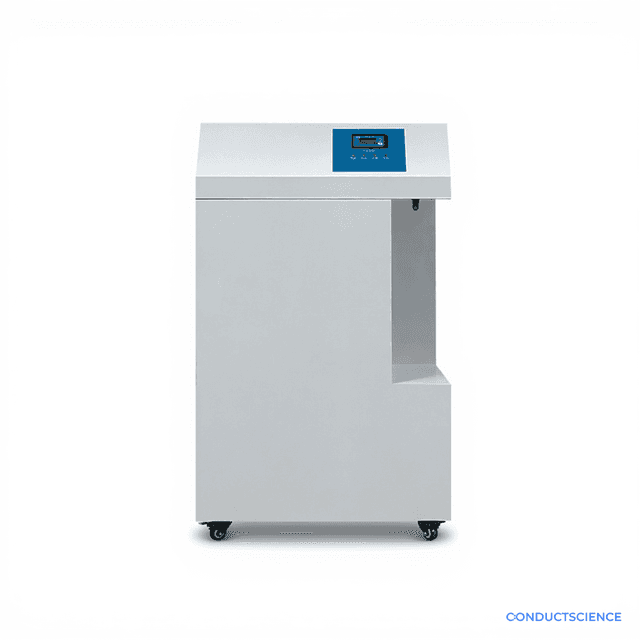
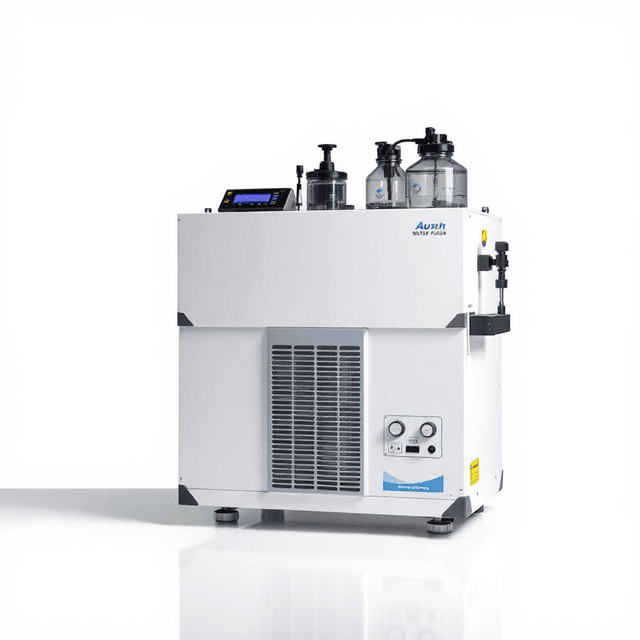
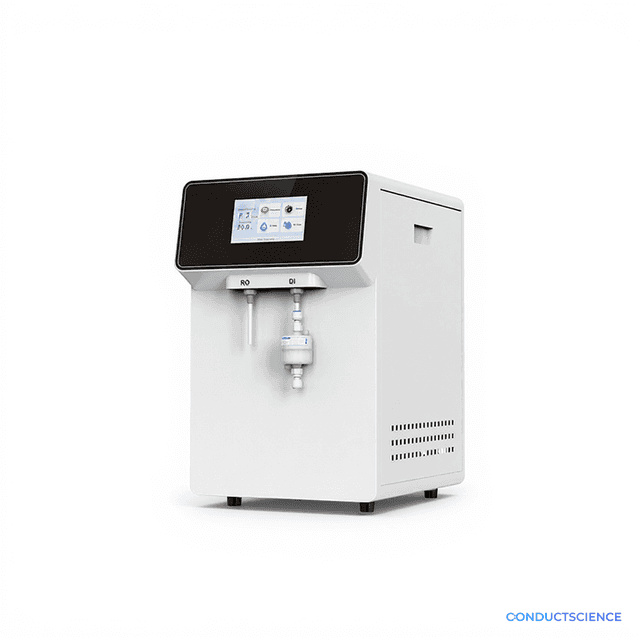
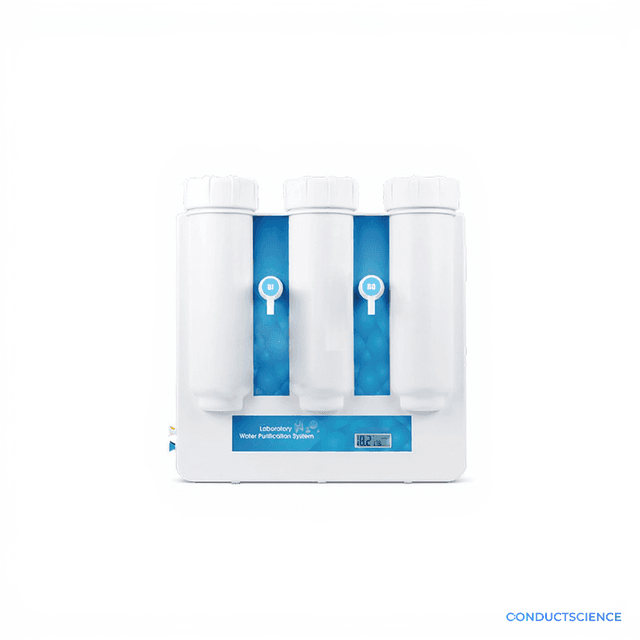
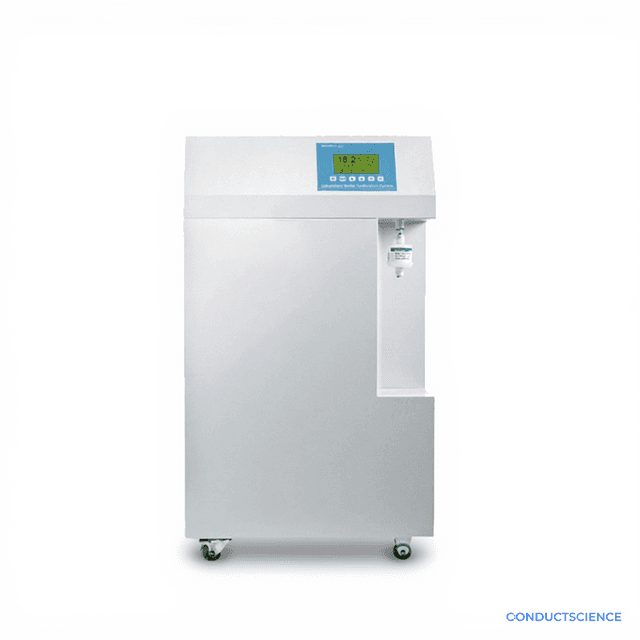
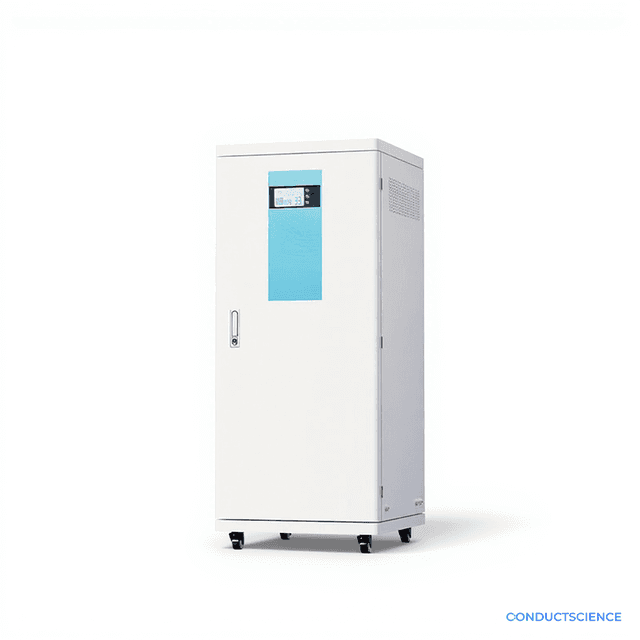
Laboratory Water Purifier 80L/H
High-capacity laboratory water purification system producing 80 liters per hour of purified water for analytical, pharmaceutical, and research applications.

Louise Corscadden, PhD
Director of Science · ConductScience
Ask Louise about Laboratory Water Purifier 80L/H fit, setup, configuration, or quote prep.
Already working with us? Sign in to connect this with My Scientist.
Key Specifications
Full details →- Model fit
- Configured during quote
- SKU family
- BIO-0708
- Shipping box
- 112.5 x 69.0 x 45.5 cm
- Ordering
- Online checkout and quote request available
- Category
- Water Purifiers
- Build notes
- Confirm accessories, station layout, and support needs before purchase
The Laboratory Water Purifier 80L/H is a high-capacity water purification system designed for research and analytical applications requiring consistent, high-quality water. With an 80 liter per hour production rate, this system provides sufficient purified water output for medium to large laboratory operations including analytical chemistry, microbiology, and pharmaceutical quality control workflows.
The system incorporates multiple purification stages to remove contaminants, dissolved solids, and organic compounds from source water. The compact design (112.5 × 69.0 × 45.5 cm) allows installation in standard laboratory spaces while maintaining the production capacity needed for continuous research operations. The purified water output supports applications requiring low conductivity water for sample preparation, instrument operation, and analytical procedures.
How It Works
The water purification system employs a multi-stage treatment process to remove ionic, organic, and particulate contaminants from feed water. The process typically begins with pre-filtration to remove suspended particles and chlorine, followed by reverse osmosis membranes that reject dissolved salts and larger organic molecules through size exclusion and charge repulsion mechanisms.
Secondary purification stages may include activated carbon adsorption for organic compound removal, ion exchange resins for trace ionic species, and ultraviolet sterilization for microbial control. The system continuously monitors water quality parameters and maintains consistent output specifications through automated control of flow rates, pressure, and regeneration cycles.
The 80L/H production capacity is achieved through optimized membrane surface area and flow dynamics, allowing continuous operation while maintaining water quality standards. Temperature and pressure compensation ensure stable performance across varying operating conditions typical in laboratory environments.
Features & Benefits
Automation Level
- semi-automated
Research Domain
- Analytical Chemistry
- Clinical Diagnostics
- Environmental Monitoring
- Materials Science
- Microbiology
- Pharmaceutical QC
Shipping weight
- 70.0 lb
Shipping box
- L: 112.5 cm
- W: 69.0 cm
- H: 45.5 cm
| Feature | This Product | Typical Alternative | Advantage |
|---|---|---|---|
| Production Capacity | 80 liters per hour continuous production | Entry-level systems often produce 10-30 L/H | Higher capacity reduces production scheduling constraints and supports multiple simultaneous applications. |
| Footprint Efficiency | 112.5 × 69.0 cm footprint for 80L/H capacity | Comparable capacity systems often require larger installation areas | Optimizes laboratory space utilization while maintaining high production output. |
| System Weight | 70 kg total system weight | High-capacity systems typically range from 50-120 kg | Manageable weight for standard laboratory floors without specialized installation requirements. |
| Purification Stages | Multi-stage treatment process | Basic systems may use single-stage filtration or RO only | Comprehensive contaminant removal addresses diverse water quality requirements across multiple applications. |
The Laboratory Water Purifier 80L/H combines high production capacity with compact design, providing 80 liters per hour output in a space-efficient footprint. The multi-stage purification process addresses comprehensive water quality requirements for analytical and research applications.
Practical Tips
Verify conductivity meters and monitoring instruments monthly using certified reference standards.
Why: Accurate monitoring ensures water quality specifications are maintained and documented for regulatory compliance.
Replace pre-filters when differential pressure exceeds manufacturer specifications or water quality parameters decline.
Why: Timely filter replacement maintains system efficiency and prevents damage to downstream purification components.
Collect water quality samples from the point of use rather than the system outlet to verify distribution system integrity.
Why: End-point sampling identifies potential contamination in distribution lines that could compromise analytical results.
Monitor system pressure differentials across purification stages to identify component loading or fouling issues.
Why: Pressure monitoring provides early indication of performance degradation before water quality specifications are compromised.
Document water usage patterns and quality trends to optimize maintenance scheduling and component replacement.
Why: Usage data enables predictive maintenance and ensures consistent water availability for critical research activities.
Install appropriate leak detection and automatic shutoff systems in the installation area.
Why: Water leak protection prevents equipment damage and maintains safe laboratory operating conditions.
Sanitize the system periodically according to manufacturer protocols to prevent microbial growth in storage and distribution components.
Why: Regular sanitization maintains low microbial counts required for sensitive analytical and microbiological applications.
Setup Guide
What’s in the Box
- Laboratory water purifier main unit
- Power supply and electrical connections (typical)
- Feed water connection fittings (typical)
- Outlet valves and fittings (typical)
- Pre-filter cartridges (typical)
- Installation and operation manual (typical)
- Water quality test kit (typical)
- Performance verification certificate (typical)
Warranty
ConductScience provides a standard one-year manufacturer warranty covering defects in materials and workmanship. Technical support includes installation guidance, operational training, and troubleshooting assistance for optimal system performance.
Compliance
References
Background reading relevant to this product:
What water quality parameters does the system achieve and how frequently should they be monitored?
Consult product datasheet for specific conductivity, total organic carbon (TOC), and microbial specifications. Monitor conductivity daily and perform comprehensive water quality analysis weekly or per laboratory SOP requirements.
How often do the purification components require replacement and what is the maintenance schedule?
Replacement frequency depends on feed water quality and usage volume. Pre-filters typically require monthly replacement, while RO membranes and ion exchange resins have longer service intervals based on water quality parameters and throughput.
Can the system operate continuously or does it require regeneration cycles?
The system supports continuous operation at the rated 80L/H capacity. Ion exchange components may require periodic regeneration based on feed water quality and total dissolved solids loading.
What are the feed water quality requirements and pressure specifications?
Consult product datasheet for minimum feed water quality standards including chlorine, hardness, and turbidity limits. Typical systems require feed pressure between 2-6 bar for optimal performance.
How does this system compare to distillation or other purification methods?
Multi-stage purification provides faster production rates than distillation with lower energy consumption. The system removes a broader range of contaminants than single-stage methods while maintaining consistent quality output.
What data logging or documentation capabilities are included for quality assurance?
Consult product specifications for available monitoring and data recording features. Most laboratory systems include basic parameter displays with optional data logging capabilities for GMP documentation requirements.
Can the system integrate with existing laboratory water distribution networks?
The system includes standard outlet connections compatible with laboratory distribution systems. Installation may require pressure boosting or additional treatment depending on distribution requirements and endpoint applications.
Have a question about this product?
Have a question? Just ask.
Send it over and we'll email you a personalized answer — no call, no scheduling.
Prefer to talk it through?
Upgrade Options