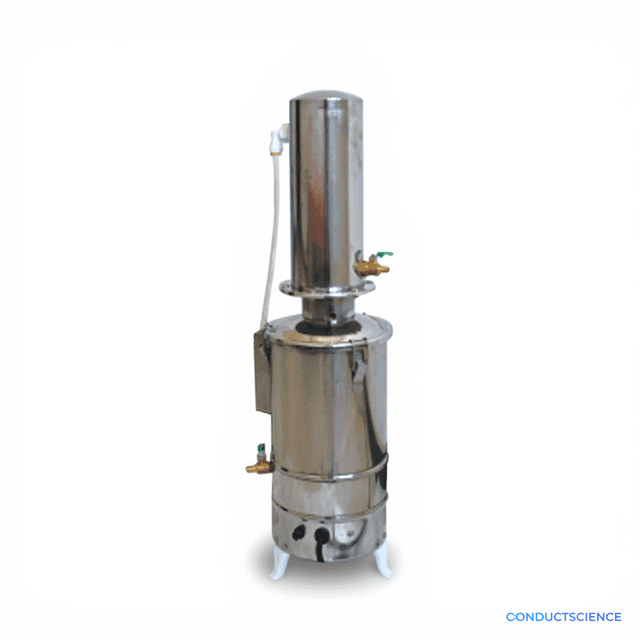
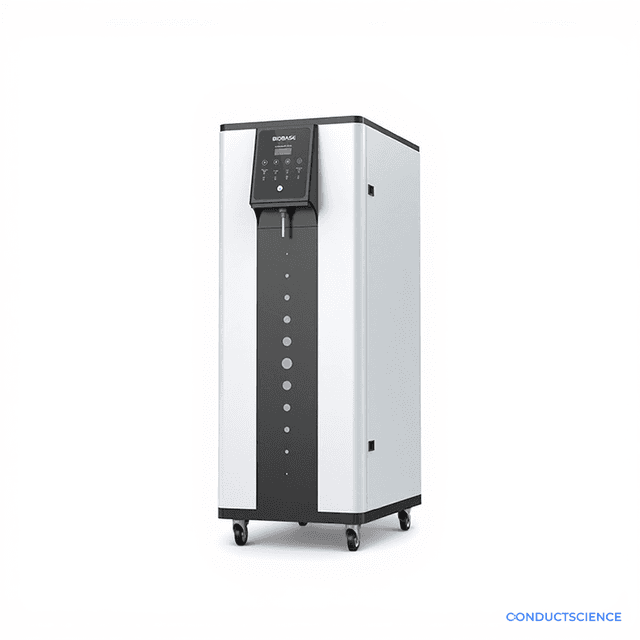
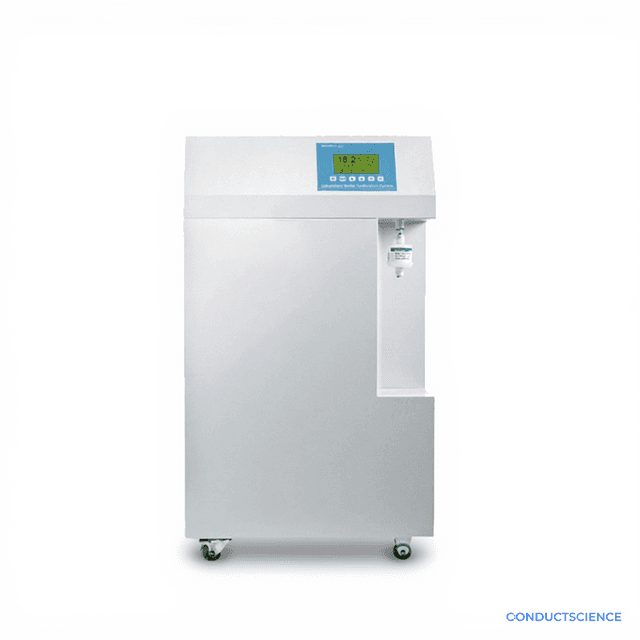
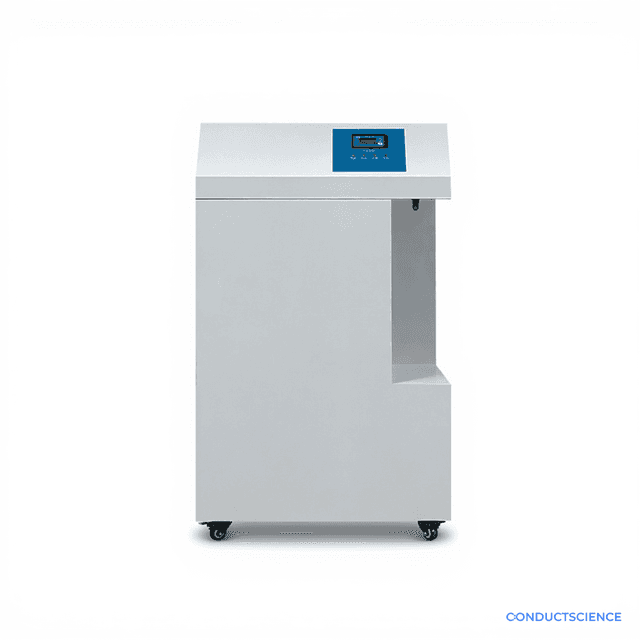
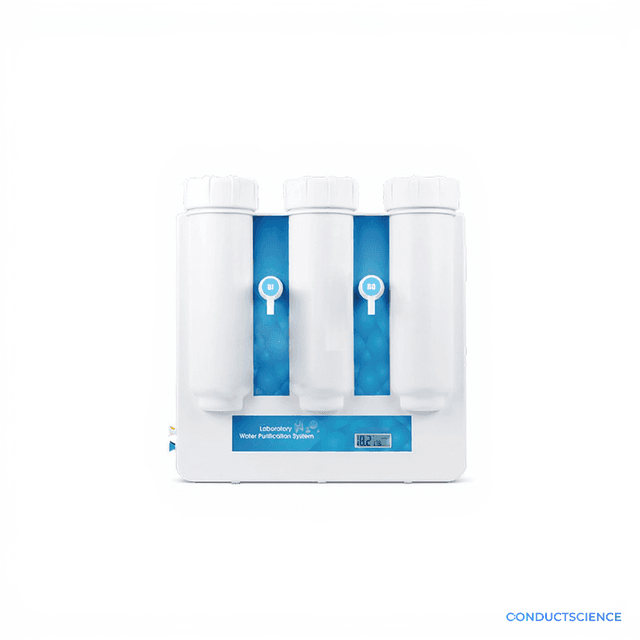
Electric-heating Water Distillation Distiller
Electric-heating water distillation system producing laboratory-grade purified water at an output rates of ≤5L/H through thermal distillation processes.

Louise Corscadden, PhD
Director of Science · ConductScience
Ask Louise about Electric-heating Water Distillation Distiller fit, setup, configuration, or quote prep.
Already working with us? Sign in to connect this with My Scientist.
Key Specifications
Full details →- Model fit
- Configured during quote
- SKU family
- BIO-0730
- Shipping box
- 70.0 x 33.0 x 29.0 cm
- Ordering
- Online checkout and quote request available
- Category
- Water Purifiers
- Build notes
- Confirm accessories, station layout, and support needs before purchase
The Electric-heating Water Distillation Distiller provides laboratory-grade purified water through thermal distillation processes. This system generates distilled water at output rates ranging from ≤5L/H. The distillation process removes dissolved solids, organic compounds, and biological contaminants through controlled evaporation and condensation cycles.
The system operates using electric heating elements with power consumption specifications of 5KW, 7.5KW, or 15KW corresponding to the different output capacities. The compact design features external dimensions from 280×700mm to 375×917mm depending on model selection, making it suitable for laboratory benchtop or floor installation. Each unit includes integrated controls for temperature regulation and distillation monitoring.
How It Works
The electric-heating water distillation process operates on the principle of thermal separation based on differential vapor pressures. Feed water is heated to its boiling point using controlled electric heating elements, converting liquid water to vapor while leaving dissolved solids, non-volatile organic compounds, and biological contaminants in the boiling chamber. The generated steam rises and enters a condensation chamber where it cools and returns to liquid phase as purified distilled water.
Temperature control systems maintain optimal heating conditions to ensure complete vaporization while preventing overheating that could cause thermal decomposition of organic contaminants into volatile compounds. The distillation rate is governed by the power input specifications (5KW to 15KW) and the thermal efficiency of the heating elements. Continuous operation allows for steady-state production matching the specified output rates.
The system design incorporates separate chambers for evaporation and condensation to prevent carryover of contaminants. Vapor pathway geometry ensures adequate residence time for complete phase separation, while condensate collection systems direct the purified water output to storage or direct-use applications.
Features & Benefits
Automation Level
- semi-automated
WD-10
- WD-20
Water Output
- ≤5L/H
≤10L/H
- ≤20L/H
Consumption
- 5KW
7.5KW
- 15KW
External Size(φ*H)
- 280*700mm
310*820mm
- 375*917mm
Package Size(W*D*H)
- 330*290*700mm
360*320*720mm
- 430*380*770mm
8kg
- 11kg
Brand
- ConductScience
Research Domain
- Analytical Chemistry
- Cell Biology
- Clinical Diagnostics
- Materials Science
- Microbiology
- Pharmaceutical QC
Weight
- 8kg
Shipping weight
- 8.0 lb
Shipping box
- L: 70.0 cm
- W: 33.0 cm
- H: 29.0 cm
| Feature | This Product | Typical Alternative | Advantage |
|---|---|---|---|
| Production Capacity Range | ≤5L/H to ≤20L/H across three model configurations | Entry-level models often limited to single production rate with fewer capacity options | Allows laboratories to select optimal capacity matching their water consumption patterns without oversizing equipment. |
| Power Efficiency Scaling | 5KW to 15KW power consumption scaled to production capacity | Fixed power consumption regardless of actual production needs | Reduces energy costs by matching power consumption to required production output. |
| Compact Design Options | External dimensions from 280×700mm to 375×917mm depending on capacity | Larger footprint designs with less flexible sizing options | Enables installation in space-constrained laboratories while maintaining full production capability. |
| System Weight | 8kg to 11kg depending on model configuration | Heavier construction often exceeding bench weight limits | Facilitates laboratory relocation and installation on standard laboratory furniture. |
| Multiple Model Configurations | WD-10, WD-20, and higher capacity models available | Single model design with limited scalability options | Provides upgrade pathway for laboratories with changing water production requirements. |
This distiller system offers scalable production capacity with matched power consumption and compact designs across multiple configurations. The range of available models allows laboratories to select appropriate capacity while maintaining energy efficiency and space optimization for their specific operational requirements.
Practical Tips
Verify temperature control calibration monthly using calibrated thermometers to ensure optimal distillation efficiency.
Why: Temperature accuracy directly affects distillation rate and output quality consistency.
Descale heating elements based on feed water hardness levels, typically every 2-4 weeks for hard water supplies.
Why: Scale buildup reduces heating efficiency and can cause element failure or uneven heating.
Allow initial distillate output to run to waste for first 10-15 minutes after startup to ensure system equilibration.
Why: Initial output may contain residual contaminants from previous shutdown cycles.
Monitor output flow rate consistency as indicator of system performance and potential maintenance needs.
Why: Flow rate reduction often indicates heating element issues or internal fouling before complete failure occurs.
Test distilled water conductivity regularly using calibrated meters to verify purification performance.
Why: Conductivity provides rapid assessment of ionic contamination removal efficiency.
Ensure adequate ventilation around the unit during operation to prevent heat buildup and maintain safe working conditions.
Why: Electric heating generates significant thermal output requiring proper air circulation for safe operation.
Use distilled water output immediately or store in clean, covered containers to prevent recontamination.
Why: Distilled water readily absorbs airborne contaminants and carbon dioxide, affecting water quality over time.
Inspect and clean condensation pathways monthly to prevent bacterial growth in moisture-prone areas.
Why: Microbial contamination in condensation systems can compromise distilled water sterility and quality.
Setup Guide
What’s in the Box
- Electric-heating water distiller main unit
- Power cable with appropriate connector
- Water inlet connection fittings (typical)
- Distilled water output tubing (typical)
- Operating manual and setup instructions
- Basic maintenance tools (typical)
- Warranty documentation
Warranty
ConductScience provides standard one-year manufacturer warranty covering defects in materials and workmanship, with technical support for installation and operational guidance. Extended warranty options and preventive maintenance programs are available for high-usage laboratory applications.
Compliance
What water quality specifications can this distiller achieve compared to other purification methods?
Thermal distillation removes dissolved solids, non-volatile organic compounds, and biological contaminants through physical separation. Output quality depends on feed water characteristics and distillation efficiency. Consult product datasheet for specific conductivity and contaminant removal specifications.
How does power consumption scale with production capacity across the different models?
Power consumption ranges from 5KW for ≤5L/H output to 15KW for ≤20L/H capacity models, with intermediate 7.5KW rating for mid-range production. Energy efficiency per liter produced varies with model selection and operating conditions.
What maintenance procedures are required for continuous operation?
Regular descaling of heating elements, cleaning of boiling chamber, and inspection of condensation systems are essential. Maintenance frequency depends on feed water quality and production volume. Consult operating manual for detailed maintenance schedules.
Can the system operate continuously or does it require batch processing?
The system supports continuous operation at rated production capacity, allowing steady-state water generation. Feed water supply and waste disposal systems must be configured to support continuous flow.
What are the electrical requirements for different capacity models?
Electrical specifications vary by model with power requirements from 5KW to 15KW. Appropriate electrical supply capacity and safety systems must be installed according to local electrical codes and manufacturer specifications.
How does this compare to reverse osmosis or deionization systems?
Thermal distillation provides physical separation removing both dissolved and biological contaminants without membrane replacement or resin regeneration requirements. Operating costs, water recovery rates, and output quality characteristics differ from pressure-driven or ion-exchange methods.
What feed water quality is acceptable for optimal operation?
System can process typical laboratory water supplies, but feed water with high dissolved solids content will require more frequent maintenance. Pre-filtration may extend operational intervals for heavily contaminated source water.
Have a question about this product?
Have a question? Just ask.
Send it over and we'll email you a personalized answer — no call, no scheduling.
Prefer to talk it through?
Upgrade Options