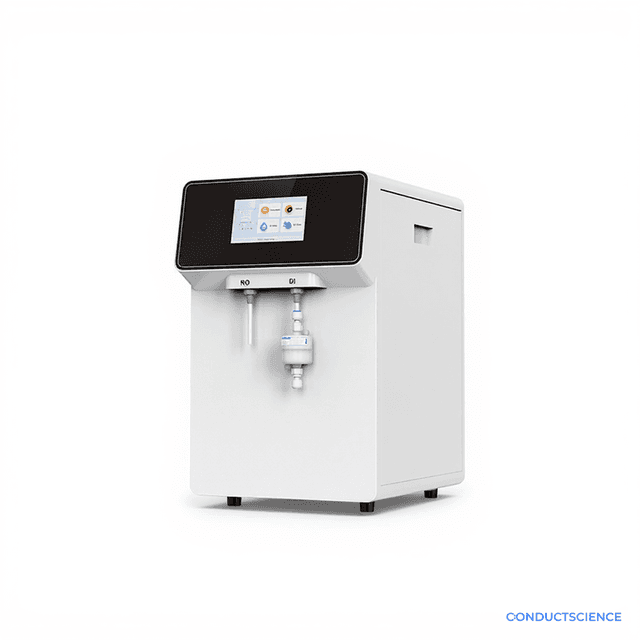
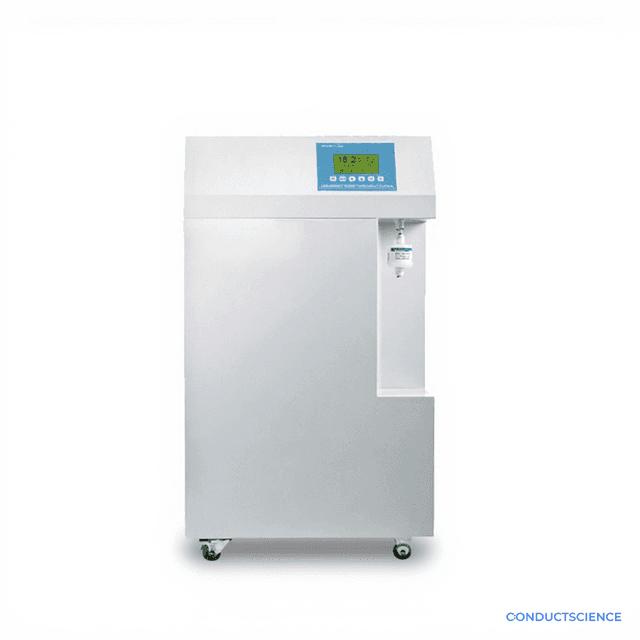
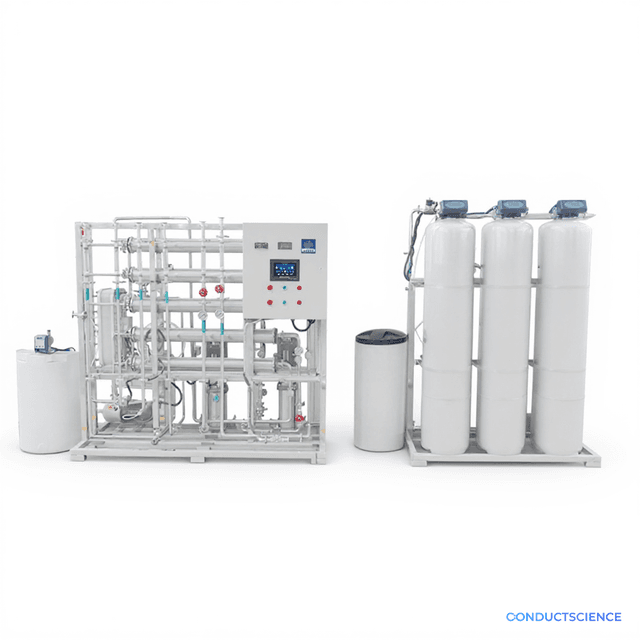
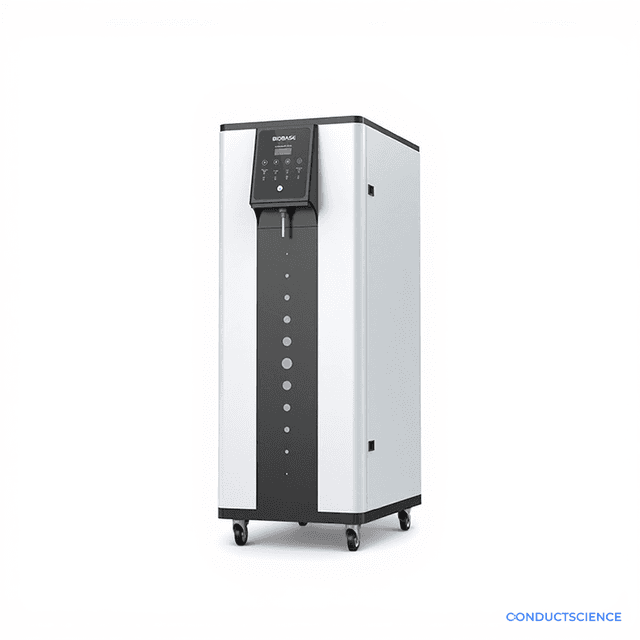
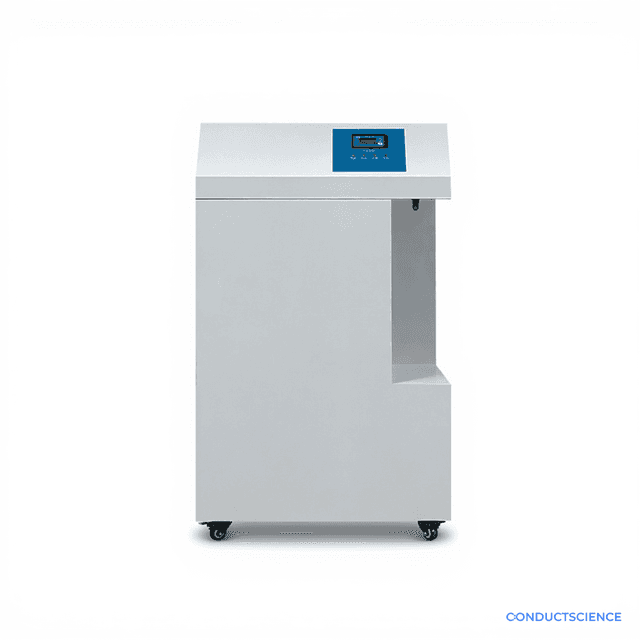
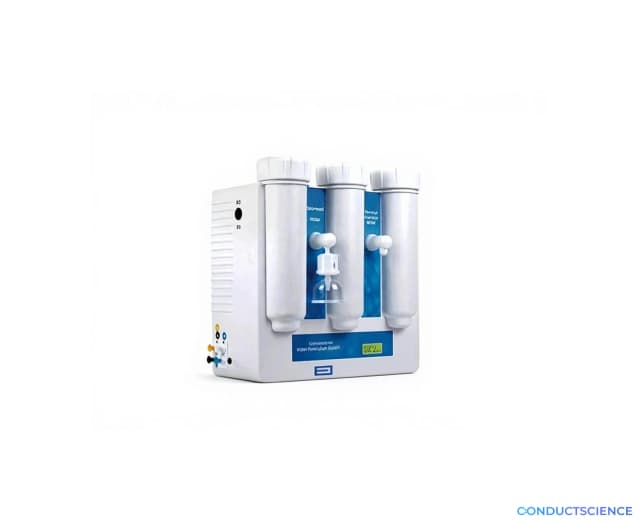
Water Purifier(Automatic RO Water) 15L/H 30L/H
Automatic reverse osmosis water purification system producing 15L/H or 30L/H of laboratory-grade purified water for analytical and research applications.

Louise Corscadden, PhD
Director of Science · ConductScience
Ask Louise about Water Purifier(Automatic RO Water) 15L/H 30L/H fit, setup, configuration, or quote prep.
Already working with us? Sign in to connect this with My Scientist.
Key Specifications
Full details →- Model fit
- Configured during quote
- SKU family
- BIO-0716
- Shipping box
- 42.0 x 41.0 x 22.0 cm
- Ordering
- Online checkout and quote request available
- Category
- Water Purifiers
- Build notes
- Confirm accessories, station layout, and support needs before purchase
The Water Purifier (Automatic RO Water) is a reverse osmosis purification system designed to produce high-quality water for laboratory applications. Available in 15L/H and 30L/H production capacities, this system removes dissolved solids, organic compounds, and microbial contaminants through membrane filtration technology. The automatic operation minimizes manual intervention while maintaining consistent water quality for research protocols requiring purified water.
The compact design (42cm x 41cm x 22cm) accommodates standard laboratory bench spaces while providing reliable water purification for routine analytical procedures, equipment preparation, and experimental protocols. The system operates continuously to maintain water quality standards required for sensitive analytical instrumentation and research applications.
How It Works
Reverse osmosis purification operates through selective membrane filtration, where water molecules pass through a semi-permeable membrane while dissolved salts, organic compounds, and particulates are retained on the concentrate side. Applied pressure forces water molecules through the membrane pores, which are typically 0.0001 micrometers in diameter, effectively removing contaminants based on molecular size exclusion.
The automatic system monitors water production and quality parameters, adjusting flow rates and pressure to maintain consistent purification performance. Pre-filtration stages remove larger particles and chlorine before the RO membrane, while post-treatment may include activated carbon filtration for organic compound removal. The system operates in a continuous mode, producing purified water on demand while automatically managing membrane backwashing and system maintenance cycles.
Features & Benefits
Automation Level
- semi-automated
Research Domain
- Analytical Chemistry
- Cell Biology
- Environmental Monitoring
- Materials Science
- Microbiology
- Pharmaceutical QC
Shipping weight
- 35.0 lb
Shipping box
- L: 42.0 cm
- W: 41.0 cm
- H: 22.0 cm
| Feature | This Product | Typical Alternative | Advantage |
|---|---|---|---|
| Production Capacity Options | Available in 15L/H and 30L/H configurations | Single fixed capacity models are common in this category | Allows laboratories to select appropriate output rate matching their specific water consumption patterns and workflow demands. |
| Automated Operation | Automatic system monitoring and control | Manual monitoring and adjustment requirements vary by model | Reduces operator oversight requirements and maintains consistent water quality without continuous manual intervention. |
| Compact Footprint | 42cm x 41cm x 22cm bench-top dimensions | Larger floor-standing units often require more laboratory space | Fits standard laboratory benches while providing point-of-use water purification near analytical instruments. |
| Reverse Osmosis Technology | Membrane-based purification system | Distillation or mixed-bed ion exchange systems are alternative approaches | Provides continuous operation with lower energy consumption compared to distillation while achieving comprehensive contaminant removal. |
This water purifier combines reverse osmosis technology with automated operation and flexible capacity options in a compact bench-top design. The dual capacity configurations and automatic monitoring provide reliable water purification for diverse laboratory applications requiring consistent high-purity water production.
Practical Tips
Monitor conductivity readings regularly to track membrane performance and schedule replacement before significant quality decline.
Why: Early detection of membrane degradation prevents compromised water quality from affecting analytical results.
Install pressure gauge monitoring to ensure inlet water pressure remains within specified operating range for optimal performance.
Why: Proper pressure control maximizes membrane lifespan and maintains consistent purification efficiency.
Calibrate conductivity monitoring equipment monthly using standard solutions to ensure accurate water quality assessment.
Why: Accurate conductivity measurement is essential for determining when membrane replacement or system maintenance is required.
If production rate decreases significantly, check for pre-filter clogging before assuming membrane replacement is needed.
Why: Pre-filter blockage is often the cause of reduced flow rates and is more economical to address than membrane replacement.
Document water quality test results and production rates to establish baseline performance trends for your specific installation.
Why: Historical data helps predict maintenance needs and ensures water quality remains suitable for your analytical applications.
Ensure proper drainage of concentrate waste water to prevent backflow and potential contamination of the purified water system.
Why: Adequate drainage prevents system pressure buildup and maintains separation between purified product water and concentrated waste streams.
Setup Guide
What’s in the Box
- Water purifier main unit
- Power cord and adapter (typical)
- Water inlet connection fittings (typical)
- Drain line tubing (typical)
- Pre-filter cartridges (typical)
- RO membrane module (typical)
- Installation and operation manual
- Water quality testing kit (typical)
Warranty
ConductScience provides a standard one-year manufacturer warranty covering parts and technical support for proper operation under normal laboratory conditions.
Compliance
What water quality parameters can this system achieve?
The reverse osmosis membrane removes dissolved salts, organic compounds, and microbial contaminants. Consult the product datasheet for specific conductivity, TOC, and bacterial reduction specifications for your analytical requirements.
How frequently does the RO membrane require replacement?
Membrane lifespan depends on inlet water quality and usage patterns. Typical replacement intervals range from 6-24 months based on conductivity monitoring and flow rate decline indicators.
Can this system connect directly to existing laboratory water lines?
Yes, the system connects to standard laboratory water supplies with appropriate pressure regulation. Inlet pressure should be maintained within manufacturer specifications for optimal performance.
What maintenance procedures are required for continued operation?
Routine maintenance includes pre-filter replacement, membrane sanitization, and conductivity monitoring. Automatic operation reduces daily oversight while maintaining consistent water quality.
How does the automatic operation function work?
The system automatically monitors production parameters and adjusts operation to maintain water quality and flow rates. Manual intervention is primarily required for filter changes and periodic maintenance.
What is the difference between the 15L/H and 30L/H models?
The models differ in production capacity to match laboratory water consumption patterns. Both use similar purification technology with sizing optimized for different throughput requirements.
Is additional water storage recommended for this system?
Storage tanks can provide water reserves for peak demand periods. Consider storage based on your laboratory's usage patterns and the selected production capacity model.
Have a question about this product?
Have a question? Just ask.
Send it over and we'll email you a personalized answer — no call, no scheduling.
Prefer to talk it through?
Upgrade Options