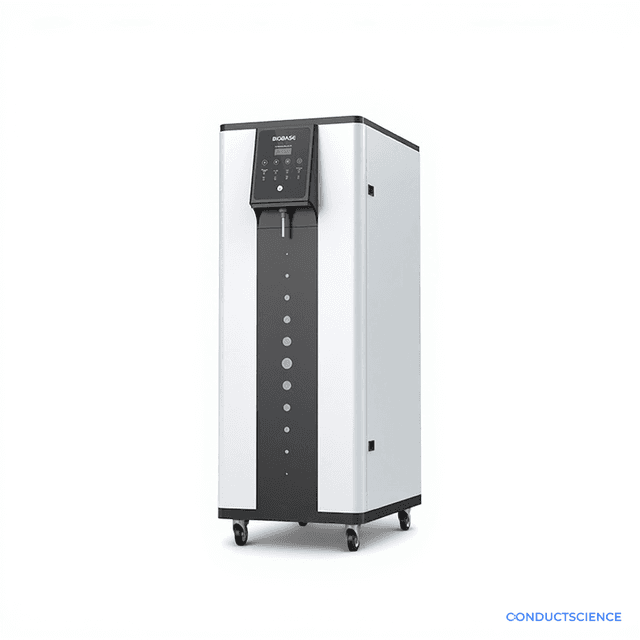
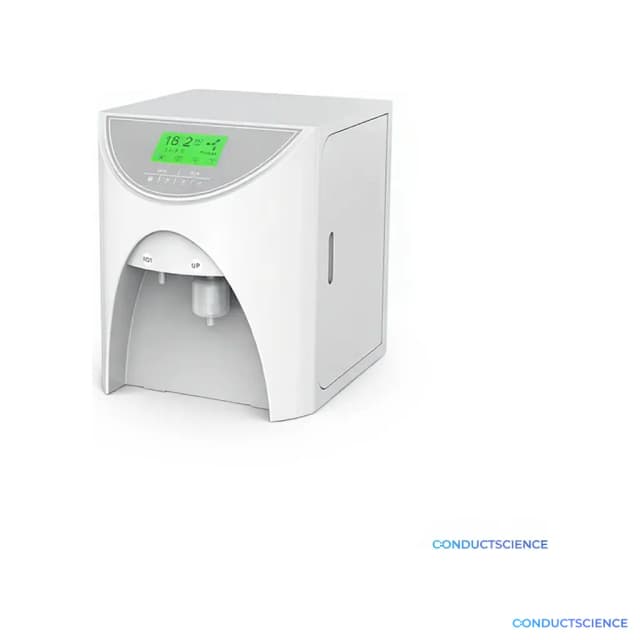
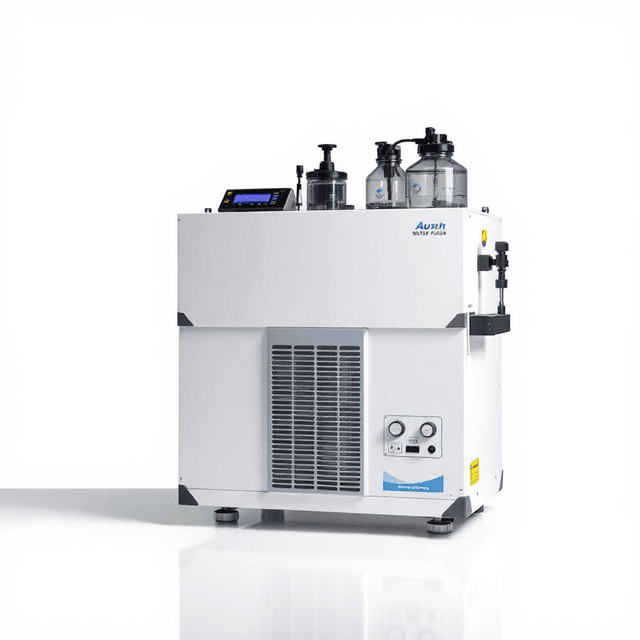
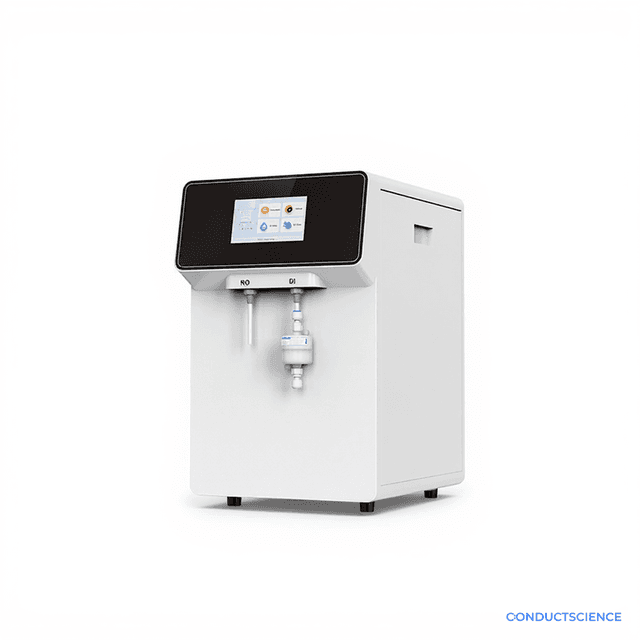
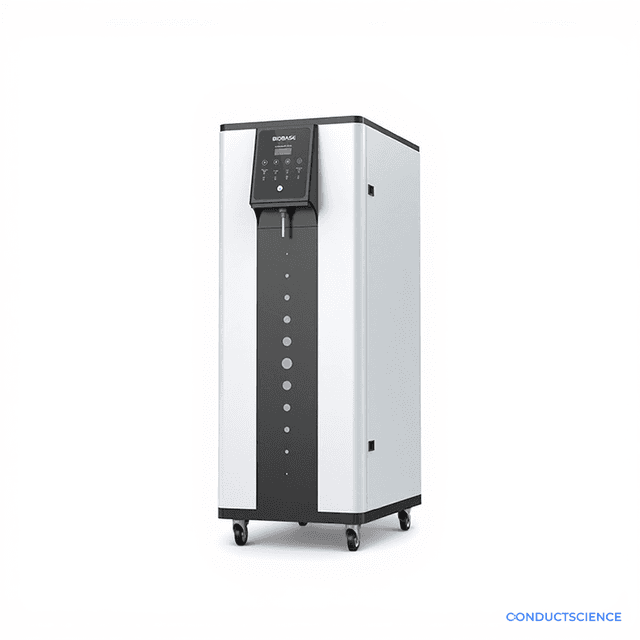
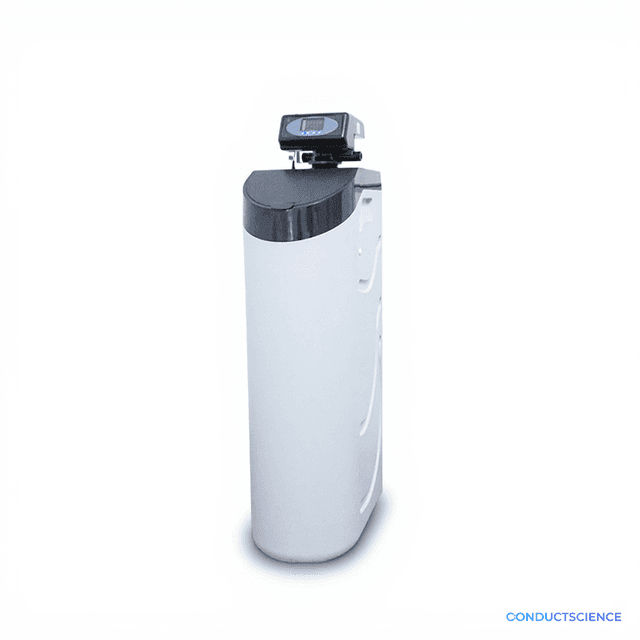
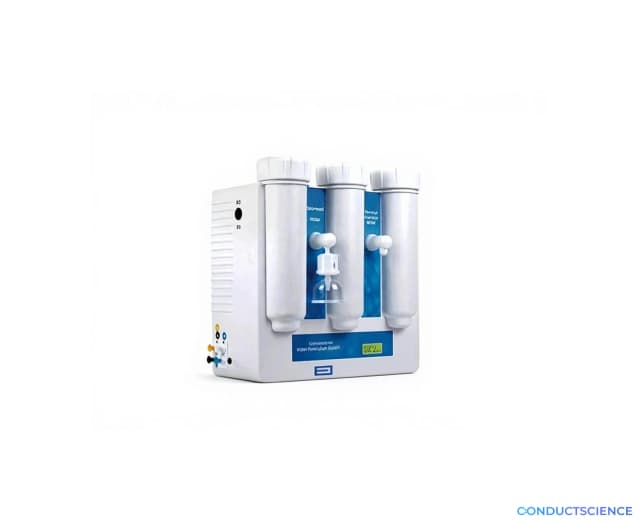
Laboratory Water Purifier 120L/H 150L/H 200L/H
High-capacity laboratory water purification system producing 120-200 L/H of ultrapure water for analytical instruments, cell culture, and buffer preparation.

Louise Corscadden, PhD
Director of Science · ConductScience
Ask Louise about Laboratory Water Purifier 120L/H 150L/H 200L/H fit, setup, configuration, or quote prep.
Already working with us? Sign in to connect this with My Scientist.
Key Specifications
Full details →- Model fit
- Configured during quote
- SKU family
- BIO-0721
- Shipping box
- 120.0 x 75.0 x 60.0 cm
- Ordering
- Online checkout and quote request available
- Category
- Water Purifiers
- Build notes
- Confirm accessories, station layout, and support needs before purchase
The Laboratory Water Purifier delivers high-capacity ultrapure water production at flow rates of 120, 150, or 200 liters per hour, designed for continuous operation in research and analytical laboratories. This system employs multi-stage purification technologies to remove ionic, organic, and microbial contaminants from source water, producing water suitable for critical laboratory applications including HPLC, spectrophotometry, cell culture, and buffer preparation.
The compact benchtop design (120 × 75 × 60 cm) maximizes laboratory space efficiency while providing reliable water quality for demanding analytical workflows. The system is engineered for laboratories requiring consistent access to ultrapure water without the storage limitations and contamination risks associated with traditional carboy systems.
How It Works
Laboratory water purification operates through sequential removal of contaminants using multiple complementary technologies. The process typically begins with pre-filtration to remove particulates and chlorine, followed by reverse osmosis to eliminate dissolved salts and organic molecules. Ion exchange resins then capture residual ionic species, while UV sterilization destroys microorganisms and breaks down organic contaminants.
The final purification stage often employs ultrafiltration to remove endotoxins and submicron particles, producing water with resistivity exceeding 18.2 MΩ·cm. Continuous recirculation maintains water quality by preventing microbial growth and ionic contamination in the distribution loop.
Real-time monitoring systems track key parameters including resistivity, TOC levels, and microbial contamination to ensure consistent water quality throughout the production cycle.
Features & Benefits
Automation Level
- semi-automated
Research Domain
- Analytical Chemistry
- Cell Biology
- Clinical Diagnostics
- Environmental Monitoring
- Materials Science
- Microbiology
- Pharmaceutical QC
Shipping weight
- 110.0 lb
Shipping box
- L: 120.0 cm
- W: 75.0 cm
- H: 60.0 cm
| Feature | This Product | Typical Alternative | Advantage |
|---|---|---|---|
| Production Capacity | 120-200 L/H continuous production | Entry-level systems often provide 50-100 L/H capacity | Supports multiple simultaneous users and high-volume applications without supply interruption during peak demand periods. |
| Installation Footprint | Compact 120 × 75 × 60 cm benchtop design | Floor-standing units require dedicated floor space | Maximizes valuable laboratory bench space while providing convenient access for monitoring and maintenance. |
| Water Delivery Method | Point-of-use dispensing system | Storage-based systems rely on reservoir tanks | Eliminates storage-related contamination risks and provides fresh ultrapure water on demand for critical applications. |
| System Weight | 110 kg total weight | Varies by model and capacity configuration | Engineered for stable benchtop operation while housing comprehensive purification components. |
This laboratory water purification system combines high-capacity production rates with a space-efficient benchtop design, offering continuous ultrapure water delivery for demanding research applications. The point-of-use dispensing eliminates storage contamination while supporting multiple concurrent users.
Practical Tips
Verify conductivity and resistivity sensors monthly using certified reference standards to maintain measurement accuracy.
Why: Sensor drift can lead to false water quality readings that may compromise experimental results.
Replace pre-filters based on pressure differential readings rather than fixed time intervals to optimize component lifespan.
Why: Source water quality variations significantly affect filter loading and replacement timing.
Flush dispensing lines daily before first use to remove any overnight contamination from distribution tubing.
Why: Stagnant water in lines can accumulate contaminants that affect initial water quality measurements.
Monitor water production rates and quality parameters simultaneously to identify declining purification component performance.
Why: Gradual performance degradation often precedes complete component failure, allowing preventive replacement.
Record water quality measurements alongside experimental data to enable troubleshooting of unexpected analytical results.
Why: Water quality variations can introduce systematic errors that are difficult to identify without comprehensive documentation.
Install appropriate drainage systems to handle potential overflow conditions during system maintenance or component failure.
Why: Water damage to laboratory equipment and flooring can be prevented with proper drainage planning.
Setup Guide
What’s in the Box
- Laboratory water purification unit
- Power cable and electrical connections
- Water inlet connection fittings (typical)
- Dispensing valve and tubing (typical)
- Installation and operation manual
- Water quality monitoring sensors (typical)
- Replacement filter indicators (typical)
Warranty
ConductScience provides a standard one-year manufacturer warranty covering system components and technical support for installation and operation assistance.
Compliance
References
Background reading relevant to this product:
What water quality parameters can this system achieve for HPLC applications?
Consult product datasheet for specific resistivity, TOC, and particulate levels. The multi-stage purification design typically produces water suitable for gradient HPLC with minimal ionic interference.
How frequently do purification components require replacement?
Replacement intervals depend on source water quality and usage volume. Monitor system indicators and water quality parameters to determine optimal replacement scheduling for your laboratory conditions.
Can the system handle varying daily demand patterns?
The continuous production design accommodates fluctuating demand without storage-related quality degradation. Peak demand periods up to the rated flow capacity are supported without performance compromise.
What monitoring capabilities are included for quality assurance?
Real-time monitoring systems track key parameters throughout the purification process. Specific sensor types and measurement ranges should be confirmed in the technical specifications.
Is the system suitable for cell culture water requirements?
The purification technology removes endotoxins and microbial contaminants typically required for cell culture applications. Verify specific endotoxin levels and bioburden specifications meet your culture protocols.
How does the compact design affect maintenance accessibility?
The benchtop configuration provides front-panel access to key components while maintaining a small footprint. Adequate clearance around the unit ensures routine maintenance can be performed without relocation.
What source water conditions are required for optimal performance?
Consult installation requirements for acceptable inlet pressure, temperature, and pre-treatment needs. Most systems accommodate standard municipal water supplies with basic pre-filtration.
Can multiple users access purified water simultaneously?
The high-capacity design supports multiple dispensing points operating concurrently up to the rated flow limit. Distribution manifolds can be configured for various laboratory layouts.
Have a question about this product?
Have a question? Just ask.
Send it over and we'll email you a personalized answer — no call, no scheduling.
Prefer to talk it through?
Upgrade Options