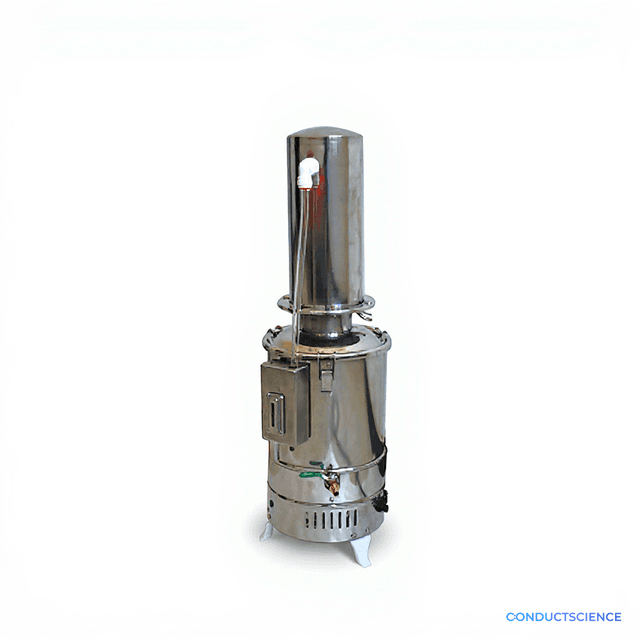
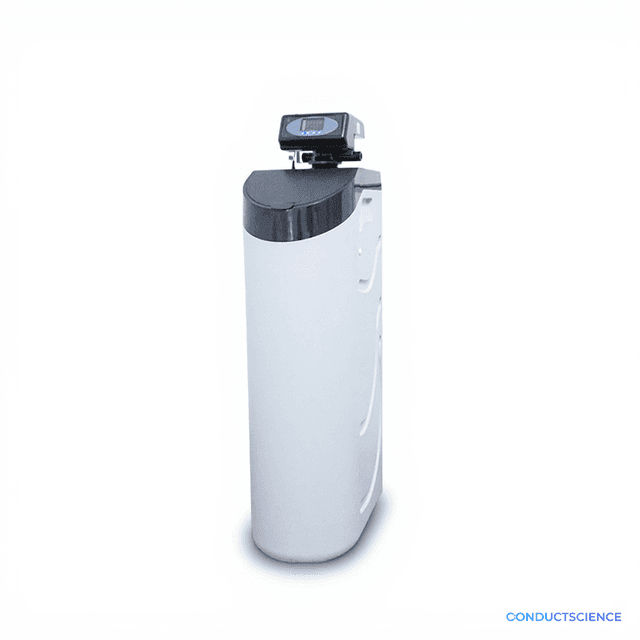
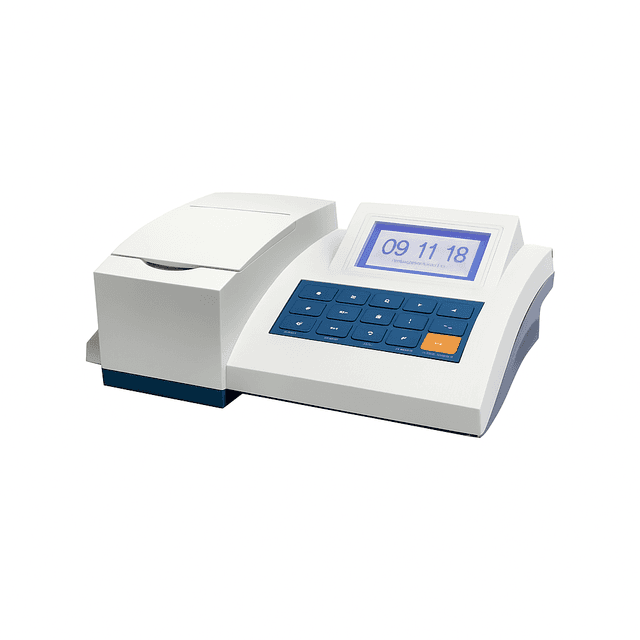
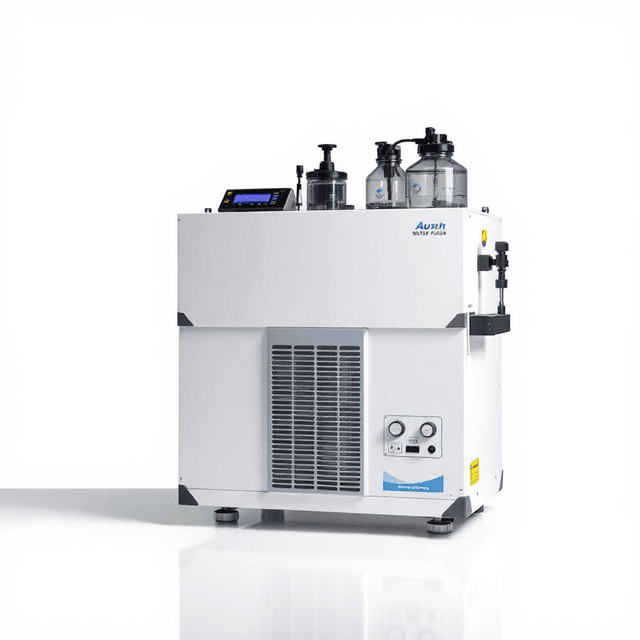
Auto-control Electric-heating Water Distiller
Electric-heating water distiller providing laboratory-grade distilled water in three output capacities (5-20L/H) for analytical applications and equipment cleaning.

Louise Corscadden, PhD
Director of Science · ConductScience
Ask Louise about Auto-control Electric-heating Water Distiller fit, setup, configuration, or quote prep.
Already working with us? Sign in to connect this with My Scientist.
Key Specifications
Full details →- Model fit
- Configured during quote
- SKU family
- BIO-0729
- Shipping box
- 71.0 x 33.0 x 29.0 cm
- Ordering
- Online checkout and quote request available
- Category
- Water Purifiers
- Build notes
- Confirm accessories, station layout, and support needs before purchase
The Auto-control Electric-heating Water Distiller provides laboratory-grade distilled water through electric heating and condensation processes. This compact benchtop unit delivers consistent water purity for analytical applications, buffer preparation, and equipment cleaning where deionized or tap water quality is insufficient.
Available in three output capacities (≤5L/H, ≤10L/H, and ≤20L/H), the system accommodates varying laboratory throughput requirements. The auto-control functionality maintains consistent distillation parameters while the electric heating element provides reliable energy input for continuous operation. Compact external dimensions and standardized power requirements enable integration into existing laboratory infrastructure.
How It Works
The water distillation process operates through electric heating of source water to generate steam, followed by condensation to produce distilled water. The heating element vaporizes water at 100°C, leaving non-volatile contaminants, dissolved salts, and organic compounds in the boiling chamber. The resulting steam travels through a condensation system where it cools and returns to liquid state as purified water.
Auto-control functionality monitors heating parameters to maintain consistent distillation rates and prevent overheating. The electric heating system provides uniform energy distribution across the water volume, ensuring complete vaporization and efficient steam generation. The condensation chamber design maximizes heat transfer for effective vapor-to-liquid conversion while maintaining product purity.
Output flow rates are determined by heating power (5-15KW) and chamber design, with higher power models achieving greater throughput. The closed-system design prevents atmospheric contamination during the distillation process while allowing continuous water production for laboratory applications.
Features & Benefits
Automation Level
- semi-automated
WD-A10
- WD-A20
Water Output
- ≤5L/H
≤10L/H
- ≤20L/H
Consumption
- 5KW
7.5KW
- 15KW
External Size(φ*H)
- 280*740mm
310*855mm
- 375*960mm
Package Size(W*D*H)
- 330*290*710mm
360*320*720mm
- 430*380*770mm
8.5kg
- 13kg
Brand
- ConductScience
Research Domain
- Analytical Chemistry
- Clinical Diagnostics
- Environmental Monitoring
- Materials Science
- Microbiology
- Pharmaceutical QC
Weight
- 8kg
Shipping weight
- 8.0 lb
Shipping box
- L: 71.0 cm
- W: 33.0 cm
- H: 29.0 cm
| Feature | This Product | Typical Alternative | Advantage |
|---|---|---|---|
| Output Capacity Range | ≤5L/H to ≤20L/H across three models | Many units offer single fixed output rates | Allows selection of appropriate capacity for specific laboratory throughput requirements without over-sizing. |
| Power Consumption | 5-15KW electric heating elements | Basic models often use lower power heating | Higher power enables faster heating and more consistent output rates for demanding applications. |
| Auto-control System | Automated heating parameter control | Manual temperature and timing controls | Reduces operator intervention and maintains consistent distillation conditions for reproducible water quality. |
| Compact Design | 280-375mm diameter, 8-13kg weight | Larger footprint units common in this capacity range | Benchtop installation in space-constrained laboratories while maintaining full production capacity. |
| Model Scalability | Three capacity options with consistent design | Single model offerings or disparate product lines | Enables laboratory expansion or capacity adjustment while maintaining familiar operation and maintenance procedures. |
This water distiller combines auto-control operation with scalable output capacities and compact design for laboratory water purification. The electric heating system provides consistent performance across the capacity range, while the automated controls reduce manual monitoring requirements compared to basic distillation units.
Practical Tips
Clean the boiling chamber weekly with dilute acid solution to remove mineral deposits, followed by thorough rinsing with distilled water.
Why: Mineral buildup reduces heating efficiency and can affect water quality.
Monitor the first 100mL of each distillation cycle and discard if conductivity is elevated above your quality threshold.
Why: Initial output may contain residual contaminants from the previous cycle or standing time.
Verify output flow rate monthly by collecting timed samples and measuring volume to ensure consistent production rates.
Why: Flow rate changes may indicate heating element degradation or system blockages requiring attention.
Test distilled water conductivity daily and maintain a log to track system performance and identify trends.
Why: Conductivity provides real-time water quality assessment and early warning of system issues.
If output flow decreases, check for mineral deposits in the boiling chamber and condensation system before adjusting heating parameters.
Why: Physical obstructions are more common than control system issues and easier to resolve.
Ensure adequate ventilation around the unit during operation and avoid contact with hot surfaces on the heating chamber.
Why: Electric heating generates significant thermal output that requires proper heat dissipation.
Use a dedicated collection container for distilled water and replace it regularly to prevent contamination during storage.
Why: Clean collection prevents recontamination of purified water after distillation.
Setup Guide
What’s in the Box
- Auto-control electric-heating water distiller main unit
- Power cord and electrical connections (typical)
- Water inlet and outlet tubing (typical)
- User manual and operating instructions (typical)
- Installation hardware (typical)
Warranty
ConductScience provides a standard one-year manufacturer warranty covering defects in materials and workmanship. Technical support is available for installation guidance, operational questions, and troubleshooting assistance.
Compliance
What water quality can I expect from the distillation process?
The electric heating distillation process removes dissolved salts, organic contaminants, and particulates through vaporization and condensation. Final water quality depends on source water characteristics and should be verified through conductivity or total dissolved solids testing for specific applications.
How do I select between the different output capacity models?
Choose based on daily water consumption requirements. The ≤5L/H model suits individual bench applications, ≤10L/H accommodates small team usage, and ≤20L/H supports higher-volume laboratory operations or multiple concurrent users.
What electrical requirements must be met for installation?
Power requirements range from 5KW to 15KW depending on model capacity. Ensure your electrical system can support the continuous load and that appropriate circuit protection is installed according to local electrical codes.
How often does the distiller require maintenance?
Regular maintenance includes cleaning the boiling chamber to remove mineral deposits, inspecting heating elements, and monitoring output quality. Frequency depends on source water quality and usage patterns, typically weekly to monthly cleaning cycles.
Can this distiller be operated continuously for extended periods?
Yes, the auto-control system enables continuous operation. Monitor water levels, heating performance, and output quality during extended runs. Consider implementing automated monitoring for overnight or weekend operation.
What factors affect distillation efficiency and output quality?
Source water quality, heating element condition, condensation system performance, and ambient temperature influence efficiency. Regular cleaning prevents mineral buildup that reduces heating efficiency and output purity.
How does this compare to deionization or reverse osmosis systems?
Distillation provides excellent removal of dissolved salts and organic compounds through phase change, while deionization targets ionic species and RO removes particles and some dissolved materials. Distillation typically achieves lower total dissolved solids but requires more energy input.
Have a question about this product?
Have a question? Just ask.
Send it over and we'll email you a personalized answer — no call, no scheduling.
Prefer to talk it through?