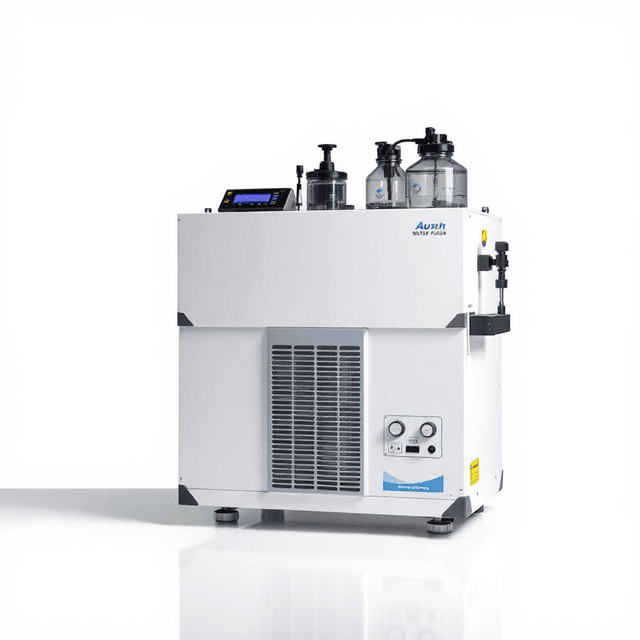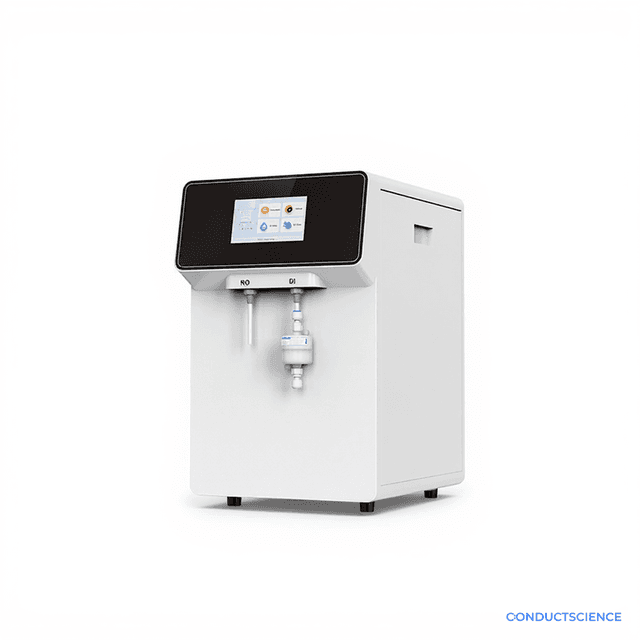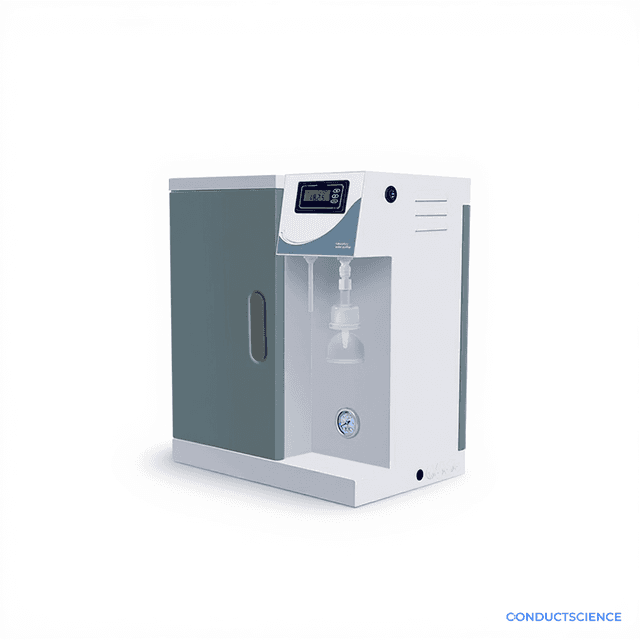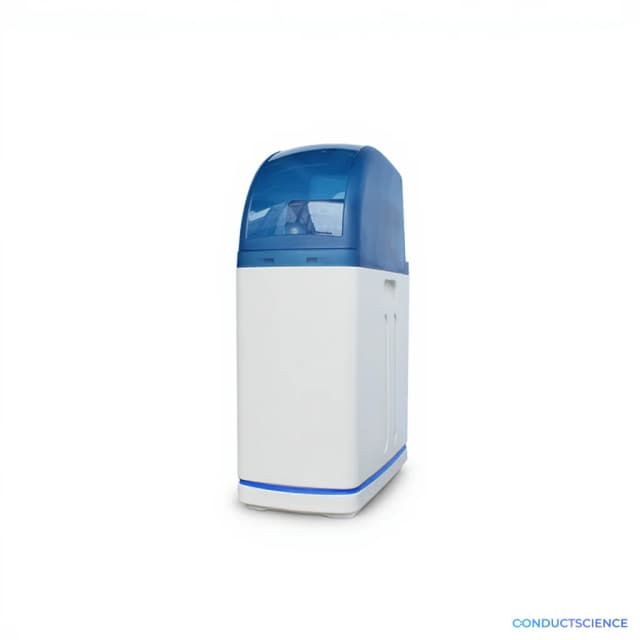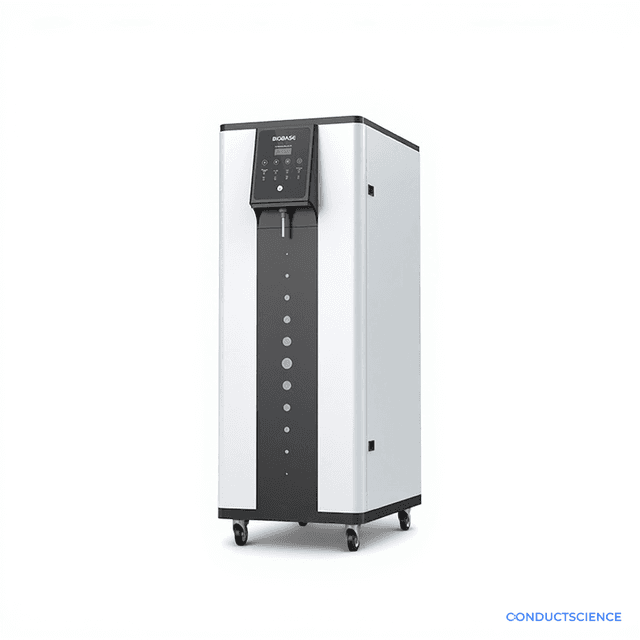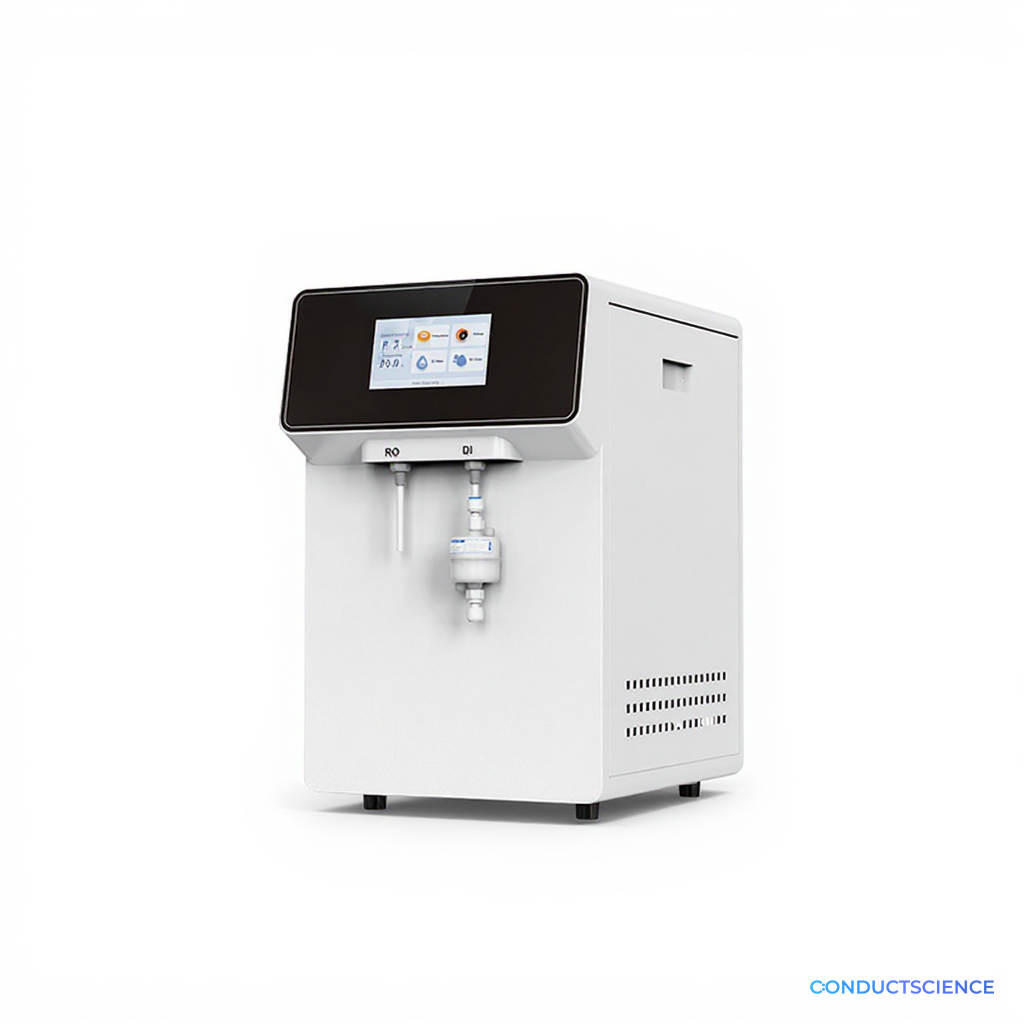
Laboratory Water Purifier 20L 30L 40L
Professional laboratory water purification system with 20L, 30L, or 40L/hour capacity.
Features 6-stage filtration, touch-screen control, and real-time water quality monitoring.

Louise Corscadden, PhD
Director of Science · ConductScience
Ask Louise about Laboratory Water Purifier 20L 30L 40L fit, setup, configuration, or quote prep.
Already working with us? Sign in to connect this with My Scientist.
Key Specifications
Full details →- Model fit
- 3 selectable configurations
- SKU family
- BIO-0712
- Shipping box
- 64.0 x 53.5 x 40.0 cm
- Ordering
- Online checkout and quote request available
- Category
- Water Purifiers
- Build notes
- Confirm accessories, station layout, and support needs before purchase
Product Overview
Professional-grade laboratory water purification system with high-capacity output for research facilities, hospitals, and testing laboratories. Features advanced multi-stage filtration and real-time water quality monitoring through an intuitive 7-inch touch screen interface.
Key Features
- 7-inch color touch screen display with comprehensive information and data logging
- Six-stage filtration system (PF+AC+RO+UV+DI+TF) for superior water purity
- Triple water quality detection with dual flow rate monitoring
- Automatic RO membrane anti-scaling and self-washing function
- Large-capacity consumables for extended service life
- Dual water outlets for both RO and DI water collection
- Intelligent consumables management and data processing
- Optional USB, SD card, and RS232 interfaces for data export and monitoring software connection
Applications
- Biochemical analysis and testing
- Laboratory research and development
- Hospital and clinical testing
- Pharmaceutical research facilities
- Environmental and water quality testing
- Scientific research institutions
- Medical diagnostic laboratories
- Industrial quality control
Specifications
| Parameter | Value |
|---|---|
| Purifying Procedure | Prefilter (PF) + Active Carbon (AC) + Reverse Osmosis (RO) + UV + Deionization (DI) + Terminal Filter (TF) |
| Water Output Type | RO water outlet (×2), DI water outlet (×2) |
| Display | 7-inch color touch screen with data logging capabilities |
| Water Quality Testing | Tap water, RO water, and DI water quality real-time testing |
| Power Supply | AC 100-240V, 50/60Hz |
| Power Consumption | 60W |
| External Dimensions (W×D×H) | 535 × 400 × 640mm |
| Net Weight | 46.5kg |
| Flow Rate | 2.0L/min (with external pressure tank) |
| Water Storage | External pressure water tank |
Model Comparison
| Specification | BK-DI-20L | BK-DI-30L | BK-DI-40L |
|---|---|---|---|
| Water Output Speed (25°C) | 20L/H | 30L/H | 40L/H |
| Best For | Small to medium labs | Medium labs and facilities | Large labs and hospitals |
Water Quality Specifications
DI Water Quality:
- Resistivity: 10~18 MΩ·cm
- Conductivity: 0.055~0.1 μs/cm
- Heavy Metals: <0.1 ppb
- Particle: <0.1 cfu/mL
- Bacteria (>0.2μm): <1/mL
RO Water Quality:
- Ion Rejection Rate: 96~99%
- Organic Rejection Rate: >99%
- Particle and Bacteria Rejection Rate: >99%
Purification System Components
- PP filter (1×)
- Active carbon filter (1×)
- RO membrane 3012-300 (1×)
- Deionization purification column 12L (1×)
- UV lamp (1×)
- Capsule terminal filter (1×)
- Consumables management with lifespan alerts at various levels
Setup & Support
- Installation: Requires AC power source (100-240V, 50/60Hz) and water inlet connection. Simple setup with included pressure water tank.
- Monitoring: Real-time water quality monitoring for tap water, RO water, and DI water with 7-inch touch screen display.
- Maintenance: Intelligent consumables management alerts users to filter replacement needs based on usage and time.
- Data Management: Optional USB and SD card interfaces for data export and backup to monitoring software.
- Integration: Optional RS232 interface for connection to laboratory management systems and external monitoring equipment.
Documentation
- Complete technical manual with operation guidelines and maintenance procedures
- Water quality verification certificates and specifications
- Safety guidelines and electrical specifications
- Consumables replacement and maintenance schedule
- Optional: Software integration guide for external data monitoring systems
Q&A
Q: What is the difference between RO and DI water outputs?
A: RO water undergoes reverse osmosis filtration, ideal for most laboratory applications. DI water additionally passes through deionization columns for ultra-pure applications requiring extremely low conductivity.
Q: How often do consumables need replacement?
A: The system provides real-time alerts for each consumable component based on usage patterns and lifespan. Typical replacements range from 6-12 months depending on input water quality and usage volume.
Q: Can the system handle hard water?
A: Yes, the automatic RO membrane anti-scaling and self-washing function effectively manages hard water, extending filter life and maintaining consistent water quality.
Q: Is external tank storage required?
A: Yes, the system includes an external pressure water tank for storage. This design allows for higher flow rates and flexible water access without continuous operation.
Q: What data can be exported?
A: With optional USB/SD card interfaces, users can export water quality test results, consumables usage data, and system performance logs for quality assurance and record-keeping.
How It Works
The six-stage purification process begins with pre-filtration (PF) to remove larger particulates, followed by activated carbon (AC) filtration to adsorb chlorine and organic compounds. Reverse osmosis (RO) membranes then remove dissolved ions, bacteria, and remaining organics through selective permeability under pressure. UV treatment inactivates remaining microorganisms through DNA damage at germicidal wavelengths.
Deionization (DI) columns containing mixed-bed ion exchange resins remove residual ionic species through cation-anion exchange mechanisms, achieving high resistivity water. Terminal filtration (TF) provides final particulate removal before water reaches the outlet. The system monitors water quality parameters continuously, displaying conductivity, flow rates, and system status on the touchscreen interface.
Dual outlet design allows simultaneous access to both RO water (suitable for general laboratory use and equipment cleaning) and DI water (required for analytical procedures and trace analysis). The multi-stage approach ensures consistent water quality while maximizing membrane and resin lifespan through progressive contaminant removal.
Features & Benefits
Shipping weight
- 46.5 lb
Shipping box
- L: 64.0 cm
- W: 53.5 cm
- H: 40.0 cm
| Feature | This Product | Typical Alternative | Advantage |
|---|---|---|---|
| Purification Stages | Six-stage process (PF+AC+RO+UV+DI+TF) | Basic systems often use 3-4 stages without UV sterilization or terminal filtration | Comprehensive contamination removal ensures consistent water quality for sensitive analytical procedures |
| Output Options | Dual outlets each for RO and DI water (4 total) | Single outlet systems require manual switching between water grades | Simultaneous access to different water grades eliminates workflow interruptions |
| DI Water Conductivity | 0.055-0.1 μS/cm | Entry-level systems may achieve only 1-5 μS/cm | Lower ionic contamination prevents interference in trace analysis and electrochemical measurements |
| Production Capacity | 20L/H, 30L/H, or 40L/H options | Smaller systems typically produce 5-15L/H | Higher throughput supports busy laboratories with multiple concurrent water demands |
| Interface | 7-inch touchscreen display | Basic models use simple LED indicators or small LCD screens | Comprehensive real-time monitoring enables proactive maintenance and quality assurance |
| Heavy Metal Specification | < 0.1 ppb | Many systems do not specify trace metal levels | Documented low metal content ensures suitability for ICP-MS and trace analysis applications |
This system offers comprehensive multi-stage purification with dual-grade water output and high production capacity. The touchscreen interface and specified trace metal levels address requirements of analytical laboratories requiring documented water quality for sensitive measurements.
| Model | SKU | Listed price | Status | Shipping box |
|---|---|---|---|---|
| BK-DI-40L | BK-DI-40L | $3,290.00 | Available | 64.0 x 53.5 x 40.0 cm |
| BK-DI-30L | BK-DI-30L | $2,990.00 | Available | 64.0 x 53.5 x 40.0 cm |
| BK-DI-20L | BK-DI-20L | $2,890.00 | Available | 64.0 x 53.5 x 40.0 cm |
Practical Tips
Verify conductivity readings monthly against a certified reference standard to ensure measurement accuracy.
Why: Sensor drift affects water quality monitoring and determines when maintenance is required.
Replace pre-filters when differential pressure increases or water quality parameters begin to decline.
Why: Pre-filter maintenance extends RO membrane life and maintains system efficiency.
Use RO water for general cleaning and equipment rinsing, reserving DI water for analytical sample preparation.
Why: Efficient water grade selection reduces operating costs while ensuring analytical quality.
Document water quality parameters at the start of each analytical batch for quality assurance records.
Why: Quality documentation supports method validation and troubleshooting of analytical results.
If DI water conductivity increases, check resin bed saturation and UV lamp operation before replacing membranes.
Why: Systematic troubleshooting identifies the correct maintenance action and avoids unnecessary component replacement.
Ensure UV lamp housing remains closed during operation and follow lockout procedures during maintenance.
Why: UV exposure can cause eye and skin damage during lamp replacement or system service.
Sanitize DI water outlets weekly with appropriate disinfectant to prevent biofilm formation.
Why: Biofilm growth in low-flow outlets can increase bacterial counts and compromise water quality.
Setup Guide
What’s in the Box
- Laboratory water purifier main unit
- Power cord and electrical connections
- Water inlet and outlet tubing (typical)
- Mounting hardware and fittings (typical)
- User manual and installation guide (typical)
- Water quality test certificate (typical)
Warranty
ConductScience provides standard manufacturer warranty coverage with technical support for installation and operational guidance. Extended service plans available for preventive maintenance and component replacement.
Compliance
References
Background reading relevant to this product:
What is the difference between the RO and DI water outputs?
RO water has >99% rejection of ions, organics, particles and bacteria but retains some dissolved species. DI water undergoes additional ion exchange treatment achieving 0.055-0.1 μS/cm conductivity for analytical applications requiring minimal ionic contamination.
How frequently should filtration components be replaced?
Replacement frequency depends on feed water quality and usage volume. Monitor conductivity readings and flow rates through the touchscreen interface to determine when pre-filters, RO membranes, or DI resins require service.
Can this system handle high-TDS feed water?
The multi-stage design handles variable feed water quality, but high total dissolved solids will reduce membrane lifespan and require more frequent maintenance. Consult product datasheet for specific feed water quality limits.
What data can be monitored and recorded?
The 7-inch touchscreen displays real-time conductivity, flow rates, system pressure, and component status. Consult product datasheet for data logging capabilities and output formats.
Is the system suitable for trace metal analysis sample preparation?
Yes, with heavy metal content <0.1 ppb, the DI water output meets requirements for ICP-MS sample preparation and other trace metal analytical methods.
How does output capacity vary with water temperature?
Specified output rates (20L/H, 30L/H, 40L/H) are measured at 25°C. Lower temperatures will reduce membrane permeability and decrease production rates.
Can both outlet types be used simultaneously?
Yes, the dual outlet design for both RO and DI water allows concurrent use, though total system output capacity may be divided between outlets depending on demand.
Have a question about this product?
Have a question? Just ask.
Send it over and we'll email you a personalized answer — no call, no scheduling.
Prefer to talk it through?
Upgrade Options