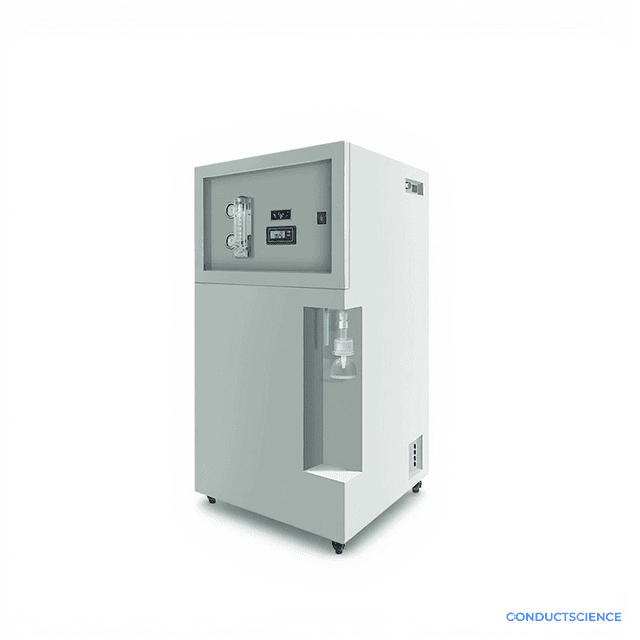
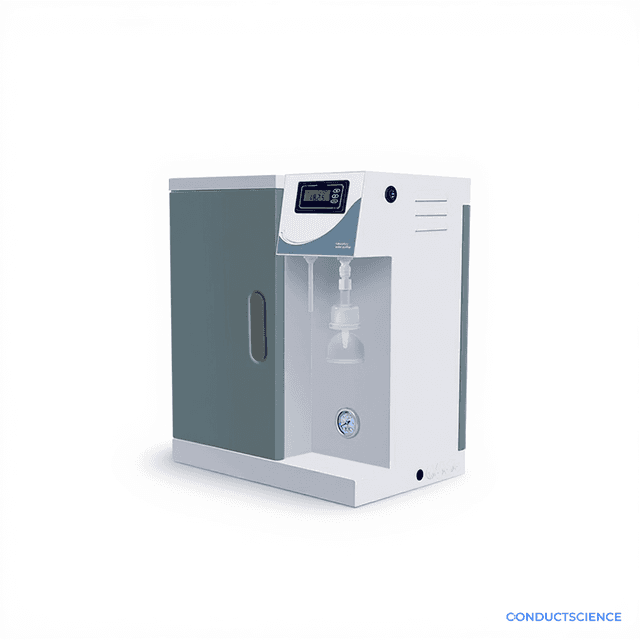
RO Laboratory Water Purifier 300L/h 600L/h 1000L/h
High-capacity laboratory water purification system producing both RO and deionized water at rates up to 1000L/h, featuring automated touchscreen control and integrated mixed-bed resin technology.

Louise Corscadden, PhD
Director of Science · ConductScience
Ask Louise about RO Laboratory Water Purifier 300L/h 600L/h 1000L/h fit, setup, configuration, or quote prep.
Already working with us? Sign in to connect this with My Scientist.
Key Specifications
Full details →- Model fit
- Configured during quote
- SKU family
- BIO-0719
- Shipping box
- 153.0 x 115.0 x 93.0 cm
- Ordering
- Online checkout and quote request available
- Category
- Water Purifiers
- Build notes
- Confirm accessories, station layout, and support needs before purchase
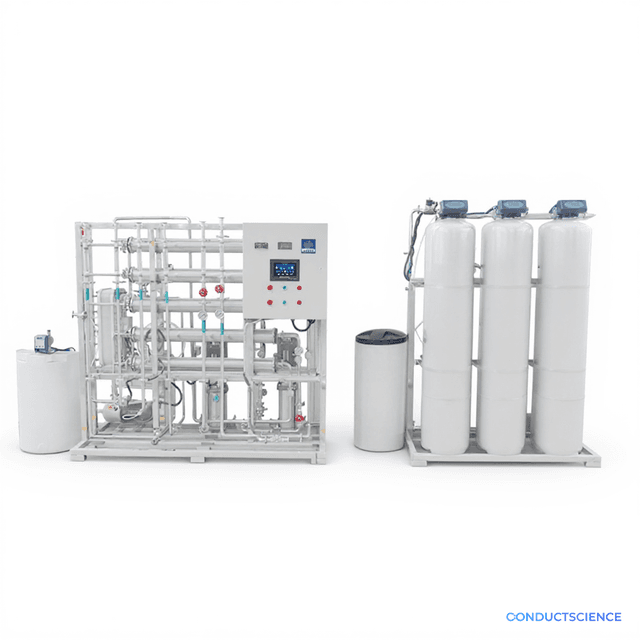
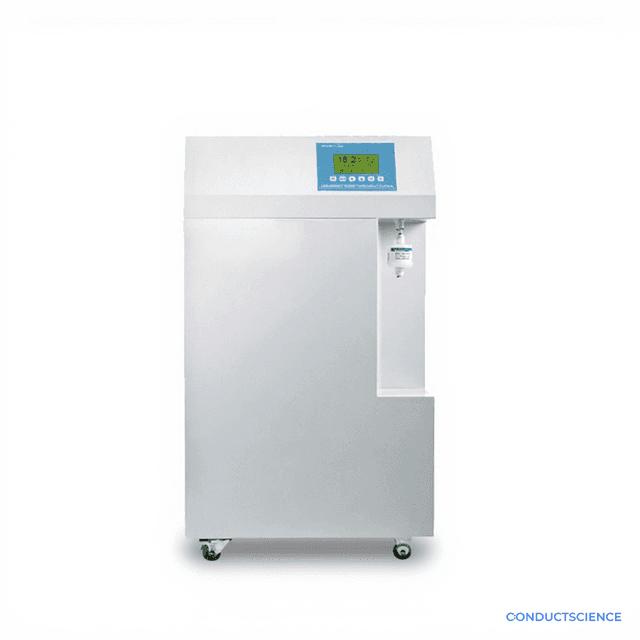
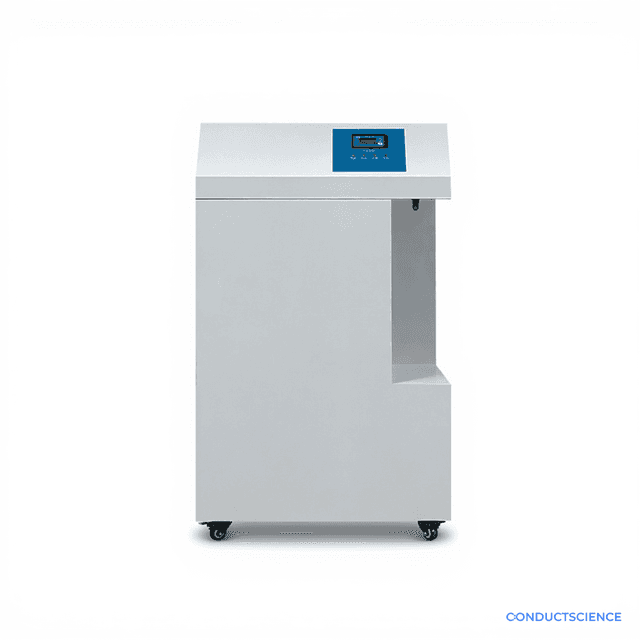
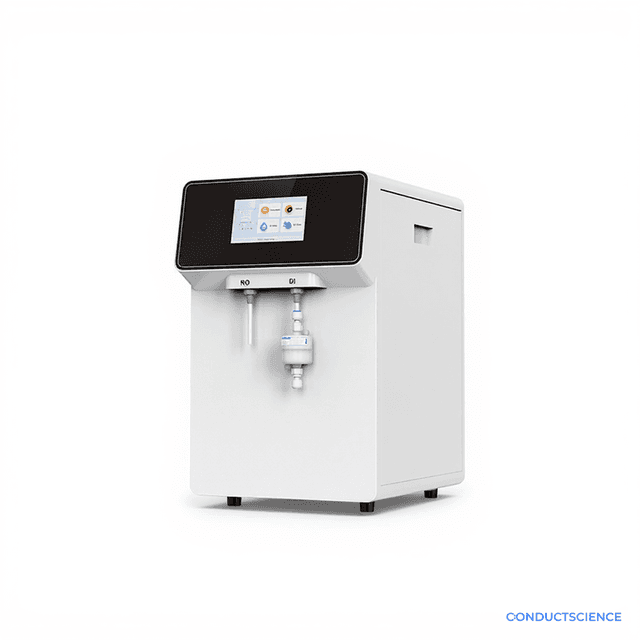
The Laboratory Water Purifier is a high-capacity water treatment system designed for demanding research and analytical applications requiring large volumes of purified water. This system combines single-stage reverse osmosis with mixed-bed resin technology to produce both RO and deionized water through dedicated outlets.
Available in three production capacities (300L/h, 600L/h, and 1000L/h at 25°C), the system features a 10-inch touchscreen interface for fully automated operation. The integrated preprocessing, reverse osmosis, and mixed-bed resin components provide consistent water quality with ≥98% desalination rate and ≥60% water utilization efficiency. Optional water storage tanks accommodate high-volume laboratory workflows requiring continuous purified water supply.
How It Works
The water purification system operates through a multi-stage treatment process beginning with preprocessing to remove particulates and chlorine. Feed water then passes through a single-stage reverse osmosis membrane where applied pressure forces water molecules through the semi-permeable membrane while rejecting dissolved salts, organic compounds, and other contaminants.
The RO permeate is further processed through mixed-bed ion exchange resin, which removes residual ionic species through simultaneous cation and anion exchange reactions. This dual-bed configuration contains both strong acid cation resin (hydrogen form) and strong base anion resin (hydroxide form) in intimate contact, enabling efficient removal of trace ionic contaminants and producing deionized water suitable for analytical applications.
The touchscreen control system monitors water quality parameters and automatically manages system operation, including flush cycles, regeneration sequences, and production scheduling to maintain consistent water quality output through both the RO and DI water outlets.
Features & Benefits
Automation Level
- fully-automated
SCSJ-II-600LF
- SCSJ-II-1000LF
Water Output Type
- RO water outlet*1 and DI water outlet*1
Water Output Speed
- 300L/h/set(25℃)
600L/h/set(25℃)
- 1000L/h/set(25℃)
External Size(Without Water Tank)(L*W*H)
- 1150*930*1530mm
1150*930*1530mm
- 1350*700*1700mm
Water Tank(Optional)
- Φ720*1150mm
Φ720*1150mm
- Φ1100*1350mm
External Size(With Water Tank)(L*W*H)
- 1870*930*1530mm
Water Utilization Rate
- ≥60%
Desalinization Rate
- ≥98%
Production Water Quality Treatment Method
- Single stage reverse osmosis and mixed bed resin
Control Mode
- 10-inch touch screen, fully automatic control
Component
- Preprocessing device, reverse osmosis device, mixed bed resin and pure water supply device
Brand
- ConductScience
Research Domain
- Analytical Chemistry
- Cell Biology
- Environmental Monitoring
- Materials Science
- Microbiology
- Pharmaceutical QC
Shipping weight
- 450.0 lb
Shipping box
- L: 153.0 cm
- W: 115.0 cm
- H: 93.0 cm
| Feature | This Product | Typical Alternative | Advantage |
|---|---|---|---|
| Production Capacity | 300L/h to 1000L/h at 25°C with three capacity options | Entry-level systems often limited to 50-200L/h production rates | Higher throughput supports laboratories with significant daily water requirements without system bottlenecks. |
| Water Output Options | Dual outlets providing both RO water and DI water from single system | Many systems provide single water type, requiring separate units for different purity levels | Allows researchers to select appropriate water quality for each application without maintaining multiple systems. |
| Control Interface | 10-inch touchscreen with fully automated control | Basic systems often use simple push-button controls or minimal displays | Advanced interface enables comprehensive system monitoring and automated operation scheduling. |
| Water Utilization Efficiency | ≥60% water utilization rate | Standard RO systems typically achieve 25-40% recovery rates | Higher efficiency reduces operational costs and minimizes waste water discharge. |
| Storage Integration | Optional storage tanks (Φ720×1150mm to Φ1100×1350mm) with system integration | Many systems require separate tank procurement and connection | Integrated storage design ensures proper sizing and maintains system pressure for consistent performance. |
This laboratory water purifier offers high production capacity with dual water outputs and automated touchscreen control, achieving superior water utilization efficiency compared to standard RO systems. The integrated design with optional storage tanks provides comprehensive water treatment capability for high-volume laboratory applications.
Practical Tips
Monitor water quality parameters from both RO and DI outlets using calibrated conductivity meters to verify system performance against specifications.
Why: Regular quality verification ensures consistent water purity for critical analytical procedures.
Schedule membrane and resin replacement based on throughput volume and water quality trends rather than fixed time intervals.
Why: Performance-based maintenance optimizes component life while maintaining water quality standards.
Use RO water outlet for equipment cleaning and glassware washing, reserving DI water outlet for analytical preparations requiring ultra-low conductivity.
Why: Matching water quality to application requirements extends system capacity and reduces operating costs.
Check preprocessing components first if water quality declines suddenly, as particulate fouling can affect downstream performance.
Why: Preprocessing issues often manifest as rapid quality degradation and are typically easier to resolve than membrane problems.
Maintain water quality logs from the touchscreen system to identify performance trends and optimize replacement schedules.
Why: Historical data enables predictive maintenance and ensures consistent water quality for reproducible results.
Ensure proper drainage for concentrate discharge to prevent system overpressure and maintain safe operating conditions.
Why: Adequate drainage prevents system damage and maintains stable operating pressures.
Install optional storage tanks when daily usage exceeds production capacity to maintain continuous water availability.
Why: Buffer capacity prevents workflow interruptions during peak demand periods or routine maintenance.
Setup Guide
What’s in the Box
- Main purification unit (typical)
- 10-inch touchscreen control panel (typical)
- Preprocessing components (typical)
- Reverse osmosis membrane assembly (typical)
- Mixed-bed resin cartridge (typical)
- Installation hardware (typical)
- User manual and documentation (typical)
- Water quality test kit (typical)
Warranty
ConductScience provides a standard one-year manufacturer warranty covering parts and labor, with ongoing technical support for installation guidance, operational training, and maintenance scheduling to ensure optimal system performance.
Compliance
References
Background reading relevant to this product:
What water quality parameters can be achieved with the mixed-bed resin system?
The system achieves ≥98% desalination rate through the RO stage, with the mixed-bed resin providing additional ionic removal for deionized water output. Consult product datasheet for specific conductivity and resistivity specifications.
How does the water utilization rate compare to single-pass RO systems?
The system achieves ≥60% water utilization efficiency, which is favorable compared to standard single-pass RO systems that typically operate at 25-50% recovery rates, reducing waste water generation.
What maintenance is required for the mixed-bed resin components?
Mixed-bed resin cartridges require periodic replacement based on water quality monitoring and throughput volume. The touchscreen interface provides maintenance scheduling and performance tracking features.
Can the system operate continuously for high-volume applications?
Yes, the system is designed for continuous operation with production rates up to 1000L/h. Optional storage tanks provide buffer capacity during maintenance or peak demand periods.
What feed water quality is required for optimal system performance?
The integrated preprocessing device conditions incoming water by removing particulates and chlorine. Consult product datasheet for specific feed water quality requirements and acceptable ranges for hardness and TDS.
How does the dual outlet configuration benefit laboratory workflows?
Separate RO and DI outlets allow users to select appropriate water quality for specific applications, with RO water suitable for equipment cleaning and DI water for analytical preparations requiring ultra-low conductivity.
What data logging and monitoring capabilities are included?
The 10-inch touchscreen provides fully automated control with system monitoring features. Specific data logging capabilities and connectivity options should be confirmed via product datasheet.
Have a question about this product?
Have a question? Just ask.
Send it over and we'll email you a personalized answer — no call, no scheduling.
Prefer to talk it through?
Upgrade Options