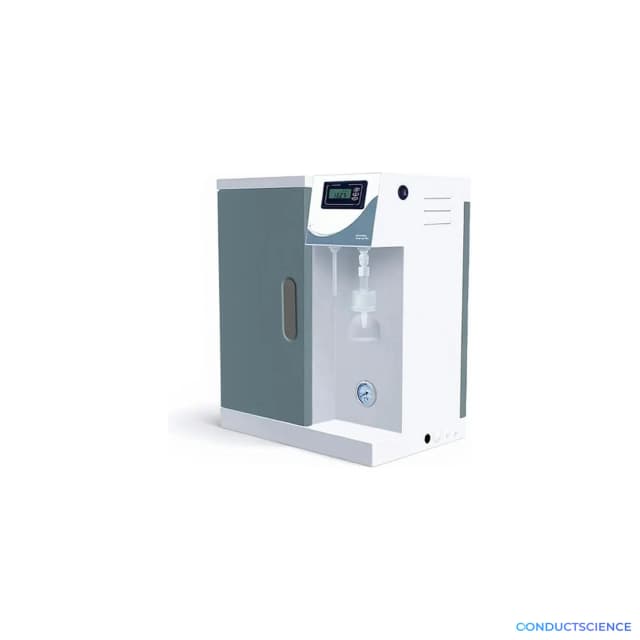
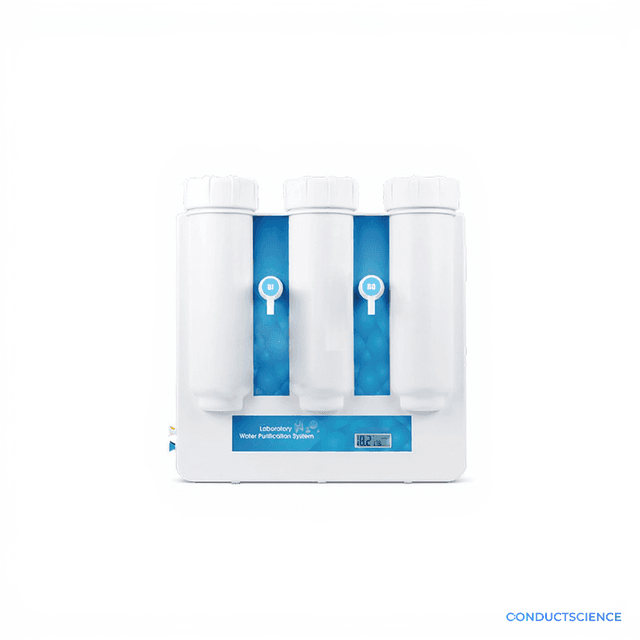
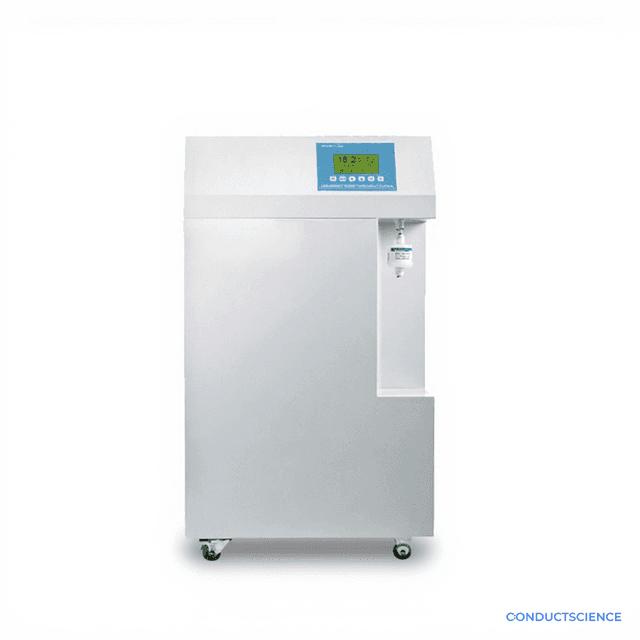
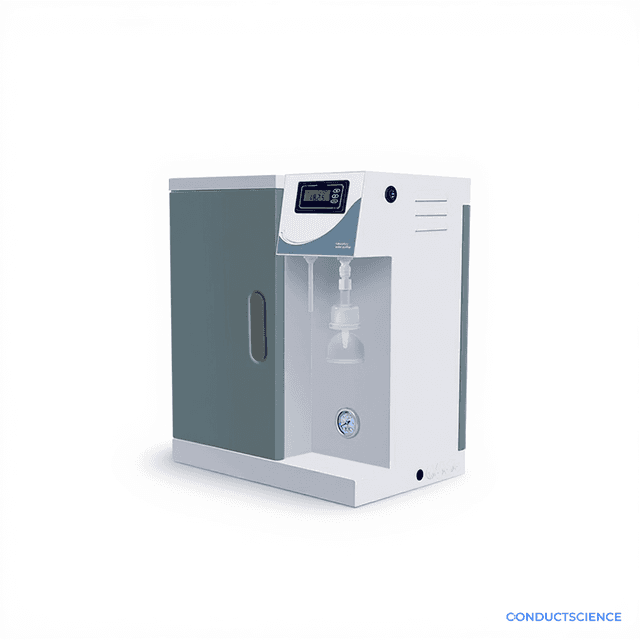
Water Purifier(Automatic RO/DI/Ultra - pure Water) 40/60/120L/H
Multi-stage RO/DI/Ultra-pure water system producing high-purity laboratory water at flow rates of 40, 60, or 120 L/H through automated reverse osmosis, deionization, and final polishing stages.

Louise Corscadden, PhD
Director of Science · ConductScience
Ask Louise about Water Purifier(Automatic RO/DI/Ultra - pure Water) 40/60/120L/H fit, setup, configuration, or quote prep.
Already working with us? Sign in to connect this with My Scientist.
Key Specifications
Full details →- Model fit
- Configured during quote
- SKU family
- BIO-0725
- Shipping box
- 108.0 x 50.0 x 52.0 cm
- Ordering
- Online checkout and quote request available
- Category
- Water Purifiers
- Build notes
- Confirm accessories, station layout, and support needs before purchase
The Water Purifier (Automatic RO/DI/Ultra-pure Water) is a multi-stage water treatment system designed to produce high-purity water for laboratory applications. This system combines reverse osmosis (RO), deionization (DI), and ultra-pure water production technologies to remove contaminants, dissolved solids, and trace impurities from feed water. Available in three flow rate configurations (40, 60, and 120 L/H), the system provides on-demand pure water production for analytical instrumentation, sample preparation, and general laboratory use.
The system operates through a sequential purification process, beginning with reverse osmosis to remove dissolved salts and larger contaminants, followed by deionization to eliminate remaining ionic species, and concluding with ultra-pure water production to achieve high resistivity water suitable for sensitive analytical procedures. The automated design minimizes manual intervention while maintaining consistent water quality output for routine laboratory operations.
How It Works
The water purification system operates through three sequential treatment stages to progressively remove contaminants and achieve ultra-pure water quality. The reverse osmosis stage employs a semi-permeable membrane that removes dissolved salts, organic compounds, and particulates by applying hydraulic pressure to force water molecules through the membrane while rejecting larger contaminants. This process typically achieves 95-99% rejection of dissolved solids and most organic compounds.
Following RO treatment, the water passes through deionization cartridges containing mixed-bed ion exchange resins. These resins selectively remove remaining ionic species through cation and anion exchange processes, reducing conductivity to less than 1 µS/cm. The final ultra-pure water stage employs additional polishing cartridges and UV sterilization to remove trace organics and microbial contamination, producing water with resistivity greater than 10 MΩ·cm suitable for analytical applications.
The automated control system monitors water quality parameters including conductivity, flow rate, and system pressure to maintain consistent output quality. Regeneration and maintenance cycles are initiated based on water quality measurements and usage volume to ensure continuous high-purity water production.
Features & Benefits
Automation Level
- fully-automated
Research Domain
- Analytical Chemistry
- Cell Biology
- Clinical Diagnostics
- Environmental Monitoring
- Microbiology
- Pharmaceutical QC
Shipping weight
- 131.48 lb
Shipping box
- L: 108.0 cm
- W: 50.0 cm
- H: 52.0 cm
| Feature | This Product | Typical Alternative | Advantage |
|---|---|---|---|
| Purification Stages | Multi-stage RO/DI/Ultra-pure treatment | Entry-level systems often use single-stage treatment | Progressive contaminant removal achieves higher purity levels for sensitive analytical applications. |
| Flow Rate Options | 40, 60, or 120 L/H configurations available | Fixed flow rate systems common | Allows selection of production capacity matching laboratory demand to optimize efficiency and cost. |
| Operation Control | Fully automated monitoring and control | Manual systems require operator intervention | Reduces labor requirements and maintains consistent water quality through automated parameter monitoring. |
| System Footprint | Compact 108×50×52 cm dimensions | Larger systems often require more floor space | Fits in standard laboratory spaces without requiring dedicated equipment rooms. |
This system combines multi-stage purification technology with automated operation to produce ultra-pure water at selectable flow rates. The compact design accommodates standard laboratory installations while providing continuous high-purity water production for analytical and research applications.
Practical Tips
Verify conductivity meter calibration monthly using certified reference standards to ensure accurate water quality monitoring.
Why: Accurate conductivity measurement is essential for determining cartridge replacement timing and system performance.
Replace pre-filters before RO membrane to extend membrane life and maintain system performance.
Why: Pre-filtration removes particulates and chlorine that can damage downstream components and reduce purification efficiency.
Use first-draw water for general applications and collect final-draw water for critical analytical work.
Why: Water quality may vary slightly during initial system startup, with highest purity achieved during continuous operation.
Monitor reject water flow rate as indicator of membrane condition and system performance.
Why: Decreasing reject flow may indicate membrane fouling requiring cleaning or replacement.
Record daily conductivity readings and production volumes to track system performance trends.
Why: Historical data helps predict maintenance needs and identify performance changes before they affect water quality.
Install appropriate pressure relief and overflow protection in water lines to prevent system damage.
Why: Pressure fluctuations can damage membranes and fittings, while overflow protection prevents water damage to laboratory equipment.
Perform system sanitization cycles according to recommended schedule to prevent microbial growth.
Why: Microbial contamination can affect water quality and create biofilms that reduce system efficiency.
Setup Guide
What’s in the Box
- Water purification main unit
- RO membrane cartridge (typical)
- DI resin cartridges (typical)
- Ultra-pure polishing cartridge (typical)
- Inlet water connection fittings (typical)
- Pure water outlet tubing (typical)
- Electrical power cable (typical)
- Installation and operation manual (typical)
- Water quality test certificate (typical)
Warranty
ConductScience provides a one-year manufacturer warranty covering system components and technical support for installation and operation guidance.
Compliance
What water quality specifications can this system achieve?
The system produces ultra-pure water through multi-stage RO/DI/Ultra-pure treatment. Specific conductivity, resistivity, and TOC specifications should be confirmed from the product datasheet for your application requirements.
How often do consumable cartridges require replacement?
Cartridge life depends on feed water quality and usage volume. RO membranes typically require replacement every 12-24 months, while DI cartridges may need replacement every 6-12 months based on conductivity monitoring.
What feed water quality is required for optimal system performance?
The system operates with standard tap water input, though pre-filtration may extend component life. Feed water should be within municipal supply specifications for temperature, pressure, and chlorine content.
Can the system produce water continuously at maximum flow rate?
Yes, the system is designed for continuous operation at rated capacity. Production rate may vary with feed water temperature and quality conditions.
What maintenance procedures are required for reliable operation?
Routine maintenance includes cartridge replacement based on quality monitoring, system sanitization cycles, and periodic leak inspection of fittings and connections.
Is the system suitable for feeding analytical instruments directly?
Yes, the ultra-pure output stage produces water suitable for direct feeding to analytical instruments including HPLC, LC-MS, and ICP systems requiring low-conductivity water.
What electrical requirements are needed for installation?
Consult product datasheet for specific electrical requirements. Most laboratory water systems require 220V electrical supply with appropriate circuit protection.
Have a question about this product?
Have a question? Just ask.
Send it over and we'll email you a personalized answer — no call, no scheduling.
Prefer to talk it through?
Upgrade Options