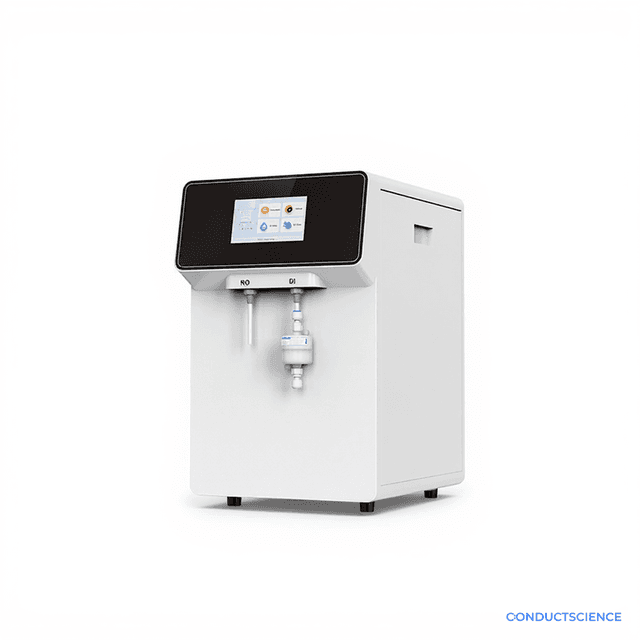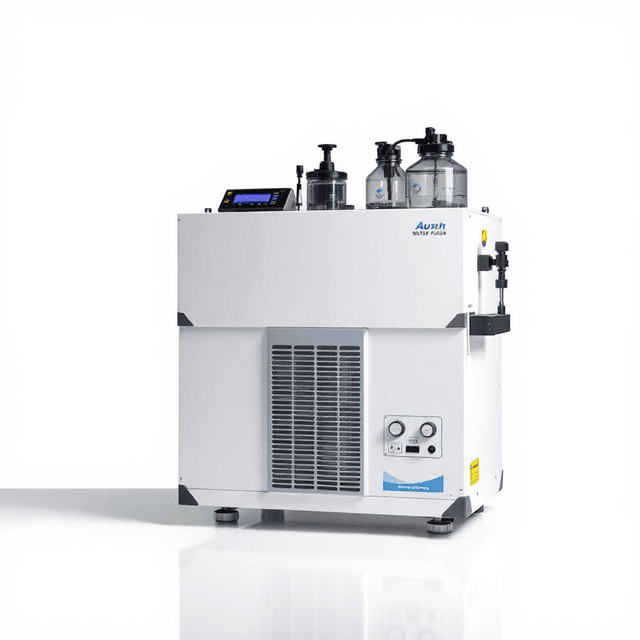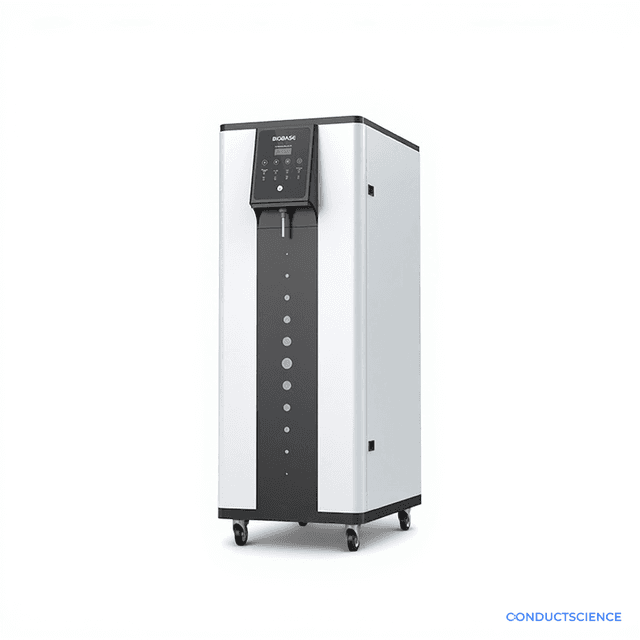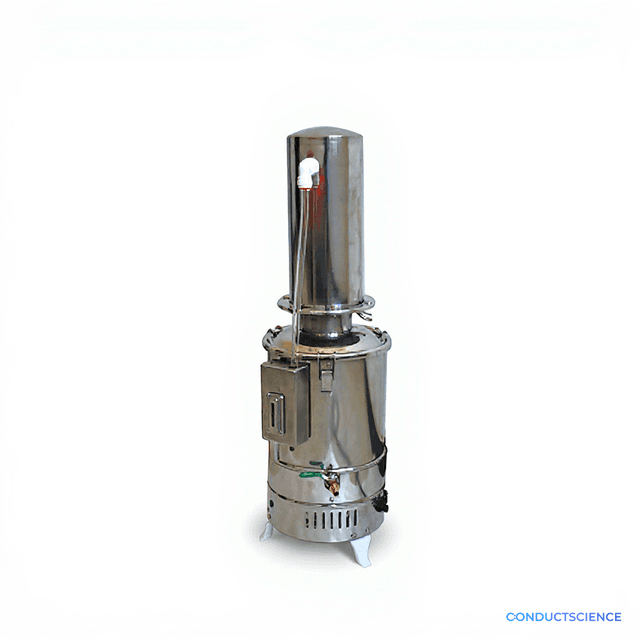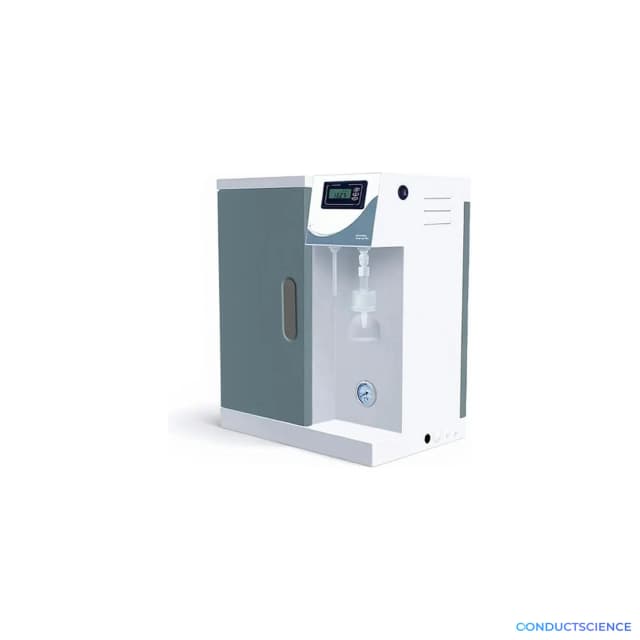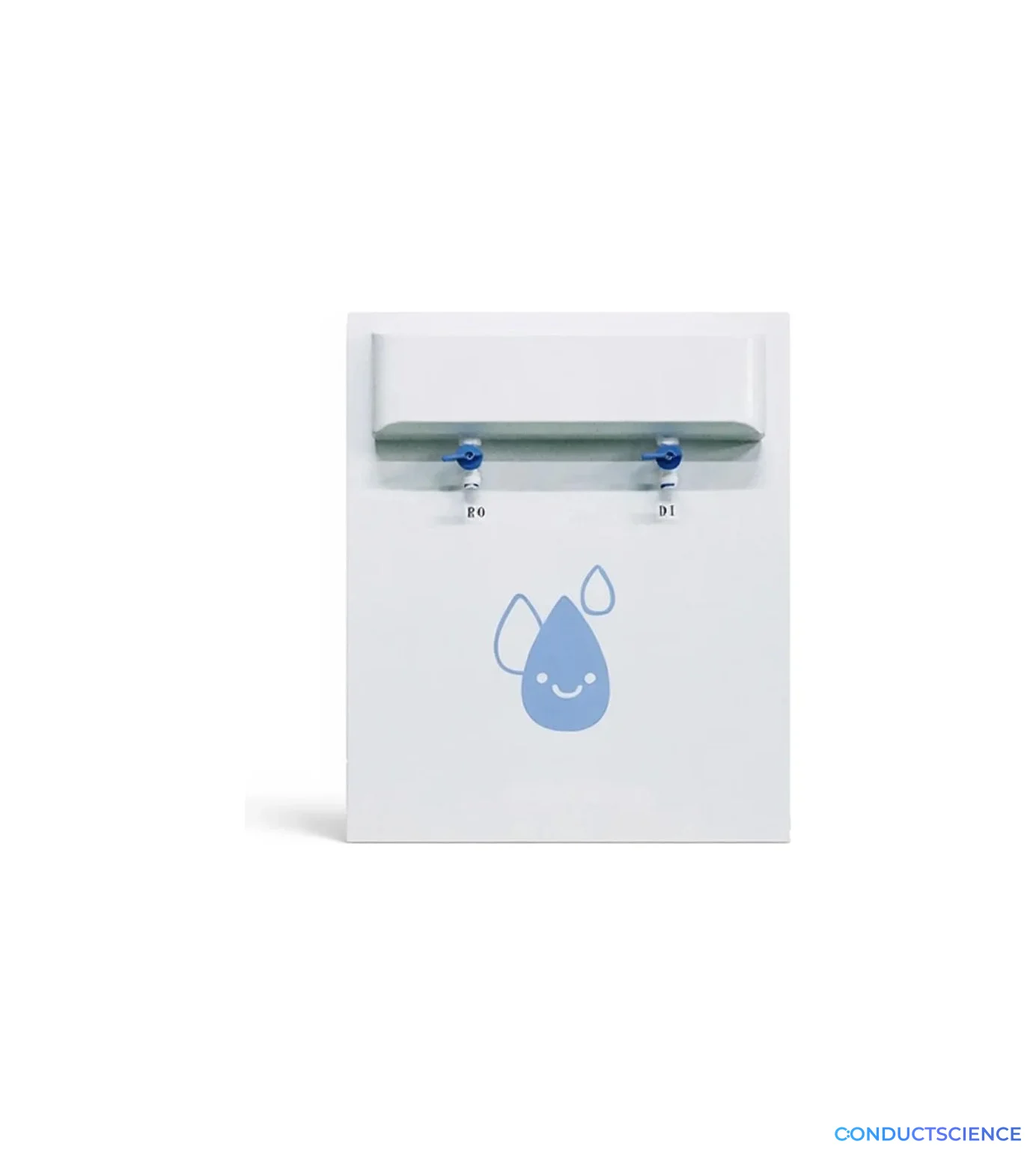
Laboratory Water Purifier 10L/H 15L/H
Dual-capacity laboratory water purifier producing 10L/H or 15L/H ultrapure water for analytical and research applications through multi-stage purification.

Louise Corscadden, PhD
Director of Science · ConductScience
Ask Louise about Laboratory Water Purifier 10L/H 15L/H fit, setup, configuration, or quote prep.
Already working with us? Sign in to connect this with My Scientist.
Key Specifications
Full details →- Model fit
- Configured during quote
- SKU family
- BIO-0709
- Shipping box
- 50.3 x 39.0 x 40.0 cm
- Ordering
- Online checkout and quote request available
- Category
- Water Purifiers
- Build notes
- Confirm accessories, station layout, and support needs before purchase
The Laboratory Water Purifier 10L/H 15L/H provides dual-capacity ultrapure water production for analytical and research applications. This bench-top system delivers consistent water quality through multi-stage purification, supporting laboratory workflows requiring Type I ultrapure water. The compact design fits standard laboratory spaces while providing reliable water purification for routine analytical procedures.
The system accommodates varying laboratory demands with selectable flow rates, making it suitable for both high-throughput analytical work and precision applications requiring smaller volumes. The purification system removes ionic contaminants, organic compounds, and particulates to produce water meeting ultrapure specifications for critical analytical work.
How It Works
The water purification system employs sequential treatment stages to remove different classes of contaminants. Initial filtration removes particulates and chlorine, followed by ion exchange resins that capture dissolved salts and ionic species. Activated carbon adsorption removes organic compounds and chloramines that could interfere with analytical measurements.
The multi-stage design ensures comprehensive contaminant removal through complementary mechanisms. Ion exchange specifically targets dissolved minerals and salts, while carbon filtration addresses organic molecules and residual disinfectants. This combination produces water with low conductivity and minimal organic carbon content suitable for analytical applications.
Flow rate selection allows optimization for different laboratory needs. Higher flow rates support routine laboratory operations, while lower flows can be used when maximum purification contact time is required for critical applications.
Features & Benefits
Automation Level
- semi-automated
Research Domain
- Analytical Chemistry
- Clinical Diagnostics
- Environmental Monitoring
- Materials Science
- Microbiology
- Pharmaceutical QC
Shipping weight
- 36.75 lb
Shipping box
- L: 50.3 cm
- W: 39.0 cm
- H: 40.0 cm
| Feature | This Product | Typical Alternative | Advantage |
|---|---|---|---|
| Flow Rate Options | Selectable 10L/H or 15L/H capacity | Fixed flow rate systems often provide single capacity | Allows optimization for both routine laboratory work and precision analytical applications requiring different volumes |
| Footprint | Compact bench-top design (50.3 x 39.0 x 40.0 cm) | Larger systems may require floor mounting or dedicated utility connections | Integrates into existing laboratory spaces without infrastructure modifications |
| Purification Stages | Multi-stage purification system | Single-stage systems offer limited contaminant removal | Comprehensive treatment addresses diverse contaminant classes for broader analytical compatibility |
| Maintenance Design | User-replaceable cartridge system | Some systems require service technician for maintenance | Reduces downtime and service costs through laboratory-manageable maintenance procedures |
The system combines dual flow rate flexibility with multi-stage purification in a compact bench-top format. The user-serviceable design and comprehensive contaminant removal make it suitable for diverse analytical applications requiring consistent ultrapure water quality.
Practical Tips
Verify water quality specifications weekly using conductivity and pH measurements to establish baseline performance.
Why: Early detection of purification decline allows proactive maintenance before analytical results are affected.
Replace purification cartridges based on water quality monitoring rather than fixed time intervals.
Why: Usage-based replacement optimizes cartridge life while ensuring consistent water quality for analytical work.
Run a brief flush cycle before collecting water for critical analytical work, especially after periods of non-use.
Why: Flushing removes any stagnant water that may have accumulated contaminants from system components.
If water quality degrades suddenly, check for cartridge bypass by inspecting O-ring seating and cartridge installation.
Why: Improper cartridge seating allows untreated water to bypass purification stages, compromising output quality.
Maintain logs of water quality measurements and cartridge replacement dates to identify performance trends.
Why: Historical data helps predict maintenance needs and provides documentation for quality assurance programs.
Ensure electrical connections remain dry and inspect water lines regularly for leaks or deterioration.
Why: Water and electrical safety requires ongoing vigilance in laboratory environments where spills and condensation are common.
Select lower flow rates when maximum purification is needed for trace analysis applications.
Why: Extended contact time with purification media enhances contaminant removal for the most demanding analytical work.
Setup Guide
What’s in the Box
- Laboratory water purifier main unit
- Initial purification cartridge set (typical)
- Water inlet connection kit (typical)
- Power cord and adapter (typical)
- Installation and operation manual (typical)
- Water quality test strips (typical)
Warranty
ConductScience provides a standard one-year manufacturer warranty covering parts and technical support. Extended warranty options and preventive maintenance contracts are available for high-use laboratory environments.
Compliance
References
Background reading relevant to this product:
What water quality specifications does this system achieve?
Consult the product datasheet for specific resistivity, conductivity, total organic carbon, and particulate specifications. The multi-stage purification design targets Type I ultrapure water quality for analytical applications.
How often do purification cartridges need replacement?
Replacement frequency depends on feed water quality and usage volume. Monitor output water quality regularly and replace cartridges when specifications cannot be maintained. Typical replacement intervals range from 3-12 months in normal laboratory use.
Can this system connect directly to municipal water supplies?
The system is designed for connection to laboratory-grade feed water. Pre-treatment may be required for municipal water with high chlorine content or hardness. Consult installation requirements for specific feed water specifications.
What maintenance is required beyond cartridge replacement?
Routine maintenance includes periodic sanitization, O-ring inspection, and system flushing. The design minimizes maintenance requirements through user-replaceable components and straightforward operation.
How do I verify water quality meets my analytical requirements?
Use conductivity meters, TOC analyzers, or analytical test methods appropriate for your application. Establish baseline measurements and monitor trends to ensure consistent quality and predict maintenance needs.
Can the flow rate be adjusted between 10L/H and 15L/H during operation?
Consult the operation manual for flow rate adjustment procedures. The dual-capacity design allows selection of appropriate flow rates for different laboratory workflows and water quality requirements.
What happens if the system loses power during operation?
The system will stop producing water when power is interrupted. Upon restart, run a brief flush cycle to clear any stagnant water before resuming normal operation.
Have a question about this product?
Have a question? Just ask.
Send it over and we'll email you a personalized answer — no call, no scheduling.
Prefer to talk it through?
Upgrade Options