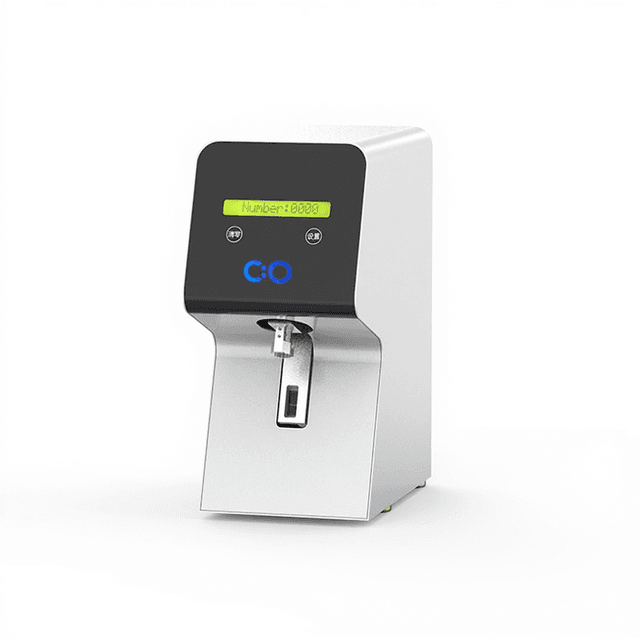
Digester
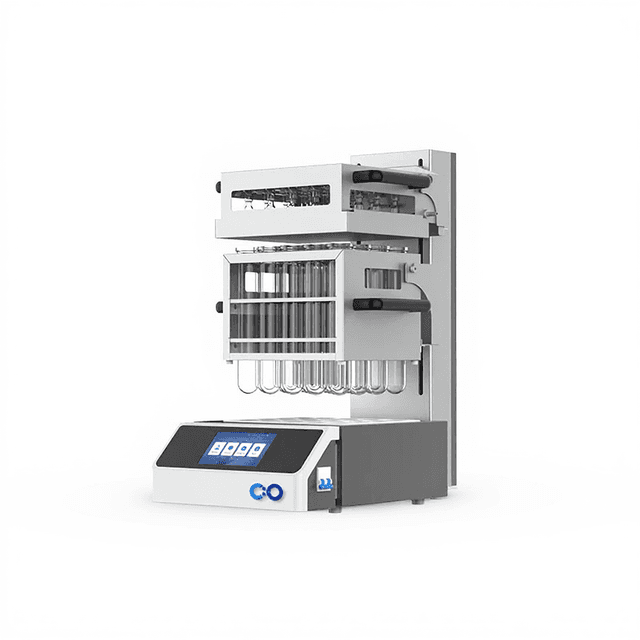
Programmable heating block digester for wet acid digestion of solid samples, featuring PID temperature control up to 450°C and accommodating 10-20 glass tubes for analytical sample preparation.
| display_size | 5.6 inch |
| language_support | Chinese and English |
| program_segments | 0-40 segments |
| heating_modes | Single point heating and curve heating |
| temperature_control | Intelligent PID self-tuning |
| control_system | Solid state relay |

The Digester is a programmable heating block system designed for wet acid digestion of solid samples in analytical laboratories. The system features an aluminum alloy heating block with aviation-grade coating technology capable of reaching 450°C, accommodating 10, 15, or 20 glass digestion tubes (300ml each) depending on the model selected. The unit incorporates intelligent PID temperature control with ±1°C accuracy and offers both single-point and curve heating modes through a 5.6-inch color touchscreen interface supporting Chinese and English languages.
The digester enables researchers to decompose organic and inorganic solid samples through controlled acid digestion protocols, preparing samples for subsequent elemental analysis techniques such as ICP-MS or AAS. The system supports programmable temperature profiles with up to 40 segments, allowing optimization of digestion conditions for different sample matrices. Multiple safety features include over-temperature, over-pressure, and over-current protection, along with power outage prevention and segmented power supply management for secure operation in analytical environments.
How It Works
The digester operates through controlled thermal decomposition of organic matrices using concentrated acids such as nitric acid, sulfuric acid, or mixed acid systems. The 6061 aluminum alloy heating block with aviation-grade coating provides uniform heat distribution across all tube positions, while the intelligent PID control system maintains precise temperature regulation within ±1°C of the setpoint. Sample matrices are broken down through oxidative digestion reactions facilitated by the combination of elevated temperature and oxidizing acids.
The programmable controller allows researchers to create multi-step temperature profiles with up to 40 segments, enabling gradual heating protocols that prevent violent reactions and ensure complete sample decomposition. The solid-state relay control system provides quiet, interference-free operation while maintaining temperature stability throughout extended digestion cycles. Safety monitoring systems continuously track temperature, pressure, and current parameters to prevent overheating and protect both samples and equipment.
Features & Benefits
Model
- BIO-BKD-10RL
- BIO-BKD-15RL
- BIO-BKD-20RL
display_size
- 5.6 inch
language_support
- Chinese and English
program_segments
- 0-40 segments
heating_modes
- Single point heating and curve heating
temperature_control
- Intelligent PID self-tuning
control_system
- Solid state relay
coating_technology
- Aviation industry coating
safety_features
- Over-temperature, over-pressure, over-current protection
power_management
- Segmented power supply and power outage prevention restart
Automation Level
- semi-automated
Material
- Aluminum alloy
Temperature Range
- 0 to 450°C
Display Type
- Color touch screen
Research Domain
- Analytical Chemistry
- Environmental Monitoring
- Food Science
- Materials Science
- Pharmaceutical QC
Weight
- 6.06 kg
Dimensions
- L: 65.0 mm
- W: 36.0 mm
- H: 27.0 mm
Comparison Guide
| Feature | This Product | Typical Alternative | Advantage |
|---|---|---|---|
| Temperature Control Accuracy | ±1°C with intelligent PID self-tuning | Basic models often provide ±3-5°C accuracy without PID control | Higher accuracy ensures reproducible digestion conditions critical for quantitative analytical methods |
| Programming Flexibility | 0-40 segment programmable profiles with curve and single-point modes | Entry-level digesters typically offer 5-10 program segments | Extensive programming capability allows optimization for diverse sample matrices and complex protocols |
| User Interface | 5.6-inch color touchscreen with bilingual support | Many models use basic LED displays with button controls | Intuitive touchscreen interface reduces programming errors and improves workflow efficiency |
| Safety Systems | Over-temperature, over-pressure, over-current protection with power outage prevention | Basic units may have limited safety features | Comprehensive protection systems ensure safe operation and protect valuable samples from equipment failures |
| Heating Block Material | 6061 aluminum alloy with aviation-grade coating | Standard aluminum blocks without specialized coatings | Aviation-grade coating provides superior chemical resistance and durability for extended service life |
This digester combines precise temperature control, extensive programming flexibility, and comprehensive safety features in a user-friendly touchscreen interface. The aviation-grade heating block coating and intelligent PID control system provide reliable performance for demanding analytical applications requiring consistent, reproducible sample preparation.
Practical Tips
Verify temperature accuracy using a certified reference thermometer at least quarterly, checking multiple points across your typical operating range.
Why: Regular calibration verification ensures the ±1°C accuracy specification is maintained for analytical compliance.
Clean the heating block surface with appropriate solvents after each use to prevent acid residue buildup that could affect heat transfer.
Why: Maintaining clean heating surfaces ensures uniform temperature distribution across all tube positions.
Develop standard temperature programs for common sample matrices and save them in the controller memory for consistent results.
Why: Standardized programs reduce operator variability and improve reproducibility of analytical results.
Always operate the digester in a properly functioning fume hood and use appropriate PPE including heat-resistant gloves.
Why: High-temperature acid digestion generates hazardous vapors requiring proper ventilation and protection.
If temperature uniformity issues arise, check for proper tube seating and ensure the heating block is level and clean.
Why: Poor thermal contact between tubes and block can cause temperature variations affecting digestion completeness.
Document heating programs and digestion conditions in laboratory notebooks for method validation and troubleshooting.
Why: Complete documentation enables method optimization and provides traceability for analytical quality control.
Setup Guide
What’s in the Box
- Digester main unit
- Glass digestion tubes (300ml capacity, quantity varies by model)
- Power cord
- User manual with programming instructions
- Temperature calibration certificate (typical)
- Safety operation guide (typical)
Warranty
ConductScience provides a comprehensive 1-year manufacturer warranty covering parts and labor, with technical support for programming, calibration, and troubleshooting assistance.
Compliance
What acid systems are compatible with the aluminum heating block coating?
The aviation-grade aluminum alloy coating is designed for compatibility with common digestion acids including nitric acid, sulfuric acid, and mixed acid systems. Consult the product datasheet for specific acid concentration and temperature limitations.
How do I optimize heating programs for different sample matrices?
Use the programmable 0-40 segment capability to create gradual heating profiles. Start with lower temperatures for organic-rich samples to prevent violent reactions, then ramp to higher temperatures for complete mineralization. The curve heating mode allows precise control of heating rates.
What is the temperature uniformity across all tube positions?
The 6061 aluminum alloy heating block design provides uniform heat distribution, though specific temperature uniformity specifications should be verified in the product datasheet for your analytical requirements.
Can the system be used for microwave-alternative digestion protocols?
Yes, the digester serves as an alternative to microwave digestion for laboratories preferring conventional heating methods. The programmable temperature control allows adaptation of many established digestion protocols originally developed for microwave systems.
How do I validate temperature accuracy for analytical compliance?
Use certified reference thermometers to verify the ±1°C accuracy specification at multiple temperature points across your operating range. The PID self-tuning function should be calibrated periodically to maintain precision.
What safety precautions are required for high-temperature operation?
The system includes over-temperature protection and should be operated in a fume hood for acid vapor management. The heating block reaches 450°C and requires appropriate heat-resistant gloves and safety protocols for sample handling.
Have a question about this product?
Upgrade Options