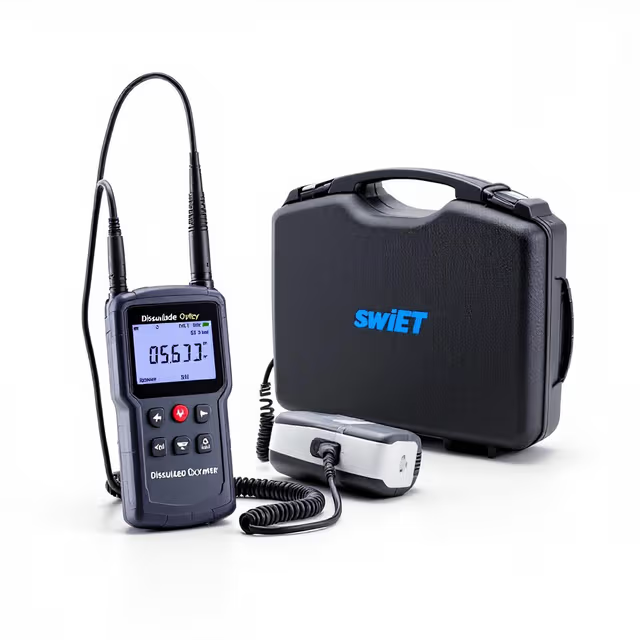
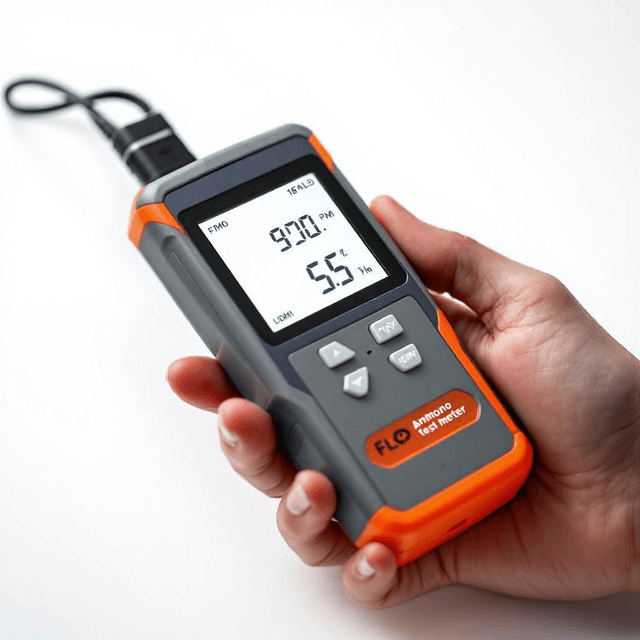
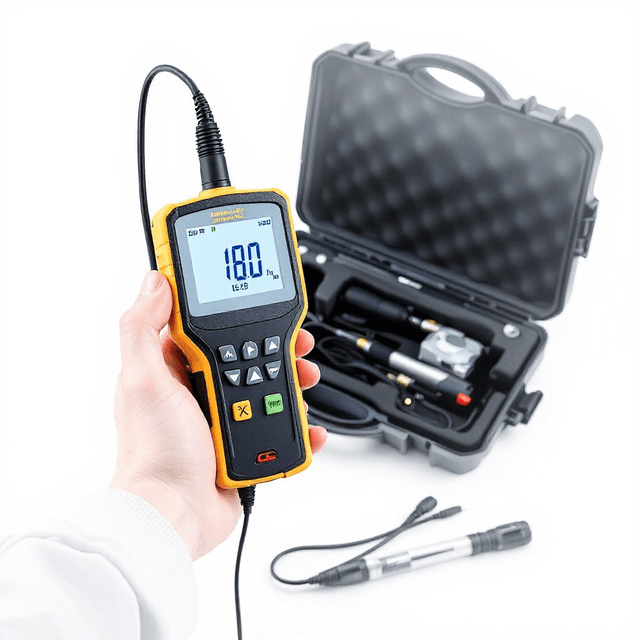
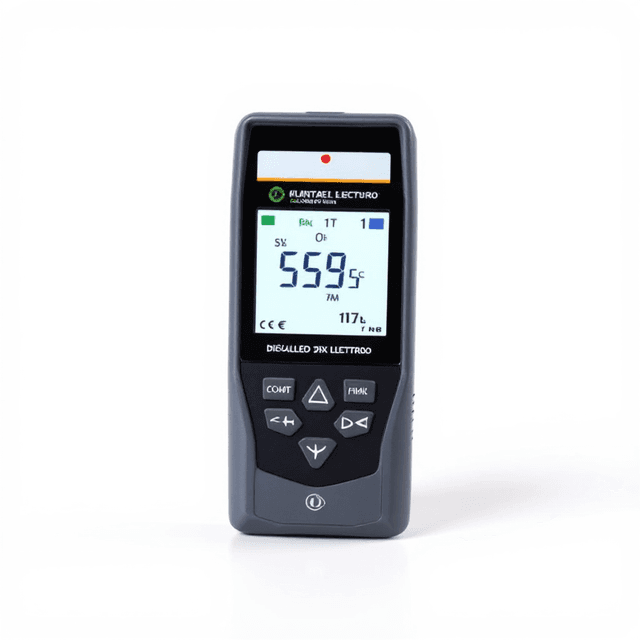
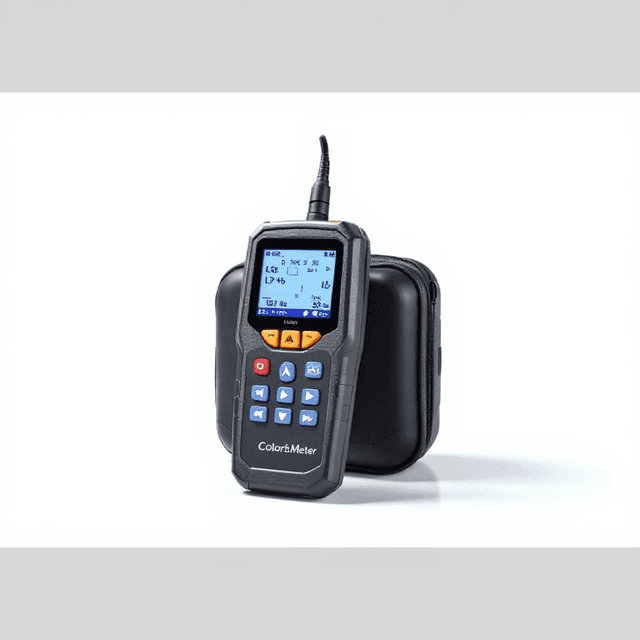
Dissolved Oxygen Measurement Pen
Portable dissolved oxygen measurement pen with electrochemical sensor, 0.00-20.00 mg/L range, automatic temperature compensation, and IP65 waterproof construction for field and laboratory water quality analysis.
| Model | LH-D300J |
| Item | Specification |
| Measuring range | 0.00-20.00mg/L;0.0-200.0% |
| Temperature measurement range | 0-100â/32-212â |
| Calibration | 1 or 2 points(0% anaerobic/100% saturated oxygen) |
| Salinity compensation | 0.0-40.0g/L |

The LH-D300J dissolved oxygen measurement pen provides portable electrochemical measurement of dissolved oxygen concentrations in aqueous solutions. The instrument features a galvanic oxygen sensor with automatic temperature compensation and user-adjustable salinity and atmospheric pressure compensation. The pen-style form factor incorporates a boat-shaped floating design for surface water measurements and IP65 waterproof construction for field applications.
The instrument measures dissolved oxygen from 0.00-20.00 mg/L with 0.01 mg/L resolution, or 0.0-200.0% saturation with 0.1% resolution. Temperature measurement range spans 0-100°C (32-212°F) with automatic compensation. One or two-point calibration options accommodate anaerobic (0%) and saturated oxygen (100%) standards. The backlit display enables measurement in low-light conditions, while automatic data lock captures stable readings.
How It Works
The LH-D300J employs a galvanic electrochemical sensor to measure dissolved oxygen concentration. The sensor consists of a cathode and anode separated by an electrolyte solution and covered by an oxygen-permeable membrane. Dissolved oxygen diffuses through the membrane and undergoes electrochemical reduction at the cathode, generating a current proportional to oxygen concentration.
The galvanic cell reaction produces electrons without requiring external power, making it suitable for portable applications. Temperature affects both oxygen solubility and reaction kinetics, necessitating automatic temperature compensation through integrated thermistor measurement. Salinity and atmospheric pressure corrections account for their effects on oxygen solubility according to Henry's Law, with user-adjustable compensation ranges of 0.0-40.0 g/L salinity and 700-1400 mbar atmospheric pressure.
The microprocessor converts the electrochemical signal to dissolved oxygen concentration in mg/L or percent saturation. One or two-point calibration using anaerobic (0% oxygen) and air-saturated (100% oxygen) standards ensures measurement accuracy across the full concentration range.
Features & Benefits
Model
- LH-D300J
Item
- Specification
Measuring range
- 0.00-20.00mg/L;0.0-200.0%
Temperature measurement range
- 0-100â/32-212â
Calibration
- 1 or 2 points(0% anaerobic/100% saturated oxygen)
Salinity compensation
- 0.0-40.0g/L
Atmospheric pressure compensation
- 700-1400mbar
IP grade
- IP65
Size&weight
- 185*40*48mm,95g
Automation Level
- manual
Brand
- ConductScience
Accuracy
- 0.01mg/L;0.1%
Research Domain
- Analytical Chemistry
- Environmental Monitoring
- Food Science
- Industrial Hygiene
- Microbiology
- Pharmaceutical QC
Weight
- 0.18 kg
Dimensions
- L: 7.28 mm
- W: 1.89 mm
- H: 1.57 mm
Comparison Guide
| Feature | This Product | Typical Alternative | Advantage |
|---|---|---|---|
| Measurement Range | 0.00-20.00 mg/L with 0.01 mg/L resolution | Entry-level instruments often provide 0-20 mg/L range with 0.1 mg/L resolution | Higher resolution enables more precise measurements for applications requiring detection of small dissolved oxygen changes. |
| Temperature Compensation Range | 0-100°C (32-212°F) automatic compensation | Basic models typically cover 0-50°C temperature range | Extended temperature range accommodates hot water systems and industrial applications beyond standard environmental conditions. |
| Atmospheric Pressure Compensation | 700-1400 mbar compensation range | Many portable instruments lack atmospheric pressure compensation | Enables accurate measurements at varying altitudes and weather conditions without manual correction calculations. |
| Physical Design | Boat-shaped floating design with 95g weight | Standard pen-style meters typically use straight probe designs | Floating capability enables stable surface water measurements without requiring sample collection or support equipment. |
| Calibration Options | 1 or 2 point calibration (0% anaerobic/100% saturated) | Budget instruments often provide single-point calibration only | Two-point calibration improves accuracy across the full measurement range, particularly important for low-oxygen applications. |
| User Maintenance | User-replaceable electrode and membrane components | Some instruments require factory service for electrode replacement | Field-replaceable components reduce downtime and service costs while maintaining measurement performance. |
The LH-D300J combines high-resolution measurement capabilities with field-optimized design features including floating capability and extended temperature compensation range. User-replaceable components and comprehensive atmospheric correction make it suitable for diverse environmental monitoring applications.
Practical Tips
Perform two-point calibration when measuring low dissolved oxygen concentrations below 2 mg/L to improve accuracy in the critical range.
Why: Single-point calibration may introduce errors at low concentrations where sensor linearity deviates from the calibration point.
Replace the electrode membrane every 3-6 months or when response time exceeds 2 minutes for stable readings.
Why: Membrane degradation reduces oxygen permeability and increases response time, compromising measurement accuracy.
Allow the electrode to equilibrate for 2-3 minutes in each new sample before recording measurements.
Why: Electrochemical sensors require time to reach steady-state response, particularly when moving between samples with different oxygen concentrations.
Gently agitate static water samples to ensure representative oxygen levels and prevent localized depletion around the electrode.
Why: Stagnant conditions can create oxygen gradients that result in artificially low readings due to electrode consumption.
If readings drift or appear unstable, check that the electrode membrane is properly wetted and free from air bubbles.
Why: Dry or bubble-contaminated membranes prevent proper oxygen diffusion and cause erratic sensor response.
Rinse the electrode with distilled water between samples to prevent cross-contamination and chemical damage.
Why: Sample residues can alter electrode response and certain chemicals may damage the sensor membrane or electronics.
Record local atmospheric pressure and input the value for altitude compensation when working above 500 meters elevation.
Why: Atmospheric pressure affects oxygen solubility and ignoring this correction can introduce 2-3% error per 1000 meters altitude.
Store the electrode in distilled water or electrode storage solution when not in use to maintain membrane hydration.
Why: Dry storage can cause membrane damage and require extended reconditioning time before accurate measurements are possible.
Setup Guide
What’s in the Box
- LH-D300J dissolved oxygen measurement pen
- Galvanic oxygen electrode with membrane cap
- AAA battery
- Replacement membrane sleeves
- Electrode filling solution
- User manual and calibration instructions
- Protective carrying case (typical)
- Calibration certificate (typical)
Warranty
ConductScience provides a one-year manufacturer warranty covering defects in materials and workmanship, with technical support for calibration procedures and electrode maintenance. Consumable components including electrode membranes and filling solutions are excluded from warranty coverage.
Compliance
References
Background reading relevant to this product:
What is the typical electrode lifespan and replacement frequency?
Galvanic oxygen electrodes typically require membrane replacement every 3-6 months depending on usage frequency and sample conditions. The electrode itself may last 1-2 years with proper maintenance and calibration.
How does salinity compensation affect measurement accuracy?
Salinity compensation corrects for reduced oxygen solubility in brackish and marine waters. Input the sample salinity (0.0-40.0 g/L) for automatic correction, improving accuracy by up to 2-3% in high-salinity samples.
Can the instrument measure in flowing water or only static samples?
The boat-shaped floating design is optimized for surface measurements in both static and gently flowing water. For turbulent conditions, manual submersion with proper stabilization is recommended to avoid electrode damage.
What calibration standards are required for two-point calibration?
Two-point calibration requires an anaerobic (0% oxygen) solution prepared with sodium sulfite and cobalt chloride catalyst, plus an air-saturated water standard (100% saturation). Single-point calibration uses only the air-saturated standard.
How does temperature affect measurement response time?
Electrode response time increases at lower temperatures, typically requiring 30-60 seconds for stable readings below 10°C compared to 15-30 seconds at room temperature. The automatic temperature compensation accounts for temperature-dependent solubility changes.
What sample volume is required for accurate measurements?
The electrode requires sufficient sample volume to avoid oxygen depletion during measurement. A minimum of 100-200 mL sample volume is recommended, with gentle stirring for static samples to maintain oxygen gradient.
Can the instrument store measurement data for later download?
The basic model provides automatic data lock function for stable readings but does not include internal data logging. For data storage, manual recording or connection to external data loggers may be required.
Have a question about this product?
Upgrade Options