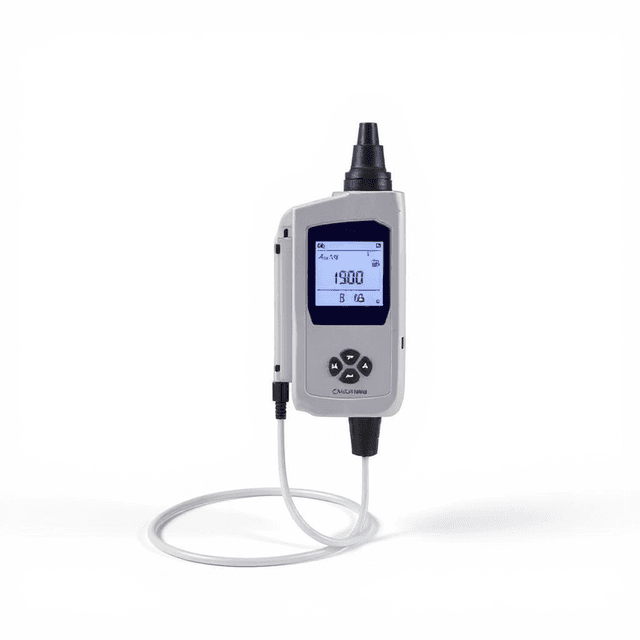
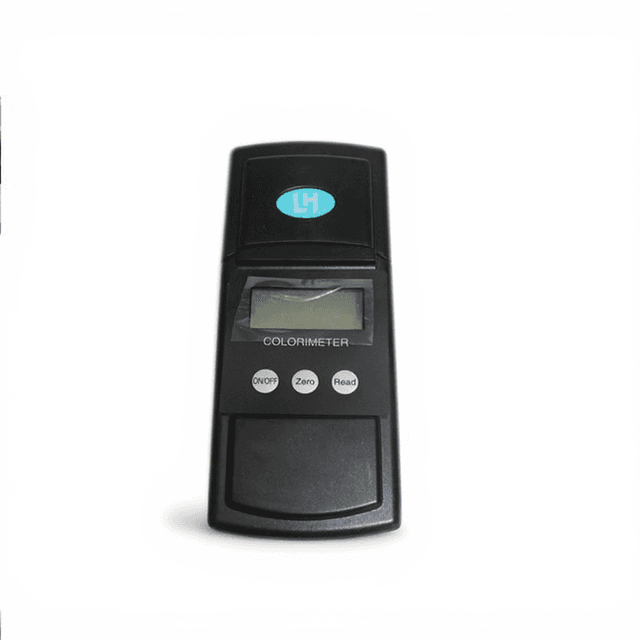
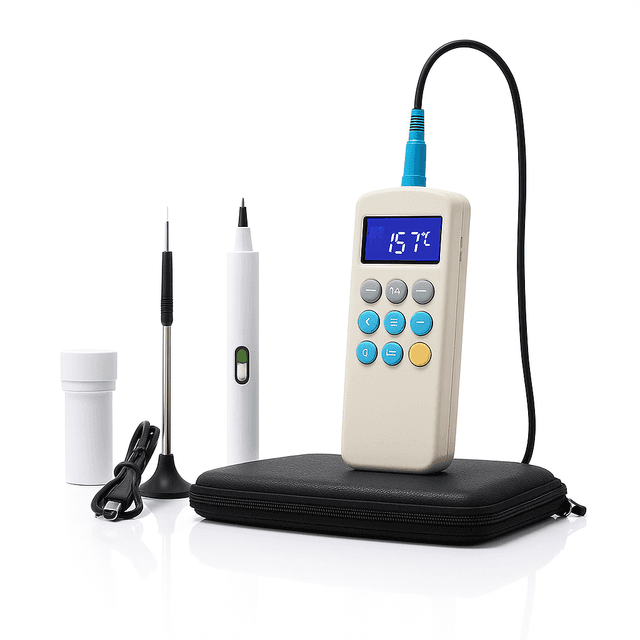
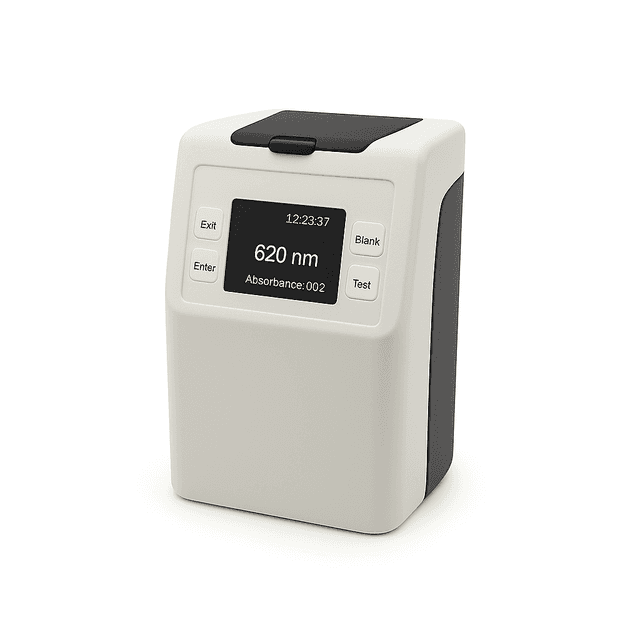
Fluorescence Dissolved Oxygen Electrode
Fluorescence-based dissolved oxygen electrode using green light excitation and fluorescence lifetime detection for maintenance-free, electrolyte-free oxygen measurement in aqueous solutions.

Louise Corscadden, PhD
Director of Science · ConductScience
Ask Louise about Fluorescence Dissolved Oxygen Electrode fit, setup, configuration, or quote prep.
Already working with us? Sign in to connect this with My Scientist.
Key Specifications
Full details →- Model fit
- Configured during quote
- SKU family
- CS-LH-DY06
- Shipping box
- 20.0 x 10.0 x 5.0 cm
- Ordering
- Online checkout and quote request available
- Category
- Portable Analyzers
- Build notes
- Confirm accessories, station layout, and support needs before purchase
The Fluorescence Dissolved Oxygen Electrode (Model LH-DY06) employs green light excitation fluorescence lifetime detection technology to measure dissolved oxygen concentrations in aqueous solutions. The instrument utilizes a light-emitting diode (LED) to emit green light that irradiates fluorescent material, exciting red fluorescence. Due to dynamic quenching by oxygen molecules in water, the fluorescence lifetime of the excited red light is inversely proportional to dissolved oxygen concentration, enabling quantitative measurement through fluorescence lifetime analysis.
This electrode eliminates the need for electrolyte solutions and membrane maintenance associated with traditional electrochemical dissolved oxygen sensors. The fluorescence-based detection mechanism provides stable, reliable measurements across diverse aqueous environments without consumable reagents or regular calibration of electrolyte solutions. The system is manufactured under ISO 9001:2015 quality management standards with pre-delivery testing and calibration verification.
How It Works
The fluorescence dissolved oxygen electrode operates on the principle of dynamic quenching of fluorescence by molecular oxygen. A green LED emits excitation light that is absorbed by fluorescent material within the sensor probe. This excitation promotes fluorescent molecules to an excited electronic state, which subsequently emit red fluorescence as they return to the ground state. The fluorescence decay follows exponential kinetics characterized by a specific fluorescence lifetime.
Dissolved oxygen molecules act as dynamic quenchers, colliding with excited fluorescent molecules and providing non-radiative pathways for energy dissipation. This quenching process reduces the fluorescence lifetime in proportion to oxygen concentration according to the Stern-Volmer equation. By measuring the phase shift or decay time of the fluorescence signal relative to the modulated excitation light, the system calculates dissolved oxygen concentration without consuming oxygen in the measurement process.
The absence of a permeable membrane and electrolyte solution eliminates drift associated with membrane fouling and electrolyte depletion. The fluorescent sensing material is immobilized in a gas-permeable matrix that allows oxygen equilibration while protecting the fluorophore from photodegradation and chemical interference.
Features & Benefits
Model
- LH-DY06
Automation Level
- semi-automated
Brand
- ConductScience
Research Domain
- Analytical Chemistry
- Environmental Monitoring
- Food Science
- Industrial Hygiene
- Microbiology
- Pharmaceutical QC
Shipping weight
- 0.26 lb
Shipping box
- L: 20.0 cm
- W: 10.0 cm
- H: 5.0 cm
| Feature | This Product | Typical Alternative | Advantage |
|---|---|---|---|
| Detection Principle | Green light excitation fluorescence lifetime detection | Electrochemical sensors typically use membrane-covered galvanic or polarographic cells | Eliminates oxygen consumption during measurement and membrane maintenance requirements. |
| Maintenance Requirements | No electrolyte or membrane maintenance needed | Traditional sensors require periodic membrane and electrolyte replacement | Reduces operational costs and eliminates measurement drift from membrane fouling. |
| Calibration Stability | Fluorescence lifetime measurement independent of light intensity | Electrochemical sensors subject to membrane aging and electrolyte drift | Provides more stable long-term calibration with less frequent recalibration needs. |
| Sample Requirements | No minimum flow rate or sample volume limitations | Electrochemical sensors often require stirring or flow for accurate readings | Suitable for static samples and low-volume measurements without stirring artifacts. |
| Chemical Compatibility | Fluorescence detection less sensitive to chemical interference | Membrane-based sensors can be affected by certain chemicals and pH extremes | Enables measurement in challenging chemical environments with reduced interference. |
This fluorescence-based dissolved oxygen electrode offers maintenance-free operation through LED excitation and fluorescence lifetime detection technology. The elimination of electrolyte solutions and membrane components provides stable, drift-free measurements particularly suited for continuous monitoring applications.
Practical Tips
Perform two-point calibration using fresh sodium sulfite solution for zero oxygen and air-saturated distilled water at the measurement temperature.
Why: Ensures accurate span and zero calibration points across the measurement range.
Clean the optical sensing surface gently with distilled water and soft cloth to remove deposits without scratching the fluorescent coating.
Why: Maintains optimal light transmission and prevents interference with fluorescence detection.
Allow 10-15 minutes for thermal equilibration when moving between samples of different temperatures.
Why: Temperature affects both oxygen solubility and fluorescence lifetime, requiring stabilization for accurate measurements.
If readings appear unstable, check for air bubbles on the sensor surface and ensure complete submersion without gaps.
Why: Air bubbles can interfere with optical detection and create false high oxygen readings.
Record sample temperature, barometric pressure, and salinity along with dissolved oxygen measurements for complete documentation.
Why: These parameters affect oxygen solubility and are necessary for accurate data interpretation and method validation.
Use appropriate personal protective equipment when handling calibration solutions, particularly sodium sulfite zero oxygen standards.
Why: Chemical calibration standards require proper handling procedures to prevent exposure and ensure safety.
Store the electrode probe in distilled water or manufacturer-recommended storage solution when not in use.
Why: Prevents drying of the fluorescent sensing material and maintains sensor responsiveness.
Verify calibration accuracy periodically using certified dissolved oxygen standards or air-saturated water at known temperature and pressure.
Why: Confirms measurement accuracy and identifies any drift requiring recalibration or sensor replacement.
Setup Guide
What’s in the Box
- Fluorescence dissolved oxygen electrode probe (typical)
- Connecting cable with appropriate connector (typical)
- Protective probe cap (typical)
- User manual and calibration instructions (typical)
- Calibration certificate (typical)
- Mounting hardware (typical)
Warranty
ConductScience provides a standard one-year manufacturer warranty covering defects in materials and workmanship, with technical support for installation, calibration, and troubleshooting assistance.
Compliance
How does fluorescence lifetime detection compare to electrochemical dissolved oxygen measurement in terms of accuracy and stability?
Fluorescence lifetime detection eliminates oxygen consumption during measurement and is not affected by flow rate, stirring, or sample volume limitations. The method provides stable readings without membrane fouling or electrolyte drift issues common in electrochemical sensors.
What calibration procedures are required for this fluorescence-based electrode?
Two-point calibration using zero oxygen solution (typically sodium sulfite) and air-saturated water at known temperature. Unlike electrochemical sensors, no membrane or electrolyte maintenance is required between calibrations.
Can this electrode be used in high-salinity or chemically aggressive samples?
The fluorescence detection method is generally less sensitive to chemical interference than electrochemical sensors since it does not require ion transport through membranes. Consult product datasheet for specific chemical compatibility and salinity operating ranges.
What is the typical response time and minimum sample volume required?
Response time depends on temperature equilibration and oxygen diffusion to the sensing surface. Minimum sample volume requirements are typically lower than electrochemical sensors since no oxygen consumption occurs during measurement. Consult specifications for exact values.
How does temperature affect the fluorescence measurement and what compensation is available?
Temperature affects both oxygen solubility and fluorescence lifetime. The system requires temperature compensation through integrated temperature sensors or manual temperature input for accurate dissolved oxygen calculations.
Is this electrode suitable for continuous monitoring applications?
Yes, the absence of consumable electrolytes and membrane maintenance makes fluorescence-based sensors well-suited for long-term continuous monitoring with minimal drift compared to electrochemical alternatives.
What maintenance procedures are required for optimal performance?
Minimal maintenance is required compared to electrochemical sensors. Regular cleaning of the optical surface, periodic calibration verification, and protection from mechanical damage are the primary maintenance requirements.
Can this electrode measure oxygen in both gaseous and liquid phases?
The electrode is designed specifically for dissolved oxygen measurement in aqueous solutions. Gas phase oxygen measurement would require different sensor configurations optimized for gas-phase fluorescence quenching.
Have a question about this product?
Have a question? Just ask.
Send it over and we'll email you a personalized answer — no call, no scheduling.
Prefer to talk it through?