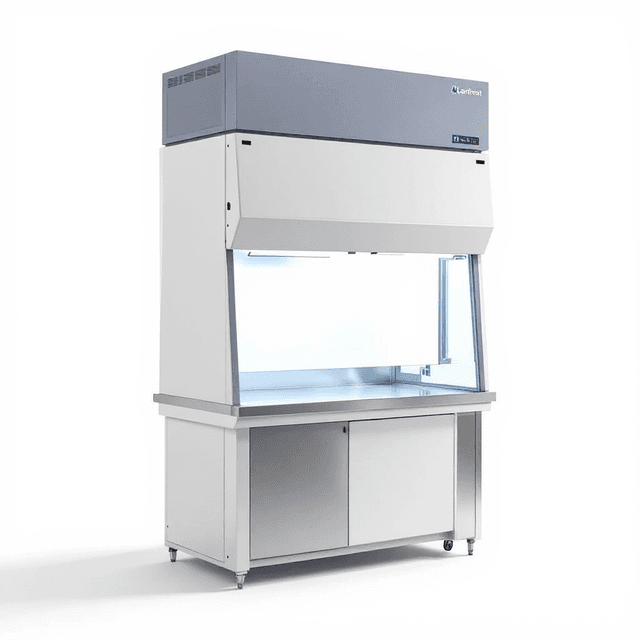
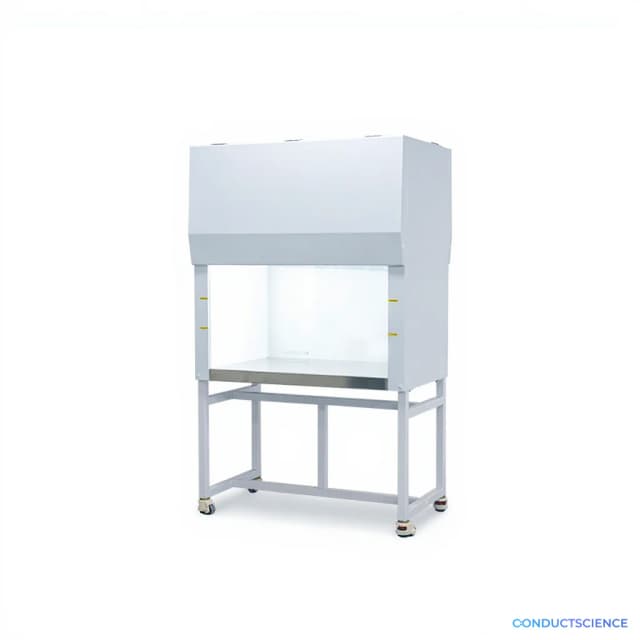
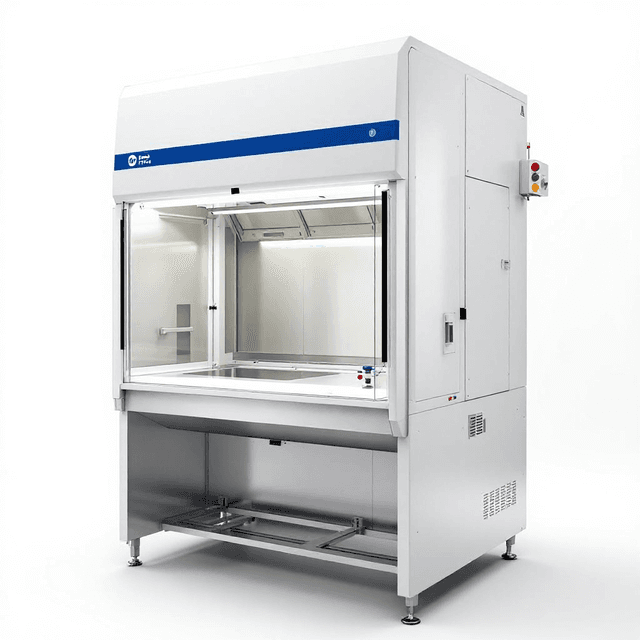
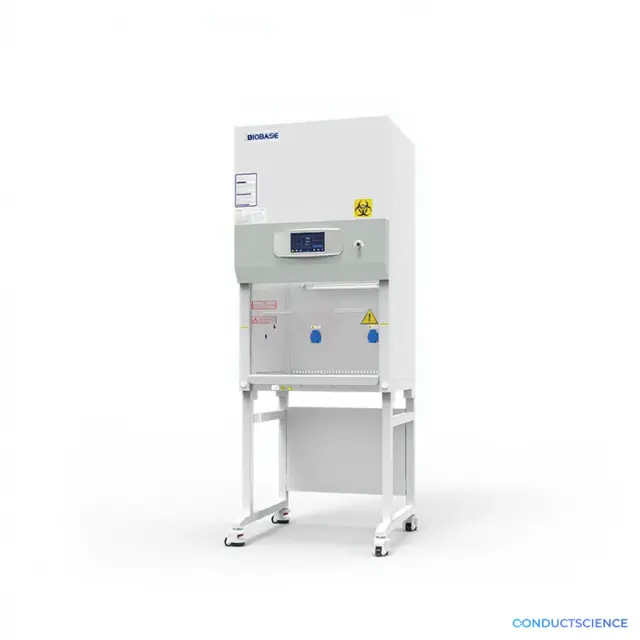
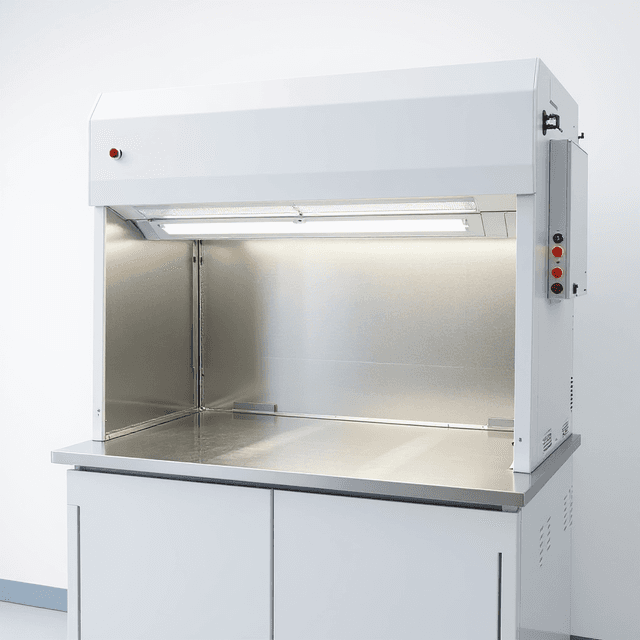
Ducted Fume Hood FH1000(A)
Ducted chemical fume hood with 590 m³/h exhaust capacity, 0.3-0.8 m/s face velocity, and 820×670×730mm internal workspace for laboratory chemical handling operations.
| Automation Level | manual |
| FH1200(A) | FH1500(A) |
| External Size(W*D*H) | 1040*800*2200mm |
| 1240*800*2200mm | 1540*800*2200mm |
| Internal Size(W*D*H) | 820*670*730mm |
| 1020*670*730mm | 1320*670*730mm |

The FH1000(A) Ducted Fume Hood provides controlled chemical ventilation for laboratory operations requiring protection from hazardous vapors and fumes. This unit features a 1040×800×2200mm external footprint with 820×670×730mm internal workspace, offering 0.3-0.8 m/s face velocity for effective containment. The system includes integrated LED lighting, PVC exhaust ducting, and operates at ≤68dB noise levels.
Designed for continuous laboratory use, the hood maintains consistent airflow through its 590 m³/h exhaust capacity with adjustable sash opening up to 520mm. The 850mm work surface height accommodates standard laboratory protocols while the ducted design ensures proper chemical removal from the workspace environment.
How It Works
The ducted fume hood operates on the principle of controlled airflow to capture and remove hazardous chemical vapors at the source. Air is drawn into the hood through the open sash at a face velocity of 0.3-0.8 m/s, creating a protective barrier between the user and chemical workspace. This inward airflow prevents vapor escape into the laboratory environment.
The captured air passes through the internal workspace and is exhausted through a PVC duct system at 590 m³/h capacity. The adjustable sash allows operators to control the opening height up to 520mm while maintaining adequate face velocity for containment. The ducted design ensures contaminated air is completely removed from the building rather than filtered and recirculated.
Features & Benefits
Automation Level
- manual
FH1200(A)
- FH1500(A)
External Size(W*D*H)
- 1040*800*2200mm
1240*800*2200mm
- 1540*800*2200mm
Internal Size(W*D*H)
- 820*670*730mm
1020*670*730mm
- 1320*670*730mm
Work Surface Height
- 850mm
Max Opening
- 520mm
Air Velocity
- 0.3~0.8m/s
Exhaust Air Volume
- 590m³/h
730m³/h
- 950m³/h
Noise
- ≤68dB
Exhaust Duct
- PVC, Standard length: 5 meters
LED Lamp
- 8W*1
12W*1
- 16W*1
Brand
- ConductScience
Research Domain
- Analytical Chemistry
- Environmental Monitoring
- Industrial Hygiene
- Materials Science
- Microbiology
- Pharmaceutical QC
Weight
- 286.0 kg
Dimensions
- L: 220.0 mm
- W: 104.0 mm
- H: 80.0 mm
Comparison Guide
| Feature | This Product | Typical Alternative | Advantage |
|---|---|---|---|
| Internal Workspace | 820×670×730mm | Smaller models often provide 600×600×650mm workspace | Larger workspace accommodates multiple samples and standard laboratory equipment simultaneously |
| Face Velocity Range | 0.3-0.8 m/s adjustable | Fixed velocity models offer single speed operation | Variable velocity allows optimization for different chemical procedures and energy efficiency |
| Noise Level | ≤68dB operation | Basic models often exceed 70dB noise levels | Quieter operation reduces fatigue during extended laboratory procedures |
| Sash Opening | 520mm maximum height | Standard models typically offer 400-450mm opening | Greater sash height provides better access for equipment setup and sample manipulation |
| Exhaust Ducting | PVC with 5-meter standard length | Shorter duct lengths require additional connections | Extended duct length provides installation flexibility and reduces connection points |
| Work Surface Height | 850mm standard | Variable height options often require custom configuration | Standard ergonomic height compatible with existing laboratory furniture and seating |
The FH1000(A) offers a spacious 820×670×730mm workspace with variable face velocity control and quiet operation. The extended 5-meter exhaust ducting and 520mm sash opening provide installation flexibility and improved access for laboratory procedures.
Practical Tips
Verify face velocity at startup, after maintenance, and quarterly using calibrated anemometer at multiple points across sash opening.
Why: Ensures consistent containment performance and regulatory compliance for chemical procedures
Inspect PVC ducting monthly for chemical degradation, joints, and blockages that could reduce exhaust efficiency.
Why: Prevents airflow reduction and maintains proper vapor removal from workspace
Keep sash at lowest practical height during procedures to maintain optimal face velocity and energy efficiency.
Why: Reduces exhaust volume requirements while maximizing containment effectiveness
Install visual airflow indicator such as tissue paper strip to provide continuous airflow verification during use.
Why: Provides immediate warning of airflow failure that could compromise chemical containment
If face velocity decreases, check for sash seal integrity and duct obstructions before adjusting external fan settings.
Why: Identifies common mechanical issues that affect performance before making system modifications
Document face velocity measurements and maintenance activities to establish performance baseline and trending.
Why: Enables predictive maintenance scheduling and demonstrates consistent safety performance
Position chemical containers and equipment at least 15cm inside sash plane to ensure vapor capture.
Why: Prevents vapor escape at workspace edges where airflow patterns may be disrupted
Setup Guide
What’s in the Box
- Ducted fume hood main unit
- PVC exhaust duct (5 meters)
- LED lighting system (8W)
- Installation hardware (typical)
- Operation manual (typical)
- Airflow verification guidelines (typical)
Compliance
References
Background reading relevant to this product:
Warranty & ConductCare
ConductScience provides a standard 1-year manufacturer warranty covering defects in materials and workmanship, with technical support for installation and operation guidance.
What face velocity range should be maintained for optimal containment?
The unit operates at 0.3-0.8 m/s face velocity. For most chemical procedures, maintain 0.5 m/s minimum. Higher velocities may cause turbulence while lower velocities reduce containment effectiveness.
How do I verify proper airflow performance?
Use smoke tubes at the sash opening to visualize airflow patterns. Measure face velocity with calibrated anemometer across multiple points. All air should flow inward without escape at the sash plane.
What chemicals are compatible with PVC exhaust ducting?
PVC ducting resists most acids, bases, and organic solvents. Avoid use with strong oxidizers, aromatic hydrocarbons at high concentrations, or chemicals above 60°C that may soften PVC.
Can the exhaust volume be adjusted for different procedures?
The unit provides 590 m³/h fixed exhaust volume. Face velocity variation occurs through sash position adjustment. External exhaust fan controls may allow volume modification if system permits.
What maintenance schedule is recommended?
Perform daily visual airflow checks, weekly face velocity measurements, monthly duct inspection, and annual comprehensive performance testing including containment verification.
How does this compare to recirculating carbon filter hoods?
Ducted design provides complete vapor removal versus filtered recirculation. Offers superior protection for unknown chemicals and eliminates filter breakthrough risk, but requires external exhaust system.
What installation requirements are needed?
Requires external exhaust fan sized for 590 m³/h minimum, electrical connection for LED lighting, and adequate makeup air to prevent building pressure imbalance.
Have a question about this product?
Upgrade Options