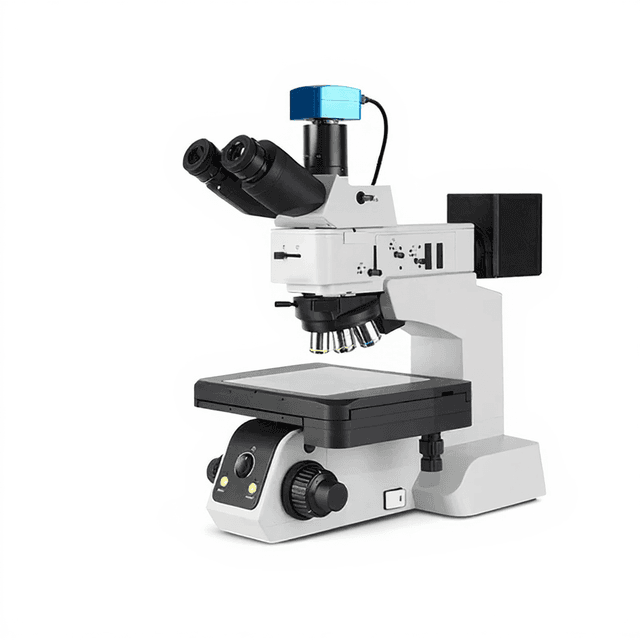
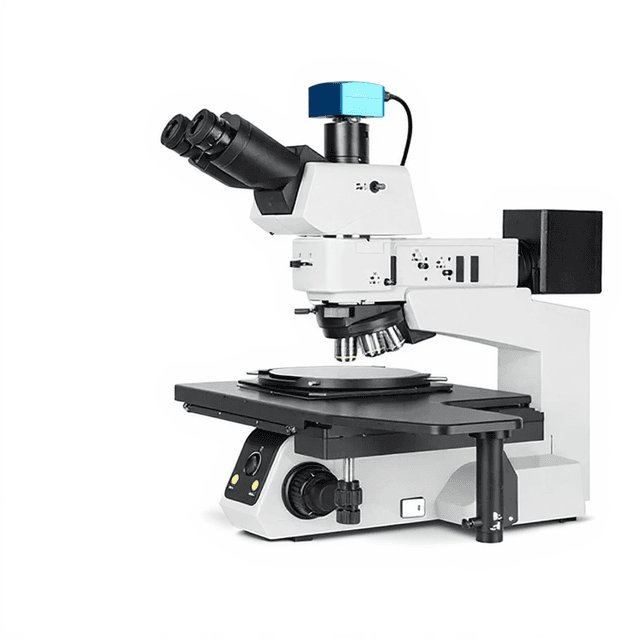
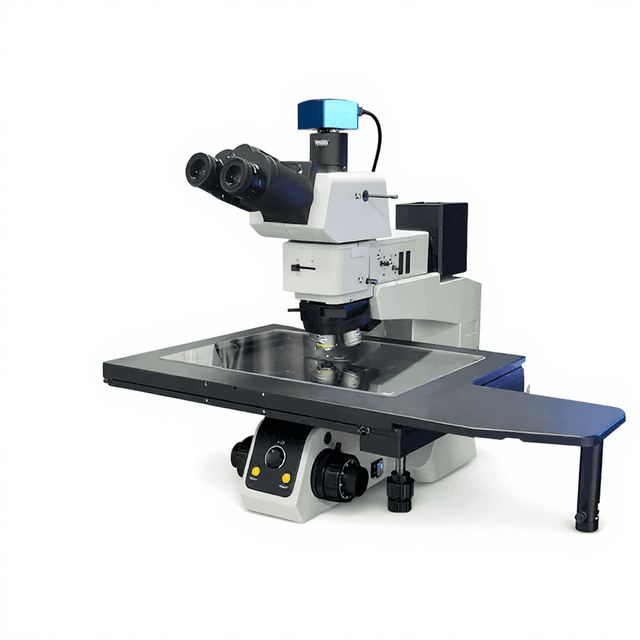
Electric light & BF/DF 5-hole Converter Metallurgical Microscope with 4K Auto-Focus HDMI Camera
Metallurgical microscope with infinite optics, motorized brightfield/darkfield converter, trinocular head, and integrated 4K auto-focus HDMI camera for materials characterization and quality control applications.
| Automation Level | semi-automated |
| Product Type | Microscope |
| Microscope Type | General Purpose |
| Application | General Laboratory |
| Skill Level | Professional / Research |
| Brand | ConductScience |

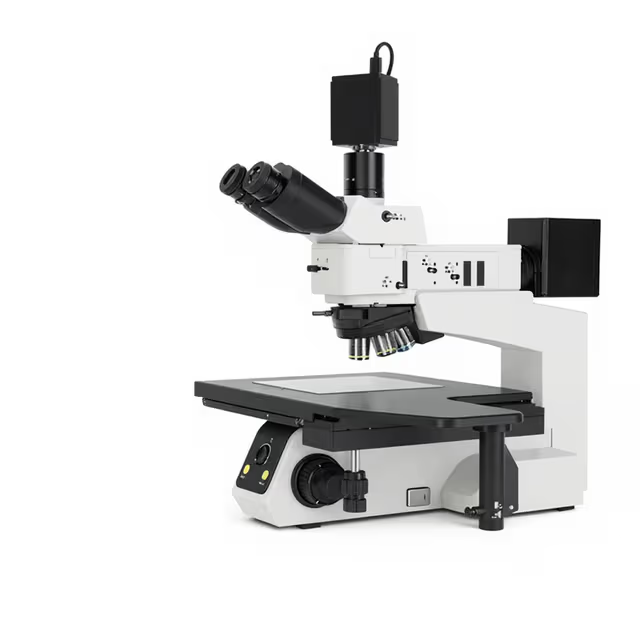
The MCX-0023 metallurgical microscope integrates infinite chromatic aberration correction optics with motorized brightfield/darkfield switching for comprehensive materials characterization. The system features a trinocular observation head with 100:0 light splitting ratio, enabling simultaneous visual observation and 4K HDMI imaging through the integrated auto-focus camera system.
Designed for reflected light microscopy applications, the instrument incorporates a 5-position motorized nosepiece with DIC slot, polarizing assembly for stress analysis, and dual LED illumination systems for both reflection and transmission modes. The coaxial mechanical stage provides 150×100mm travel range with precise X-Y positioning for systematic sample examination across large specimens.
How It Works
The microscope employs infinite chromatic aberration correction optics to minimize color distortion across the visible spectrum. Light from the 5W LED reflective illuminator passes through a variable aperture and field diaphragm, reflects off the specimen surface, and travels through the objective lens to form an intermediate image at infinity before being focused by the tube lens.
The motorized 5-position nosepiece enables rapid switching between brightfield and darkfield illumination modes. In brightfield mode, directly reflected light creates contrast based on reflectivity differences. Darkfield mode blocks directly reflected light, highlighting surface irregularities and phase boundaries through scattered light detection. The integrated polarizing assembly allows stress analysis and crystal orientation studies through crossed-polarized light examination.
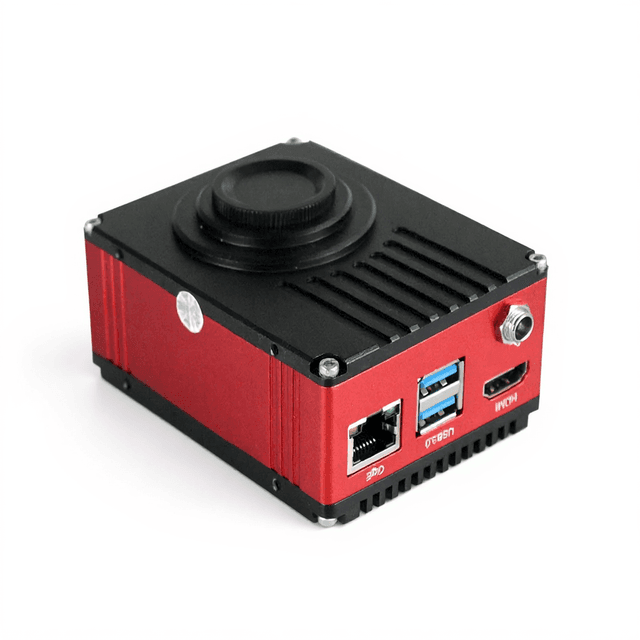
Digital imaging is achieved through a 4K HDMI camera with auto-focus capability and 0.65× reduction optics, providing calibrated measurements and documentation. The trinocular head design allows simultaneous visual observation and digital capture without light loss to the eyepieces.
Features & Benefits
Automation Level
- semi-automated
Product Type
- Microscope
Microscope Type
- General Purpose
Application
- General Laboratory
Skill Level
- Professional / Research
Brand
- ConductScience
Research Domain
- Analytical Chemistry
- Environmental Monitoring
- Industrial Hygiene
- Materials Science
- Pharmaceutical QC
Weight
- 1.9 kg
Dimensions
- L: 4.9 mm
- W: 6.6 mm
- H: 6.6 mm
Comparison Guide
| Feature | This Product | Typical Alternative | Advantage |
|---|---|---|---|
| Optical System | Infinite chromatic aberration correction with semi-apochromatic objectives | Basic finite optical systems often use standard achromatic objectives | Eliminates color fringing and provides superior image quality for accurate materials identification. |
| Nosepiece Operation | Motorized 5-position brightfield/darkfield converter with software control | Manual nosepiece rotation with limited contrast modes | Enables rapid, reproducible switching between illumination modes without manual intervention during analysis. |
| Digital Integration | 4K HDMI auto-focus camera with 0.65× adapter | Lower resolution cameras often require manual focus adjustment | Provides high-resolution documentation with automated focusing for consistent image quality and measurement accuracy. |
| Stage Travel Range | 150×100mm XY mechanical travel with coaxial controls | Entry-level models typically offer smaller travel ranges | Accommodates larger specimens and enables comprehensive surface mapping without repositioning samples. |
| Illumination System | Dual 5W LED systems for reflection and transmission with variable aperture control | Single illumination mode with basic intensity control | Supports diverse contrast techniques and specimen types through optimized illumination for each application. |
| Observation Configuration | Trinocular head with 100:0 light splitting ratio | Binocular heads often compromise between visual and camera brightness | Allows simultaneous observation and documentation without light loss to either visual or digital imaging paths. |
This metallurgical microscope combines advanced optical correction, motorized operation, and integrated digital documentation in a comprehensive materials analysis platform. The infinite optical system and semi-apochromatic objectives provide superior image quality, while the motorized nosepiece and 4K camera enable efficient workflow automation.
Practical Tips
Calibrate digital measurements using a certified stage micrometer at each objective magnification, accounting for the 0.65× camera adapter reduction factor.
Why: Ensures measurement accuracy across all magnification settings and maintains traceability to dimensional standards.
Clean optical surfaces with lens tissue and appropriate solvents, avoiding excessive pressure on objective front lenses.
Why: Preserves optical performance and prevents damage to expensive semi-apochromatic objective elements.
Use brightfield illumination for initial specimen examination, then switch to darkfield or polarized light for enhanced contrast of specific features.
Why: Optimizes contrast for different specimen characteristics and reveals details not visible with single illumination modes.
If motorized nosepiece movement becomes irregular, cycle through all positions several times and check for dust or debris in the mechanism.
Why: Maintains smooth operation and prevents mechanical binding that can damage the precision positioning system.
Establish consistent illumination settings for quantitative analysis and document camera settings for reproducible imaging conditions.
Why: Enables valid comparison between specimens and maintains measurement reproducibility across analysis sessions.
Allow LED illumination systems to warm up for several minutes before critical measurements to ensure stable light output and color temperature.
Why: Eliminates thermal drift effects that can affect illumination uniformity and color accuracy during extended analysis sessions.
Use the coaxial stage controls to maintain consistent working distance while scanning across large specimens.
Why: Preserves focus and ensures uniform illumination across the entire specimen surface during systematic examination.
Periodically verify polarizer orientation using a known birefringent standard to maintain accuracy in stress analysis measurements.
Why: Ensures quantitative reliability of polarized light analysis and maintains measurement traceability over time.
Setup Guide
What’s in the Box
- Metallurgical microscope with trinocular head
- PL10X/23mm eyepieces (pair)
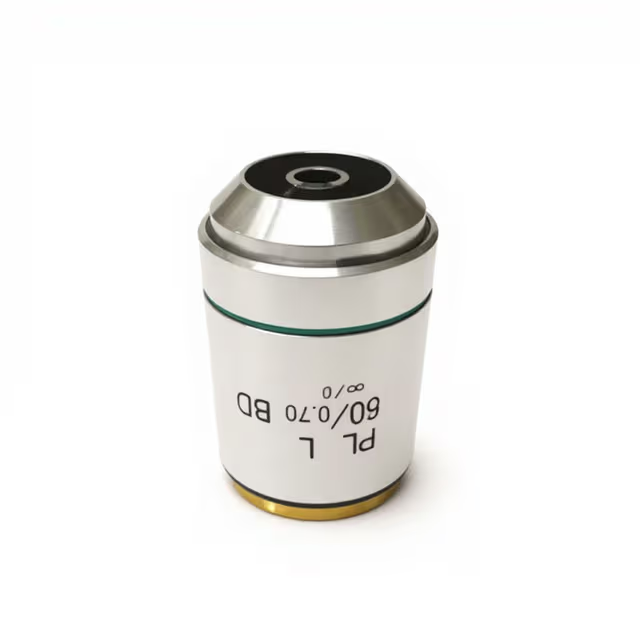
- BD Semi-Apo 5X/NA0.15 objective lens
- 4K HDMI auto-focus camera with 0.65× adapter
- Motorized 5-position nosepiece
- Coaxial mechanical stage with specimen holders
- Dual LED illumination systems (reflection and transmission)
- Polarizing assembly with rotary analyzer
- Power adapter and HDMI cable
- User manual and software CD (typical)
- Dust cover and maintenance kit (typical)
Warranty
ConductScience provides a standard one-year manufacturer warranty covering defects in materials and workmanship, with technical support for setup, calibration, and operational guidance.
Compliance
References
Background reading relevant to this product:
What is the effective magnification range for both visual and digital observation?
Visual magnification ranges from 50×-500× with standard PL10X eyepieces, expandable to 2000× with optional PL20X eyepieces and 100× objectives. Digital magnification through the 4K camera reaches 150-3000× on a 22-inch display.
Can this microscope perform quantitative polarized light analysis for stress measurement?
Yes, the integrated 360° rotary polarizing assembly with analyzer and polarizer slots enables quantitative stress analysis and crystal orientation studies using crossed-polarized light techniques.
What specimen thickness limitations apply with the long working distance objectives?
The BD Semi-Apo 5X objective provides 15mm working distance, accommodating substantial specimen thickness. Consult product datasheet for complete objective specifications and working distance values at higher magnifications.
How is the digital camera calibrated for accurate measurements?
Use a certified stage micrometer to calibrate each objective magnification. The 0.65× camera adapter requires calibration factor calculation for each objective to ensure measurement accuracy in analysis software.
What maintenance is required for the motorized nosepiece system?
Regular cleaning of optical surfaces and occasional lubrication of mechanical components. The motorized system should be operated through its full range periodically to maintain smooth operation of the brightfield/darkfield converter.
Can transmitted light illumination be used simultaneously with reflected light?
The system includes separate 5W LED illuminators for reflection and transmission modes. While both are present, they are typically used independently based on the contrast technique required for specific specimens.
What is the stage load capacity and precision of the mechanical positioning?
The 4-inch mechanical stage supports specimens up to 310×240mm platform area with 150×100mm XY travel range. Consult product datasheet for specific load capacity and positioning precision specifications.
How does the trinocular head light distribution affect imaging quality?
The 100:0 light splitting ratio directs full illumination intensity to eyepieces during visual observation, with camera imaging achieved through the dedicated third port without light loss to visual observation.
Have a question about this product?
Frequently Bought Together
Upgrade Options
Related Products