Scientific Grade Metallurgical Microscope with 8-inch Stage for Polymer Materials
Scientific-grade metallurgical microscope with infinite optical correction, 50x-1000x magnification range, and 8-inch mechanical stage for comprehensive materials characterization and polymer analysis.

Louise Corscadden, PhD
Director of Science · ConductScience
Ask Louise about Scientific Grade Metallurgical Microscope with 8-inch Stage for Polymer Materials fit, setup, configuration, or quote prep.
Already working with us? Sign in to connect this with My Scientist.
Key Specifications
Full details →- Model fit
- Configured during quote
- SKU family
- MCX-0020
- Shipping box
- 4.9 x 6.6 x 6.6 cm
- Ordering
- Online checkout and quote request available
- Category
- Microscopy
- Build notes
- Confirm accessories, station layout, and support needs before purchase
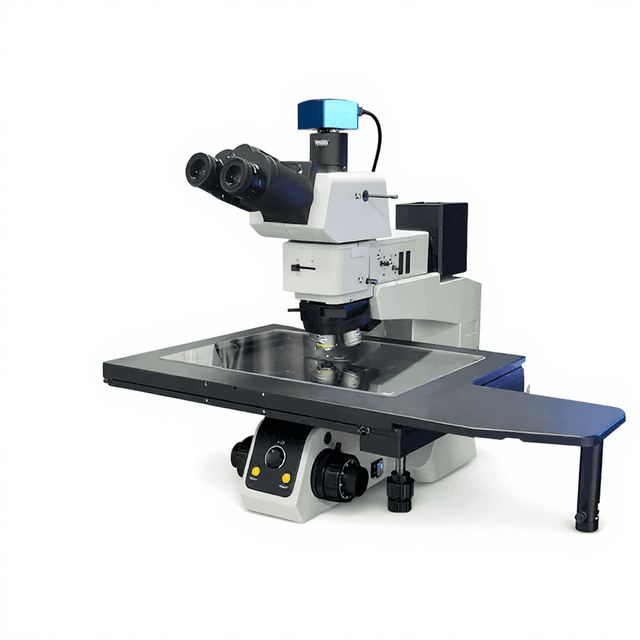
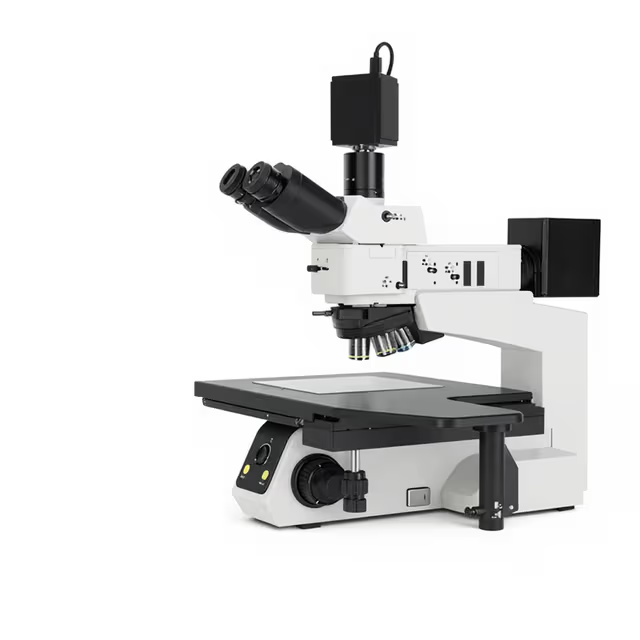
The Scientific Grade Metallurgical Microscope with 8-inch Stage represents a precision optical instrument engineered for comprehensive materials characterization and polymer analysis. Built around an infinite chromatic aberration correction optical system, this microscope delivers magnifications from 50x to 1000x with the optional 100x long working distance objective, enabling detailed examination of metallurgical specimens and polymer materials across multiple scales.
The instrument features a large 8-inch mechanical stage (525×330mm platform area) with 210×210mm travel range, accommodating substantial specimens while maintaining precise positioning through coaxial X-Y adjustment mechanisms. The BD reflective illuminator with variable aperture control and 5W adjustable LED illumination provides optimal contrast for opaque materials, while the transmitted light capability extends versatility to semi-transparent specimens. Integration of polarizing components and DIC compatibility supports advanced imaging techniques essential for materials research.
How It Works
The microscope operates on the principle of reflected light microscopy optimized for opaque materials examination. The infinite chromatic aberration correction optical system eliminates color distortion across the magnification range by using specialized objective and eyepiece combinations that maintain parfocality and consistent image quality. Light from the 5W LED source passes through the BD reflective illuminator, which incorporates variable aperture and field aperture controls to optimize contrast and resolution.
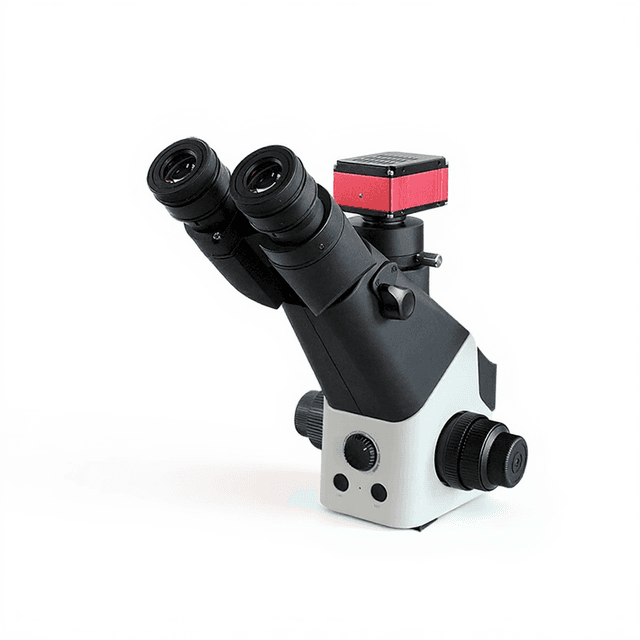
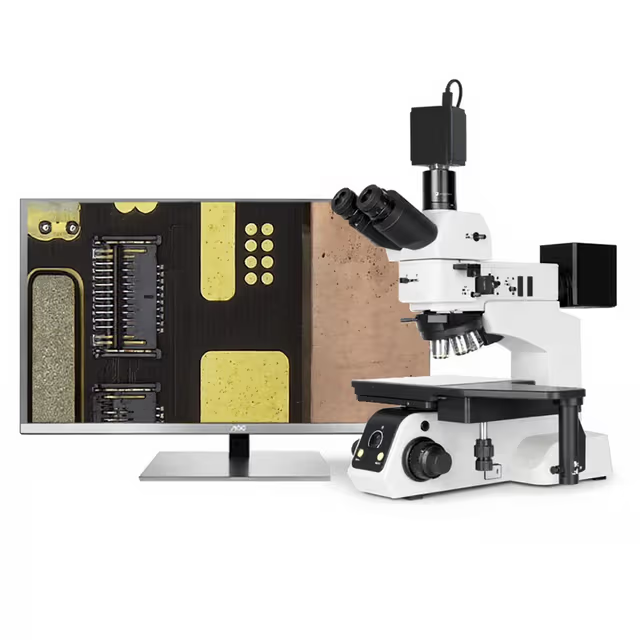
The specimen is illuminated through the objective lens, with reflected light collected by the same objective and directed through the binocular observation tube. The polarizing assembly enables differential interference contrast (DIC) and polarized light microscopy techniques, revealing crystallographic features and stress patterns invisible under conventional brightfield illumination. The 8-inch mechanical stage provides precise specimen positioning with coaxial controls, while the optional camera adapter enables digital documentation with magnifications extending to 3000x on a 22-inch display.
Features & Benefits
Automation Level
- manual
Product Type
- Microscope
Microscope Type
- Metallurgical
Application
- Laboratory Research
- Materials Science
- Quality Control
Skill Level
- Professional / Research
Brand
- ConductScience
Research Domain
- Analytical Chemistry
- Materials Science
Shipping weight
- 1.9 lb
Shipping box
- L: 4.9 cm
- W: 6.6 cm
- H: 6.6 cm
| Feature | This Product | Typical Alternative | Advantage |
|---|---|---|---|
| Stage Size and Travel Range | 8-inch stage with 525×330mm platform and 210×210mm travel range | Entry-level models often provide smaller stages with limited travel range | Accommodates large specimens and enables systematic mapping of extended areas without repositioning. |
| Optical Correction System | Infinite chromatic aberration correction with parfocal objectives | Basic models may use finite tube length systems with limited color correction | Maintains consistent image quality and color fidelity across the full magnification range for accurate materials identification. |
| Working Distance Capability | 15mm working distance with BD Semi-Apo objectives | Standard objectives often provide shorter working distances | Enables examination of rough surfaces and thick specimens without objective damage risk. |
| Illumination Control | Variable aperture BD reflective illuminator with dual LED sources | Basic models may offer limited illumination adjustment options | Provides precise contrast control and optimal Köhler illumination for different specimen types. |
| Advanced Imaging Techniques | Integrated polarization assembly and DIC compatibility | Entry-level systems may be limited to brightfield imaging only | Reveals crystallographic features and stress patterns essential for comprehensive materials analysis. |
This metallurgical microscope offers scientific-grade optics with infinite aberration correction, large specimen handling capabilities, and advanced imaging techniques in a comprehensive materials characterization platform. The combination of precise stage control, extended working distance objectives, and integrated polarization capabilities provides the versatility required for demanding metallurgical applications.
Practical Tips
Establish parfocal adjustment using a standard test specimen before beginning analysis sessions.
Why: Ensures consistent focus across objective changes, maintaining measurement accuracy and workflow efficiency.
Clean the BD reflective illuminator optics monthly using appropriate lens cleaning solutions and techniques.
Why: Maintains optimal light transmission and contrast, preventing artifacts that could compromise analysis results.
Use the coaxial stage controls systematically when mapping large specimens to maintain positional reference.
Why: Ensures comprehensive coverage and prevents duplicate or missed areas during systematic examination.
If contrast appears poor, check both variable aperture and field aperture settings for proper Köhler illumination alignment.
Why: Improper aperture adjustment is the most common cause of reduced image quality in reflected light microscopy.
Utilize the polarization assembly when examining stress patterns or crystallographic features in materials.
Why: Polarized light reveals anisotropic properties and internal structures invisible under conventional brightfield illumination.
Ensure specimens are securely mounted on the large stage before engaging the fast-moving positioning device.
Why: Prevents specimen displacement and potential damage to both sample and microscope components during rapid positioning.
Switch between reflected and transmitted illumination modes using the roll-out condenser for optimal specimen contrast.
Why: Different materials and specimen preparations require specific illumination approaches for maximum detail revelation.
Regularly verify the 210×210mm stage travel limits and lubricate the coaxial adjustment mechanisms as specified.
Why: Maintains smooth operation and positioning accuracy essential for precise measurements and specimen navigation.
Setup Guide
What’s in the Box
- Microscope main unit with binocular head
- PL10x/25mm eyepieces (pair)
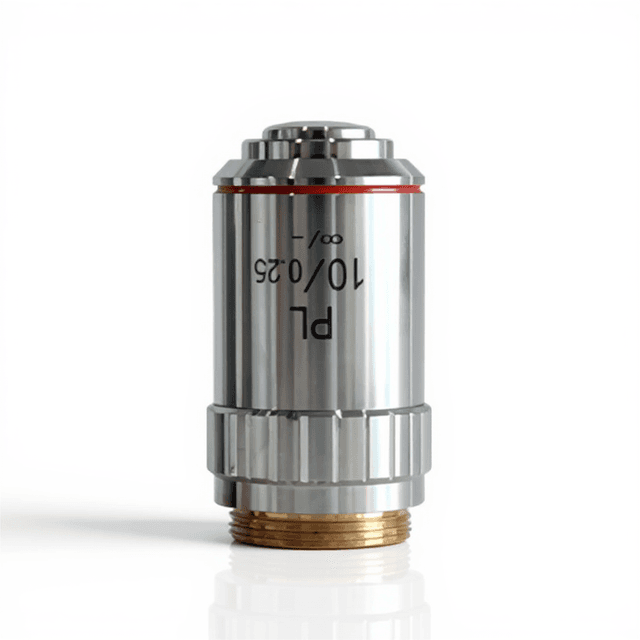
- 5x BD Semi-Apo long working distance objective
- 8-inch mechanical stage assembly
- BD reflective illuminator with LED source
- Transmitted light LED assembly
- Roll-out achromatic condenser
- Polarizing filter assembly
- Power supply and cables
- Dust cover (typical)
- User manual and optical cleaning kit (typical)
Warranty
ConductScience provides a standard one-year manufacturer warranty covering optical and mechanical components, with technical support available for setup assistance and application guidance.
Compliance
References
Background reading relevant to this product:
What is the practical magnification range and how does the infinite optical system benefit materials analysis?
The microscope provides 50x to 500x magnification in standard configuration, extending to 1000x with optional objectives. The infinite chromatic aberration correction system maintains consistent color fidelity and parfocal performance across all magnifications, critical for accurate materials identification and documentation.
Can this microscope handle large metallurgical specimens and how precise is the stage positioning?
The 8-inch stage accommodates specimens up to 525×330mm with 210×210mm of travel range. Coaxial X-Y controls provide precise positioning for systematic area mapping, while the fast-moving device enables rapid specimen navigation between regions of interest.
What advanced imaging techniques are supported beyond basic brightfield microscopy?
The system supports polarized light microscopy through the 360° rotary polarizer assembly and differential interference contrast (DIC) via the compatible nosepiece design. These techniques reveal crystallographic features, stress patterns, and surface topography invisible under conventional illumination.
How does the illumination system optimize contrast for different materials types?
The BD reflective illuminator incorporates variable aperture, field aperture, and centering adjustments for optimal Köhler illumination. The 5W LED provides stable, temperature-consistent lighting, while the dual reflected/transmitted capability extends applications to semi-transparent specimens.
What are the digital documentation capabilities and camera integration options?
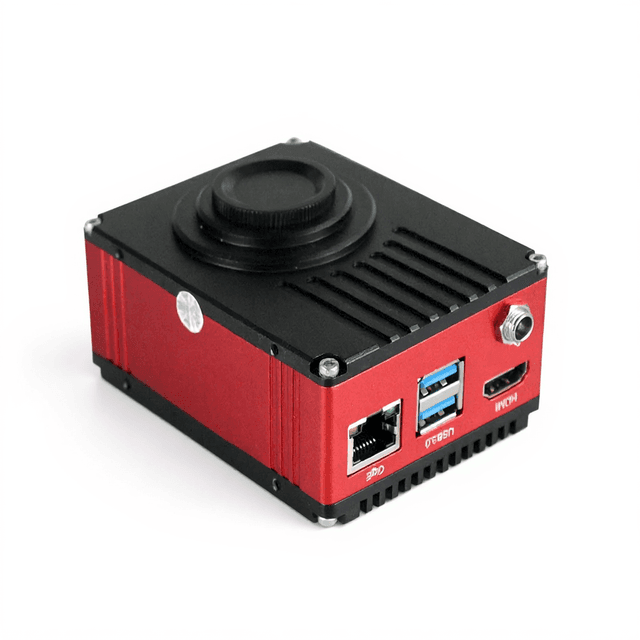
The system accepts camera adapters with 0.5x, 0.65x, and 1x magnification options through C-type interface. Digital magnifications reach 150-3000x with a 12MP camera and 22-inch display, enabling high-resolution documentation and measurement applications.
How does the working distance of the objectives affect specimen examination flexibility?
The BD Semi-Apo 5x objective provides 15mm working distance, enabling examination of rough or irregular surfaces without objective damage. This extended working distance is particularly valuable for as-cast specimens, fracture surfaces, and thick metallographic mounts.
Have a question about this product?
Have a question? Just ask.
Send it over and we'll email you a personalized answer — no call, no scheduling.
Prefer to talk it through?
Frequently Bought Together
Upgrade Options

Related Products