Forced Air Drying Oven
30L forced convection laboratory oven with temperature control from RT+10°C to 300°C, featuring 0.1°C precision and LCD display for precise heating and drying applications.
| Automation Level | semi-automated |
| Power/Voltage | 100~245V, 50/60Hz |
| Temp. Precision | 0.1℃ |
| Temp. Uniformity | ≤Max Temp.±2.5% |
| Circulation Mode | Bottom heating, forced convection |
| Timing Range | 0~9999min/h |
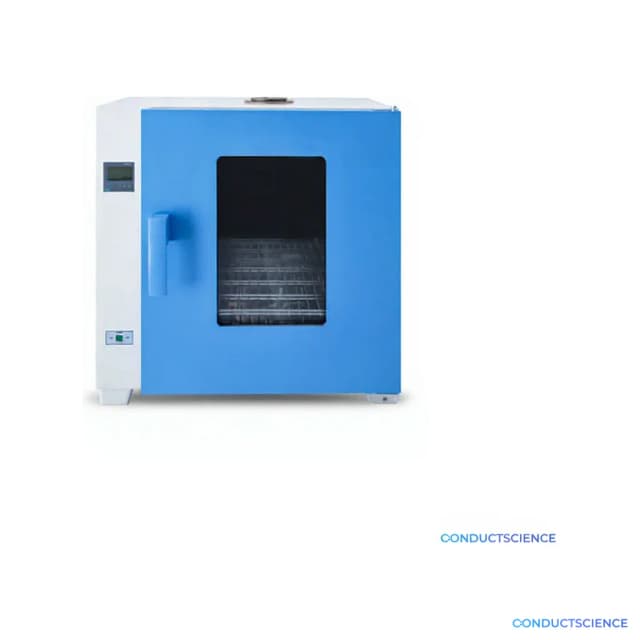
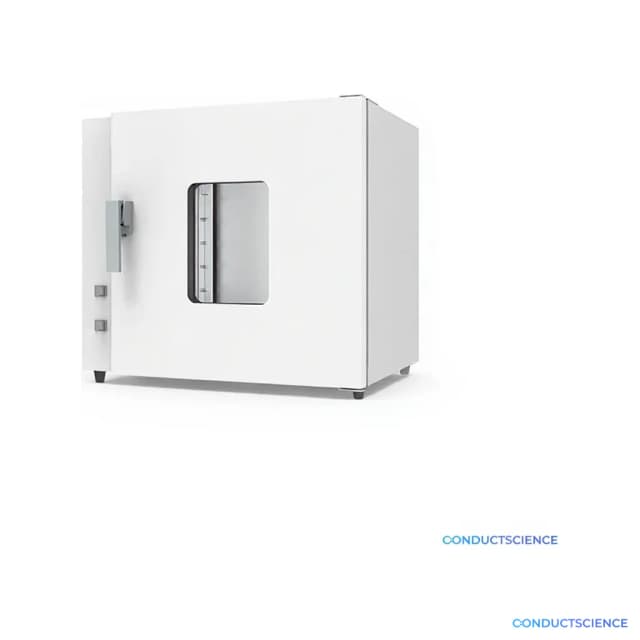
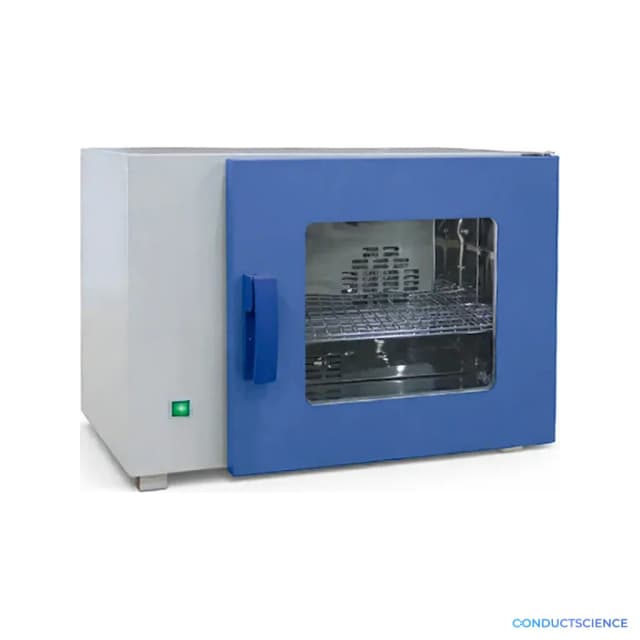
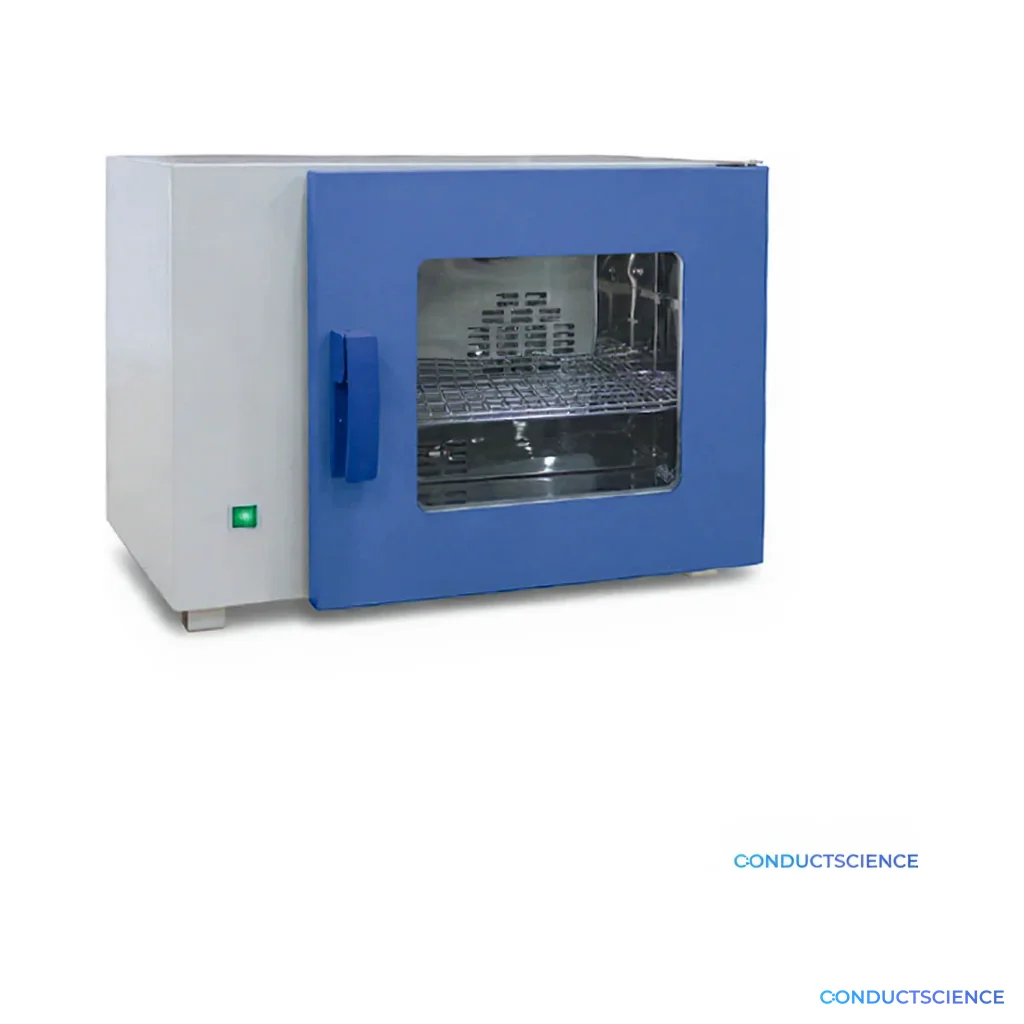
The ConductScience Forced Air Drying Oven is a 30L capacity laboratory oven designed for controlled heating and drying applications requiring precise temperature control. The unit operates over a temperature range of ambient +10°C to 300°C with 0.1°C precision and uniformity within ±2.5% of maximum temperature. Bottom heating with forced convection circulation ensures uniform heat distribution throughout the chamber.
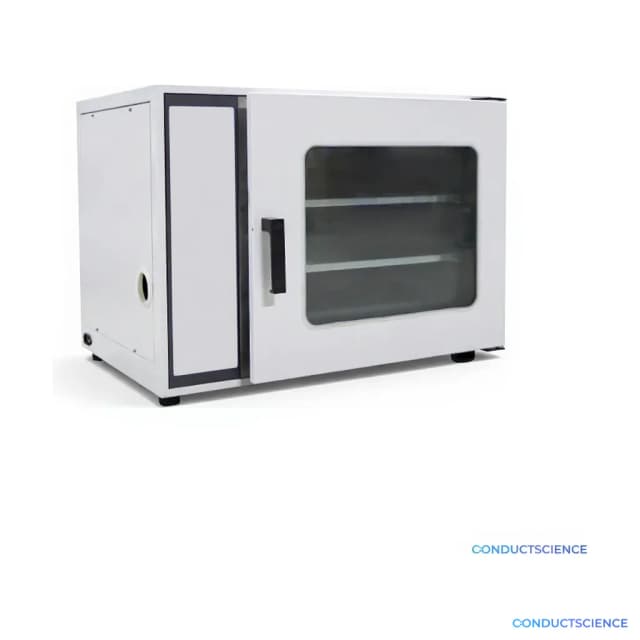
The oven features LCD display control with programmable timing from 0-9999 minutes or hours, accommodating both short-term and extended drying protocols. Two adjustable shelves provide flexible sample arrangement within the 310×310×310mm internal chamber. The wide voltage compatibility (100-245V, 50/60Hz) supports installation in diverse laboratory environments.
How It Works
The forced air drying oven operates on the principle of controlled convective heat transfer. Bottom-mounted heating elements generate thermal energy that is distributed throughout the chamber by an internal circulation fan. This forced convection system creates uniform air movement, eliminating temperature gradients that can occur in gravity convection ovens.
Temperature control is maintained through a feedback system that monitors chamber temperature via internal sensors and adjusts heating element output to maintain the setpoint within 0.1°C precision. The LCD controller allows programming of both temperature and time parameters, with automatic shutoff upon completion of the drying cycle.
The 310×310×310mm chamber provides sufficient volume for multiple samples while maintaining temperature uniformity within ±2.5% of the maximum temperature setting. Two adjustable shelves allow optimization of sample placement for efficient heat transfer and air circulation around specimens.
Features & Benefits
Automation Level
- semi-automated
Power/Voltage
- 100~245V, 50/60Hz
Temp. Precision
- 0.1℃
Temp. Uniformity
- ≤Max Temp.±2.5%
Circulation Mode
- Bottom heating, forced convection
Timing Range
- 0~9999min/h
Shelves NO.(pc)
- 2
Internal Size(mm)
- 310*310*310
Temp. Range
- RT+10℃~300℃
External Size(mm)
- 440*670*495
Packing Size(mm)
- 520*810*550
Gross Weight(kg)
- 50
Brand
- ConductScience
Research Domain
- Analytical Chemistry
- Cell Biology
- Environmental Monitoring
- Food Science
- Materials Science
- Pharmaceutical QC
Capacity
- 30L
Display Type
- LCD
Weight
- 110.23 lbs
Dimensions
- L: 12.2 in
- W: 12.2 in
- H: 12.2 in
Comparison Guide
| Feature | This Product | Typical Alternative | Advantage |
|---|---|---|---|
| Chamber Capacity | 30L with 310×310×310mm internal dimensions | Entry-level models often offer 20-25L capacity with smaller chambers | Larger capacity accommodates more samples per run or larger specimens while maintaining precise control |
| Temperature Range | RT+10°C to 300°C with 0.1°C precision | Many units limited to 200-250°C maximum with lower precision | Extended high-temperature capability supports sterilization and thermal treatment applications |
| Temperature Uniformity | ±2.5% of maximum temperature throughout chamber | Basic models may show greater temperature variation across the chamber | Better uniformity ensures consistent results regardless of sample position on shelves |
| Circulation System | Bottom heating with forced convection | Gravity convection or less efficient circulation designs | Forced air circulation provides faster heating and improved temperature distribution |
| Timing Control | 0-9999 minutes or hours with automatic shutoff | Limited timer ranges or manual operation only | Extended timing capability supports long protocols with unattended operation |
| Power Compatibility | Universal 100-245V, 50/60Hz operation | Fixed voltage requirements limiting installation flexibility | Wide voltage compatibility simplifies installation in diverse laboratory environments |
This oven combines 30L capacity with precise temperature control and forced convection heating in a laboratory-appropriate package. The extended temperature range to 300°C and universal power compatibility provide operational flexibility for diverse applications.
Practical Tips
Verify temperature accuracy using calibrated thermometers at multiple chamber positions and at your most frequently used operating temperatures.
Why: Temperature uniformity can vary with different setpoints, and multiple position verification ensures accuracy across your sample loading pattern.
Clean the chamber and shelves regularly with mild detergent and inspect the circulation fan for dust accumulation.
Why: Clean surfaces prevent contamination between samples and proper airflow maintains temperature uniformity.
Allow adequate spacing between samples and avoid overloading shelves to maintain proper air circulation.
Why: Restricted airflow can create temperature gradients and extend drying times, reducing protocol reproducibility.
If temperature uniformity degrades, check for obstructed air circulation and verify the circulation fan is operating properly.
Why: Poor circulation is the most common cause of temperature variation in forced convection ovens.
Record actual chamber temperature along with setpoint temperature for critical applications requiring documentation.
Why: Temperature logs provide traceability and help identify any drift in calibration over time.
Use appropriate heat-resistant gloves and ensure samples have cooled sufficiently before handling after high-temperature operations.
Why: Chamber and samples retain heat after operation, and thermal protection prevents burns during sample retrieval.
Preheat the empty chamber to your operating temperature before loading heat-sensitive samples.
Why: Preheating reduces the time samples spend at intermediate temperatures during chamber warm-up.
Perform periodic door seal inspection and clean the door gasket to maintain thermal efficiency.
Why: Damaged seals cause heat loss and temperature instability, affecting both performance and energy consumption.
Setup Guide
What’s in the Box
- Forced air drying oven main unit
- Two adjustable stainless steel shelves
- Power cord
- User manual and operation guide
- Temperature calibration certificate (typical)
Warranty
ConductScience provides a 1-year manufacturer warranty covering defects in materials and workmanship. Technical support is available for troubleshooting and operational guidance throughout the warranty period.
Compliance
What is the temperature recovery time after opening the chamber door?
Recovery time depends on ambient conditions and door open duration, but forced convection typically restores setpoint temperature within 5-10 minutes for brief sample loading. Consult product datasheet for specific recovery specifications.
Can this oven be used for sterilization of laboratory glassware?
Yes, the 300°C maximum temperature capability supports dry heat sterilization protocols. Verify specific sterilization temperature and time requirements for your application and glassware specifications.
How should I verify temperature accuracy for critical applications?
Use calibrated reference thermometers or temperature loggers placed at multiple locations within the chamber. Verify at your operating temperature and perform periodic calibration checks per your laboratory protocols.
What maintenance is required for the forced convection system?
Regular cleaning of the chamber and shelves is essential. The circulation fan should be inspected periodically for dust accumulation. Consult user manual for specific maintenance intervals and procedures.
Can the timing function be bypassed for continuous operation?
The timer range extends to 9999 minutes/hours, effectively allowing continuous operation for extended periods. Check if continuous mode is available in the control settings for indefinite operation.
How does forced convection compare to gravity convection ovens?
Forced convection provides faster heating, better temperature uniformity, and shorter equilibration times. This reduces total drying time and improves reproducibility compared to gravity convection systems.
What sample containers are compatible with this temperature range?
Glass and metal containers are suitable for the full temperature range. Plastic containers are limited by their thermal stability - verify material specifications against your operating temperature.
How many samples can be processed simultaneously?
Capacity depends on sample size and container type. Two shelves with 310×310mm area each provide flexibility for multiple samples, but maintain spacing for air circulation around each container.
Have a question about this product?
Accessories
Enhance your setup with compatible accessories