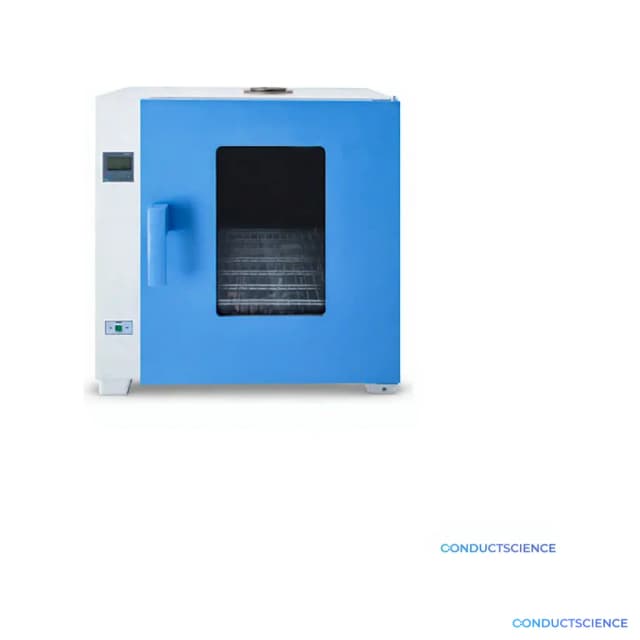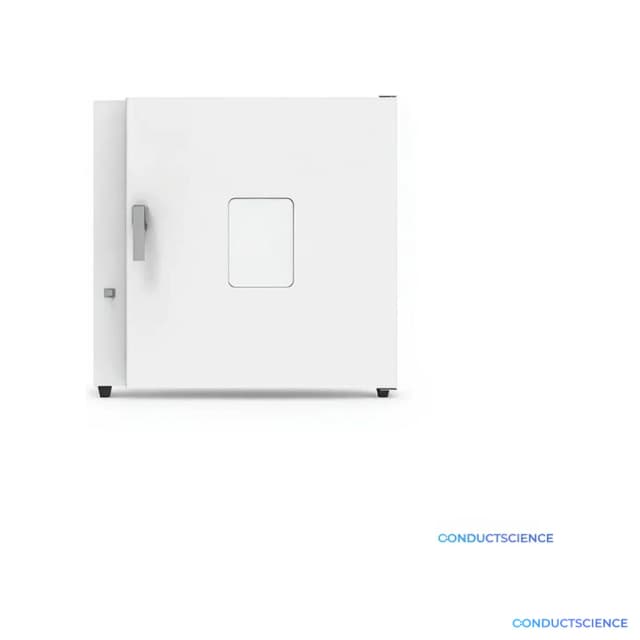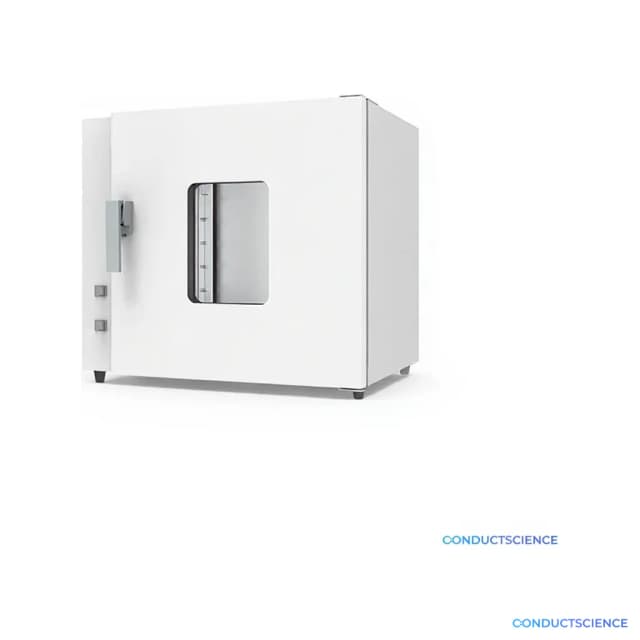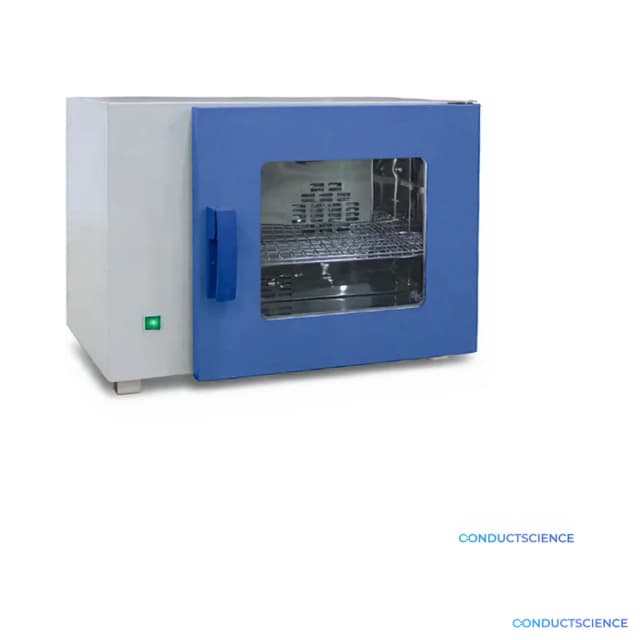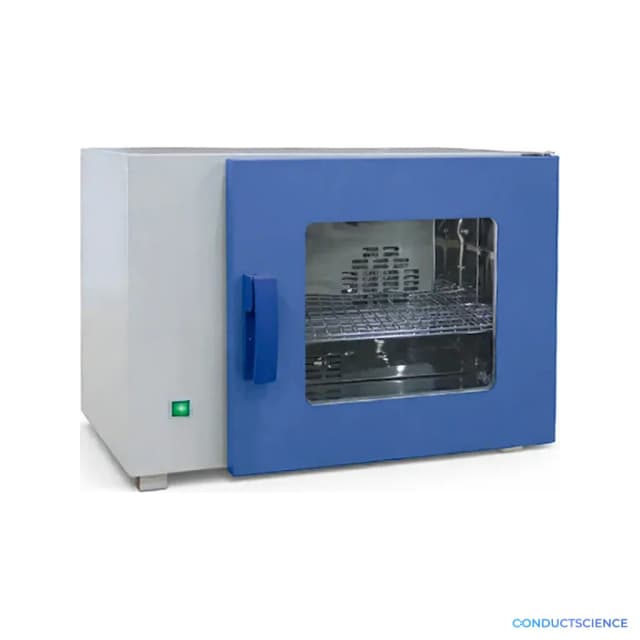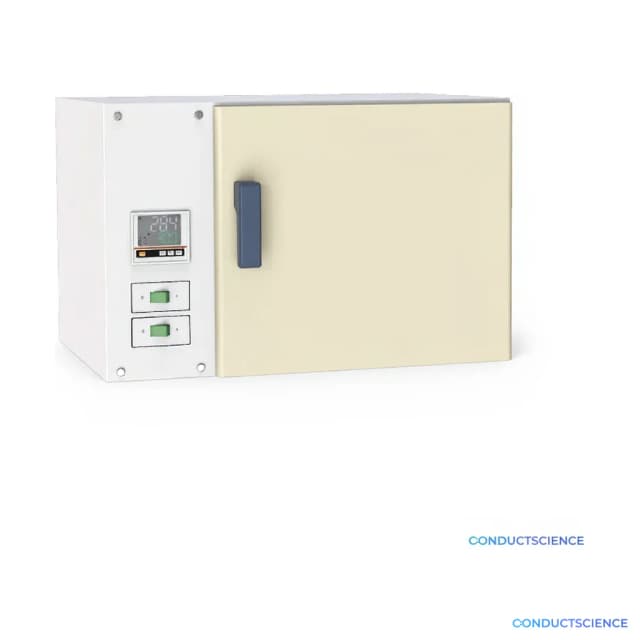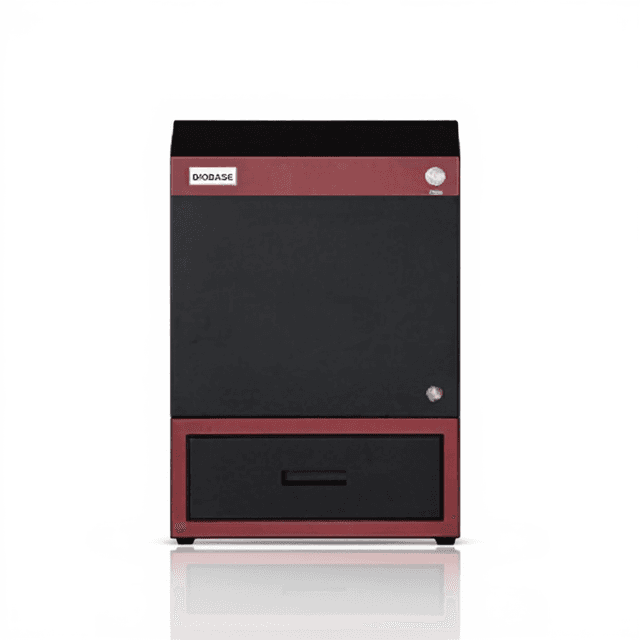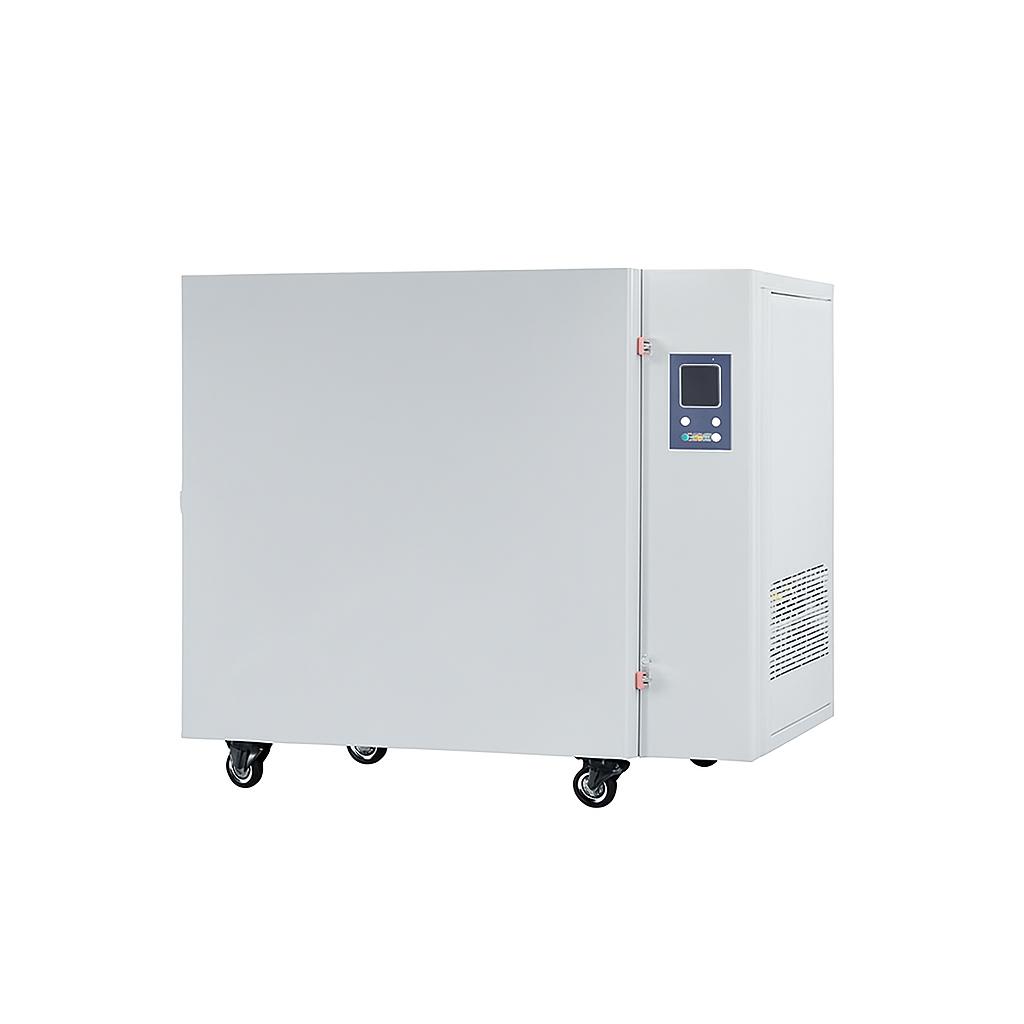
High Temperature Drying Oven
Laboratory convection oven with temperature range RT+20-400°C, available in 50L, 100L, and 226L capacities, featuring digital LCD control and precision temperature management for drying and thermal processing applications.

Louise Corscadden, PhD
Director of Science · ConductScience
Ask Louise about High Temperature Drying Oven fit, setup, configuration, or quote prep.
Already working with us? Sign in to connect this with My Scientist.
Key Specifications
Full details →- Model fit
- 3 selectable configurations
- SKU family
- BIO-0258
- Shipping box
- 40.0 x 35.0 x 35.0 cm
- Ordering
- Online checkout and quote request available
- Category
- Drying Ovens
- Build notes
- Confirm accessories, station layout, and support needs before purchase
The High Temperature Drying Oven delivers precise, uniform heat for drying, curing, annealing, and heat treatment workflows at elevated temperatures. PID microprocessor control holds temperature to 0.1°C precision with fluctuation of ±0.5°C (BOV-H50/H100) or ±1°C (BOV-H226), making it well suited for materials research, electronics baking, ceramics processing, and industrial quality-control applications.
The stainless steel chamber with arc-corner construction resists contamination and cleans easily after high-temperature runs. Hot-air circulation maintains uniform temperature distribution across the working volume. Safety is managed by built-in over-temperature alarm and temperature probe damage alarm. The BOV-H50 and BOV-H100 support optional printer, RS485, or USB connectivity for data logging and software integration.
Key Features
- PID microprocessor control — 0.1°C precision, stable ±0.5°C (H50/H100) or ±1°C (H226)
- Stainless steel interior with arc-corner design for easy cleaning
- Cold-rolled steel exterior with painted finish
- Over-temperature alarm and probe damage alarm as standard
- Optional printer / RS485 / USB interface for data logging (BOV-H50, BOV-H100)
- Three models: 50 L up to 400°C, 100 L up to 400°C, 226 L up to 500°C
Technical Specifications
| Parameter | BOV-H50 | BOV-H100 | BOV-H226 |
| Capacity | 50 L | 100 L | 226 L |
| Temperature Range | RT+20–400°C | RT+20–400°C | 50–500°C |
| Temperature Precision | 0.1°C | ||
| Temperature Fluctuation | ±0.5°C | ±0.5°C | ±1°C |
| Temperature Uniformity | ±3.0% | ±3.0% | ±3.5% |
| Timing Range | 0–5999 min | 0–5999 min | 0–9999 min |
| Display | LCD | LCD | LED |
| Alarm | Over-temperature, probe damage | ||
| Power Supply | AC 380V, 50/60 Hz | ||
| Power Consumption | 3250 W | 4050 W | 8000 W |
| Shelves | 2 | 2 | 3 |
| Optional Accessories | Printer/RS485/USB | Printer/RS485/USB | — |
| Interior (W×D×H) | 350×350×400 mm | 450×450×450 mm | 602×500×753 mm |
| Exterior (W×D×H) | 890×700×920 mm | 990×790×990 mm | 1070×770×1122 mm |
| Net Weight | 153 kg | 180 kg | 174 kg |
How It Works
The High Temperature Drying Oven operates on the principle of forced convection heating, where heated air circulates throughout the chamber to provide uniform temperature distribution. Internal heating elements generate thermal energy that is distributed by convection currents, ensuring consistent heat transfer to samples placed within the stainless steel chamber.
The digital temperature control system continuously monitors chamber temperature via precision sensors and maintains the setpoint through feedback control of the heating elements. The LCD display provides real-time temperature readout with 0.1°C resolution, while the internal safety systems monitor for over-temperature conditions and sensor malfunctions.
The programmable timer function allows for precise control of exposure duration, automatically terminating the heating cycle when the programmed time elapses. This enables reproducible thermal processing protocols and unattended operation for extended drying procedures.
Features & Benefits
Shipping weight
- 153.0 lb
Shipping box
- L: 40.0 cm
- W: 35.0 cm
- H: 35.0 cm
| Feature | This Product | Typical Alternative | Advantage |
|---|---|---|---|
| Maximum Temperature | 400°C | Entry-level laboratory ovens often limited to 200-300°C | Enables high-temperature sterilization and thermal processing applications beyond the range of standard laboratory ovens |
| Temperature Precision | ±0.1°C | Basic models typically offer ±1-5°C precision | Supports applications requiring tight temperature control and regulatory compliance documentation |
| Capacity Options | 50L, 100L, and 226L configurations | Fixed capacity models require purchasing different units for varying throughput needs | Allows laboratories to select optimal chamber size for their sample volume and space constraints |
| Timer Range | 0-5999 minutes (programmable) | Basic timers often limited to shorter durations or manual operation | Enables extended unattended drying cycles for protocols requiring long exposure times |
| Safety Features | Over-temperature alarm and temperature probe damage detection | Entry-level units may lack comprehensive alarm systems | Protects valuable samples and ensures operator safety through proactive fault detection |
| Display Type | LCD digital display | Analog dial displays with lower resolution | Provides precise temperature readout for accurate process monitoring and documentation |
This High Temperature Drying Oven offers extended temperature capability to 400°C with precision digital control and multiple capacity configurations. The comprehensive alarm system and programmable timing support both routine drying operations and specialized high-temperature thermal processing applications.
| Model | SKU | Listed price | Status | Shipping box |
|---|---|---|---|---|
| BOV-H226 | BIO-BOV-H226 | $5,590.00 | Available | 40.0 x 35.0 x 35.0 cm |
| BOV-H100 | BIO-BOV-H100 | $4,090.00 | Available | 40.0 x 35.0 x 35.0 cm |
| BOV-H50 | BIO-BOV-H50 | $3,090.00 | Available | 40.0 x 35.0 x 35.0 cm |
Practical Tips
Verify temperature accuracy at multiple points throughout your working range using calibrated reference thermometers placed in different chamber locations.
Why: Ensures temperature uniformity and accuracy across the entire working space for reliable results
Clean the stainless steel interior regularly with appropriate solvents to remove sample residues and prevent cross-contamination.
Why: Maintains chamber cleanliness and prevents interference with subsequent drying operations
Allow adequate spacing between samples and avoid overloading the chamber to ensure proper air circulation.
Why: Promotes uniform heating and prevents temperature gradients that could affect drying consistency
Always operate within the specified ambient temperature range (5-40°C) and ensure adequate room ventilation.
Why: Prevents equipment overheating and maintains safe operating conditions for personnel
If temperature probe alarms occur, verify sensor connections and placement before continuing operations.
Why: Temperature probe faults can lead to inaccurate control and potential sample damage
Document temperature profiles and timing for critical applications to support method validation and regulatory compliance.
Why: Provides traceable records for quality assurance and regulatory documentation requirements
Pre-heat the empty chamber to target temperature before loading samples to minimize thermal lag effects.
Why: Reduces total processing time and improves temperature control accuracy during the critical initial phase
Setup Guide
What’s in the Box
- High Temperature Drying Oven (main unit)
- Power cable (AC380V)
- User manual and operating instructions
- Temperature probe assembly
- Internal shelving system (typical)
- Calibration certificate (typical)
Warranty
ConductScience provides a standard one-year manufacturer warranty covering parts and labor, with comprehensive technical support for installation, calibration, and operational guidance throughout the warranty period.
Compliance
What is the temperature uniformity across the chamber at different setpoints?
The system maintains temperature fluctuation within ±3.0% of setpoint throughout the chamber. For specific uniformity mapping data at your target temperatures, consult the product datasheet or perform validation measurements with multiple calibrated probes.
Can the oven handle corrosive sample vapors during drying?
The stainless steel interior provides good chemical resistance for most laboratory applications. However, compatibility with specific corrosive vapors should be evaluated based on your sample chemistry and concentrations.
How long does it take to reach target temperature from ambient conditions?
Heat-up time depends on target temperature, chamber size, and sample load. Consult product datasheet for specific heat-up curves, or perform timing studies with your typical sample configurations.
Is the temperature control suitable for regulated pharmaceutical testing?
The ±0.1°C precision meets requirements for many pharmacopeial loss on drying methods. Verify specific temperature accuracy requirements against your standard operating procedures and validation protocols.
What maintenance is required for long-term accuracy?
Regular temperature calibration verification is recommended using calibrated reference thermometers. Clean the chamber interior regularly and inspect heating elements and temperature sensors according to the user manual schedule.
Can I interrupt a drying cycle to check samples?
The unit allows manual cycle interruption, though this may affect temperature recovery time and protocol reproducibility. Document any interruptions in your laboratory records for quality assurance purposes.
How does this compare to vacuum drying ovens for heat-sensitive materials?
This convection oven operates at atmospheric pressure, making it suitable for materials that can withstand the full temperature range. For highly heat-sensitive compounds, vacuum drying at reduced pressure may be more appropriate.
Have a question about this product?
Have a question? Just ask.
Send it over and we'll email you a personalized answer — no call, no scheduling.
Prefer to talk it through?
Accessories
Enhance your setup with compatible accessories
Upgrade Options