Optogenetics Optical Fiber
Multimode optical fiber for optogenetic light delivery with customizable core diameter (100-400µm) and numerical aperture (0.22-0.37), operating across 400-1100nm wavelength range.

Louise Corscadden, PhD
Director of Science · ConductScience
Ask Louise about Optogenetics Optical Fiber fit, setup, configuration, or quote prep.
Already working with us? Sign in to connect this with My Scientist.
Key Specifications
Full details →- Model fit
- Hamster, Non-human Primate, Rabbit, Mouse, Rat, Guinea pig
- SKU family
- CS-958439
- Shipping box
- 65.0 x 36.0 x 27.0 cm
- Ordering
- Online checkout and quote request available
- Category
- Optogenetics & Photometry
- Build notes
- Confirm accessories, station layout, and support needs before purchase
The Optogenetics Optical Fiber provides precise light delivery for in vivo optogenetic experiments across the visible to near-infrared spectrum. This multimode optical fiber features customizable core diameters (100–400 µm) and numerical apertures (0.22–0.50) to match specific experimental requirements and light coupling efficiency needs.
The fiber operates across a broad wavelength range of 400–1100 nm, accommodating various optogenetic tools including channelrhodopsins, halorhodopsins, and archaerhodopsins. Standard 1-meter length with customizable extensions up to 5 meters enables flexible experimental setups from acute preparations to chronic behavioral studies.
Model Configurations
| Model | Ferrule | Core Diameter | NA | Connector | Length |
|---|---|---|---|---|---|
| R-FC-L-N2-300-L1 | Φ1.25 mm Ceramic | 300 µm | 0.22 | FC/PC | 1 m |
| R-FC-L-N2-400-L1 | Φ1.25 mm Ceramic | 400 µm | 0.22 | FC/PC | 1 m |
| R-FC-P-N2-100-L1 | Φ2.5 mm Ceramic | 100 µm | 0.22 | FC/PC | 1 m |
| R-FC-P-N2-200-L1 | Φ2.5 mm Ceramic | 200 µm | 0.22 | FC/PC | 1 m |
| R-FC-P-N2-300-L1 | Φ2.5 mm Ceramic | 300 µm | 0.22 | FC/PC | 1 m |
| R-FC-P-N2-400-L1 | Φ2.5 mm Ceramic | 400 µm | 0.22 | FC/PC | 1 m |
| R-FC-L-N3-200-L1 | Φ1.25 mm Ceramic | 200 µm | 0.39 | FC/PC | 1 m |
| R-FC-L-N3-300-L1 | Φ1.25 mm Ceramic | 300 µm | 0.39 | FC/PC | 1 m |
| R-FC-L-N3-400-L1 | Φ1.25 mm Ceramic | 400 µm | 0.39 | FC/PC | 1 m |
| R-FC-P-N3-200-L1 | Φ2.5 mm Ceramic | 200 µm | 0.39 | FC/PC | 1 m |
| R-FC-P-N3-300-L1 | Φ2.5 mm Ceramic | 300 µm | 0.39 | FC/PC | 1 m |
| R-FC-P-N3-400-L1 | Φ2.5 mm Ceramic | 400 µm | 0.39 | FC/PC | 1 m |
| R-FC-L-N5-200-L1 | Φ1.25 mm Ceramic | 200 µm | 0.50 | FC/PC | 1 m |
| R-FC-L-N5-400-L1 | Φ1.25 mm Ceramic | 400 µm | 0.50 | FC/PC | 1 m |
| R-FC-P-N5-200-L1 | Φ2.5 mm Ceramic | 200 µm | 0.50 | FC/PC | 1 m |
| R-FC-P-N5-400-L1 | Φ2.5 mm Ceramic | 400 µm | 0.50 | FC/PC | 1 m |
How It Works
The optical fiber operates on the principle of total internal reflection to guide light from the proximal end (connected to light source) to the distal end (positioned at target tissue). Light propagates through the silica core when the angle of incidence exceeds the critical angle determined by the numerical aperture, which defines the light-gathering ability and beam divergence characteristics.
The numerical aperture (0.22-0.37) determines both the acceptance cone angle for incoming light and the divergence angle of emitted light at the tissue interface. Larger core diameters (200-400µm) provide higher light throughput but reduced spatial precision, while smaller cores (100-200µm) offer improved spatial selectivity at the expense of total light delivery. The cladding maintains the refractive index contrast necessary for efficient light guidance across the 400-1100nm operational spectrum.
Features & Benefits
Shipping weight
- 6.06 lb
Shipping box
- L: 65.0 cm
- W: 36.0 cm
- H: 27.0 cm
| Feature | This Product | Typical Alternative | Advantage |
|---|---|---|---|
| Wavelength Range | 400-1100nm | Many standard fibers optimize for narrower ranges | Single fiber accommodates multiple optogenetic tools without wavelength-specific selection |
| Core Diameter Options | 100µm, 200µm, 300µm, 400µm | Standard fibers often limited to 1-2 core sizes | Allows optimization of light delivery versus spatial precision for specific experimental requirements |
| Numerical Aperture Range | 0.22-0.37 | Fixed NA values in most commercial fibers | Enables matching to different light sources and control of beam divergence characteristics |
| Length Customization | 1.5-5m in 0.5m steps | Standard lengths only | Precise fitting to experimental geometry minimizes handling complexity and transmission losses |
| Ferrule Compatibility | 100µm and 200µm options | Single ferrule size | Direct compatibility with existing optogenetic hardware reduces need for adapters |
This fiber provides comprehensive wavelength coverage and multiple customization options for core diameter, numerical aperture, and length. The range of available specifications allows optimization for specific experimental requirements rather than compromising with fixed parameters.
| Model | SKU | Listed price | Status | Shipping box |
|---|---|---|---|---|
| 400um | CS-R-FC-P-N3-400-L1 | $59.99 | Available | 65.0 x 36.0 x 27.0 cm |
| 400um | CS-R-FC-L-N3-400-L1 | $59.99 | Available | 65.0 x 36.0 x 27.0 cm |
| 400um | CS-R-FC-P-N2-400-L1 | $59.99 | Available | 65.0 x 36.0 x 27.0 cm |
| 400um | CS-R-FC-L-N2-400-L1 | $59.99 | Available | 65.0 x 36.0 x 27.0 cm |
| 300um | CS-R-FC-P-N3-300-L1 | $49.99 | Available | 65.0 x 36.0 x 27.0 cm |
| 300um | CS-R-FC-L-N3-300-L1 | $49.99 | Available | 65.0 x 36.0 x 27.0 cm |
| 300um | CS-R-FC-P-N2-300-L1 | $49.99 | Available | 65.0 x 36.0 x 27.0 cm |
| 300um | CS-R-FC-L-N2-300-L1 | $49.99 | Available | 65.0 x 36.0 x 27.0 cm |
| 200um | RWD-R-FC-P-N3-200-L1 | $39.99 | Available | 65.0 x 36.0 x 27.0 cm |
| 200um | RWD-R-FC-P-N2-200-L1 | $39.99 | Available | 65.0 x 36.0 x 27.0 cm |
| 100um | RWD-R-FC-P-N2-100-L1 | $29.99 | Available | 65.0 x 36.0 x 27.0 cm |
| 200um | RWD-R-FC-L-N3-200-L1 | $39.99 | Available | 65.0 x 36.0 x 27.0 cm |
| 200um | RWD-R-FC-L-N2-200-L1 | $39.99 | Available | 65.0 x 36.0 x 27.0 cm |
| 100um | RWD-R-FC-L-N2-100-L1 | $29.99 | Available | 65.0 x 36.0 x 27.0 cm |
Practical Tips
Match core diameter to your target region size - smaller cores for precise stimulation, larger cores for broader illumination.
Why: Optimizes the balance between spatial precision and light delivery efficiency
Measure actual light output at the fiber tip rather than relying on source specifications.
Why: Accounts for coupling losses and fiber transmission characteristics for accurate dosimetry
Store fibers with protective caps and avoid sharp bends below the minimum bend radius.
Why: Prevents core damage and maintains optical transmission quality over repeated use
Always verify light output levels before tissue contact to prevent thermal damage.
Why: High optical power densities can cause tissue heating even with brief exposures
Document exact fiber specifications and measured irradiance values for experimental reproducibility.
Why: Enables accurate replication and comparison across experimental sessions and laboratories
Check fiber end faces under magnification if light output decreases during experiments.
Why: Contamination or damage at fiber tips is the most common cause of reduced transmission
Setup Guide
What’s in the Box
- Optical fiber with specified core diameter and numerical aperture
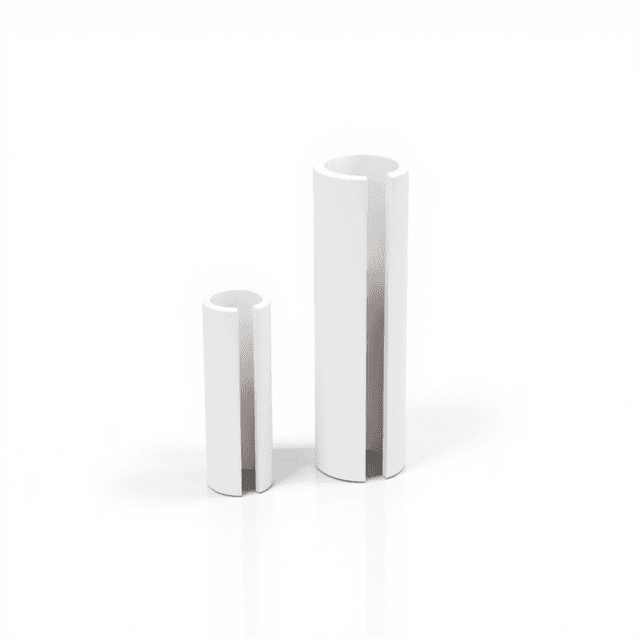
- Protective sleeve or jacket
- Ferrule connectors
- Fiber specification sheet (typical)
- Handling instructions (typical)
Warranty
ConductScience provides a standard manufacturer warranty covering material defects and workmanship, with technical support for fiber handling and optical coupling guidance.
Compliance
References
Background reading relevant to this product:
How do I select the appropriate core diameter for my experimental setup?
Choose based on balance between light throughput and spatial precision. 100-200µm cores provide better spatial selectivity for small target regions, while 300-400µm cores maximize light delivery for larger areas or when working with lower-power sources.
What numerical aperture should I use for coupling with LED sources?
Higher numerical apertures (0.35-0.37) improve coupling efficiency with divergent LED sources, while lower values (0.22-0.25) work better with collimated laser sources and provide more controlled beam divergence at the tissue.
How does fiber length affect light transmission?
Longer fibers introduce additional transmission losses, typically 0.1-0.5 dB/meter depending on wavelength. Consider this when calculating required source power for chronic implant applications requiring extended fiber lengths.
Can this fiber handle high-power pulsed light sources?
Consult product datasheet for power handling specifications. Generally, multimode fibers handle higher powers than single-mode, but peak power density at fiber tips should be verified to prevent damage.
What wavelength-dependent losses should I expect?
Silica fibers typically show lowest losses around 800-900nm with higher attenuation at shorter wavelengths. Measure actual transmission at your specific wavelength for accurate power calculations.
How do I clean and maintain the fiber ends?
Use appropriate fiber cleaning solutions and lint-free wipes. Avoid touching fiber tips directly and store with protective caps to prevent contamination and scratching.
Have a question about this product?
Have a question? Just ask.
Send it over and we'll email you a personalized answer — no call, no scheduling.
Prefer to talk it through?
Accessories
Enhance your setup with compatible accessories
Frequently Bought Together
Upgrade Options