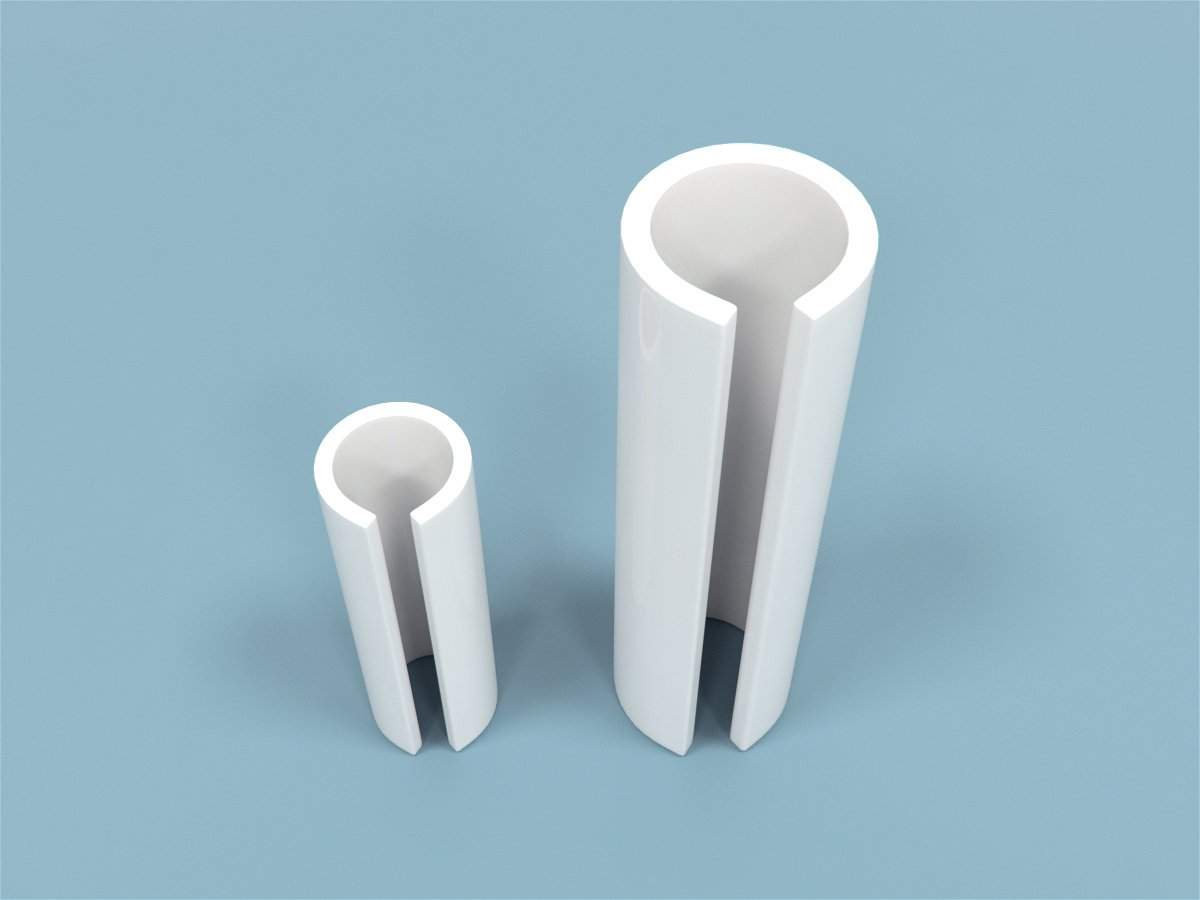
Optogenetics Ceramic Cannula
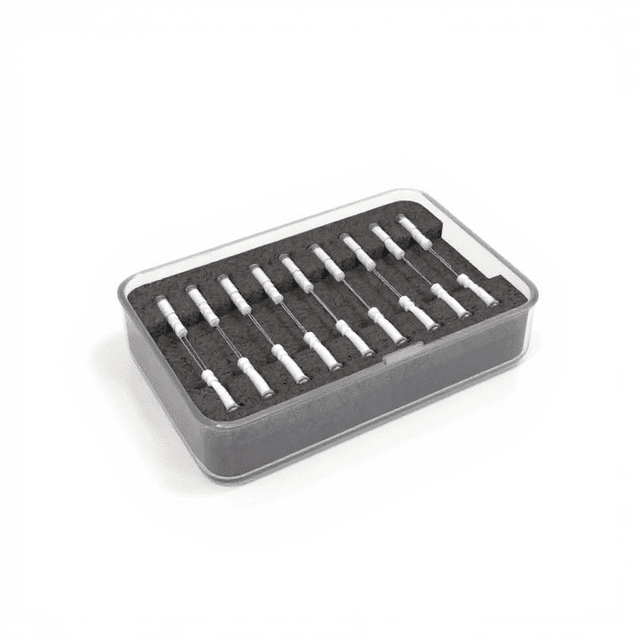
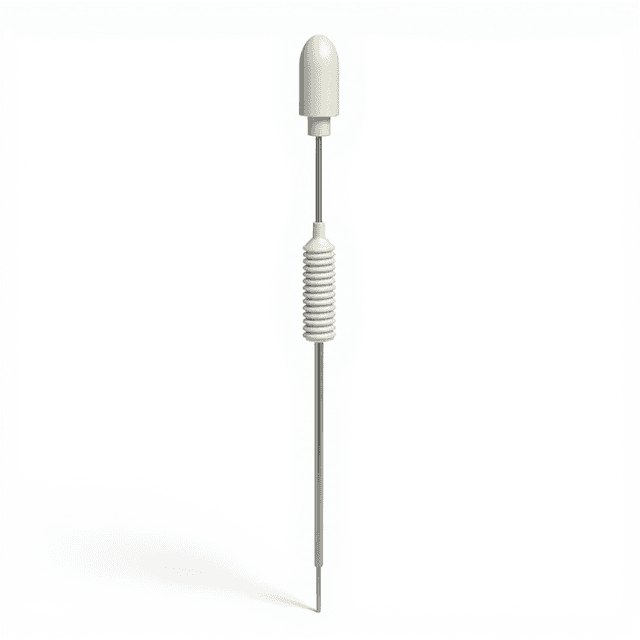
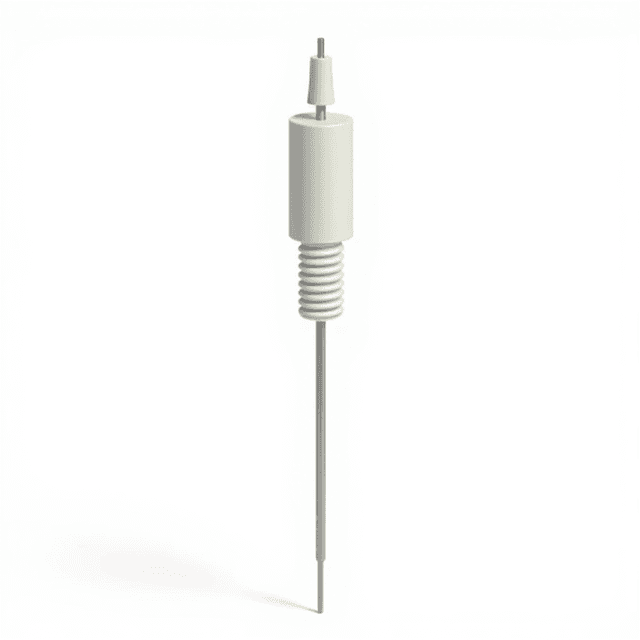
Ceramic cannulae designed for temporary optical fiber connections in optogenetic research, available in two size configurations with 20 units per package.

Louise Corscadden, PhD
Director of Science · ConductScience
Ask Louise about Optogenetics Ceramic Cannula fit, setup, configuration, or quote prep.
Already working with us? Sign in to connect this with My Scientist.
Key Specifications
Full details →- Model fit
- Mouse, Rat
- SKU family
- CS-958440
- Shipping box
- 65.0 x 36.0 x 27.0 cm
- Ordering
- Online checkout and quote request available
- Category
- Microinjection & Infusion
- Build notes
- Ceramic
The Optogenetics Ceramic Cannula serves as a temporary connection interface between optical fibers in optogenetic research applications. These ceramic components provide stable, precise alignment for optical coupling while maintaining durability under laboratory conditions. The cannulae are manufactured from ceramic material to ensure optical clarity and resistance to chemical degradation from biological fluids.
Available in two size configurations - 1.25mm diameter with 7mm length and 2.5mm diameter with 11.5mm length - these cannulae accommodate different fiber optic specifications and implantation depths required in optogenetic protocols. Each package contains 20 units, providing researchers with multiple components for extended experimental series or replacement needs during chronic implantation studies.
How It Works
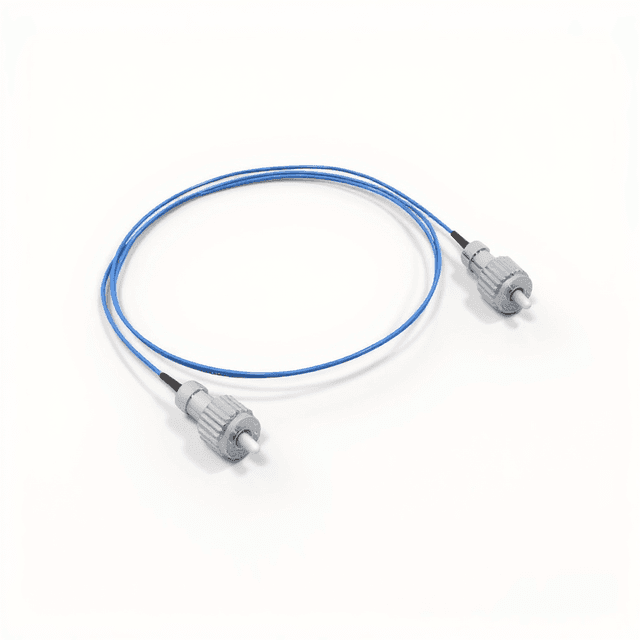
The ceramic cannula functions as a mechanical and optical interface between two optical fiber segments, typically connecting a chronically implanted fiber optic to an external light delivery system. The ceramic material provides precise bore dimensions that maintain fiber alignment while allowing for repeated connections and disconnections without degradation of optical coupling efficiency.
The cannula's internal diameter matches standard optical fiber dimensions, creating a secure mechanical connection that minimizes light loss at the interface. The ceramic construction offers superior chemical resistance compared to polymer alternatives, maintaining optical properties when exposed to biological fluids or cleaning agents commonly used in optogenetic protocols.
During operation, optical fibers are inserted into opposing ends of the cannula, creating a temporary but stable connection that allows light transmission from external sources to implanted neural targets. The standardized lengths accommodate different implantation depths and connection geometries required in various experimental configurations.
Features & Benefits
Diameters
- 1.25mm and 2.5mm
Package Quantity
- 20
Automation Level
- manual
Material
- Ceramic
Dimensions
- 7mm and 11.5mm
Research Domain
- Anxiety and Depression
- Behavioral Pharmacology
- Learning and Memory
- Motor Function
- Neuroscience
- Social Behavior
Species
- Mouse
- Rat
Shipping weight
- 6.06 lb
Shipping box
- L: 65.0 cm
- W: 36.0 cm
- H: 27.0 cm
| Feature | This Product | Typical Alternative | Advantage |
|---|---|---|---|
| Material Construction | Ceramic material | Polymer or plastic materials in entry-level options | Ceramic provides superior chemical resistance and maintains dimensional stability when exposed to biological fluids. |
| Size Options | Two diameter options (1.25mm and 2.5mm) with corresponding lengths | Single size configuration in basic models | Multiple size options accommodate different fiber specifications and experimental requirements in the same product line. |
| Package Quantity | 20 units per package | Varies by model, often smaller quantities | Higher quantity provides sufficient components for extended experimental series and replacement needs. |
| Connection Type | Temporary connection design | Permanent or semi-permanent coupling methods | Allows repeated connections and disconnections for chronic experiments without permanent fiber modification. |
The ceramic cannulae offer durable, chemically resistant optical fiber coupling with dual size configurations and quantity packaging suitable for extended optogenetic research programs. The ceramic construction provides superior material properties compared to polymer alternatives while maintaining precision bore dimensions for consistent optical coupling.
| Model | SKU | Listed price | Status | Shipping box |
|---|---|---|---|---|
| ?2.50mm/11mm | RWD-R-MS-2.6 | $8.28 | Available | 65.0 x 36.0 x 27.0 cm |
| ?1.25mm/7mm | RWD-R-MS-2.5 | $8.28 | Available | 65.0 x 36.0 x 27.0 cm |
Practical Tips
Clean cannula bore with appropriate solvents between uses to remove biological debris and maintain optical clarity.
Why: Debris accumulation can reduce light transmission efficiency and compromise experimental consistency.
Store cannulae in protective containers to prevent bore contamination and mechanical damage during handling.
Why: Ceramic material can chip or crack if subjected to impact, compromising optical alignment.
Match cannula diameter precisely to fiber specifications to ensure optimal coupling efficiency and prevent light leakage.
Why: Diameter mismatch can result in significant light loss and inconsistent stimulation parameters.
If experiencing reduced light transmission, inspect fiber ends for damage and verify complete insertion into both sides of cannula.
Why: Incomplete insertion or damaged fiber ends are common causes of coupling losses in temporary connections.
Handle ceramic components carefully to avoid breakage that could create sharp fragments or compromise optical integrity.
Why: Ceramic material can fracture under mechanical stress, potentially causing injury or equipment damage.
Test light transmission through each cannula connection before beginning experimental sessions to ensure consistent stimulation parameters.
Why: Connection variability can introduce experimental artifacts and compromise data reproducibility.
Setup Guide
What’s in the Box
- 20 ceramic cannulae (specified size configuration)
- Product specifications sheet
Warranty
ConductScience provides standard warranty coverage against manufacturing defects with technical support for proper application guidance.
Compliance
What is the maximum number of connection cycles these cannulae can withstand?
Consult product datasheet for specific cycle testing data, though ceramic construction provides superior durability compared to polymer alternatives for repeated connections.
Are these cannulae compatible with standard optogenetic fiber specifications?
The 1.25mm and 2.5mm diameter options accommodate common fiber specifications used in optogenetic research, but verify compatibility with your specific fiber dimensions.
Can these cannulae be sterilized for chronic implantation?
The ceramic material is compatible with standard sterilization methods including autoclave and chemical sterilization, though specific protocols should be validated for your application.
What is the light transmission efficiency through the cannula interface?
Transmission efficiency depends on fiber alignment and cleave quality - consult product datasheet for specific optical specifications.
How do I select between the two size options?
Choose based on your fiber optic diameter and implantation depth requirements - 1.25mm diameter with 7mm length for smaller fibers, 2.5mm diameter with 11.5mm length for larger diameter applications.
Are replacement cannulae available individually?
The standard package contains 20 units, providing multiple components for extended experimental series and replacement needs.
Have a question about this product?
Have a question? Just ask.
Send it over and we'll email you a personalized answer — no call, no scheduling.
Prefer to talk it through?
Accessories
Enhance your setup with compatible accessories