Single Cannula System Pack
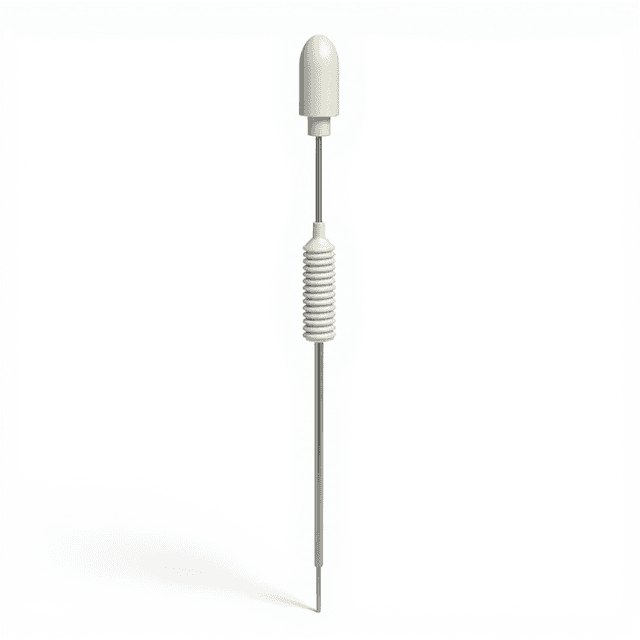
A – The length of the stainless steel tubing above the plastic pedestal B – The height of the cylindrical plastic base..
C – The length of the stainless steel tubing below the plastic pedestal,can be customized.

Louise Corscadden, PhD
Director of Science · ConductScience
Ask Louise about Single Cannula System Pack fit, setup, configuration, or quote prep.
Already working with us? Sign in to connect this with My Scientist.
Key Specifications
Full details →- Model fit
- Mouse, Rat
- SKU family
- RWD-SCSP-01/RWD-SCSP-02/RWD-SCSP-03/RWD-SCSP-04/RWD-SCSP-05/RWD-SCSP-06/RWD-SCSP-07/RWD-SCSP-08/RWD-SCSP-09/RWD-SCSP-10
- Shipping box
- 34.0 x 39.0 x 33.0 cm
- Ordering
- Online checkout and quote request available
- Category
- Microinjection & Infusion
- Build notes
- Metal, Plastic, Stainless Steel
The cannula implantation system is an accepted method of acute and chronic intracranial drug administration for animal experiments.A single cannula system includes a guide cannula, dummy cannula, internal cannula, and fixing screw. Together with our stereotaxic instruments, holders, fixing screws, PE cannulas, injection pumps, and other related products, this system provide a set of simple and effective experimental tool for unilateral intracranial administration for neuroscientists. More importantly, we offer users can customized cannulas based on their specific experimental requirements.
Cannula Models and Specifications
|
Guide Cannula [OD x ID]* |
Internal Cannula [OD x ID]** |
Dummy Cannula Plastic [OD]*** |
Dummy Cannula Metal [OD]*** |
|---|---|---|---|
|
RWD-62001 (23g) (0.64 x 0.45) |
RWD-62201 (0.41×0.25) |
RWD-62101 0.4 |
RWD-62106 0.4 |
|
RWD- 62002 (24G) (0.56 × 0.38) |
RWD-62202 (0.36×0.2) |
RWD-62102 0.3 |
RWD-62107 0.3 |
|
RWD-62003 (26G) (0.48×0.34) |
RWD-62203 (0.3×0.14) |
RWD-62102 0.3 |
RWD-62107 0.3 |
|
RWD-62004 (27G) (0.41×0.25) |
RWD-62204 (0.21×0.11) |
RWD-62104 0.2 |
RWD-62108 0.2 |
|
RWD-62005 (22G) (0.71×0.45) |
RWD-62201 (0.41×0.25) |
RWD-62101 0.4 |
RWD-62106 0.4 |
Note: Unit of data in the table is mm. Uniform height of the single cannula base: 6mm. Width of the base: 3.5mm. Dummy cannula is available in plastic or metal.
*C value: length of the stainless steel tube of the Guide cannula 0.5 ~ 15mm
**G1 value:the length of the protruding part of the internal cannula. 0, 0.5 ~ 15mm
***G2 value: The length of the protruding part of the dummy cannula. Plastic or metal option. 0, 0.5 ~ 15mm
Accesories
|
Product Type |
Product Description |
|---|---|
|
Fixing Screw |
RWD-62502 |
|
PU Tube |
RWD-BC-22 |
|
Plug |
RWD-P22-R/ RWD P22-W |
|
Cannula Holder |
RWD-68205/ RWD 68217 |
|
C*:Length Customization Range (mm) |
0.5~15 mm |
|
G1*:Length Customization Range (mm) |
0, 0.5~15 mm |
|
G2*:Length Customization Range (mm) |
0, 0.5~15 mm |
C* value: length of the stainless steel tube of the Guide cannula. C = depth of target brain region + thickness of dental cement (0.5 ~ 0.8 mm) - G1.
G1* value: the length of the protruding part of the internal cannula when it is inserted into the guide cannula, can be customized. Usually, 0.5 mm or 1.0 mm is selected, and 0.5 mm is recommended.
G2* value: The length of the protruding part of the dummy cannula when it is inserted into the guide cannula, can be customized. Usually 0, 0.5mm or 1.0 mm is selected, 0 mm is recommended.
Cannula components
|
Cannula component |
Product Description |
|---|---|
|
Guide cannula |
Guide cannula consists of a cylindrical base with threads and a thin stainless steel tube. It is pre-implanted intracranially and secured with dental cement around the injection orifice. Both dummy cannula and internal cannula can be inserted into the guide cannula individually for sealing or injections. |
|
Internal cannula |
Internal cannula connects with the guide cannula on one end and with PU tube on the other end for injections. |
|
Fixing screw |
Fixing screw is used to fix the relative position of the internal cannula and the guide cannula to ensure stable connection and avoid leakage. |
|
Dummy cannula |
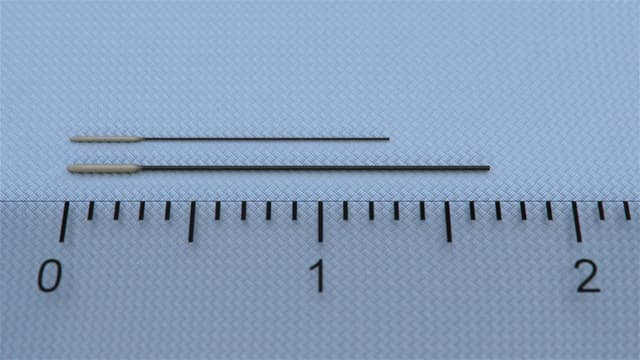
Dummy cannula is composed of a stainless steel wire and a threaded plastic cap. For use, it should be inserted in and fixed on the guide cannula to prevent tissue fluid from entering the catheter and causing it to become blocked. The length of the stainless steel wire can be customized or cut according to actual needs.Optional plastic or metal material (more durable). |
|
PU tube |
PU tube connects with the internal cannula on one end and syringe on the other end for drug injection. |
|
Plug |
Plug connects with PU tube on the one end and with syringes of different sizes on the other end. |
|
Screw |
Screw provides the dental cement with a point of strength to prevent it from falling off. |
Cannula selection: Mice and Rat options
Step 1. Selecting the guide cannula size according to the experimental animal and the depth of the target brain region.
Guide cannula size selection for rat: 62005 (22G), 62001 (23G), 62002 (24G).
Guide cannula size selection for mouse: 62003 (26G), 62004 (27G).
|
Product Type |
Product Description |
|---|---|
|
Guide cannula size selection for Rat |
RWD-62005 (22G) RWD-62001 (23G) RWD-62002 (24G) |
|
Guide cannula size selection for Mouse |
RWD-62003 (26G) RWD-62004 (27G) |
Step 2. Determine the C value: length of the stainless steel tube of the Guide cannula. C = depth of target brain region + thickness of dental cement (0.5 ~ 0.8 mm) – G1.
Step 3:
Determine the G1 value:the length of the protruding part of the internal cannula when it is inserted into the guide cannula.Usually 0.5 mm or 1.0 mm is selected, and 0.5 mm is recommended.
Step 4:
Determine the G2 value: The length of the protruding part of the dummy cannula when it is inserted into the guide cannula.Usually 0, 0.5mm or 1.0 mm is selected, 0 mm is recommended.
Step 5:
Selecting the screws (recommended diameter slightly larger than the diameter of the skull drill), plugs, catheters, and other accessories.
How It Works
The cannula system operates through stereotaxic-guided implantation of a permanent guide cannula into the target brain region. During surgery, the guide cannula is positioned according to atlas coordinates and secured with dental cement and fixing screws. A dummy cannula maintains patency and prevents tissue ingrowth during the recovery period, typically extending flush with the guide cannula tip (0mm protrusion recommended).
For drug administration, the dummy cannula is removed and replaced with an internal cannula connected to an injection system. The internal cannula extends beyond the guide cannula tip (0.5mm protrusion recommended) to ensure drug delivery directly into the target tissue rather than the cannula tract. This design minimizes tissue damage while providing reliable access for repeated administrations over chronic study periods.
The differential gauge sizing between guide and internal cannulas ensures smooth insertion while maintaining a sealed delivery pathway. Stainless steel construction provides biocompatibility and resistance to corrosion from repeated sterilization cycles and diverse drug formulations.
Features & Benefits
Guide Cannula Gauges Rat
- 22G (62005), 23G (62001), 24G (62002)
Guide Cannula Gauges Mouse
- 26G (62003), 27G (62004)
Guide Cannula Tube Length Range
- 0.5 - 15mm
Internal Cannula Protrusion Range
- 0, 0.5 - 15mm
Dummy Cannula Protrusion Range
- 0, 0.5 - 15mm
Recommended Internal Cannula Protrusion
- 0.5mm
Recommended Dummy Cannula Protrusion
- 0mm
Dental Cement Thickness
- 0.5 - 0.8mm
Cannula Base Dimensions
- 6mm height x 3.5mm width
Administration Type
- Acute and chronic intracranial
Customization Available
- Yes
Automation Level
- manual
Material
- Metal
- Plastic
- Stainless Steel
Species
- Mouse
- Rat
Dimensions
- 3.5mm x 6mm
Research Domain
- Addiction Research
- Anxiety and Depression
- Behavioral Pharmacology
- Learning and Memory
- Motor Function
- Neurodegeneration
- Neuroscience
Brand
- RWD
Shipping weight
- 8.27 lb
Shipping box
- L: 34.0 cm
- W: 39.0 cm
- H: 33.0 cm
| Feature | This Product | Typical Alternative | Advantage |
|---|---|---|---|
| Gauge Range | 22G-27G options covering mouse and rat applications | Limited gauge selection often focused on single species | Enables researchers to optimize tissue damage versus flow rate trade-offs for specific experimental requirements. |
| Tube Length Customization | 0.5-15mm range with custom fabrication available | Fixed lengths requiring researchers to adapt coordinates to available sizes | Provides precise anatomical targeting without compromising surgical approach or coordinate accuracy. |
| Base Standardization | Uniform 6mm × 3.5mm base across all gauges | Variable base sizes complicating surgical planning and cement application | Simplifies surgical protocols and ensures consistent anchoring strength across different gauge selections. |
| Material Options | Stainless steel with plastic and metal dummy cannula choices | Single material options limiting experimental flexibility | Accommodates diverse experimental requirements including MRI compatibility considerations and biocompatibility needs. |
| Component Modularity | Independent replacement of internal and dummy cannulas | Integrated systems requiring complete replacement if any component fails | Extends chronic study duration and reduces animal replacement costs when components become damaged or occluded. |
The Single Cannula System Pack provides comprehensive gauge coverage with standardized base dimensions and customizable specifications. The modular design and material options offer experimental flexibility while the custom fabrication capability accommodates specialized research requirements.
| Model | SKU | Listed price | Status | Shipping box |
|---|---|---|---|---|
| RWD-62101 | RWD-SCSP-01/RWD-SCSP-02/RWD-SCSP-03/RWD-SCSP-04/RWD-SCSP-05/RWD-SCSP-06/RWD-SCSP-07/RWD-SCSP-08/RWD-SCSP-09/RWD-SCSP-10 | $17.50 | Available | 34.0 x 39.0 x 33.0 cm |
| RWD-62102 | RWD-SCSP-02 | $17.50 | Available | 34.0 x 39.0 x 33.0 cm |
| RWD-62102 | RWD-SCSP-03 | $17.50 | Available | 34.0 x 39.0 x 33.0 cm |
| RWD-62104 | RWD-SCSP-04 | $17.50 | Available | 34.0 x 39.0 x 33.0 cm |
| RWD-62101 | RWD-SCSP-05 | $20.50 | Available | 34.0 x 39.0 x 33.0 cm |
| RWD-62106 | RWD-SCSP-06 | $19.50 | Available | 34.0 x 39.0 x 33.0 cm |
| RWD-62107 | RWD-SCSP-07 | $19.50 | Available | 34.0 x 39.0 x 33.0 cm |
| RWD-62107 | RWD-SCSP-08 | $19.50 | Available | 34.0 x 39.0 x 33.0 cm |
| RWD-62108 | RWD-SCSP-09 | $19.50 | Available | 34.0 x 39.0 x 33.0 cm |
| RWD-62106 | RWD-SCSP-10 | $22.50 | Available | 34.0 x 39.0 x 33.0 cm |
Practical Tips
Test injection system flow rate and verify cannula patency with saline before drug administration.
Why: Prevents loss of experimental compounds due to blockages and ensures accurate dose delivery timing.
Sonicate internal cannulas in distilled water between uses and inspect tips under magnification for damage.
Why: Removes protein deposits and particulates that can cause progressive flow restriction over multiple sessions.
Verify stereotaxic coordinates with atlas references and account for individual animal size variation.
Why: Ensures accurate anatomical targeting, especially critical for small brain regions with narrow effective zones.
Always use dummy cannula placement immediately after surgery to prevent tissue ingrowth and maintain sterility.
Why: Protects the injection pathway and reduces infection risk during the critical tissue healing period.
Record injection resistance and any unusual flow patterns during drug delivery sessions.
Why: Documents delivery efficacy and helps identify developing blockages before complete cannula occlusion occurs.
If internal cannula insertion becomes difficult, check for tissue overgrowth and consider gentle dilation with graduated probes.
Why: Prevents cannula damage from forced insertion while maintaining access to the target brain region.
Setup Guide
What’s in the Box
- Guide cannula (selected gauge)
- Internal cannula (gauge-matched)
- Dummy cannula (plastic or metal)
- Fixing screw
- Installation instructions
- Specifications sheet
Warranty
ConductScience provides a one-year manufacturer warranty covering material defects and workmanship. Technical support includes surgical guidance and custom fabrication consultation for specialized research applications.
Compliance
What factors should I consider when selecting the appropriate cannula gauge for my study?
Choose gauge based on species (26G-27G for mice, 22G-24G for rats) and brain region sensitivity. Smaller gauges minimize tissue damage but may increase clogging risk with viscous solutions. Larger gauges accommodate higher flow rates but create more tissue displacement.
How do I determine the optimal guide cannula length for my target coordinates?
Calculate length from skull surface to target depth minus desired internal cannula protrusion (typically 0.5mm). Account for skull thickness variation and ensure sufficient length for stable dental cement anchoring around the 6mm base height.
What is the recommended recovery period between implantation and first injection?
Allow 7-10 days for tissue healing and inflammatory response resolution. Shorter intervals may compromise injection accuracy due to edema, while longer periods risk excessive tissue ingrowth despite dummy cannula placement.
How should I maintain cannula patency during chronic studies?
Flush with sterile saline between injections and immediately replace dummy cannula after each session. Inspect cannula tips weekly for blockage or tissue ingrowth. Replace internal cannulas if resistance increases during injection.
What injection volumes and flow rates are appropriate for this system?
Typical volumes range 0.1-2.0 μL for mice and 0.5-5.0 μL for rats, delivered at 0.1-0.5 μL/min to prevent pressure-induced tissue damage. Consult specific brain region literature for volume limits to avoid overflow to adjacent areas.
Can this system be used with viral vectors or other biological agents?
Yes, stainless steel construction is compatible with viral vectors, proteins, and biological agents. Ensure solutions are sterile and consider particle size relative to cannula inner diameter to prevent clogging during delivery.
How does this single cannula system compare to dual cannula approaches?
Single cannula systems provide unilateral delivery with simpler surgical procedures and reduced tissue damage compared to bilateral implants. However, they cannot provide within-subject controls or simultaneous bilateral manipulations that dual systems enable.
Have a question about this product?
Have a question? Just ask.
Send it over and we'll email you a personalized answer — no call, no scheduling.
Prefer to talk it through?
Accessories
Enhance your setup with compatible accessories
Frequently Bought Together