Silicone Coated MCAO Monofilament Suture
Specialized intraluminal monofilament sutures with silicone coating for inducing middle cerebral artery occlusion in mouse stroke models, available in multiple diameter configurations for different body weight ranges.

Louise Corscadden, PhD
Director of Science · ConductScience
Ask Louise about Silicone Coated MCAO Monofilament Suture fit, setup, configuration, or quote prep.
Already working with us? Sign in to connect this with My Scientist.
Key Specifications
Full details →- Model fit
- Isoflurane (4-5% induction, 2-3% maintenance)
- SKU family
- MSMC19B100PK50/MSMC21B120PK50/MSMC23B120PK50/MSMC25B150PK50 /MSMC26B150PK50/MSRC32B200PK50/MSRC35B200PK50/MSRC37B250PK50 /MSRC40B250PK50/MSRC42B250PK50/MSRC45B300PK50
- Shipping box
- 26.0 x 12.0 x 7.0 cm
- Ordering
- Online checkout and quote request available
- Category
- Neuroscience Models
- Build notes
- Nylon, Silicone
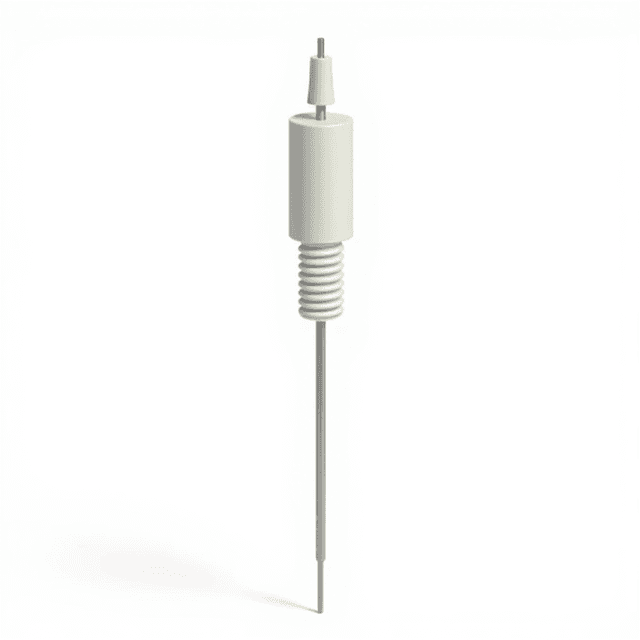
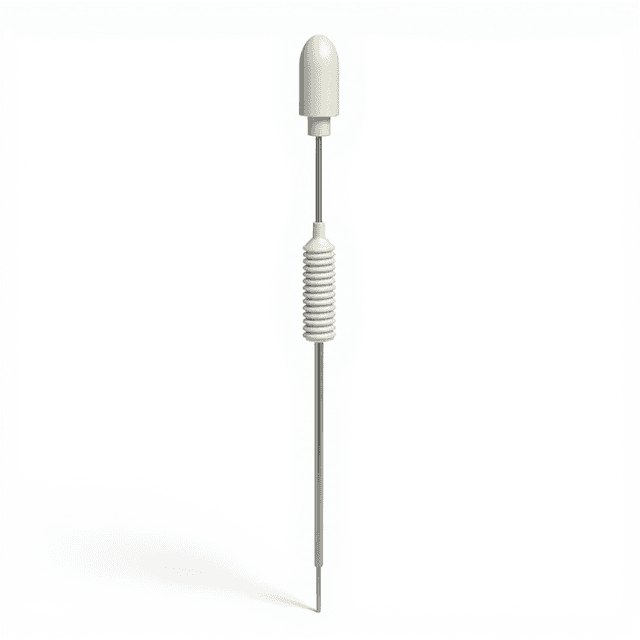
The Silicone Coated MCAO Monofilament Suture is a specialized intraluminal filament designed for inducing middle cerebral artery occlusion in mouse models of focal cerebral ischemia. The suture features a cylinder-like silicone head manufactured using open-molded techniques, providing consistent occlusion geometry for reproducible stroke induction. Available in multiple diameter configurations to accommodate mouse body weights from 15-35+ grams, each model is optimized for specific animal size ranges with corresponding coating and tip diameters.
The nylon monofilament core with silicone coating enables precise vascular occlusion while minimizing endothelial damage during insertion and withdrawal. The 30mm total length with 3-4mm coating length provides adequate reach for middle cerebral artery access via the internal carotid artery approach. Each package contains 50 sterile sutures, supporting multiple experimental procedures while maintaining consistent stroke induction parameters across subjects.
How It Works
The MCAO monofilament suture operates through mechanical occlusion of the middle cerebral artery via an intraluminal approach. The nylon core provides structural integrity and flexibility for navigation through the carotid arterial system, while the silicone coating creates a cylinder-like head that blocks arterial flow when positioned at the MCA origin. The open-molded manufacturing technique ensures consistent head geometry and diameter across sutures.
During the procedure, the suture is advanced through the external carotid artery, into the internal carotid artery, and positioned to occlude the MCA origin. The silicone coating diameter is calibrated to the vessel size based on animal body weight, creating complete flow cessation while minimizing vessel wall trauma. For transient occlusion models, the suture can be withdrawn after predetermined time periods to allow reperfusion, while permanent occlusion maintains the filament in position throughout the experimental period.
The procedure requires maintenance of core body temperature at 36.5-37.5°C and isoflurane anesthesia (4-5% induction, 2-3% maintenance) to ensure physiological stability during vascular manipulation. The sterile manufacturing and packaging support aseptic surgical conditions necessary for successful model induction.
Features & Benefits
Coating Length Mouse
- 3-4mm
Coating Length Rat
- 5-6mm
Head Shape
- Cylinder-like silicone head
Manufacturing Technique
- Open-molded manufacturing
Suture Type
- MCAO (Middle Cerebral Artery Occlusion)
Core Temperature Range
- 36.5-37.5°C (during procedure)
Anesthesia Compatibility
- Isoflurane (4-5% induction, 2-3% maintenance)
Sterilization Required
- Yes - sterile environment
Automation Level
- manual
Material
- Nylon
- Silicone
Dimensions
- 30mm (mouse models), 50mm (rat models)
Research Domain
- Behavioral Pharmacology
- Cardiovascular
- Learning and Memory
- Motor Function
- Neurodegeneration
- Neuroscience
Species
- Mouse
Shipping weight
- 1.1 lb
Shipping box
- L: 26.0 cm
- W: 12.0 cm
- H: 7.0 cm
| Feature | This Product | Typical Alternative | Advantage |
|---|---|---|---|
| Coating Length | 3-4mm silicone coating | Varies from 2-6mm across different manufacturers | Optimized length provides focal MCA occlusion without blocking collateral circulation or extending into downstream vessels. |
| Manufacturing Method | Open-molded silicone coating | Dip-coated or heat-shrink methods common | Produces more consistent cylinder-like head geometry for reproducible occlusion characteristics across experimental subjects. |
| Size Range Options | 5 weight-specific diameter ranges (15->35g) | Limited size options or single diameter models | Enables precise vessel caliber matching across different mouse strains and body weights for optimal occlusion. |
| Package Quantity | 50 sutures per package | Typically 10-25 pieces per package | Provides sufficient quantities for larger experimental cohorts while maintaining cost-effectiveness for longitudinal studies. |
| Total Suture Length | 30mm total length | Ranges from 25-35mm depending on manufacturer | Optimized length provides adequate reach for MCA access while offering sufficient handling length for precise surgical manipulation. |
This MCAO suture system provides comprehensive size options with open-molded coating consistency for reproducible stroke induction. The weight-specific diameter selection and standardized 30mm length design support protocol standardization across different mouse models.
| Model | SKU | Listed price | Status | Shipping box |
|---|---|---|---|---|
| 50pcs | MSMC26B150PK50 | $400.00 | Available | 26.0 x 12.0 x 7.0 cm |
| 50pcs | MSMC25B150PK50 | $400.00 | Available | 26.0 x 12.0 x 7.0 cm |
| 50pcs | MSMC23B120PK50 | $400.00 | Available | 26.0 x 12.0 x 7.0 cm |
| 50pcs | MSMC21B120PK50 | $400.00 | Available | 26.0 x 12.0 x 7.0 cm |
| 50pcs | MSMC19B110PK50 | $400.00 | Available | 26.0 x 12.0 x 7.0 cm |
Practical Tips
Pre-warm all surgical instruments and maintain ambient temperature at 22-24°C to prevent hypothermia during the procedure.
Why: Temperature drops can provide neuroprotection that masks true stroke severity and affects outcome measurements.
Practice suture insertion technique on cadaveric specimens before live animal procedures to minimize surgical time and trauma.
Why: Reduced procedure time decreases anesthesia exposure and improves post-operative recovery outcomes.
If the suture advances too easily past 20mm, withdraw slightly and reposition to ensure proper MCA origin occlusion.
Why: Excessive advancement may position the suture in smaller distal vessels, reducing stroke volume and affecting model consistency.
Handle sutures with forceps rather than fingers to maintain sterility and prevent coating damage from body oils.
Why: Contamination or coating alterations can affect occlusion properties and introduce infection risk.
Record exact insertion depth for each animal to enable correlation with final infarct volume measurements.
Why: Insertion depth variability can account for stroke volume differences and improves data interpretation accuracy.
Inspect suture coating under magnification before use to identify any manufacturing defects or damage.
Why: Coating irregularities can cause incomplete occlusion or vessel trauma that affects stroke model validity.
Verify animal body weight immediately before surgery to confirm appropriate suture diameter selection.
Why: Weight changes during experimental protocols may require different suture sizes than initially planned based on earlier measurements.
Setup Guide
What’s in the Box
- 50 sterile MCAO monofilament sutures
- Product specification sheet
- Sizing chart for body weight selection
- Storage instructions
Warranty
ConductScience provides a standard manufacturer warranty covering material defects and manufacturing inconsistencies. Technical support is available for proper sizing selection and procedural guidance.
Compliance
How do I select the correct suture diameter for my mouse strain?
Select based on body weight using the provided chart: 15-20g mice use 0.17-0.19mm coating diameter, 21-25g use 0.20-0.21mm, 26-30g use 0.22-0.23mm, 31-35g use 0.24-0.25mm, and >35g mice use 0.24-0.25mm coating diameter.
What insertion depth indicates proper MCA occlusion?
Advance the suture 18-20mm from the carotid bifurcation until resistance is felt, indicating positioning at the MCA origin. Proper positioning blocks middle cerebral artery flow while preserving anterior cerebral artery circulation.
Can these sutures be used for both transient and permanent occlusion models?
Yes, the sutures support both permanent occlusion (suture left in place) and transient models (timed withdrawal after predetermined ischemia duration). The silicone coating minimizes endothelial damage during withdrawal for reperfusion studies.
What anesthesia protocols are recommended for MCAO procedures?
Use isoflurane at 4-5% for induction followed by 2-3% maintenance throughout the procedure. Maintain core body temperature at 36.5-37.5°C to prevent hypothermia-induced neuroprotection that could confound stroke outcomes.
How should unused sutures be stored to maintain sterility?
Store unopened packages at room temperature in dry conditions. Once opened, use sutures immediately as the sterile barrier is compromised. Do not resterilize as this may alter silicone coating properties.
What are the key advantages compared to alternative occlusion methods?
The intraluminal approach provides more consistent occlusion compared to external ligation methods, allows for transient occlusion models, and produces more focal infarcts than embolic models while maintaining reproducible stroke volumes.
How do I confirm successful stroke induction?
Monitor for immediate neurological deficits including contralateral circling behavior, forelimb weakness, and Bederson neurological scores. Post-mortem TTC staining or MRI can confirm infarct location and volume at experimental endpoints.
Have a question about this product?
Have a question? Just ask.
Send it over and we'll email you a personalized answer — no call, no scheduling.
Prefer to talk it through?
Accessories
Enhance your setup with compatible accessories
Frequently Bought Together
Upgrade Options