Optogenetics Rotary Joint
Fiber Optic Rotary Joint is a solution designed for fiber that needs to rotate and lossless transmission signal during use..
The rotating joint is precision machined to rotate continuously and smoothly, and the fiber transmission loss is basically unchanged in the process of rotation.

Louise Corscadden, PhD
Director of Science · ConductScience
Ask Louise about Optogenetics Rotary Joint fit, setup, configuration, or quote prep.
Already working with us? Sign in to connect this with My Scientist.
Key Specifications
Full details →- Model fit
- Mouse, Rat
- SKU family
- RWD-R-FC-1x1
- Shipping box
- 34.0 x 39.0 x 33.0 cm
- Ordering
- Online checkout and quote request available
- Category
- Optogenetics & Photometry
- Build notes
- Confirm accessories, station layout, and support needs before purchase
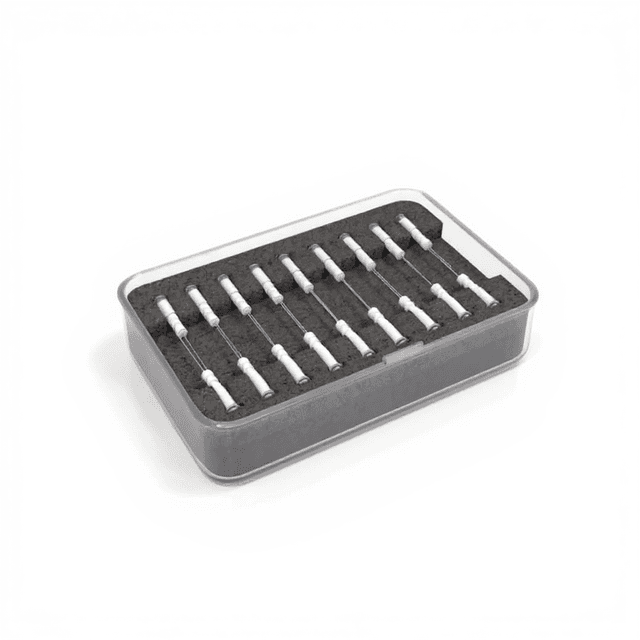
Fiber Optic Rotary Joint is a solution designed for fiber that needs to rotate and lossless transmission signal during use. The rotating joint is precision machined to rotate continuously and smoothly, and the fiber transmission loss is basically unchanged in the process of rotation. Since the fiber can be rotated freely during use, fiber damage is greatly reduced, and the fiber is not permanently fixed to the connector, so when the fiber damage can be easily replaced. The product is bidirectional, standard FC interface, plug and play with fiber optical fiber.
Applicable to long-time stimulation and observation experiments on awake and free-moving animals, avoid twining of the fiber optic.
: 9, 19-20/F, Building 7A, 9F Building 7D,
Key Features
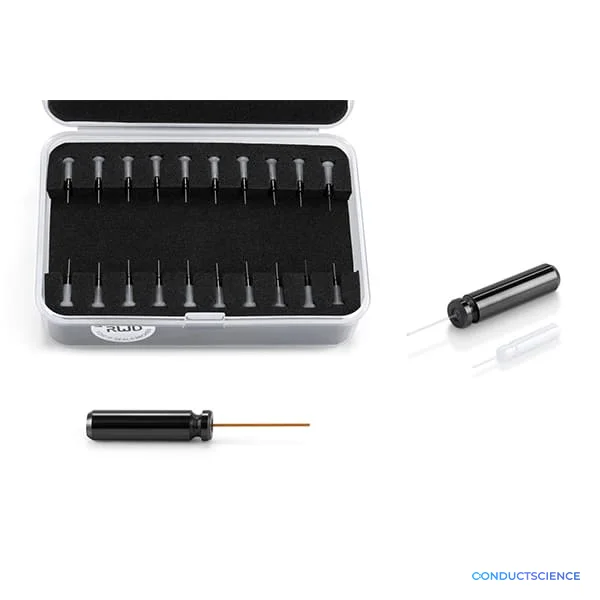
- Accessories (Fiber-optic Cannulas, optical fiber, etc.)
- Cell Counter Selection Guide: 4 Critical Criteria Every Lab Must Validate
- 1.Fill in the form and our experts will get back to you ASAP!
- 2.Ask about An Equipment
- 3.Wondering which equipment to conduct your researches or perform your experiments? Our sales reps will try their best to share their knowledge with you!
- 4.Get Technical Support
- 5.An RWD equipment is not performing? Talk to our support team to get instant feedback!
- USA: 10410 Corporate Drive, Sugar Land, TX 77478, USA China: 9, 19-20/F, Building 7A, 9F Building 7D, Shenzhen International Innovation Valley, Dashi 1st Road, Nanshan District, Shenzhen, Guangdong, China
How It Works
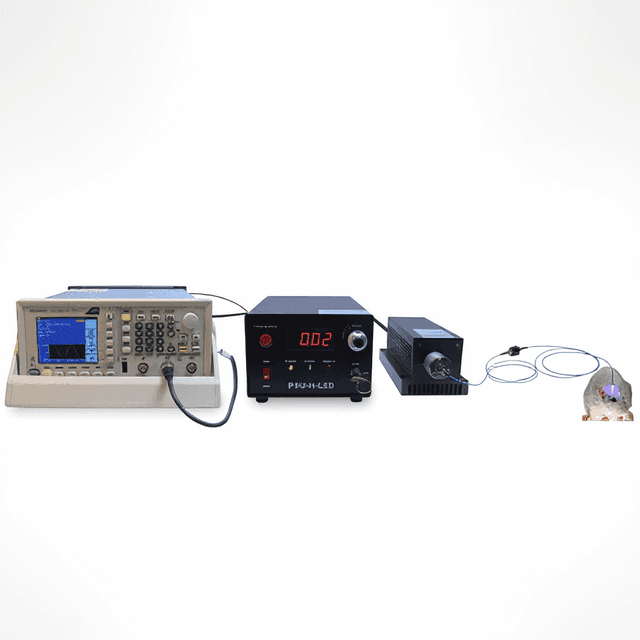
The optogenetics rotary joint operates through precision-engineered optical coupling that maintains fiber alignment during rotation. Light from the optogenetic stimulation source travels through the input fiber, passes through the rotary interface, and continues through the output fiber to the implanted cannula. The rotating mechanism uses precision bearings and optical components that maintain coupling efficiency regardless of rotational position.
The bidirectional design allows light transmission in either direction through the joint, accommodating various experimental configurations. Standard FC connectors provide secure optical coupling while enabling quick fiber changes. The mechanical design minimizes transmission loss during rotation through careful alignment of optical surfaces and controlled air gaps that prevent contamination while maintaining signal integrity.
During operation, the subject can rotate freely without generating torque on the implanted fiber, preventing tissue damage and fiber breakage. The rotary joint compensates for animal movement by allowing the fiber to rotate continuously in either direction while maintaining optical transmission efficiency throughout the experimental session.
Features & Benefits
Behavioral Construct
- Locomotor Activity
- Spatial Navigation
- Social Interaction
- Anxiety-like Behavior
- Reward-seeking Behavior
- Learning and Memory Formation
Brand
- RWD
Research Domain
- Addiction Research
- Anxiety and Depression
- Behavioral Pharmacology
- Learning and Memory
- Motor Function
- Neuroscience
- Pain Research
- Social Behavior
Species
- Mouse
- Rat
Shipping weight
- 8.27 lb
Shipping box
- L: 34.0 cm
- W: 39.0 cm
- H: 33.0 cm
| Feature | This Product | Typical Alternative | Advantage |
|---|---|---|---|
| Rotation Capability | Continuous 360-degree bidirectional rotation | Fixed connections or limited rotation ranges | Prevents fiber damage and allows natural behavior patterns during extended experimental sessions |
| Connector Interface | Standard FC connectors | Proprietary or specialized connectors | Enables plug-and-play compatibility with existing optogenetic systems and standard fiber components |
| Fiber Replacement | User-replaceable fiber design | Integrated fibers requiring full unit replacement | Reduces operational costs and minimizes experimental downtime when fibers are damaged |
| Transmission Direction | Bidirectional light transmission | Varies by model | Provides flexibility for different experimental configurations and system architectures |
This rotary joint combines continuous rotation capability with standard FC connectivity and user-replaceable fibers. The precision-machined design maintains transmission efficiency while enabling unlimited animal movement, making it suitable for extended behavioral optogenetic experiments.
Practical Tips
Measure transmission efficiency before each experimental series by comparing input and output power across the full rotation range.
Why: Ensures consistent stimulation parameters and identifies any degradation in optical coupling performance.
Clean FC connector end faces with appropriate optical cleaning materials and inspect for damage or contamination weekly.
Why: Optical contamination is the primary cause of transmission loss and can introduce variability in stimulation intensity.
Mount the rotary joint at optimal height to minimize fiber length while providing adequate clearance for animal movement.
Why: Proper positioning reduces mechanical stress on the fiber and prevents the animal from accessing or damaging the connection.
If rotation becomes stiff or irregular, check for debris in the bearing mechanism and ensure the fiber is not kinked or over-tensioned.
Why: Mechanical binding can create torque on the implanted fiber and interfere with natural animal behavior.
Monitor light output stability throughout experimental sessions to detect any rotation-dependent transmission variations.
Why: Transmission instabilities can introduce artifacts in behavioral responses that may be mistaken for biological effects.
Verify power levels at the fiber tip after installation to ensure safe tissue exposure levels for your experimental protocol.
Why: Optical power concentrations at the fiber tip can cause tissue heating or damage if not properly controlled.
Use appropriate strain relief on both input and output fibers to prevent mechanical damage during animal movement.
Why: Proper strain relief prevents fiber breakage and maintains consistent optical coupling throughout the experiment.
Setup Guide
What’s in the Box
- Optogenetics rotary joint assembly
- Protective dust caps for FC connectors
- Mounting hardware (typical)
- User manual and specifications sheet (typical)
Warranty
ConductScience provides a one-year manufacturer warranty covering defects in materials and workmanship, with technical support for setup and troubleshooting assistance.
Compliance
References
Background reading relevant to this product:
What is the typical transmission loss through the rotary joint during rotation?
Transmission efficiency is maintained during rotation through precision optical coupling. Consult the product datasheet for specific loss values at your wavelength of interest, typically minimal for standard optogenetic applications.
Can this rotary joint handle the power levels required for behavioral optogenetics?
The rotary joint is designed for standard optogenetic power requirements. Verify power handling specifications in the datasheet match your light source output to ensure safe operation and avoid optical damage.
Is the rotary joint compatible with both blue and yellow optogenetic wavelengths?
The FC connectors and optical components support broadband transmission suitable for common optogenetic wavelengths. Confirm specific wavelength compatibility and transmission characteristics in the technical specifications.
How do I prevent contamination of the optical connectors during long experiments?
Use protective dust caps when disconnected and ensure clean connections. The sealed rotary mechanism protects internal optics, but external FC connectors should be kept clean and inspected regularly.
Can multiple rotary joints be used simultaneously for multi-site stimulation?
Yes, multiple units can operate independently in the same experimental setup. Ensure adequate spacing to prevent mechanical interference and verify each joint maintains proper rotation clearance.
What maintenance is required for long-term operation?
Regular inspection of connector cleanliness and rotation smoothness is recommended. The sealed bearing system typically requires minimal maintenance, but consult the manual for specific service intervals.
How does the rotary joint affect the temporal precision of optogenetic stimulation?
The rotary joint introduces no significant delay to light transmission, maintaining the temporal precision of the light source. Mechanical rotation does not affect the speed-of-light signal transmission through the fiber.
Have a question about this product?
Have a question? Just ask.
Send it over and we'll email you a personalized answer — no call, no scheduling.
Prefer to talk it through?
Accessories
Enhance your setup with compatible accessories
Frequently Bought Together