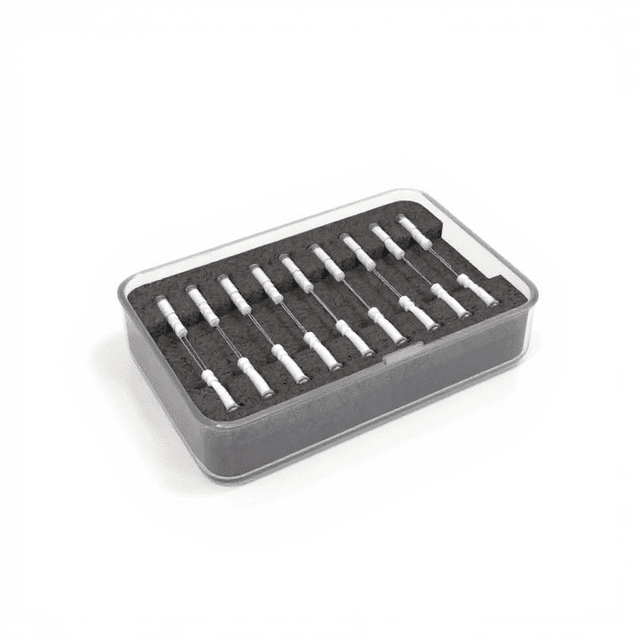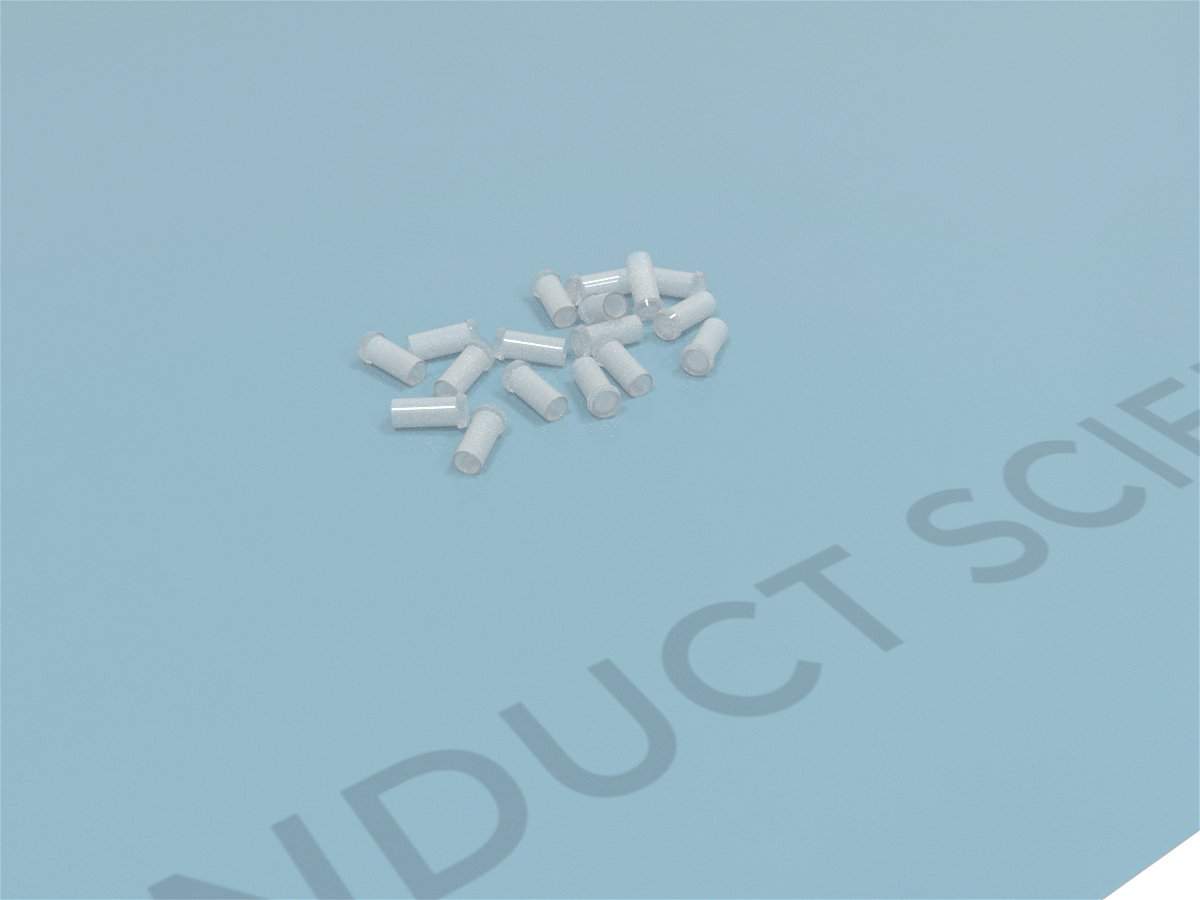
Optogenetics Ceramic Ferrule Protective Cap
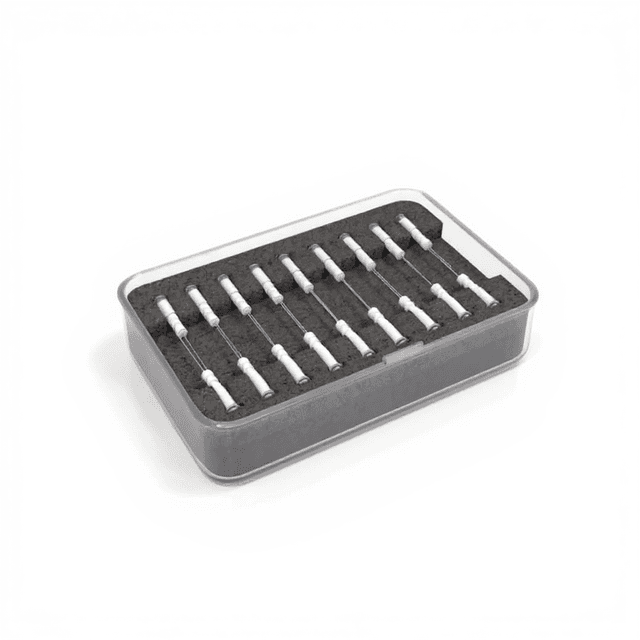
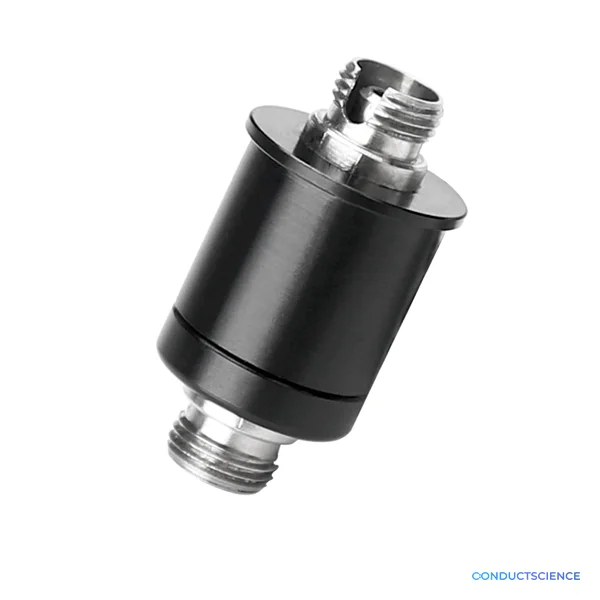
Ceramic protective caps for PC/UPC ferrule end faces and ST/SC/FC patch cords in optogenetic applications, supplied in packages of 200 units.

Louise Corscadden, PhD
Director of Science · ConductScience
Ask Louise about Optogenetics Ceramic Ferrule Protective Cap fit, setup, configuration, or quote prep.
Already working with us? Sign in to connect this with My Scientist.
Key Specifications
Full details →- Model fit
- PC/UPC end face
- SKU family
- CS-958443
- Shipping box
- 65.0 x 36.0 x 27.0 cm
- Ordering
- Online checkout and quote request available
- Category
- Optogenetics & Photometry
- Build notes
- Ceramic
The Optogenetics Ceramic Ferrule Protective Cap provides essential protection for PC/UPC ceramic ferrule end faces and ST/SC/FC patch cords in optogenetic and photometry applications. These precision-machined ceramic caps prevent contamination, physical damage, and optical degradation of critical fiber optic connections during storage, transport, and handling between experiments.
Available in both 1.25mm and 2.5mm sizes to accommodate standard ferrule dimensions, each package contains 200 protective caps for laboratory-scale consumption. The ceramic construction matches the thermal expansion properties of the protected ferrule components, ensuring stable fit across temperature variations typical in research environments.
How It Works
Ceramic ferrule protective caps function through precise mechanical fit over the polished ceramic end face of fiber optic connectors. The ceramic material provides a contamination barrier that prevents dust particles, oils, and other environmental contaminants from adhering to the optically critical ferrule surface. Unlike plastic caps, ceramic construction eliminates static charge buildup that could attract airborne particles.
The caps are designed with internal dimensions that create a protective air gap around the ferrule end face, preventing direct contact that could cause scratching or chipping of the polished surface. This design maintains the sub-wavelength surface finish required for low-loss optical connections critical in optogenetic applications where light intensity precision affects experimental outcomes.
For ST, SC, and FC connector types, the caps engage with the outer connector housing to provide secure retention during handling and storage, while the ceramic thermal expansion coefficient matches that of the protected ferrule to maintain consistent fit across laboratory temperature ranges.
Features & Benefits
Package Quantity
- 200
Compatible Connector Types
- ST/SC/FC patch cord
Ferrule Compatibility
- PC/UPC end face
Function
- Protects Ceramic Ferrules PC/UPC end face and ST/SC/FC patch cord
Automation Level
- manual
Material
- Ceramic
Research Domain
- Addiction Research
- Aging Research
- Anxiety and Depression
- Behavioral Pharmacology
- Learning and Memory
- Motor Function
- Neurodegeneration
- Neuroscience
Species
- Mouse
- Rat
Shipping weight
- 6.06 lb
Shipping box
- L: 65.0 cm
- W: 36.0 cm
- H: 27.0 cm
| Feature | This Product | Typical Alternative | Advantage |
|---|---|---|---|
| Material Construction | Ceramic construction with thermal stability | Plastic caps may generate static charge and lack thermal expansion matching | Eliminates electrostatic particle attraction while maintaining stable fit across laboratory temperature variations |
| Package Quantity | 200 units per package | Smaller quantities often require more frequent reordering | Reduces procurement overhead and ensures adequate supply for multi-experiment laboratory operations |
| Connector Compatibility | ST/SC/FC connector types supported | Some caps are limited to single connector types | Provides versatility for laboratories using mixed connector systems in optogenetic setups |
| Ferrule Size Options | Available in 1.25mm and 2.5mm sizes | Single size options may not accommodate diverse ferrule types | Supports both single-mode and multimode fiber systems commonly used in optogenetic research |
These ceramic protective caps provide comprehensive protection for PC/UPC ferrule end faces across major connector types, with ceramic construction offering thermal stability and contamination resistance. The 200-unit packaging and dual size availability support diverse laboratory requirements for optogenetic fiber maintenance.
| Model | SKU | Listed price | Status | Shipping box |
|---|---|---|---|---|
| 2.5mm | RWD-R-DC-1.26 | $10.99 | Available | 65.0 x 36.0 x 27.0 cm |
| 1.25mm | RWD-R-DC-1.25 | $10.99 | Available | 65.0 x 36.0 x 27.0 cm |
Practical Tips
Always apply caps to clean ferrules immediately after disconnection to prevent contamination accumulation between uses.
Why: Contaminated ferrule surfaces can cause permanent optical loss and require extensive cleaning procedures
Inspect caps for cracks or deformation before each use and discard damaged units to prevent ferrule surface scratching.
Why: Damaged ceramic caps can cause irreparable harm to precision-polished ferrule end faces
Handle ceramic caps gently as they can fracture if dropped on hard surfaces, creating sharp fragments.
Why: Broken ceramic pieces pose injury risk and cannot provide effective protection for optical components
Remove caps and clean ferrule surfaces before critical optical measurements to ensure consistent light transmission.
Why: Even minor contamination under protective caps can affect optical coupling efficiency in sensitive applications
Store removed caps in organized containers to prevent loss and maintain clean storage environment for reuse.
Why: Lost caps cannot protect expensive optical components and contaminated caps defeat their protective purpose
If caps appear stuck on ferrules, use gentle twisting motion while pulling rather than excessive force to prevent connector damage.
Why: Forced removal can damage both the protective cap and the underlying connector assembly
Setup Guide
What’s in the Box
- 200 ceramic protective caps (size-specific: 1.25mm or 2.5mm)
- Packaging suitable for laboratory storage (typical)
Warranty
ConductScience provides standard manufacturer warranty coverage with technical support for product defects and compatibility guidance for optogenetic applications.
Compliance
What is the difference between PC and UPC ferrule compatibility?
Both physical contact (PC) and ultra-physical contact (UPC) ferrule end faces are supported. These caps protect the polished ceramic surfaces regardless of the specific polish angle, maintaining the sub-wavelength surface finish critical for low-loss optical connections.
Can these caps be reused after removal from ferrules?
Yes, ceramic caps can typically be reused if they remain undamaged and are stored in clean conditions. Inspect caps for cracks or contamination before reuse, and clean with appropriate fiber optic cleaning protocols if necessary.
How do I determine which size caps I need for my connectors?
Measure your ferrule diameter or check connector specifications. Standard single-mode ferrules use 1.25mm caps, while multimode ferrules typically require 2.5mm caps. Consult your optogenetic system documentation for specific ferrule dimensions.
Will these caps fit connectors from different manufacturers?
The caps are designed for standard ST, SC, and FC connector geometries that follow industry dimensional specifications. However, verify fit with a test cap before bulk application, as some proprietary connector designs may have dimensional variations.
How should protected connectors be stored for long-term maintenance?
Store capped connectors in clean, dry environments with caps facing upward to prevent contamination infiltration. Avoid temperature extremes and maintain consistent humidity to prevent condensation formation under the protective caps.
What cleaning protocols should be used before applying protective caps?
Clean ferrule end faces with appropriate fiber optic cleaning materials (lint-free wipes and isopropyl alcohol or specialized fiber cleaning solutions) before cap installation. Ensure complete drying before applying caps to prevent trapped moisture.
Have a question about this product?
Have a question? Just ask.
Send it over and we'll email you a personalized answer — no call, no scheduling.
Prefer to talk it through?
Upgrade Options