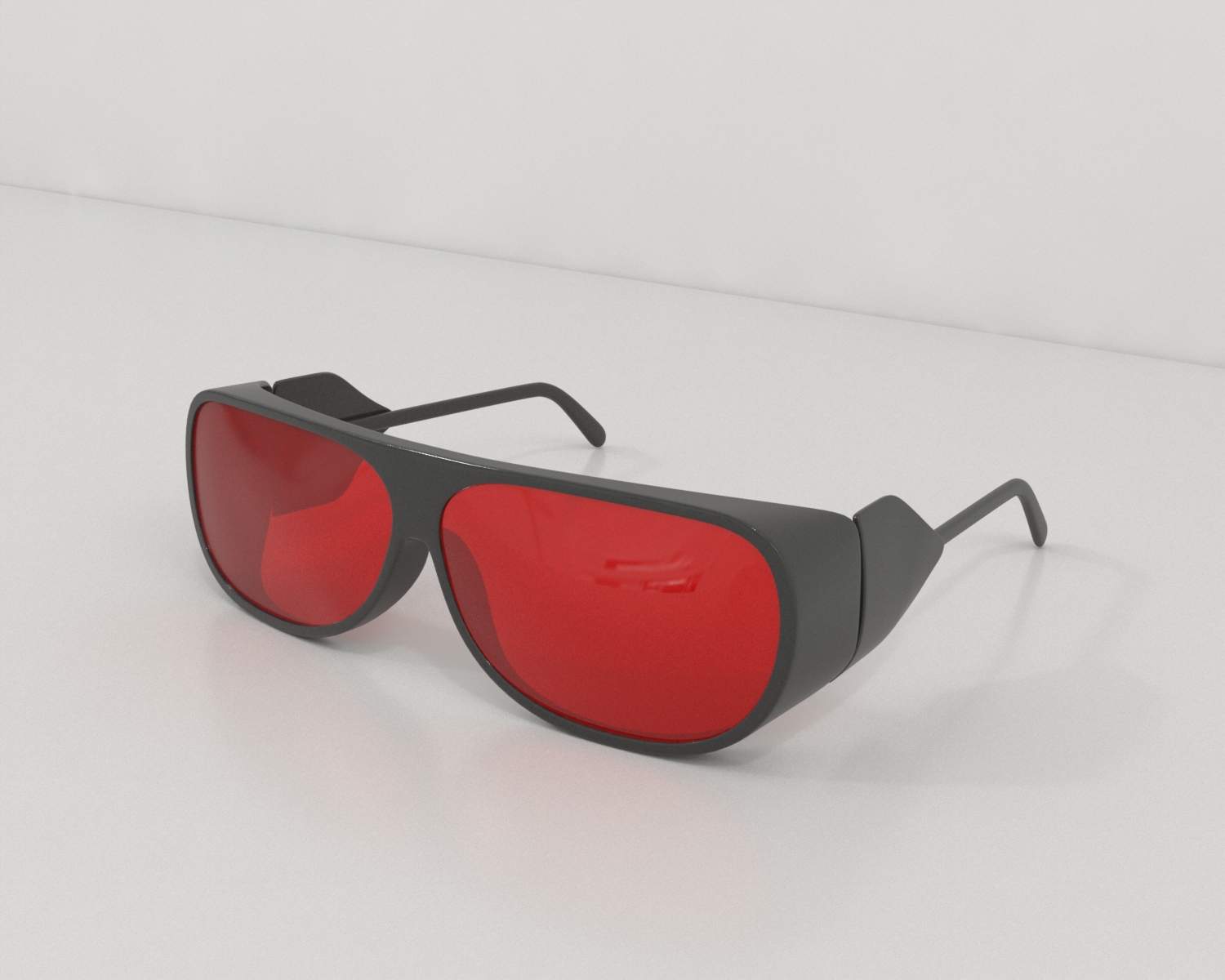
Optogenetics Laser Goggles
Wavelength-specific laser safety goggles for optogenetics and photometry research, providing <1% transmittance protection against blue, green, and yellow laser light with ANSI Z136.1 and IEC 60825 compliance.

Louise Corscadden, PhD
Director of Science · ConductScience
Ask Louise about Optogenetics Laser Goggles fit, setup, configuration, or quote prep.
Already working with us? Sign in to connect this with My Scientist.
Key Specifications
Full details →- Model fit
- 2 selectable configurations
- SKU family
- CS-958442
- Shipping box
- 65.0 x 36.0 x 27.0 cm
- Ordering
- Online checkout and quote request available
- Category
- Optogenetics & Photometry
- Build notes
- Acrylic
Optogenetics Laser Goggles provide essential eye protection for researchers working with Class 3 and Class 4 lasers in optogenetics and photometry applications. These specialized safety eyewear systems feature wavelength-specific filtering to protect against hazardous laser exposure while maintaining visual clarity for laboratory work. Two models are available: R-LS-Y goggles protect against green and yellow light (528-561 nm) with transmittance <1%, while R-LS-G goggles protect against blue and green light (200-550 nm) with transmittance <1%.
Constructed from durable acrylic material, these lightweight goggles are designed for extended laboratory use during optogenetic experiments involving laser stimulation systems. The high optical density filtering prevents retinal damage, corneal burns, and cataracts that can result from accidental laser exposure. These safety systems are essential equipment for neuroscience laboratories conducting optogenetic research, photometry experiments, and laser-based neural stimulation protocols.
How It Works
Laser safety goggles function through wavelength-selective optical filtering using specialized materials that absorb or reflect specific ranges of electromagnetic radiation. The acrylic construction incorporates chromophores and optical additives that selectively attenuate laser wavelengths while maintaining adequate visible light transmission for laboratory work. The R-LS-Y model targets green-yellow wavelengths (528-561 nm) commonly used in optogenetics, while the R-LS-G model provides broader protection against blue-green wavelengths (200-550 nm).
The <1% transmittance specification indicates that 99% or more of incident laser energy at the specified wavelengths is blocked from reaching the eye. This high optical density prevents laser radiation from reaching the retina, where focused coherent light can cause thermal damage, photochemical injury, or permanent vision loss. The filtering mechanism relies on molecular absorption and scattering processes that convert laser energy into harmless heat dissipation within the lens material.
The lightweight acrylic construction provides durability while minimizing user fatigue during extended laboratory sessions. The ergonomic design ensures proper fit and coverage to prevent laser exposure through gaps or reflections, maintaining protection integrity throughout experimental procedures.
Features & Benefits
Transmittance R Ls Y
- T<1%
Wavelength Range R Ls Y
- 528 nm-561 nm
Transmittance R Ls G
- T<1%
Wavelength Range R Ls G
- 200 nm-550 nm
Protection Type R Ls Y
- Green and yellow light
Design Features
- Lightweight and comfortable
Laser Safety Class
- Class 3 and 4 lasers
Material
- Acrylic
Certifications
- ANSI Z136.1
- IEC 60825
Protection Type R Ls G
- Blue and green light
Display Type
- None
Research Domain
- Analytical Chemistry
- Behavioral Pharmacology
- Cell Biology
- Clinical Diagnostics
- Materials Science
- Neuroscience
Shipping weight
- 6.06 lb
Shipping box
- L: 65.0 cm
- W: 36.0 cm
- H: 27.0 cm
| Feature | This Product | Typical Alternative | Advantage |
|---|---|---|---|
| Wavelength Protection Range | Dual models: 528-561 nm (R-LS-Y) or 200-550 nm (R-LS-G) | Single broadband protection or limited wavelength coverage | Allows precise matching to specific optogenetics laser wavelengths for optimal protection without excessive filtering |
| Optical Transmittance | <1% at specified wavelengths | Variable protection levels across wavelength range | Provides consistent high-level protection (>99% attenuation) across the entire specified wavelength band |
| Construction Material | Lightweight acrylic | Heavier glass or polycarbonate materials | Reduces user fatigue during extended experimental sessions while maintaining durability and optical clarity |
| Safety Standards Compliance | ANSI Z136.1 and IEC 60825 | Limited or unspecified standards compliance | Ensures protection meets established international laser safety requirements for research environments |
These goggles offer wavelength-specific protection optimized for optogenetics applications with <1% transmittance and dual-model options. The lightweight acrylic construction and compliance with ANSI and IEC standards provide professional-grade protection suitable for Class 3 and Class 4 laser research environments.
| Model | SKU | Listed price | Status | Shipping box |
|---|---|---|---|---|
| Blue - Green | RWD-R-LS-G | $165.00 | Available | 65.0 x 36.0 x 27.0 cm |
| Green - Yellow | RWD-R-LS-Y | $165.00 | Available | 65.0 x 36.0 x 27.0 cm |
Practical Tips
Always verify laser systems are powered down before removing goggles, even during brief experimental pauses.
Why: Prevents accidental eye exposure during unexpected laser activation or reflections from optical components.
Establish clear verbal communication protocols with team members before activating laser systems.
Why: Ensures all personnel are properly protected and aware of laser operation status in shared laboratory spaces.
Inspect goggles for scratches or damage before each use and replace immediately if any defects are found.
Why: Scratches or cracks can compromise optical protection and create potential failure points during laser exposure.
Store goggles in provided protective case when not in use to prevent damage and contamination.
Why: Maintains optical clarity and protection integrity while preventing scratches from contact with laboratory surfaces.
If goggles fog during use, ensure proper ventilation and consider anti-fog treatments appropriate for optical surfaces.
Why: Maintains clear vision during experiments while preserving the integrity of the protective optical coatings.
Never modify or attempt to clean protective coatings with harsh chemicals or abrasive materials.
Why: Preserves the wavelength-specific filtering properties that provide essential eye protection against laser radiation.
Setup Guide
What’s in the Box
- Laser safety goggles (R-LS-Y or R-LS-G model)
- Protective carrying case (typical)
- User manual and safety instructions (typical)
- Cleaning cloth (typical)
Warranty
ConductScience provides a standard 1-year manufacturer warranty covering material defects and construction quality, with technical support for proper selection and use of laser safety equipment.
Compliance
How do I determine which model (R-LS-Y or R-LS-G) is appropriate for my laser system?
Select R-LS-Y for protection against green and yellow lasers (528-561 nm) commonly used in optogenetics, or R-LS-G for broader protection against blue and green lasers (200-550 nm). Match the goggle protection range to your specific laser wavelengths.
What is the optical density of these goggles at the specified wavelengths?
Both models provide <1% transmittance at their specified wavelength ranges, corresponding to an optical density >2, which blocks 99%+ of incident laser energy for effective protection against Class 3 and Class 4 lasers.
Can these goggles be worn over prescription eyeglasses?
Consult product datasheet for specific over-glasses compatibility. The lightweight acrylic design may accommodate prescription eyewear, but proper fit and complete eye coverage must be verified before use.
How should I clean and maintain the laser safety goggles?
Clean with appropriate optical cleaning solution and lint-free cloth. Store in protective case away from extreme temperatures and chemical exposure to maintain optical filtering properties and structural integrity.
What is the expected lifespan of the optical filtering properties?
Consult product datasheet for specific aging characteristics. Regularly inspect for scratches, cracks, or discoloration that could compromise protection, and replace if any damage is detected.
Are these goggles suitable for use with pulsed laser systems?
The wavelength-specific filtering provides protection against both continuous wave and pulsed lasers within the specified ranges, but verify that peak power densities do not exceed the goggle damage threshold.
Can I use these goggles for laser alignment procedures?
These goggles are designed for protection during laser operation, not alignment. Use appropriate beam viewing cards or alignment tools for laser setup procedures requiring beam visualization.
Have a question about this product?
Have a question? Just ask.
Send it over and we'll email you a personalized answer — no call, no scheduling.
Prefer to talk it through?