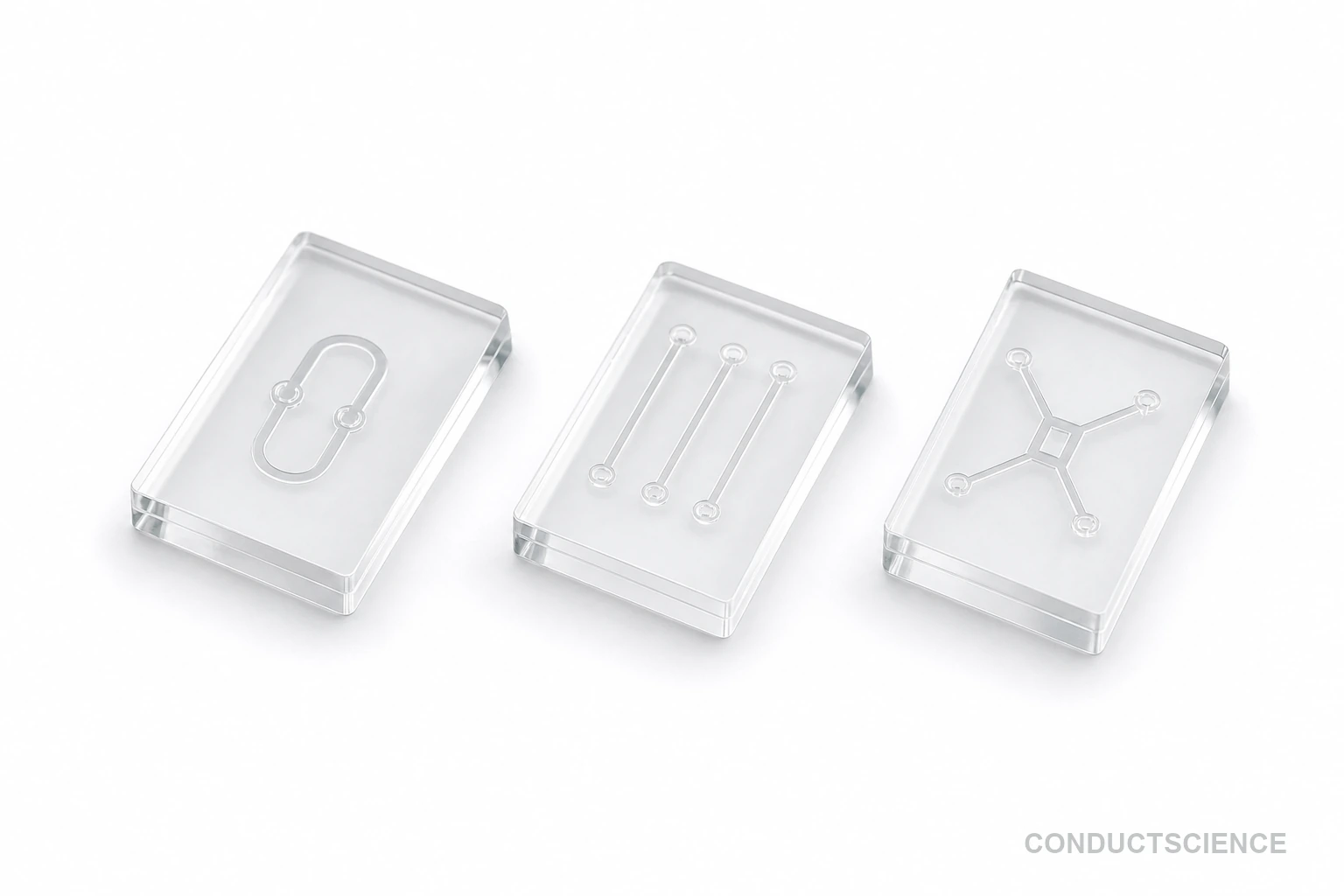
General-Purpose Microfluidic Biochip
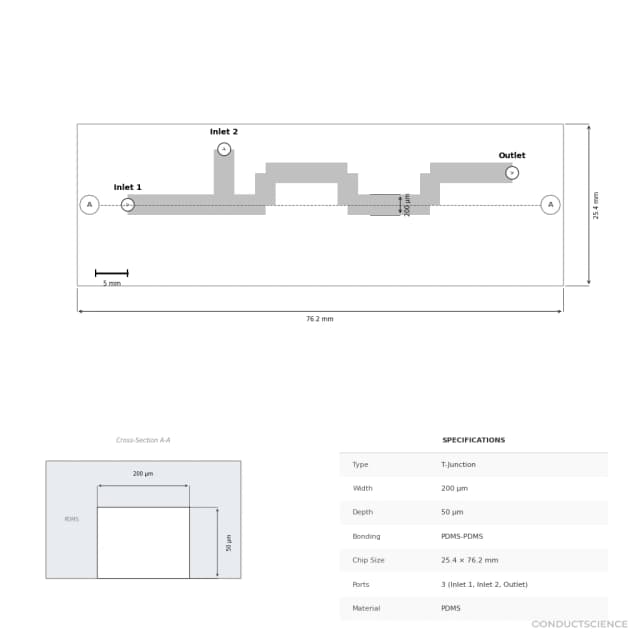
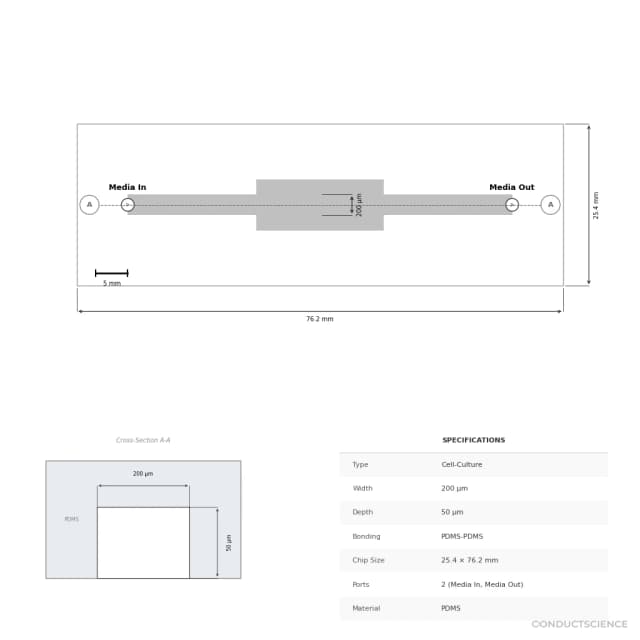
PDMS-based microfluidic biochip for general biology and biochemical assays, providing customizable microscale fluid manipulation for cell culture and analytical applications.

The General-Purpose Microfluidic Biochip (WHM-0082) is a PDMS-based microfluidic platform designed for versatile biological and biochemical applications. This customizable microfluidic device provides researchers with controlled fluid manipulation capabilities at the microscale, enabling precise cell culture, reagent mixing, and analytical assays within miniaturized channel networks.
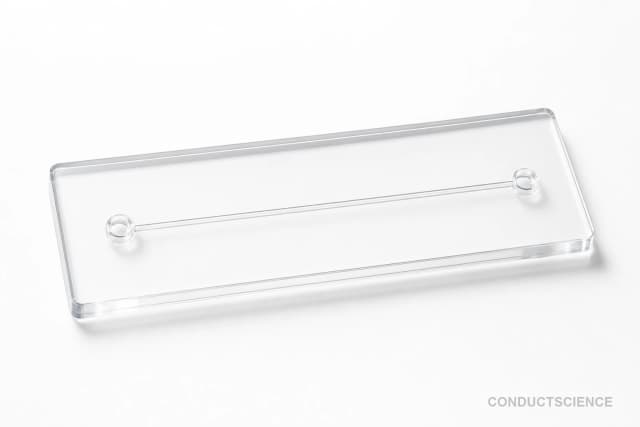
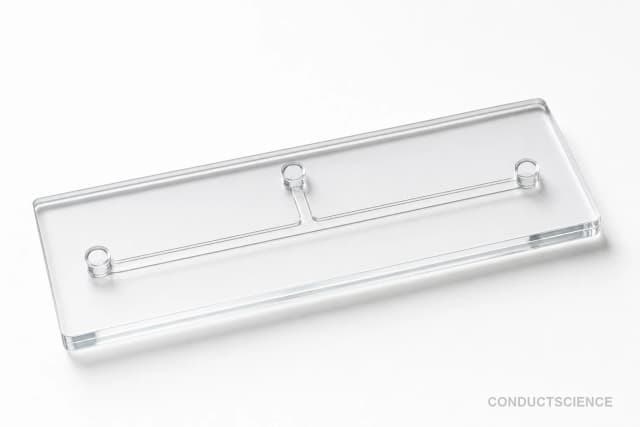
The PDMS construction offers excellent optical clarity for microscopic observation while maintaining biocompatibility for cell-based studies. The general-purpose design accommodates a wide range of experimental protocols, from single-cell analysis to complex multi-step biochemical assays, making it suitable for exploratory research and method development across multiple biological disciplines.
How It Works
The microfluidic biochip operates on the principle of controlled fluid dynamics at the microscale, where laminar flow dominates due to low Reynolds numbers. PDMS channels with dimensions typically ranging from micrometers to hundreds of micrometers enable precise manipulation of fluids, cells, and reagents through applied pressure differentials or electrokinetic forces.
The PDMS substrate provides several key advantages: its elasticity allows for reversible sealing against glass or plastic surfaces, its gas permeability enables cell culture applications requiring oxygen exchange, and its optical transparency permits real-time microscopic observation. The material's hydrophobic nature can be modified through plasma treatment or surface chemistry to achieve desired wetting properties for specific applications.
Fluid control is typically achieved through external pumping systems that create pressure-driven flow, allowing for continuous perfusion, reagent exchange, or gradient formation. The channel geometry determines flow patterns, mixing efficiency, and residence times, enabling researchers to create precisely controlled chemical and physical environments for biological studies.
Features & Benefits
Pack Size
- 5-Pack
- 10-Pack
- 25-Pack
Weight
- 3.3 kg
Dimensions
- L: 181.8 mm
- W: 136.3 mm
- H: 90.9 mm
Comparison Guide
| Feature | This Product | Typical Alternative | Advantage |
|---|---|---|---|
| Substrate Material | PDMS construction | Glass or silicon substrates | PDMS provides flexibility, gas permeability, and easier fabrication for biological applications. |
| Application Scope | General biology and biochemical assays | Specialized single-application designs | Versatile platform accommodates diverse experimental protocols without requiring multiple specialized chips. |
| Biocompatibility | Biocompatible PDMS material | Varies by substrate material | Proven biocompatibility supports cell culture and tissue engineering applications with minimal cytotoxicity concerns. |
| Optical Properties | Transparent PDMS for microscopy | Variable optical quality | High optical clarity enables real-time observation and analysis during experiments. |
| Manufacturing Quality | ConductScience precision fabrication | Varies by manufacturer | Consistent manufacturing standards ensure reproducible results across multiple chips and experiments. |
This PDMS-based microfluidic biochip offers versatile biological application support with proven biocompatibility and optical clarity. The general-purpose design provides research flexibility while maintaining the precision control advantages of microfluidic technology.
Practical Tips
Store chips in clean, dry environment and handle with appropriate tools to prevent contamination and damage to delicate channel structures.
Why: PDMS surfaces readily collect dust and debris that can block microchannels.
Inspect channels regularly under microscope for signs of wear, swelling, or residue buildup that could affect flow characteristics.
Why: Early detection prevents experimental failures and maintains consistent results.
Verify flow rates and mixing patterns before each experimental series using dye solutions or particle tracers.
Why: Channel properties may change over time or between different chip batches.
Document environmental conditions including temperature, humidity, and atmospheric pressure that may affect PDMS dimensions and flow behavior.
Why: PDMS properties are sensitive to environmental conditions affecting experimental reproducibility.
If channels become blocked, try gentle backflushing with appropriate solvents before applying higher pressures that could damage the chip.
Why: Excessive pressure can cause channel deformation or delamination from mounting surfaces.
Use appropriate personal protective equipment when handling cleaning solvents and ensure adequate ventilation during plasma treatment procedures.
Why: Chemical safety protocols protect researchers and prevent contamination of experimental environments.
Pre-wet channels with buffer solution matching your experimental conditions before introducing biological samples.
Why: Proper surface conditioning prevents cell adhesion artifacts and ensures consistent fluid behavior.
Setup Guide
What’s in the Box
- General-Purpose Microfluidic Biochip (PDMS)
- User manual with setup instructions (typical)
- Quality control documentation (typical)
Warranty
ConductScience provides a standard 1-year manufacturer warranty covering material defects and construction quality, with technical support available for setup and application guidance.
Compliance
References
Background reading relevant to this product:
What PDMS treatment is recommended for cell adhesion applications?
Plasma treatment followed by surface coating with extracellular matrix proteins or specialized adhesion promoters is typically required. Consult product datasheet for specific surface modification protocols compatible with your cell types.
What flow rate ranges are achievable with this chip design?
Flow rates depend on channel dimensions and applied pressure. Typical ranges for microfluidic applications span from nL/min to μL/min. Specific flow characteristics should be determined empirically for your channel geometry and viscosity conditions.
How do I prevent air bubble formation in the channels?
Prime channels thoroughly with degassed buffers, maintain consistent pressure gradients, and consider surface treatment to optimize wetting properties. Include bubble traps in your fluidic design if necessary.
What imaging modalities are compatible with PDMS chips?
PDMS transparency supports brightfield, phase contrast, fluorescence, and confocal microscopy. Consider refractive index matching for optimal imaging quality and avoid high-power laser applications that may cause thermal damage.
How should chips be cleaned between experiments?
Flush channels with appropriate cleaning solutions followed by sterile water or buffer. For cell culture applications, use standard sterilization protocols. PDMS is compatible with most aqueous solutions but may swell in organic solvents.
What are the temperature limitations for PDMS chips?
PDMS is stable from approximately -50°C to 200°C, making it suitable for most biological applications including incubator conditions. Prolonged exposure to extreme temperatures may affect dimensional stability.
Can these chips be reused for multiple experiments?
Yes, with proper cleaning protocols between uses. Inspect channels for wear or contamination and verify flow characteristics remain consistent. Some applications may require single-use to prevent cross-contamination.
Have a question about this product?