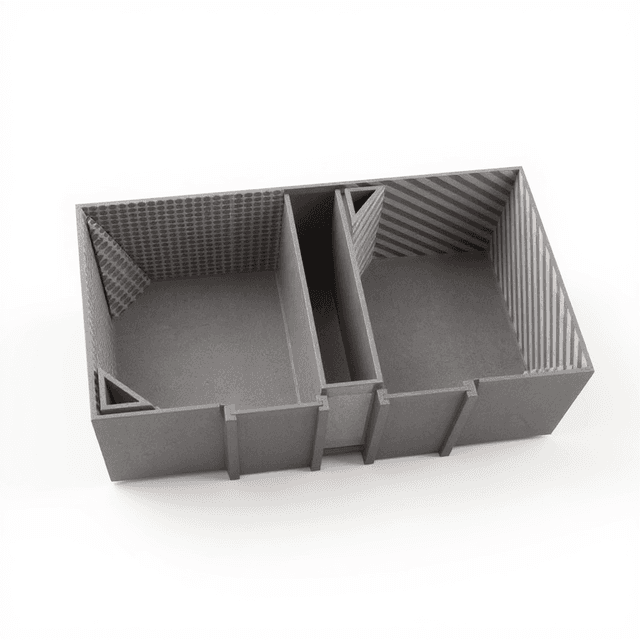
Hebb Williams
Standardized behavioral maze for assessing spatial learning and memory in rodents, featuring adjustable wall configurations for systematic cognitive testing protocols.
| maze_layout | square area |
| wall_finish | matte finish to minimize reflections |
| maze_configurations | 6 acquisition layouts and 12 testing layouts |
| goal_box_location | opposite corner from starting point |
| food_reward_well | included in goal box |
| adjustable_internal_walls | yes |

The Hebb-Williams Maze is a standardized behavioral apparatus designed for assessing spatial learning and memory capabilities in rodents. This square maze features adjustable internal wall configurations that create specific problem-solving scenarios, allowing researchers to evaluate cognitive flexibility, spatial working memory, and learning acquisition patterns in laboratory animals.
Constructed from opaque acrylic with a matte finish to minimize visual distractions, the apparatus includes complete insert sets for all 12 standard Hebb-Williams testing configurations plus 6 acquisition layouts. The modular design enables systematic progression from simple to complex spatial problems, making it suitable for longitudinal cognitive assessment studies and comparative behavioral research protocols.
How It Works
The Hebb-Williams Maze operates on the principle of spatial problem-solving under food motivation. Animals navigate from a fixed starting position to a goal box containing a food reward, with the path obstructed by strategically placed internal walls that create specific cognitive challenges. The standardized configurations progress systematically from simple direct paths to complex multi-turn problems requiring spatial planning and working memory.
Spatial learning is assessed through multiple parameters including path length, navigation errors, completion time, and learning acquisition curves across repeated trials. The modular insert system allows researchers to implement the complete battery of 18 standardized configurations (6 acquisition, 12 testing), enabling comparative analysis of cognitive performance across different difficulty levels and systematic evaluation of learning strategies employed by individual subjects.
Features & Benefits
maze_layout
- square area
wall_finish
- matte finish to minimize reflections
maze_configurations
- 6 acquisition layouts and 12 testing layouts
goal_box_location
- opposite corner from starting point
food_reward_well
- included in goal box
adjustable_internal_walls
- yes
mounting_requirement
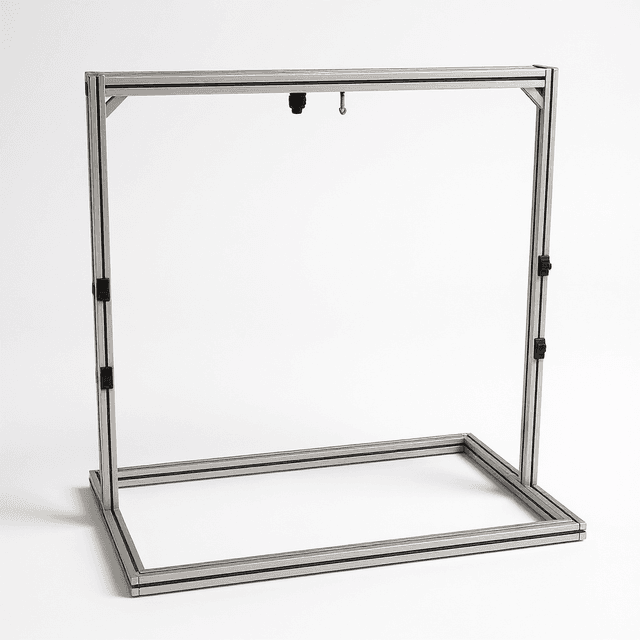
- table placement, no dedicated stand required
lighting_requirement
- dimly lit environment
video_recording_compatible
- yes, camera mounted above maze
tracking_software_compatible
- yes
Behavioral Construct
- spatial learning
- spatial memory
- working memory
- cognitive flexibility
- problem solving
- navigation behavior
Automation Level
- manual
Material
- opaque black or white material
Color
- Black
- White
Display Type
- None
Dimensions
- 60cm x 60cm (mice), 75cm x 75cm (rats) x 10cm walls (mice), 25cm walls (rats)
Research Domain
- Aging Research
- Behavioral Pharmacology
- Learning and Memory
- Neurodegeneration
- Neuroscience
- Toxicology
Species
- Mouse
- Rat
Weight
- 21.0 kg
Dimensions
- L: 43.2 mm
- W: 38.0 mm
- H: 27.9 mm
Comparison Guide
| Feature | This Product | Typical Alternative | Advantage |
|---|---|---|---|
| Configuration Standardization | Complete set of 18 standardized Hebb-Williams configurations (6 acquisition, 12 testing) | Basic maze systems often provide 3-6 simple configurations | Enables systematic cognitive assessment across standardized difficulty levels for enhanced research reproducibility. |
| Construction Material | Opaque acrylic with matte finish surface treatment | Standard acrylic or plastic construction often creates visual reflections | Eliminates reflection-based visual cues that could confound spatial navigation performance assessment. |
| Modular Design | Base separates from walls with removable configuration inserts | Fixed maze designs require complete apparatus cleaning | Facilitates rapid protocol changes and thorough decontamination between subjects for enhanced experimental efficiency. |
| Species Optimization | Species-specific dimensions (60x60cm mice, 75x75cm rats) with appropriate wall heights | One-size-fits-all designs often compromise behavioral validity | Ensures appropriate scaling for natural locomotor behavior and optimal spatial learning assessment in target species. |
| Goal Box Integration | Integrated food reward well positioned in goal box corner | External reward systems or simple food placement | Standardizes reward delivery and maintains consistent motivation across all testing configurations. |
This apparatus provides comprehensive standardization through complete configuration insert sets and species-specific dimensional optimization. The matte-finish acrylic construction and modular design enhance experimental control while facilitating efficient protocol implementation across extended behavioral testing studies.
Practical Tips
Verify tracking software detection accuracy by manually tracing known path lengths before each testing session.
Why: Ensures measurement precision for path efficiency and error quantification across all spatial learning parameters.
Inspect wall insert alignment weekly and replace any components showing wear or damage that could affect navigation patterns.
Why: Maintains standardized spatial challenges and prevents unintended behavioral cues from compromised maze integrity.
Randomize maze orientation relative to room cues between testing sessions to isolate spatial working memory from landmark navigation.
Why: Controls for external spatial reference points that could provide unintended navigation assistance.
If subjects show persistent wall-following behavior, reduce lighting levels and verify absence of tactile cues along perimeter walls.
Why: Eliminates thigmotaxic responses that can mask spatial learning capabilities and confound cognitive assessment.
Record multiple behavioral parameters simultaneously including path efficiency, error patterns, and search strategies for comprehensive analysis.
Why: Provides multidimensional assessment of spatial cognition beyond simple completion time measurements.
Monitor subject behavior during initial exposure sessions to identify signs of excessive stress or abnormal locomotor patterns.
Why: Ensures animal welfare compliance and identifies subjects requiring protocol modifications or exclusion criteria.
Maintain consistent reward type and quantity across all testing sessions to control for motivational variables.
Why: Isolates spatial learning performance from fluctuations in reward salience or motivational state changes.
Establish baseline performance criteria during acquisition phases before implementing complex testing configurations.
Why: Provides reference standards for detecting cognitive impairments or treatment effects in experimental populations.
Setup Guide
What’s in the Box
- Maze base with removable walls
- Complete set of 18 Hebb-Williams configuration inserts
- Goal box with integrated food reward well
- Assembly instructions and protocol guide
- Configuration layout diagrams (typical)
Warranty
ConductScience provides a standard one-year manufacturer warranty covering materials and construction defects, with technical support for setup and protocol optimization.
Compliance
What is the standard testing protocol sequence for the Hebb-Williams configurations?
Begin with the 6 acquisition configurations to establish baseline spatial learning, then progress through the 12 testing configurations in order of increasing complexity. Maintain consistent inter-trial intervals of 24-48 hours for optimal memory consolidation assessment.
How should food deprivation be managed for motivation without compromising animal welfare?
Maintain subjects at 85-90% of free-feeding body weight through controlled feeding schedules. Monitor body weight daily and provide supplemental feeding post-testing to ensure adequate nutritional status throughout extended protocols.
What tracking parameters should be recorded for comprehensive spatial learning analysis?
Primary measures include path length, navigation time, error frequency, and latency to goal box entry. Advanced analysis should capture movement velocity profiles, wall contact patterns, and spatial search strategies across acquisition trials.
How do you control for potential olfactory cuing between subjects?
Clean all maze surfaces with 70% ethanol between subjects and allow complete drying. Rotate maze orientation between animals and use different starting positions when protocols permit to minimize scent trail influences.
What environmental conditions are optimal for Hebb-Williams testing?
Maintain dim lighting conditions (30-50 lux) to reduce visual stress while ensuring adequate visibility for navigation. Control ambient noise levels and maintain consistent temperature and humidity throughout testing sessions.
How does this apparatus compare to other spatial memory tests like the Morris Water Maze?
The Hebb-Williams Maze assesses dry-land spatial navigation without swimming stress, making it suitable for subjects with motor impairments or temperature sensitivity. It provides more controlled problem-solving scenarios compared to open-field spatial tasks.
What sample sizes are typically required for statistical power in spatial learning studies?
Group sizes of 8-12 animals per condition typically provide adequate power for detecting moderate effect sizes in spatial learning performance, though power analysis should be conducted based on expected effect magnitude and experimental design.
Have a question about this product?
Accessories
Enhance your setup with compatible accessories

Frequently Bought Together