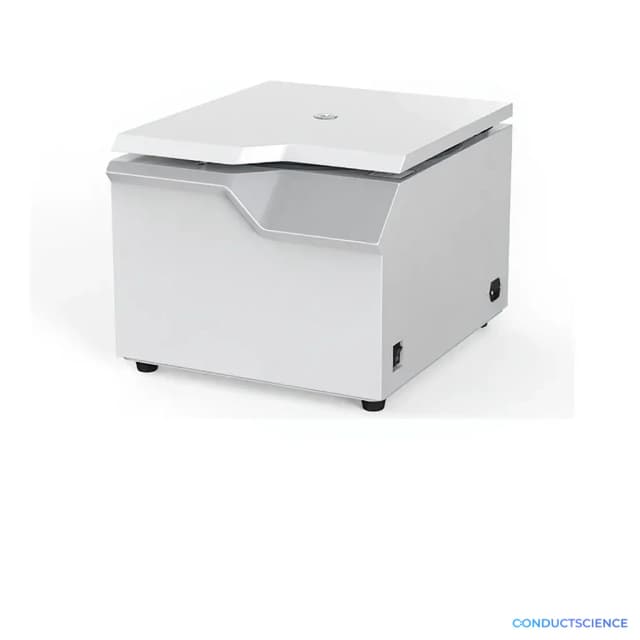
Hematocrit Centrifuge
Microhematocrit centrifuge accommodating 24 capillary tubes with speeds up to 12,000 rpm and maximum RCF of 14,170×g for packed cell volume determination.
| Automation Level | semi-automated |
| Max. Speed | 12000rpm |
| Max. RCF | 14170×g |
| Max. Capacity | 24 capillaries |
| Speed Precision | ±20rpm |
| Time Range | 1s~999min |

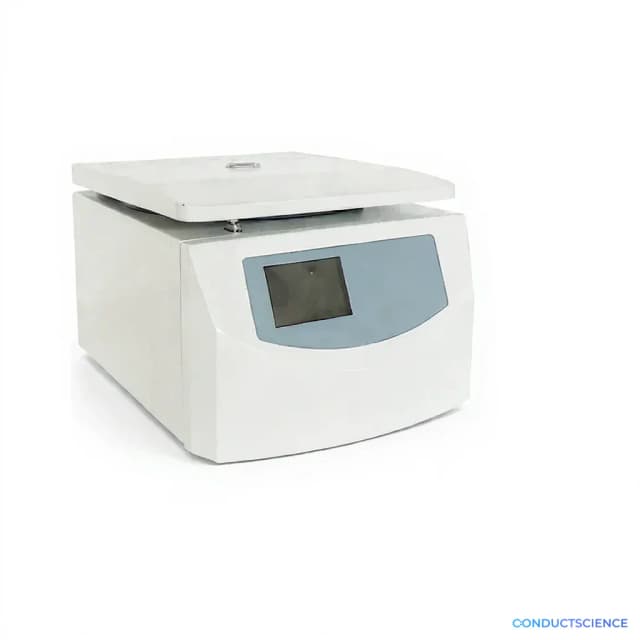
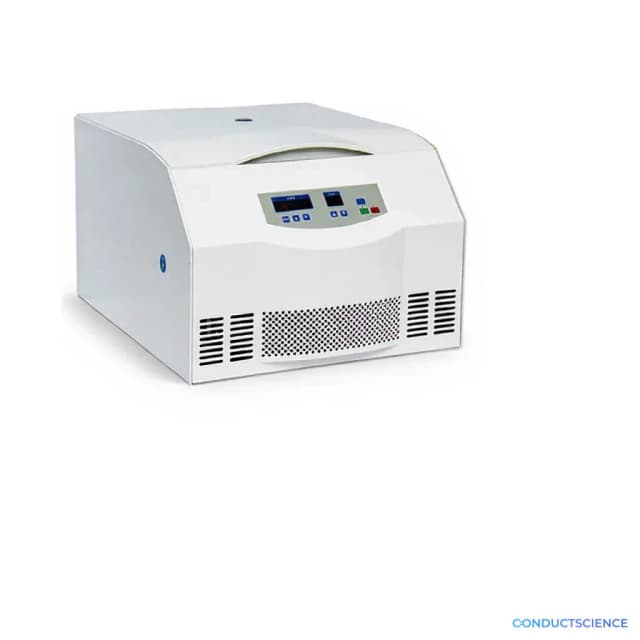
The Hematocrit Centrifuge is a specialized microhematocrit centrifuge designed for rapid separation and measurement of packed cell volume in capillary tubes. This benchtop unit accommodates up to 24 capillary tubes simultaneously, operating at speeds up to 12,000 rpm to achieve maximum centrifugal force of 14,170×g. The instrument features precise speed control within ±20 rpm and programmable timing from 1 second to 999 minutes.
Built for clinical laboratories and research facilities, this centrifuge provides consistent separation of cellular components from plasma in small blood samples. The compact design minimizes laboratory footprint while maintaining quiet operation at ≤65 dB(A). Digital controls and timer functionality support standardized protocols for hematocrit determination and microvolume sample processing.
How It Works
Centrifugal separation operates on the principle of differential sedimentation under high gravitational force. When the rotor spins at high speed, centrifugal acceleration forces particles of different densities to separate according to their mass and buoyancy. In hematocrit determination, red blood cells being denser than plasma are forced to the bottom of the capillary tube, creating distinct layers.
The instrument generates centrifugal force up to 14,170×g through precise motor control maintaining speeds up to 12,000 rpm. The radial acceleration causes rapid sedimentation that would take hours under normal gravity to occur in minutes. Digital timing control ensures reproducible separation protocols, while the balanced rotor design minimizes vibration and maintains sample integrity during processing.
Features & Benefits
Automation Level
- semi-automated
Max. Speed
- 12000rpm
Max. RCF
- 14170×g
Max. Capacity
- 24 capillaries
Speed Precision
- ±20rpm
Time Range
- 1s~999min
Noise
- ≤65dB(A)
Consumption
- 150W
External Size(L*W*H)
- 320*380*270mm
Package Size(L*W*H)
- 386*456*381mm
NO.
- Rotors Type
Brand
- ConductScience
Research Domain
- Analytical Chemistry
- Cell Biology
- Clinical Diagnostics
- Microbiology
Power/Voltage
- AC220V, 50/60Hz or 110V, 50/60Hz
Weight
- 23kg
Capacity
- Max. Speed
Weight
- 19.0 kg
Dimensions
- L: 27.0 mm
- W: 32.0 mm
- H: 38.0 mm
Comparison Guide
| Feature | This Product | Typical Alternative | Advantage |
|---|---|---|---|
| Capillary Tube Capacity | 24 capillary tubes | Entry-level models often accommodate 2-6 tubes | Higher capacity reduces processing time and increases workflow efficiency in busy laboratories. |
| Maximum Speed | 12,000 rpm | Basic units may be limited to 8,000-10,000 rpm | Higher speeds achieve more complete separation and reduce centrifugation time for improved productivity. |
| Speed Precision | ±20 rpm | Lower-cost models may have ±50-100 rpm variation | Precise speed control ensures reproducible results and meets quality control requirements for clinical applications. |
| Timer Range | 1 second to 999 minutes | Basic models often limited to fixed time increments | Flexible timing accommodates diverse protocols and specialized separation requirements. |
| Noise Level | ≤65 dB(A) | Standard centrifuges often operate at 70-80 dB(A) | Quieter operation reduces laboratory noise pollution and improves working conditions. |
| Power Consumption | 150W | Larger units may consume 300-500W | Energy-efficient design reduces operating costs and heat generation in laboratory environments. |
This centrifuge combines high-capacity processing with precise control parameters in a compact, energy-efficient design. The 24-tube capacity, precise speed control (±20 rpm), and quiet operation (≤65 dB(A)) provide advantages for laboratories requiring reliable, reproducible hematocrit determination with minimal workspace requirements.
Practical Tips
Verify speed accuracy monthly using a calibrated optical or contact tachometer during routine operation.
Why: Speed accuracy directly affects centrifugal force and separation efficiency, critical for reproducible results.
Clean the rotor and chamber weekly with mild detergent and dry thoroughly to prevent corrosion and sample contamination.
Why: Residual biological material can harbor microorganisms and affect subsequent sample integrity.
Always seal capillary tubes with clay or appropriate caps before centrifugation to prevent sample loss and contamination.
Why: Unsealed tubes can lead to aerosol generation and cross-contamination between samples during high-speed operation.
Allow the rotor to come to complete stop before opening the lid to prevent sample disturbance and ensure safety.
Why: Opening during deceleration can remix separated phases and create aerosols from sample movement.
If excessive vibration occurs, immediately stop and check for proper tube balance and rotor installation.
Why: Unbalanced loads can damage bearings and motors while creating unsafe operating conditions.
Record actual centrifugation parameters (speed, time, temperature) in laboratory notebooks rather than just programmed values.
Why: Documentation of actual conditions supports data integrity and troubleshooting of unexpected results.
Inspect capillary tubes for cracks before use and dispose of broken tubes in appropriate sharps containers.
Why: Cracked tubes can shatter under centrifugal force, creating safety hazards and sample loss.
Schedule annual professional service to verify motor performance, safety interlocks, and calibration accuracy.
Why: Regular professional maintenance ensures continued accuracy and extends instrument lifespan while maintaining safety compliance.
Setup Guide
What’s in the Box
- Hematocrit centrifuge main unit
- Microhematocrit rotor (typical)
- Power cord
- User manual and operation guide (typical)
- Capillary tube reader/scale (typical)
- Sample capillary tubes (typical)
Compliance
Warranty & ConductCare
ConductScience provides a standard one-year manufacturer warranty covering parts and labor for defects in materials and workmanship. Technical support is available for installation, operation, and maintenance guidance throughout the product lifecycle.
What is the minimum sample volume required for hematocrit determination?
Standard microhematocrit tubes typically require 50-75 μL of whole blood. The capillary tubes should be filled to approximately 2/3 capacity to prevent spillage during centrifugation while ensuring adequate sample for accurate measurement.
How do I ensure proper balance when loading fewer than 24 tubes?
Always load tubes in pairs directly opposite each other on the rotor. If processing an odd number of samples, balance the rotor using a sealed tube filled with water positioned opposite the unpaired sample tube.
What centrifugation parameters are recommended for standard hematocrit measurement?
Standard protocols typically use 10,000-12,000 rpm for 3-5 minutes. The specific parameters may vary based on sample type and laboratory standard operating procedures. Consult product datasheet for detailed protocol recommendations.
Can this centrifuge process samples other than blood?
Yes, the unit can separate any liquid samples that fit in capillary tubes, including cell suspensions, protein solutions, and other biological fluids requiring microvolume processing and phase separation.
How frequently should speed calibration be verified?
Speed accuracy should be verified quarterly or per laboratory quality control requirements using a calibrated tachometer. Any deviation beyond ±20 rpm indicates need for service or recalibration.
What maintenance is required for optimal performance?
Regular cleaning of the rotor and chamber, periodic inspection of rotor balance, and annual service calibration are recommended. The unit should be kept clean and dry, with particular attention to removing any sample residue from the rotor.
Is the noise level acceptable for open laboratory environments?
At ≤65 dB(A), the noise level is comparable to normal conversation and suitable for most laboratory environments without additional sound dampening measures.
How does this compare to larger clinical centrifuges for hematocrit testing?
This dedicated microhematocrit centrifuge offers faster processing times and lower sample volume requirements compared to general-purpose clinical centrifuges, while occupying significantly less bench space and consuming less power.
Have a question about this product?
Upgrade Options