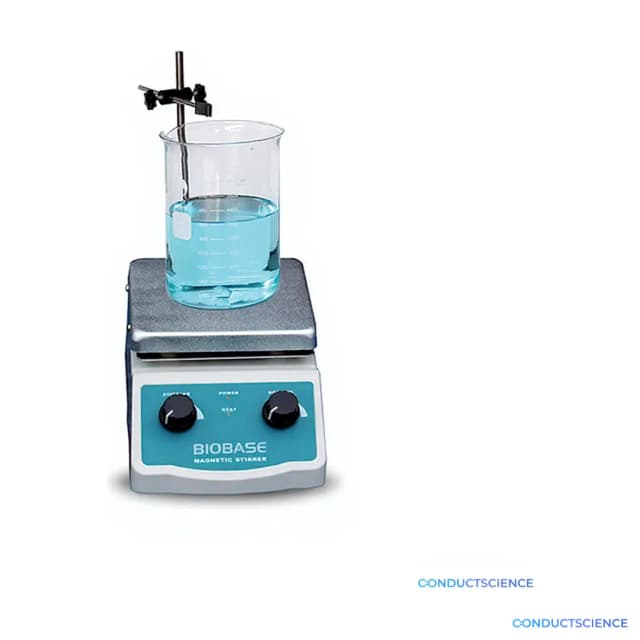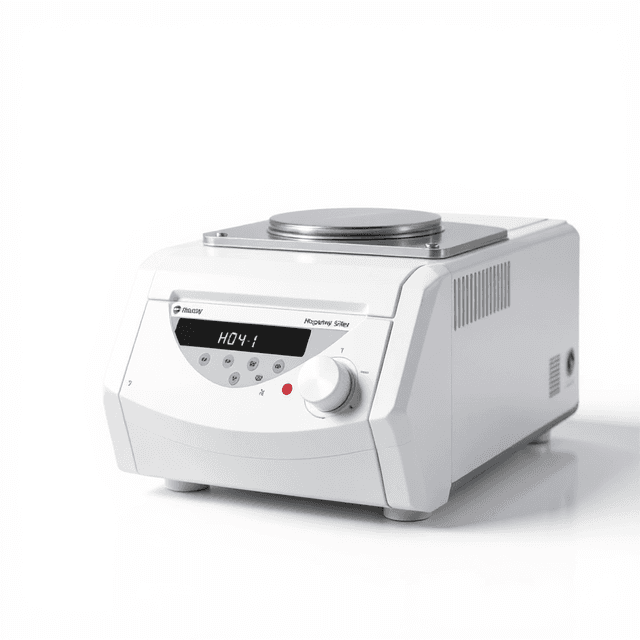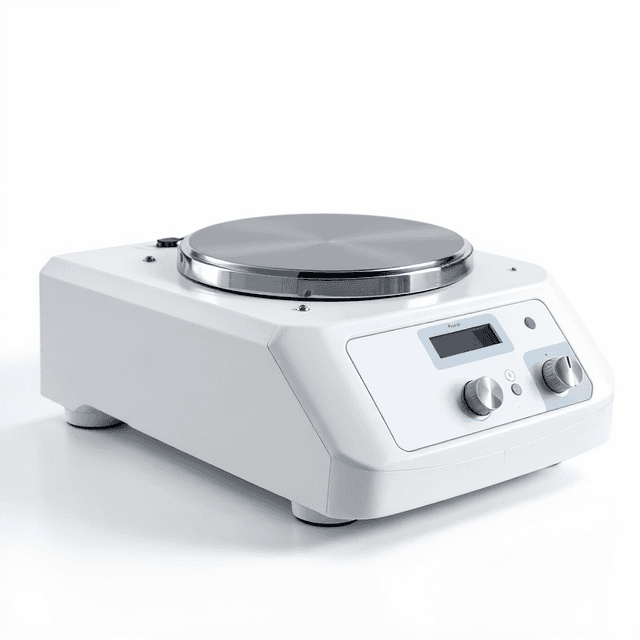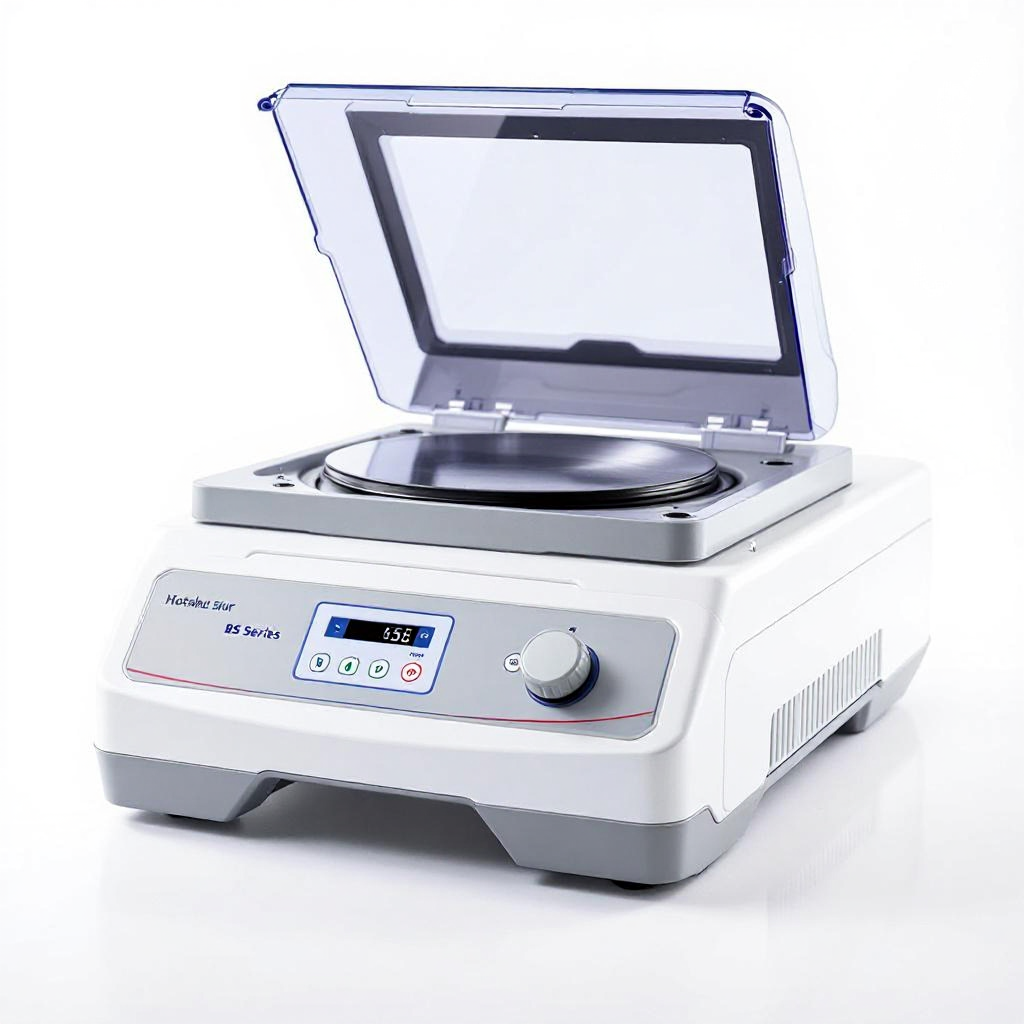
Hotplate Magnetic Stirrer BS Series
Laboratory hotplate magnetic stirrer with cast aluminum heating surface, 100-2000 rpm stirring range, and 380°C maximum heating temperature for analytical chemistry and sample preparation workflows.

Louise Corscadden, PhD
Director of Science · ConductScience
Ask Louise about Hotplate Magnetic Stirrer BS Series fit, setup, configuration, or quote prep.
Already working with us? Sign in to connect this with My Scientist.
Key Specifications
Full details →- Model fit
- Configured during quote
- SKU family
- BIO-0801
- Shipping box
- 4724.41 x 4724.41 x 38.0 cm
- Ordering
- Online checkout and quote request available
- Category
- Benchtop Instruments
- Build notes
- Cast Aluminum with surface spraying
The Hotplate Magnetic Stirrer BS Series provides laboratory-grade heating and stirring capabilities in a compact benchtop configuration. Available in three models (BS-3H, BS-4H, BS-4HC), these instruments feature cast aluminum heating plates with surface spraying for uniform heat distribution and chemical resistance. The BS-4HC model includes integrated PT100 temperature sensing for precise thermal control.
Designed for analytical chemistry, sample preparation, and synthesis workflows, the BS Series accommodates up to 2L stirring volumes with magnetic coupling. The dual-function design eliminates the need for separate heating and stirring equipment, optimizing bench space while maintaining independent control of temperature and agitation parameters.
How It Works
The hotplate magnetic stirrer operates through resistive heating elements embedded within the cast aluminum plate, providing uniform thermal distribution across the work surface. Temperature control is achieved through variable power regulation, with the heating element capable of reaching 380°C maximum temperature. The aluminum construction with surface spraying treatment ensures chemical resistance and prevents sample contamination.
Magnetic stirring is accomplished via a rotating magnetic field generated beneath the heating plate. This field couples with magnetic stir bars placed in sample containers, creating rotational motion independent of heating function. The magnetic coupling system allows stirring speeds from 100 to 2000 rpm while maintaining thermal stability. In the BS-4HC model, PT100 temperature sensing provides feedback control for precise thermal regulation during extended protocols.
Features & Benefits
Automation Level
- manual
BS-3H
- BS-4H
Work Plate Size
- 120*120mm
170*170mm
- 190*190mm
Plate Load(kg)
- 3
Work Plate Material
- Cast Aluminum with surface spraying
Max. Stirring Capacity
- 2L
Speed Range
- 100~2000rpm
Heating Temp
- 380°C
500W
- 600W
Standard Accessory
- Adjustable rack, stirrer bar; PT100 sensor(only for BS-4HC)
External Size(W*D*H)mm
- 200*120*90
265*185*190
- 320*190*125
Brand
- ConductScience
Research Domain
- Analytical Chemistry
- Clinical Diagnostics
- Environmental Monitoring
- Food Science
- Materials Science
- Pharmaceutical QC
Power/Voltage
- AC110/220V±10%, 50/60Hz
Shipping weight
- 6.61 lb
Shipping box
- L: 4724.41 cm
- W: 4724.41 cm
- H: 38.0 cm
| Feature | This Product | Typical Alternative | Advantage |
|---|---|---|---|
| Work Plate Material | Cast aluminum with surface spraying | Ceramic or basic aluminum plates without protective coating | Provides superior heat distribution and chemical resistance for extended use with diverse solvents. |
| Heating Temperature Range | Up to 380°C maximum temperature | Many entry-level models limited to 300°C or lower | Supports high-temperature applications including solvent evaporation and thermal decomposition studies. |
| Stirring Capacity | 2L maximum volume with 100-2000 rpm range | Smaller units often limited to 1L or lower speed ranges | Accommodates larger sample volumes and provides flexible agitation for various viscosity requirements. |
| Temperature Sensing | PT100 sensor integration available (BS-4HC model) | Basic models rely on heating element temperature estimation | Enables precise sample temperature monitoring and control for critical thermal protocols. |
| Plate Loading Capacity | 3kg maximum load capacity | Entry-level models often rated for lighter loads | Supports heavier glassware and larger reaction vessels for preparative chemistry applications. |
| Model Range | Three models with different plate sizes and features | Single-model offerings with limited size options | Allows selection of optimal plate size and features to match specific laboratory requirements and bench space. |
The BS Series provides cast aluminum heating construction with protective surface treatment, supporting temperatures up to 380°C and stirring volumes to 2L. The model range offers flexibility in plate dimensions and optional PT100 temperature sensing for applications requiring precise thermal control.
Practical Tips
For BS-4HC model, calibrate PT100 sensor monthly using certified reference thermometer in water bath at multiple temperatures.
Why: Maintains temperature measurement accuracy for critical thermal protocols and regulatory compliance.
Clean heating plate surface with appropriate solvents immediately after use while warm but not hot.
Why: Prevents residue buildup that can cause hot spots and reduce heat transfer efficiency.
Select stir bar size appropriate for container diameter (typically 1/2 to 2/3 of container width) and avoid oversized bars that may cause coupling loss.
Why: Ensures stable magnetic coupling and uniform mixing throughout the sample volume.
Use heat-resistant gloves and allow adequate cooling time before handling containers or adjusting equipment after high-temperature operation.
Why: Prevents thermal burns and protects samples from contamination due to handling accidents.
If stirring becomes irregular at higher temperatures, reduce stir bar size or stirring speed to maintain magnetic coupling.
Why: Elevated temperatures can affect magnetic strength, requiring adjustment to maintain consistent agitation.
Record both set temperature and actual sample temperature when using protocols requiring specific thermal conditions.
Why: Heating plate temperature may differ from sample temperature due to container thermal mass and heat transfer limitations.
Position containers in center of heating plate for optimal heat distribution and magnetic coupling strength.
Why: Maximizes heat transfer efficiency and prevents stirring irregularities at plate edges.
Inspect magnetic drive mechanism quarterly for debris accumulation and clean if necessary to prevent coupling interference.
Why: Maintains consistent stirring performance and prevents mechanical wear of drive components.
Setup Guide
What’s in the Box
- Hotplate magnetic stirrer main unit
- Adjustable rack
- Magnetic stirrer bar
- PT100 temperature sensor (BS-4HC model only)
- Power cord
- User manual (typical)
- Warranty documentation (typical)
Warranty
ConductScience provides a standard 1-year manufacturer warranty covering defects in materials and workmanship. Technical support includes calibration guidance and troubleshooting assistance for optimal laboratory performance.
Compliance
References
Background reading relevant to this product:
What is the temperature accuracy and stability of the heating plate?
Consult product datasheet for specific temperature accuracy specifications. The BS-4HC model includes PT100 sensor for enhanced thermal control and monitoring.
Can the unit handle corrosive solvents and acids?
The cast aluminum plate with surface spraying treatment provides chemical resistance, but compatibility should be verified for specific solvents and concentrations used in your protocols.
What is the minimum stirring speed for gentle mixing applications?
The stirring range begins at 100 rpm, suitable for most gentle mixing applications including cell culture media preparation and sensitive chemical reactions.
How does stirring performance change with increasing temperature?
Magnetic coupling strength may decrease slightly at elevated temperatures, but the system maintains effective stirring throughout the temperature range when properly sized stir bars are used.
What container materials are compatible with the heating surface?
Glass, PTFE, and compatible plastic containers work well. Avoid direct contact of metal containers with the heating surface to prevent damage and ensure optimal heat transfer.
Can multiple units be operated simultaneously on the same electrical circuit?
Consider total power consumption (180W-600W per unit) when planning multiple unit installations to ensure adequate electrical capacity and avoid circuit overload.
How does this compare to ceramic heating plates?
Cast aluminum provides faster heat transfer and more uniform temperature distribution than ceramic plates, with better thermal shock resistance for rapid temperature changes.
Have a question about this product?
Have a question? Just ask.
Send it over and we'll email you a personalized answer — no call, no scheduling.
Prefer to talk it through?
Accessories
Enhance your setup with compatible accessories