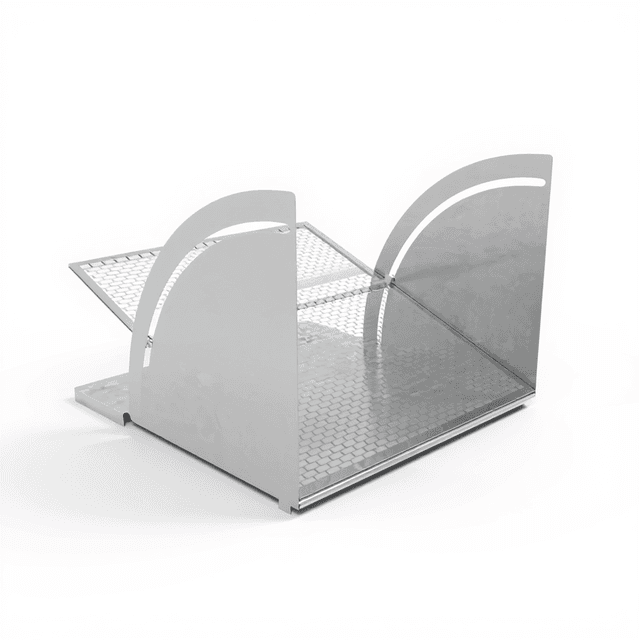
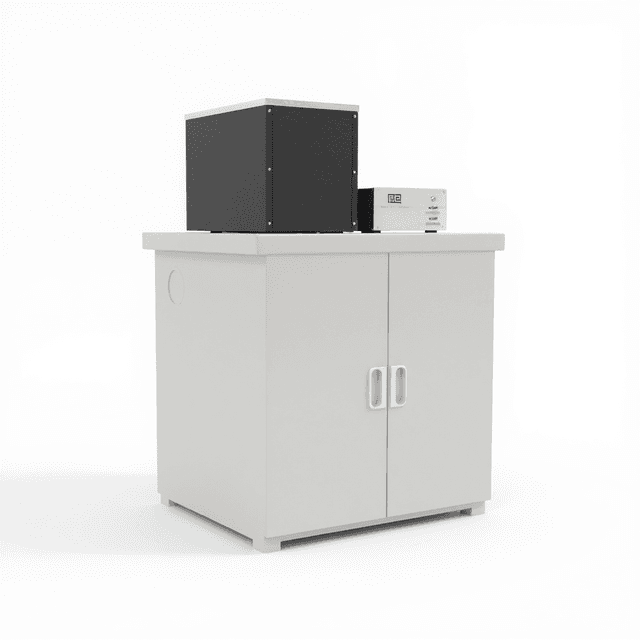
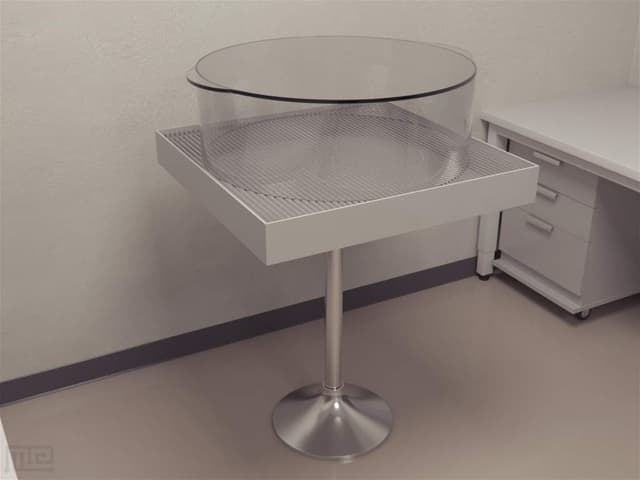
IDED Operant Chamber
Dual-chamber operant system for investigating cognitive flexibility and executive function through intra/extradimensional set-shifting protocols in rodents.
| chamber_configuration | Two identical chambers separated by transparent dividing door |
| visual_stimuli | 2 LED's |
| nose_poke_holes | 2 per chamber with infrared photo beams |
| tactile_stimuli | 2 |
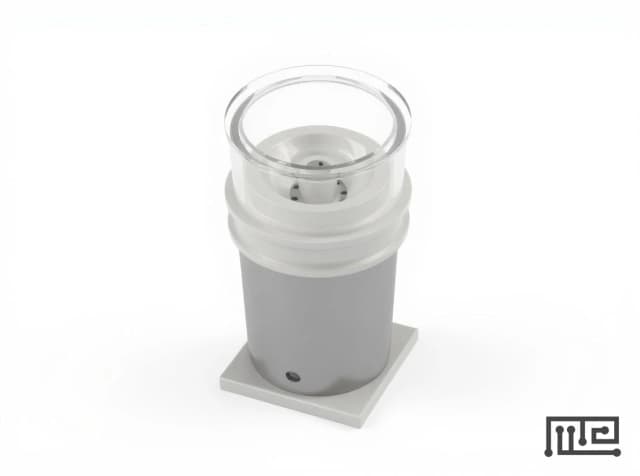
| olfactory_stimulus | 1 with dilution olfactometer |
| food_magazine | 1 with pellet dispenser |

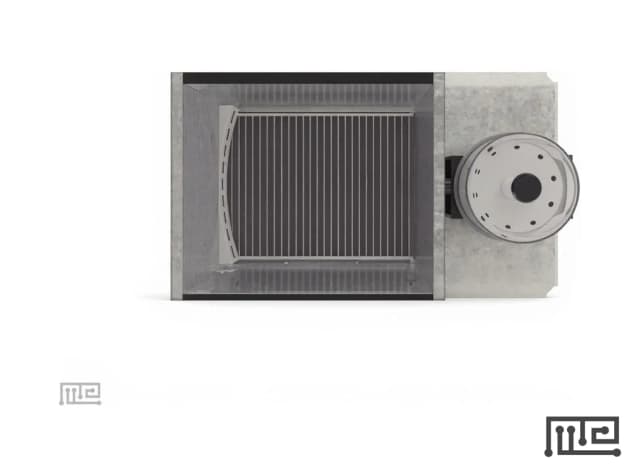
The IDED Operant Chamber is a specialized behavioral testing system designed for investigating cognitive flexibility and executive function in rodents through the intra/extradimensional set-shifting paradigm. The chamber features dual compartments separated by an automatic sliding door with infrared detection, enabling complex discrimination learning tasks across three perceptual dimensions: visual, tactile, and olfactory stimuli.
Each chamber incorporates comprehensive stimulus presentation capabilities including LED visual cues, changeable floor textures for tactile discrimination, and an integrated olfactometer for odor-based testing. The system includes nose poke holes with infrared photobeam detection, food magazine with pellet dispenser for reinforcement delivery, and overhead camera placement for behavioral recording. This configuration supports both simple and compound discrimination protocols essential for studying attentional set formation and cognitive shifting abilities.
How It Works
The IDED operant chamber operates on principles of operant conditioning combined with multidimensional stimulus discrimination. Animals learn to associate specific stimulus combinations (visual LED patterns, tactile floor textures, and olfactory cues) with reward availability through nose poke responses detected by infrared photobeams. The system presents stimuli across three perceptual dimensions simultaneously, allowing researchers to establish attentional sets where subjects focus on one relevant dimension while ignoring others.
During set-shifting phases, the chamber automatically reconfigures stimulus contingencies to test cognitive flexibility. The transparent dividing door with infrared control enables transitions between simple discrimination (one chamber) and compound discrimination (both chambers) protocols. Food pellet delivery through the magazine provides immediate reinforcement feedback, while the overhead camera captures locomotor activity and response patterns for comprehensive behavioral analysis.
Software integration with platforms like Conductor, EthoVision, and Neuralynx enables real-time data acquisition and protocol automation, ensuring standardized testing conditions and precise temporal control of stimulus presentation sequences.
Features & Benefits
chamber_configuration
- Two identical chambers separated by transparent dividing door
visual_stimuli
- 2 LED's
nose_poke_holes
- 2 per chamber with infrared photo beams
tactile_stimuli
- 2
olfactory_stimulus
- 1 with dilution olfactometer
food_magazine
- 1 with pellet dispenser
automatic_sliding_door
- 1
house_light
- 1
ir_beam_door_control
- IR beam between chambers for door control
camera
- Placed on top for recording basal alternation and locomotor activity
perceptual_dimensions
- 3 (odor, sight, tact)
changeable_floor_textures
- Mounted on sliding support in front of each nose poke hole
software_compatibility
- Conductor software, Ethovision, Neuralynx, Pulsepal
Behavioral Construct
- Cognitive Flexibility
- Executive Function
- Attentional Set Shifting
- Discrimination Learning
- Reversal Learning
- Rule Learning
Automation Level
- fully-automated
Research Domain
- Anxiety and Depression
- Behavioral Pharmacology
- Learning and Memory
- Neurodegeneration
- Neuroscience
Species
- Mouse
- Rat
Weight
- 6.06 kg
Dimensions
- L: 65.0 mm
- W: 36.0 mm
- H: 27.0 mm
Comparison Guide
| Feature | This Product | Typical Alternative | Advantage |
|---|---|---|---|
| Stimulus Modalities | Three integrated dimensions: visual (LED), tactile (changeable textures), and olfactory (dilution olfactometer) | Standard operant chambers typically offer 1-2 modalities, often limited to visual and auditory stimuli | Enables comprehensive cognitive flexibility assessment across multiple sensory domains within single experimental sessions. |
| Chamber Configuration | Dual chambers with automatic sliding door and infrared control | Single chamber configurations require manual intervention for protocol transitions | Permits seamless progression from simple to compound discrimination without experimental interruption or animal handling. |
| Response Detection | Infrared photobeam detection at nose poke locations with millisecond precision | Mechanical switches or capacitive sensors with slower response times | Provides wear-free operation and precise temporal resolution essential for cognitive timing analysis. |
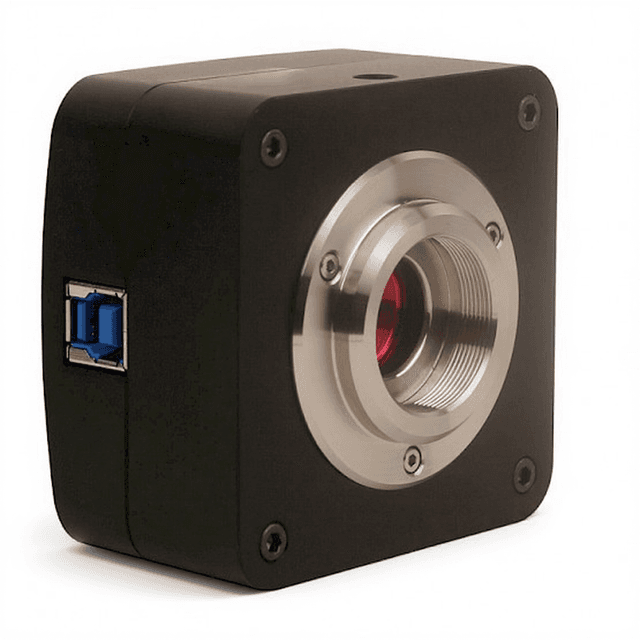
| Behavioral Recording | Integrated overhead camera mounting with software compatibility | External camera systems requiring separate mounting and synchronization | Streamlines behavioral analysis workflow with coordinated stimulus presentation and video capture timing. |
| Software Integration | Compatible with Conductor, EthoVision, Neuralynx, and PulsePal platforms | Proprietary software with limited third-party integration options | Enables integration with existing laboratory data acquisition and analysis infrastructure. |
| Floor Texture System | Changeable textures mounted on sliding supports in front of nose poke holes | Fixed floor materials or manual texture replacement systems | Allows rapid tactile cue modification without protocol interruption or animal disturbance. |
This IDED chamber offers comprehensive multi-modal stimulus presentation with automated protocol control and broad software compatibility. The dual-chamber design with three integrated sensory modalities provides advanced capabilities for cognitive flexibility research compared to standard single-chamber operant systems.
Practical Tips
Calibrate infrared photobeam sensitivity weekly using standard test objects to ensure consistent response detection across experimental sessions.
Why: Photobeam drift can alter response thresholds and affect behavioral data reliability over extended testing periods.
Clean olfactometer lines with appropriate solvents between different odor conditions to prevent cross-contamination of stimulus presentations.
Why: Residual odors can create unintended stimulus cues that confound dimensional discrimination learning.
Randomize floor texture placement and LED stimulus positions across sessions to prevent spatial learning confounds in dimensional attention tasks.
Why: Spatial biases can mask true cognitive flexibility deficits and reduce experimental validity.
Monitor sliding door operation for consistent timing and verify infrared beam alignment if door control becomes irregular.
Why: Door timing variations can disrupt protocol phases and introduce unwanted variability in cognitive testing protocols.
Synchronize camera recording with stimulus presentation timing to enable precise correlation between behavioral responses and environmental cues.
Why: Temporal alignment is critical for analyzing response latencies and movement patterns during dimensional shift phases.
Verify that automatic door operation includes safety interlocks to prevent animal injury during chamber transitions.
Why: Infrared safety systems must function properly to prevent crushing injuries during automated door cycling.
Establish consistent inter-trial intervals to allow complete odor clearing between olfactory discrimination trials.
Why: Inadequate odor purging can create carryover effects that interfere with stimulus discrimination learning.
Replace changeable floor textures periodically to maintain consistent tactile stimulus properties across experimental cohorts.
Why: Texture wear from repeated animal contact can alter stimulus salience and affect discrimination performance.
Setup Guide
What’s in the Box
- Dual operant chamber assembly (typical)
- Automatic sliding door with IR sensors (typical)
- LED visual stimulus modules (typical)
- Tactile stimulus floor texture set (typical)
- Olfactometer system with dilution control (typical)
- Food pellet dispenser and magazine (typical)
- Infrared photobeam detection system (typical)
- Overhead camera mount (typical)
- Software installation media (typical)
- User manual and calibration documentation (typical)
- Power supply and interface cables (typical)
Warranty
ConductScience provides a standard one-year manufacturer warranty covering defects in materials and workmanship, with comprehensive technical support for software integration and protocol optimization.
Compliance
What stimulus combinations are possible for set-shifting protocols?
The system supports simultaneous presentation across three dimensions: visual (LED patterns), tactile (changeable floor textures), and olfactory (dilution olfactometer). This enables classic IDED paradigms with simple discrimination, compound discrimination, intradimensional shift, extradimensional shift, and reversal learning phases.
How precise is the response detection and timing?
Infrared photobeam detection at nose poke holes provides millisecond-level temporal resolution for response recording. The system integrates with platforms like Neuralynx for precise synchronization with electrophysiological recordings during cognitive testing.
What software platforms are supported for data acquisition?
The chamber is compatible with Conductor software, EthoVision behavioral tracking, Neuralynx data acquisition, and PulsePal stimulus control systems, enabling integration with existing laboratory infrastructure and analysis workflows.
Can the olfactory system prevent cross-contamination between trials?
The integrated olfactometer includes dilution control capabilities to manage odor concentration and delivery timing. Consult product datasheet for specific air flow rates and purging cycle specifications to ensure adequate inter-trial interval clearing.
What pellet types are compatible with the food magazine?
The food magazine accommodates standard laboratory pellets for rodent reinforcement. Consult product datasheet for specific pellet diameter compatibility and dispenser reliability specifications for your chosen reward type.
How does the automatic door system maintain experimental control?
The transparent sliding door operates via infrared beam detection, allowing automated transitions between chamber configurations while maintaining visual access. The IR system prevents door operation when animals are in the transition zone, ensuring safety and protocol integrity.
What camera specifications support behavioral analysis integration?
The overhead camera placement captures both chamber compartments for locomotor activity monitoring and spatial preference analysis. The system integrates with EthoVision for automated tracking during cognitive testing protocols.
Have a question about this product?