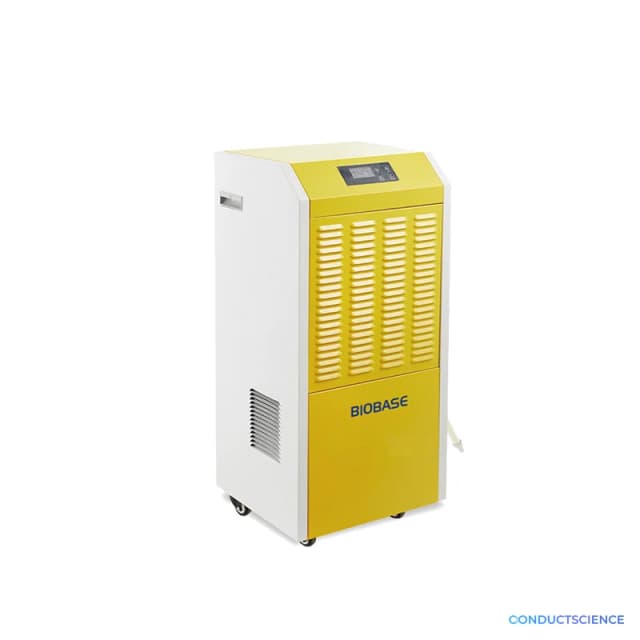
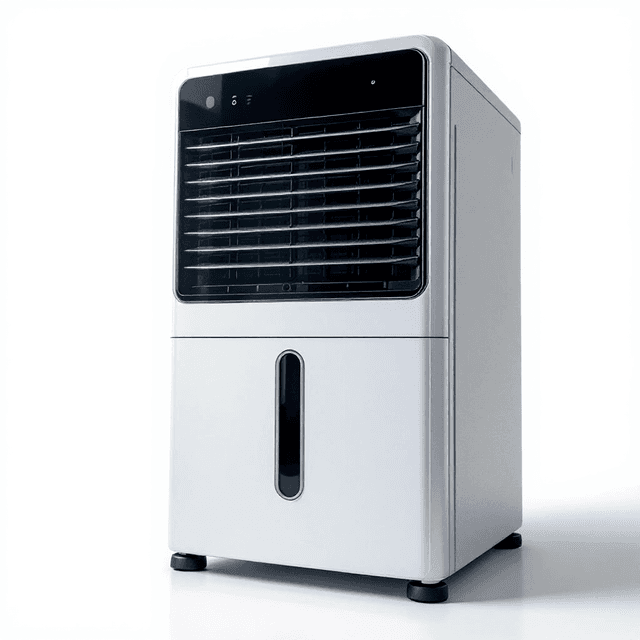
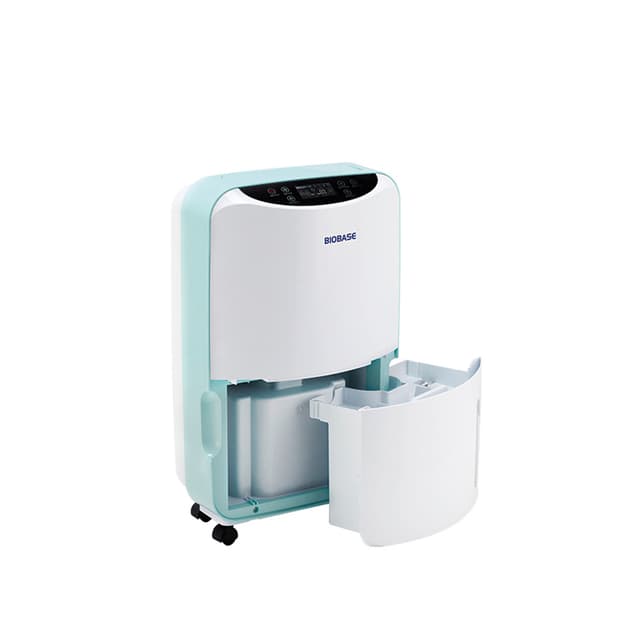
Industrial Dehumidifier
High-capacity industrial dehumidifier providing precise humidity control (±5%RH) for laboratory environments up to 230m² with 7L/h moisture removal capacity.

Louise Corscadden, PhD
Director of Science · ConductScience
Ask Louise about Industrial Dehumidifier fit, setup, configuration, or quote prep.
Already working with us? Sign in to connect this with My Scientist.
Key Specifications
Full details →- Model fit
- Configured during quote
- SKU family
- BIO-0813
- Shipping box
- 115.5 x 52.5 x 74.0 cm
- Ordering
- Online checkout and quote request available
- Category
- Environmental Control
- Build notes
- Confirm accessories, station layout, and support needs before purchase
The Industrial Dehumidifier (BIO-0813) is a high-capacity environmental control system designed for precise humidity management in laboratory and research environments. Operating on R410A refrigerant technology, this unit provides systematic moisture removal with control precision of ±5%RH across working temperatures from 5°C to 38°C. The system achieves maximum dehumidifying capacity of 7L/h at standard testing conditions (30°C, 80% humidity).
Designed for medium to large research spaces (180-230m²), the unit features automatic defrost functionality and dual drainage options including a 10L integrated water tank or external pipe connection. The 2100W power consumption provides efficient operation while maintaining precise environmental control necessary for sensitive research applications requiring stable humidity conditions.
How It Works
The dehumidifier operates on a refrigeration-based condensation principle using R410A refrigerant. Humid air is drawn across cold evaporator coils where water vapor condenses into liquid droplets due to temperature differential. The condensed water is collected either in the integrated 10L tank or directed through external drainage piping.
The system incorporates automatic defrost functionality to prevent ice formation on evaporator coils during low-temperature operation. Temperature and humidity sensors provide feedback to maintain control precision within ±5%RH of setpoint values. The refrigeration cycle operates efficiently across the specified temperature range of 5-38°C, with peak performance achieved at 30°C ambient conditions.
Features & Benefits
Automation Level
- semi-automated
Humidity Removal Capacity
- 7L/h (BKDH-6.8DT)
- 10L/h (BKDH-12KT)
- 16L/h (BKDH-15KT)
- 20L/h (BKDH-20KT)
Working Condition
- At 30C, 80% humidity, achieves maximum dehumidifying capacity
Refrigerant
- R410A
Control Precision
- +/-5%RH
Applying Area
- 180~230m2 (BKDH-6.8DT)
- 250~350m2 (BKDH-12KT)
- 350~400m2 (BKDH-15KT)
- 450~550m2 (BKDH-20KT)
Applicable Temperature
- 5~38C
Defrost
- Auto Defrost
Consumption
- 2100W (BKDH-6.8DT)
- 3800W (BKDH-12KT)
- 6100W (BKDH-15KT)
- 8000W (BKDH-20KT)
Drainage Type
- 10L water tank (standard) or external pipe (BKDH-6.8DT)
- External pipe (BKDH-12KT/15KT/20KT)
Air Circulation
- 2000 m3/h (BKDH-6.8DT)
- 2800 m3/h (BKDH-12KT)
- 4000 m3/h (BKDH-15KT)
- 5600 m3/h (BKDH-20KT)
Power/Voltage
- Standard: 220V, 50Hz; Optional: 220V, 60Hz (BKDH-6.8DT/12KT)
- Standard: 380V, 50Hz; Optional: 380V, 60Hz; 480V, 50/60Hz (BKDH-15KT/20KT)
External Size (W*D*H)
- 525x740x1155mm (BKDH-6.8DT)
- 770x470x1630mm (BKDH-12KT)
- 1095x485x1750mm (BKDH-15KT/20KT)
Package Size (W*D*H)
- 770x590x1260mm (BKDH-6.8DT)
- 870x570x1640mm (BKDH-12KT)
- 1105x495x1760mm (BKDH-15KT)
- 1280x620x1900mm (BKDH-20KT)
Net Weight
- 95kg (BKDH-6.8DT)
- 140kg (BKDH-12KT)
- 250kg (BKDH-15KT)
- 270kg (BKDH-20KT)
Gross Weight
- 100kg (BKDH-6.8DT)
- 150kg (BKDH-12KT)
- 260kg (BKDH-15KT)
- 280kg (BKDH-20KT)
Brand
- ConductScience
Research Domain
- Analytical Chemistry
- Environmental Monitoring
- Food Science
- Materials Science
- Microbiology
- Pharmaceutical QC
Shipping weight
- 95.0 lb
Shipping box
- L: 115.5 cm
- W: 52.5 cm
- H: 74.0 cm
| Feature | This Product | Typical Alternative | Advantage |
|---|---|---|---|
| Moisture Removal Capacity | 7L/h at optimal conditions (30°C, 80% humidity) | Entry-level units often provide 3-5L/h capacity | Higher capacity handles moisture loads in active laboratory environments with multiple personnel and equipment. |
| Control Precision | ±5%RH accuracy across operating range | Basic units typically offer ±10%RH or wider tolerance | Tighter control maintains stable conditions essential for moisture-sensitive experimental protocols. |
| Coverage Area | 180-230m² application area | Smaller units typically cover 50-150m² | Suitable for medium to large research facilities without requiring multiple units. |
| Operating Temperature Range | 5-38°C with automatic defrost | Many units limited to 15-35°C range | Extended range accommodates variable laboratory conditions from cold storage areas to ambient working environments. |
| Drainage Options | 10L tank or external pipe connection | Many units offer only tank collection | External drainage enables continuous operation for extended protocols without manual tank emptying. |
| Refrigerant Technology | R410A refrigerant system | Older units may use R22 or other refrigerants | Environmentally responsible refrigerant with reliable performance characteristics for laboratory applications. |
This industrial dehumidifier offers higher moisture removal capacity and tighter humidity control compared to entry-level units, with extended temperature range and flexible drainage options. The R410A refrigerant system provides reliable performance for demanding laboratory applications requiring precise environmental control.
Practical Tips
Verify control accuracy using a calibrated hygrometer placed at representative locations throughout the coverage area.
Why: Ensures the unit maintains specified ±5%RH precision across the entire laboratory space.
Clean air intake filters monthly and inspect drain lines quarterly to prevent blockages.
Why: Maintains optimal airflow and prevents water backup that could affect dehumidification performance.
Position unit away from direct sunlight and heat sources while maintaining required clearance around air vents.
Why: Prevents thermal loading that reduces efficiency and ensures proper air circulation for consistent performance.
Check for ice formation on evaporator coils if performance decreases during cold operation.
Why: Ice buildup reduces heat transfer efficiency; automatic defrost should activate but manual inspection helps identify potential issues.
Allow 30-minute stabilization after setpoint changes before recording environmental data.
Why: System requires time to reach equilibrium conditions for accurate humidity measurements in research protocols.
Ensure adequate electrical circuit capacity and use dedicated 2100W-rated circuit for installation.
Why: Prevents electrical overload and ensures reliable operation without interference from other laboratory equipment.
Use external drainage connection for protocols exceeding 8-hour duration to avoid tank overflow.
Why: 10L tank capacity may be insufficient for extended high-humidity operations without manual emptying.
Inspect refrigerant lines and connections annually for signs of leakage or damage.
Why: Maintains R410A system integrity and prevents performance degradation that affects humidity control precision.
Setup Guide
What’s in the Box
- Industrial dehumidifier main unit
- 10L water collection tank
- Power cord
- Drainage hose connection kit (typical)
- User manual and technical documentation (typical)
- Warranty registration materials (typical)
Warranty
ConductScience provides a 1-year manufacturer warranty covering parts and labor with technical support for installation and operational guidance. Extended warranty options available for critical research applications.
Compliance
References
Background reading relevant to this product:
What is the control accuracy for humidity setpoint maintenance?
The system maintains humidity control precision of ±5%RH from the programmed setpoint across the full operating temperature range of 5-38°C.
How does performance vary with ambient temperature conditions?
Maximum dehumidifying capacity of 7L/h is achieved at 30°C and 80% humidity. Performance decreases at lower temperatures, with automatic defrost preventing ice formation during cold operation.
What drainage options are available for different research protocols?
The unit includes a 10L water tank for standard intermittent operation or external pipe connection for continuous drainage during extended protocols or high-humidity applications.
What space coverage can be expected in typical laboratory environments?
The unit is rated for 180-230m² coverage area under standard conditions. Actual coverage may vary based on ceiling height, air circulation, and moisture load from personnel and equipment.
How does the automatic defrost function affect continuous operation?
Automatic defrost activates as needed during low-temperature operation to prevent ice formation on evaporator coils, maintaining consistent dehumidification without manual intervention.
What power requirements are needed for installation?
Standard operation requires 220V, 50Hz supply with 2100W consumption. Optional 220V, 60Hz configuration is available. Dedicated circuit recommended for reliable operation.
How does this compare to desiccant-based dehumidification systems?
Refrigeration-based technology provides consistent performance with lower operating costs compared to desiccant systems, though desiccant units may achieve lower absolute humidity levels for specialized applications.
Have a question about this product?
Have a question? Just ask.
Send it over and we'll email you a personalized answer — no call, no scheduling.
Prefer to talk it through?