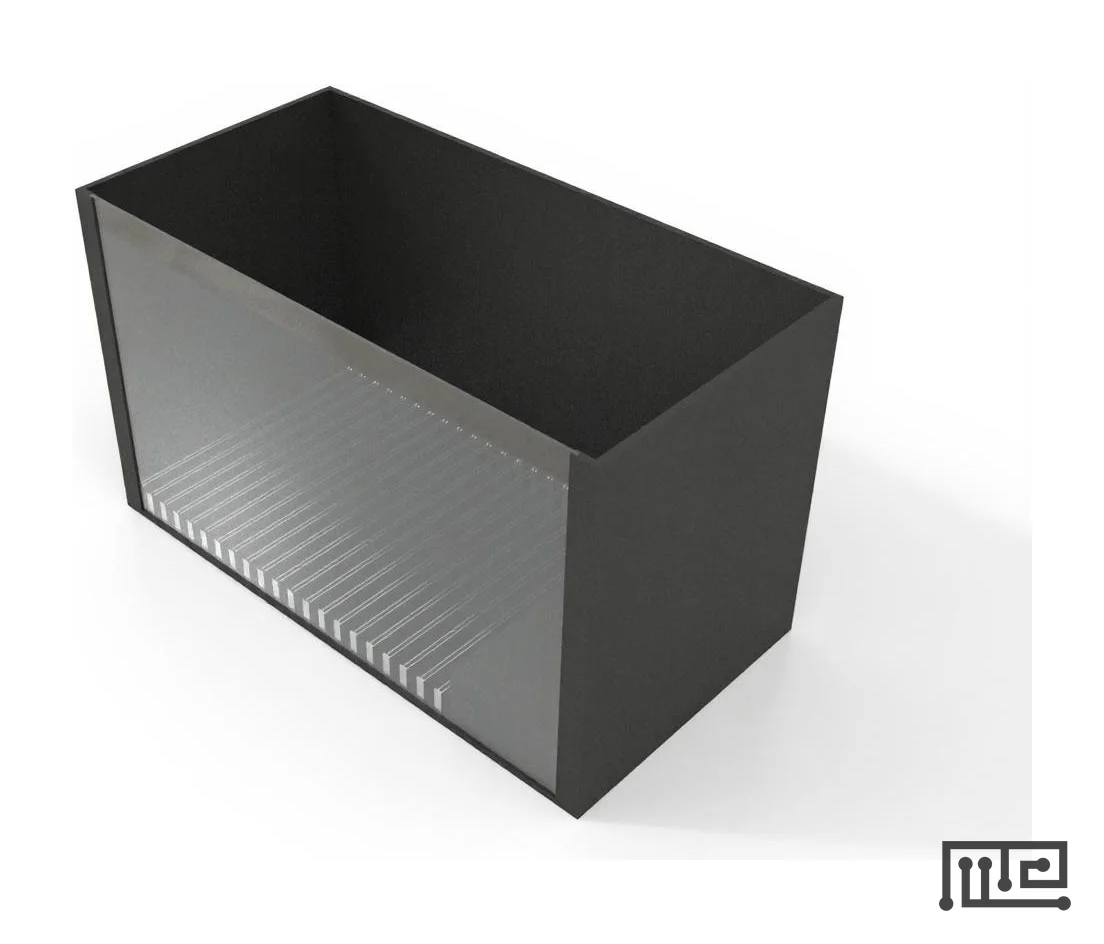
Inhibitory Avoidance Tank
SKU N/A
$3,900.00
IncludesStandard care
The Inhibitory Avoidance Tank is a behavioral neuroscience apparatus for studying passive avoidance learning and memory consolidation in laboratory animals.
This research tool enables investigation of fear-motivated learning, memory formation, and the neural mechanisms underlying aversive conditioning.
Scientist guidance

Louise Corscadden, PhD
Director of Science · ConductScience
Ask Louise about Inhibitory Avoidance Tank fit, setup, configuration, or quote prep.
Already working with us? Sign in to connect this with My Scientist.
Key Specifications
Full details →- Model fit
- Configured during quote
- SKU family
- Assigned during quote
- Sizing
- Model-specific dimensions confirmed from the selected configuration
- Ordering
- Online checkout and quote request available
- Category
- Learning & Memory Tests
- Build notes
- Confirm accessories, station layout, and support needs before purchase
Overview
The Inhibitory Avoidance Tank is a specialized behavioral neuroscience apparatus designed for studying learning, memory consolidation, and fear-motivated avoidance behaviors in laboratory animals. This research tool enables scientists to investigate the neural mechanisms underlying aversive learning through a controlled paradigm where subjects learn to avoid a compartment previously associated with mild aversive stimuli.
Key Features
The apparatus provides a controlled environment for measuring passive avoidance learning, where animals learn to suppress their natural exploratory behavior to avoid unpleasant experiences. The system allows researchers to examine both acquisition and retention phases of memory formation, making it valuable for studying memory consolidation processes and the effects of various interventions on learning and memory.
Applications
This equipment is widely used in cognitive neuroscience research to assess memory formation, consolidation, and retrieval processes. Researchers utilize the inhibitory avoidance paradigm to study age-related memory decline, evaluate potential cognitive enhancers, investigate the effects of stress on memory, and examine the neural substrates of fear learning and memory.
Species Compatibility
The Inhibitory Avoidance Tank is designed to accommodate various laboratory species commonly used in behavioral neuroscience research, allowing for comparative studies across different animal models while maintaining standardized testing conditions.
Features & Benefits
Passive avoidance learning paradigm
Enables study of inhibitory learning and memory consolidation without extensive training protocols
Controlled experimental environment
Ensures consistent testing conditions for reliable and reproducible behavioral data
Memory assessment capabilities
Allows evaluation of both short-term and long-term memory formation and retention
Fear-motivated learning model
Provides insights into anxiety-related behaviors and stress effects on cognition
Standardized behavioral paradigm
Facilitates comparison of results across laboratories and research groups
Multi-phase testing protocol
Enables separate analysis of acquisition, consolidation, and retrieval memory phases
Versatile research applications
Supports diverse studies from pharmacological interventions to genetic manipulations
Quantitative behavioral measurement
Provides objective data on latency times and avoidance behaviors for statistical analysis
Cognitive Neuroscience
Investigating neural mechanisms of memory formation and consolidation
Pharmacology
Testing cognitive enhancers and memory-modulating compounds
Aging Research
Studying age-related changes in learning and memory capacity
Stress and Anxiety Research
Examining effects of chronic stress on cognitive function
Neurological Disease Models
Assessing memory deficits in models of neurodegenerative diseases
Behavioral Genetics
Evaluating genetic influences on learning and memory performance
Neurotoxicology
Measuring cognitive effects of environmental toxins and therapeutic agents
Q
What is the typical duration of an inhibitory avoidance training session?
A
Training sessions are typically brief, lasting only a few minutes. The initial exploration phase usually takes 1-3 minutes, followed by immediate placement in the safe compartment after the aversive stimulus. The simplicity and speed of training is one advantage of this paradigm.
Q
How long should I wait between training and testing phases?
A
Testing intervals can range from 1 hour to several days depending on your research objectives. Short intervals (1-6 hours) assess short-term memory, while longer intervals (24-48 hours or more) evaluate long-term memory consolidation and retention.
Q
What behavioral measures should I record during testing?
A
Key measures include step-through latency (time to enter the previously punished compartment), number of entries, and total time spent in each compartment. Some researchers also record freezing behavior and exploratory activity as additional behavioral indicators.
Q
Can this apparatus be used with different species?
A
Yes, the inhibitory avoidance paradigm can be adapted for various laboratory species. However, species-specific considerations such as natural behaviors, stress responses, and optimal stimulus parameters should be taken into account when designing experiments.
Q
How do I determine appropriate stimulus parameters for my study?
A
Stimulus intensity should be sufficient to motivate avoidance learning without causing excessive stress or injury. Start with mild parameters and conduct pilot studies to establish the minimum effective intensity that produces reliable learning in your specific experimental conditions.
Q
What factors can influence inhibitory avoidance performance?
A
Performance can be affected by age, sex, strain differences, housing conditions, handling procedures, time of day, and previous experimental history. Standardizing these variables and using appropriate controls is essential for reliable results.
Q
How should I analyze step-through latency data?
A
Latency data often requires non-parametric statistical analysis due to ceiling effects (animals that never enter may be assigned maximum trial time). Consider using survival analysis or transforming data appropriately. Always report both individual and group performance patterns.
Q
What are common troubleshooting issues with inhibitory avoidance testing?
A
Common issues include animals that fail to explore initially, excessive freezing responses, or inconsistent avoidance behavior. These can often be addressed by adjusting habituation procedures, stimulus parameters, or environmental conditions to optimize natural exploratory behavior.
Have a question about this product?
Track rodents with ConductVision
ConductVision is our video-tracking software. Record your sessions on video, and it scores standard rodent tests, such as those listed below.
Examples of tests it scores
To check whether ConductVision scores your protocol in this apparatus, ask in your quote request.
Ask a question
Have a question? Just ask.
Send it over and we'll email you a personalized answer — no call, no scheduling.
Personalized email reply
Usually within one business day
Helpful answers published here
Prefer to talk it through?


Inhibitory Avoidance Tank
$3,900.00
Added to quoteView Quote