Laboratory Refrigerator(Single Door) 68L 108L
Precision laboratory refrigerators maintaining 2-8°C with ±0.1°C accuracy for secure storage of temperature-sensitive reagents and biological samples.
| Automation Level | semi-automated |

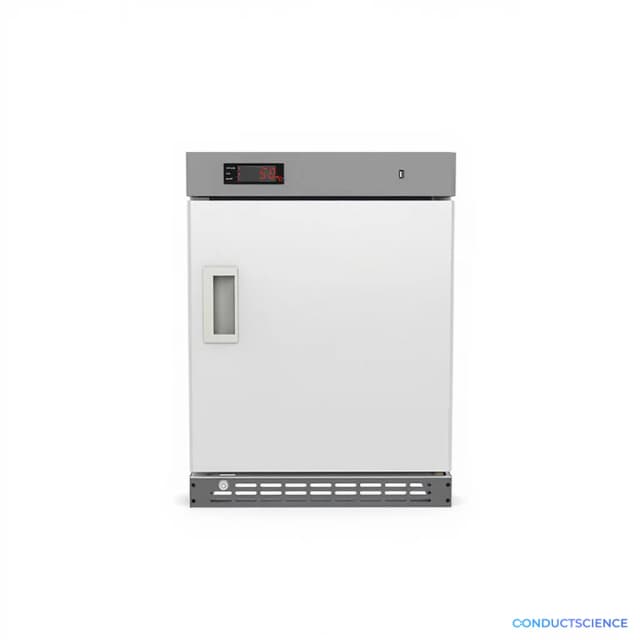
The Laboratory Refrigerator series provides precise temperature control for storage of temperature-sensitive reagents, samples, and biological materials in research environments. These single-door units feature microprocessor control systems maintaining 2-8°C temperature range with ±0.1°C accuracy and ≤2°C uniformity across the storage compartment.
Available in four capacity configurations (68L, 108L, 118L, and 238L), each unit incorporates R600a refrigerant cooling systems with automatic defrost functionality and comprehensive alarm monitoring. The polyurethane cyclopentane insulation construction ensures thermal stability while LED displays provide continuous temperature monitoring. Recovery time specifications of ≤15 minutes to 8°C following door opening events support high-frequency access protocols typical of active laboratory workflows.
How It Works
The refrigeration system operates through vapor compression cycle using R600a (isobutane) refrigerant circulating through aluminum tube evaporators and Bundy tube condensers. The microprocessor control system continuously monitors internal temperature via precision sensors, activating the compressor to maintain the 2-8°C setpoint range with ±0.1°C accuracy.
Air-cooling circulation distributes conditioned air throughout the storage compartment, achieving ≤2°C temperature uniformity across all shelf positions. Polyurethane cyclopentane foam insulation minimizes thermal transfer while automatic defrost cycles prevent ice buildup on evaporator surfaces that could compromise cooling efficiency.
Multiple alarm systems monitor critical parameters including high/low temperature excursions, thermostat malfunctions, door ajar conditions, and power interruptions. The 8-hour power failure alarm memory maintains event logs during outages to support cold chain documentation requirements.
Features & Benefits
Model
- BIO-BPR-5V68
- BIO-BPR-5V108
- BIO-BPR-5V118
- BIO-BPR-5V238
Automation Level
- semi-automated
Research Domain
- Analytical Chemistry
- Cell Biology
- Clinical Diagnostics
- Immunology
- Microbiology
- Pharmaceutical QC
Weight
- 245.0 kg
Dimensions
- L: 42.0 mm
- W: 43.6 mm
- H: 38.0 mm
Comparison Guide
| Feature | This Product | Typical Alternative | Advantage |
|---|---|---|---|
| Temperature Accuracy | ±0.1°C across 2-8°C range | Entry-level models often provide ±0.5°C to ±1.0°C accuracy | Tighter temperature control better preserves temperature-sensitive reagents and biological samples |
| Temperature Recovery Time | ≤15 minutes to 8°C after door opening | Basic units may require 30+ minutes recovery | Minimizes thermal excursion duration during frequent sample access protocols |
| Alarm System | Four alarm types with 8-hour power failure memory | Simple models often have basic temperature alarms only | Comprehensive monitoring supports cold chain documentation and regulatory compliance needs |
| Defrost System | Automatic defrost with no user intervention required | Manual defrost units require periodic maintenance shutdown | Eliminates workflow interruption and maintains continuous temperature control |
| Capacity Range | Four models from 68L to 238L capacity | Limited capacity options in most product lines | Allows selection of optimal size for specific laboratory storage requirements |
This refrigerator series combines precise temperature control with comprehensive monitoring capabilities and automatic maintenance functions. The microprocessor control system and multi-tier alarm monitoring provide laboratory-grade reliability for temperature-sensitive storage applications.
Practical Tips
Verify temperature accuracy monthly using a calibrated reference thermometer placed at shelf level with samples.
Why: Ensures continued accuracy of the microprocessor control system for critical sample preservation.
Clean condenser coils quarterly to maintain optimal heat exchange efficiency and prevent cooling performance degradation.
Why: Dust accumulation on coils reduces heat transfer and increases compressor workload.
Allow adequate air circulation around stored containers by avoiding overpacking shelves.
Why: Proper airflow maintains temperature uniformity and prevents thermal gradients within the storage chamber.
If temperature alarms activate frequently, check door seal integrity and minimize door opening duration.
Why: Damaged seals or extended door openings increase thermal load and compromise temperature stability.
Document temperature readings and alarm events as part of sample storage chain of custody records.
Why: Temperature documentation supports data integrity requirements in regulated research environments.
Position unit away from heat sources and ensure adequate ventilation clearance around condenser areas.
Why: Proper ventilation prevents overheating and maintains refrigeration system efficiency and longevity.
Setup Guide
What’s in the Box
- Laboratory refrigerator main unit
- Adjustable storage shelves (typical)
- Power cord
- User manual and technical documentation
- Temperature monitoring guide (typical)
- Alarm system operation instructions (typical)
Compliance
Warranty & ConductCare
ConductScience provides standard 1-year manufacturer warranty covering parts and labor with comprehensive technical support for installation, calibration, and maintenance guidance.
What is the temperature recovery time after door opening?
The unit recovers to 8°C within 15 minutes following door closure in 32°C ambient conditions, ensuring minimal thermal excursion during sample access.
How uniform is temperature distribution across storage shelves?
Temperature uniformity is maintained within ≤2°C throughout the storage chamber, providing consistent conditions across all shelf positions.
What alarm functions are included for monitoring?
The system monitors high/low temperature excursions, thermostat faults, door ajar conditions, and power failures with 8-hour memory backup for event documentation.
Can the temperature setpoint be adjusted within the 2-8°C range?
The microprocessor control system allows setpoint adjustment within the 2-8°C operational range with ±0.1°C accuracy maintenance.
What type of defrost system is used?
Automatic defrost cycles prevent ice accumulation on evaporator surfaces without user intervention, maintaining optimal cooling efficiency.
How does ambient temperature affect cooling performance?
Cooling times are specified for 32°C ambient conditions; performance may improve in cooler environments with reduced thermal load on the refrigeration system.
What refrigerant is used and why?
R600a (isobutane) refrigerant provides excellent thermodynamic properties with environmental compatibility and efficient cooling performance.
Have a question about this product?
Upgrade Options