Lickometer for Mice and Rats
Fiber optic lickometer with peristaltic pump reward delivery for precise measurement of rodent licking behavior.
Adjustable ball sipper spout, programmable liquid reward volumes, and real-time data acquisition via included ConductMaze software. Compatible with home cages, behavioral mazes, and operant conditioning chambers.

Louise Corscadden, PhD
Director of Science · ConductScience
Ask Louise about Lickometer for Mice and Rats fit, setup, configuration, or quote prep.
Already working with us? Sign in to connect this with My Scientist.
Key Specifications
Full details →- Model fit
- Configured during quote
- SKU family
- ME-OC-LICK
- Sizing
- Model-specific dimensions confirmed from the selected configuration
- Ordering
- Online checkout and quote request available
- Category
- Learning & Memory Tests
- Build notes
- Confirm accessories, station layout, and support needs before purchase
Overview
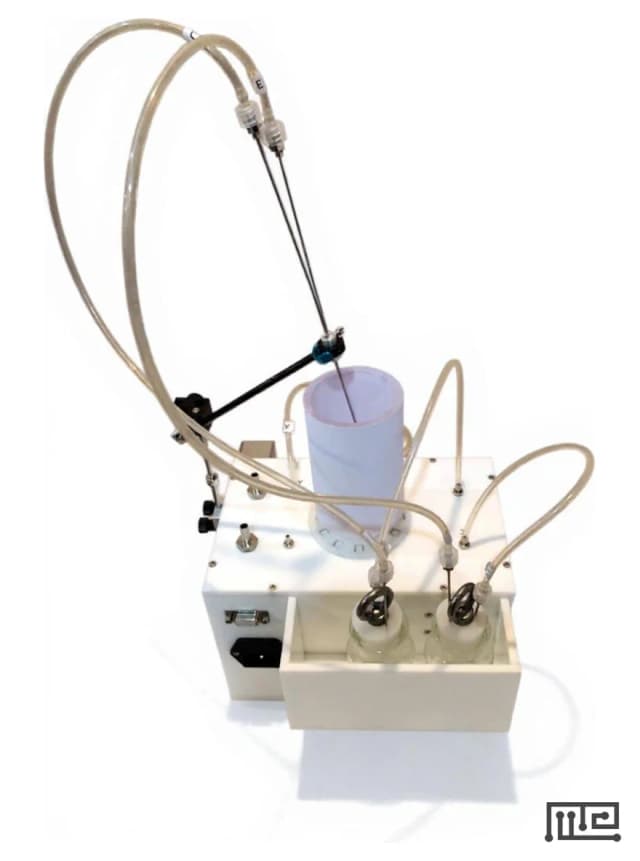
The Lickometer is a precision instrument for quantitative measurement and analysis of rodent licking behavior. It combines a fiber optic lick detection sensor with a programmable peristaltic pump to deliver precise liquid rewards (water, sucrose, or other solutions) while capturing individual lick events with high temporal resolution.
The system features an adjustable ball sipper spout mounted on a black acrylic panel that can be positioned as a wall insert in mazes and cages or placed inside a modular enclosure for standalone use. A fiber optic cable embedded beneath the spout detects each lick without requiring electrical contact with the animal, enabling artifact-free measurement across extended sessions.
The included ConductMaze software provides a complete experiment workflow: configure protocols with customizable session duration, reward volume, and lick-contingent delivery schedules, then run experiments with real-time visualization of lick activity. Results are exportable to CSV with per-lick timestamps for downstream analysis of lick rate, inter-lick intervals, bout structure, and microstructure patterns.
Key Applications
- Reward preference and palatability testing — Compare lick rates across solutions to assess taste preference and hedonic value
- Operant conditioning — Deliver liquid rewards contingent on lick responses in learning paradigms
- Pharmacological studies — Measure drug effects on consummatory behavior and motivation
- Metabolic and feeding research — Quantify fluid intake patterns across circadian cycles
- Home cage monitoring — Track drinking behavior in the animal's home environment without handling stress
Deployment Options
The lickometer supports two installation configurations:
- Wall-mount (maze or cage insert): The black acrylic panel with the lick port slots into a wall cutout on any maze or cage. Ideal for T-mazes, operant chambers, and standard housing cages.
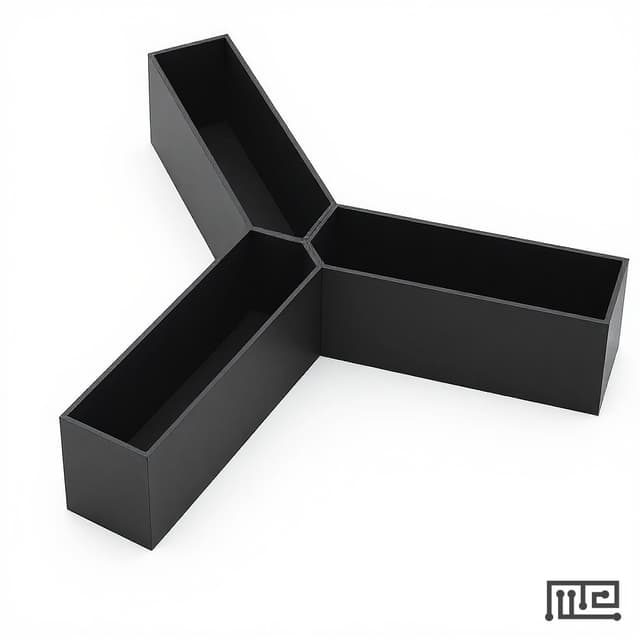
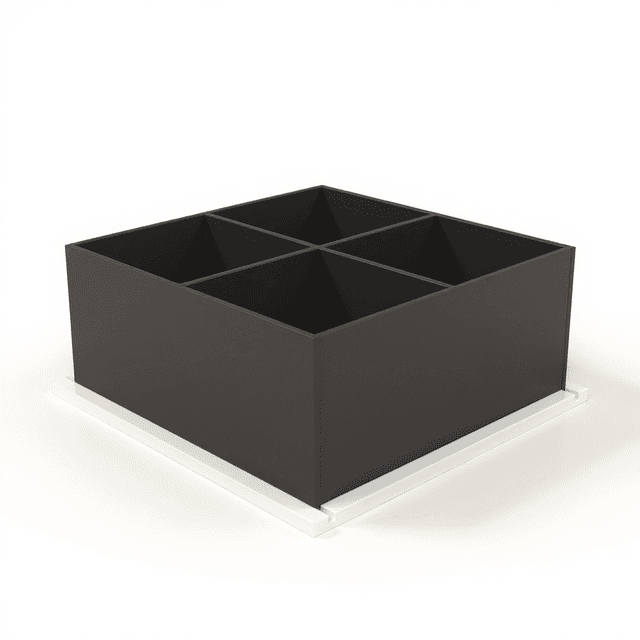
- Modular enclosure: A freestanding box that can be placed inside a cage for self-contained use. Suitable for home cage studies and facilities running multiple concurrent animals.
Specifications
| Parameter | Value |
|---|---|
| Detection method | Fiber optic sensor (non-contact) |
| Lick port | Adjustable ball sipper spout (mouse and rat sizes) |
| Reward delivery | Peristaltic pump, ~0.05 mL per drop (programmable) |
| Pump dimensions | 9.8 × 8.6 × 12.7 cm (W × H × D) |
| Mounting panel | Black acrylic, 5 × 5 cm (default; customizable) |
| Session duration | 1 – 3,600 seconds (configurable) |
| Ineffective lick window | 0 – 30 seconds (configurable) |
| Water drops per delivery | 1 – 9 (configurable) |
| Delivery modes | Lick-contingent or event-triggered |
| Signal output | TTL (compatible with RZ10 and other recording devices) |
| PC connection | USB (USB-to-RS485 adapter included) |
| Software | ConductMaze (Windows) |
| Third-party integration | ANY-Maze, Noldus EthoVision, or custom applications via COM port |
| Bottle compatibility | Standard lab bottles; tubing connects to any reservoir (~500 mL included) |
| Compatible species | Mouse, Rat |
| Data export | CSV, clipboard (copy/paste to spreadsheet) |
What's Included
- Peristaltic pump assembly with water container
- Adjustable ball sipper lick port on black acrylic mounting panel
- Fiber optic lick detection sensor and cable
- Electronic control box
- USB-to-RS485 cable and driver
- Silicone tubing and fittings
- ConductMaze software (Windows installer)
- User manual and quick-start guide
Frequently Asked Questions
How does the lickometer detect licks?
A fiber optic sensor embedded beneath the ball sipper spout detects each lick optically. This non-contact method eliminates electrical artifacts and does not require the animal to complete a circuit, providing reliable detection even with different liquid solutions. The fiber optic sensor is included standard with every unit.
What form factors are available?
The lickometer ships as a panel-mounted unit with the spout and fiber optic port on the front face. You can install it in two ways: (1) as a wall insert by fitting the panel into a cutout on any maze wall or cage side, or (2) inside a modular enclosure box that sits freely inside a cage. Both options are available at purchase — specify your preferred configuration when ordering.
How do I clean the lickometer between animals?
The fiber optic cable detaches from the spout assembly. Remove the cable, then clean the ball sipper spout and pump tubing with standard laboratory disinfectants. The tubing is replaceable and inexpensive. No special tools or disconnection of wiring is required — the components are designed for quick disassembly and reassembly between subjects or lab groups.
What bottles and sippers does it use?
The system uses ball sipper spouts available in mouse and rat sizes. Liquid is drawn from a reservoir through silicone tubing connected to the peristaltic pump — you can use your own lab bottles of any shape (round, square) or size. Standard bottles up to approximately 500 mL work well. Replacement tubing is included and also available from standard laboratory suppliers.
What software is included and how does it work?
Every lickometer ships with ConductMaze, a Windows application for experiment configuration and data acquisition. You can set session duration (up to 60 minutes), reward parameters (drops per lick, volume), and ineffective lick windows. During experiments, the software displays real-time lick events and water deliveries. Results include summary statistics (total licks, effective licks, water deliveries per unit) and a detailed activity log with per-lick timestamps. Data exports to CSV or can be copied directly to a spreadsheet.
Can I integrate the lickometer with ANY-Maze or EthoVision?
Yes. The ConductMaze Adapter software accepts commands from third-party applications including ANY-Maze, Noldus EthoVision, and custom user applications. You can also send commands directly via COM port for programmatic control. While ANY-Maze can send commands to trigger reward delivery, we recommend using ConductMaze for primary data acquisition because it is specifically configured for the fiber optic detection system. No additional equipment is needed for integration — the lickometer connects to your PC via USB, and any command-capable software can communicate with it.
Can the lickometer send signals to external recording equipment?
Yes. The control box outputs TTL signals on each detected lick event. This allows synchronization with external electrophysiology recording systems (e.g., Tucker-Davis Technologies RZ10) or other data acquisition hardware. You can select from multiple TTL channels in the software.
How many lickometers can I run simultaneously?
Each lickometer connects to a PC via its own USB port and control box. The software supports multiple units per experiment, with independent tracking of lick events and reward deliveries for each. You can assign animal names to each unit and view per-unit summary statistics after each session.
What data does the lickometer capture?
Each session records individual lick timestamps, enabling analysis of: lick rate, inter-lick intervals, bout duration, bout frequency, effective vs. ineffective lick counts, water delivery events, and microstructure patterns that reveal palatability and motivation. The raw activity log captures every event (lick start, water delivery, TTL send) with millisecond timestamps.
Features & Benefits
lick_port_adjustment
- Up, down, left, right (lockable)
detection_method
- Fiber optic feedback sensor
What’s in the Box
- 1x lickometer assembly with spout
- Liquid reservoir
- Mounting hardware
- Connection cables
What data does the lickometer capture?
Individual lick timestamps, enabling analysis of lick rate, inter-lick intervals, bout duration, bout frequency, and microstructure patterns that reveal palatability and motivation.
Have a question about this product?
Have a question? Just ask.
Send it over and we'll email you a personalized answer — no call, no scheduling.
Prefer to talk it through?