Liquid Nitrogen Container for Storage and Transportation
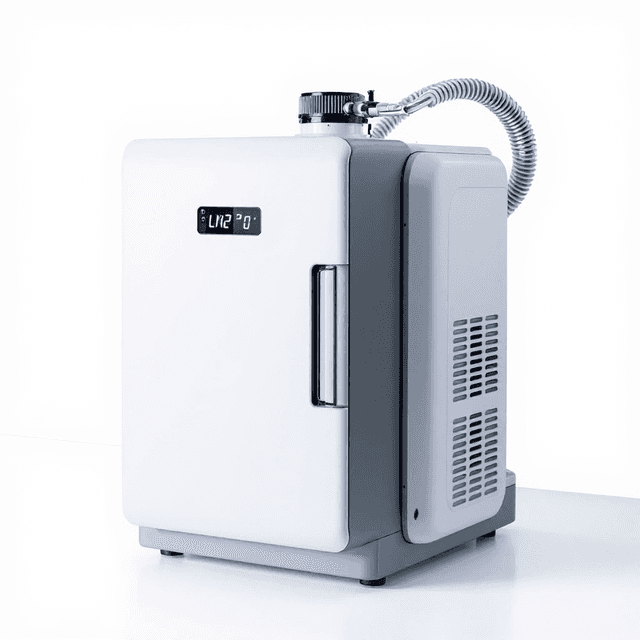
Cryogenic storage vessel for maintaining biological samples and research materials at liquid nitrogen temperatures (-196°C) during storage and transportation.
| Automation Level | manual |
| Brand | ConductScience |
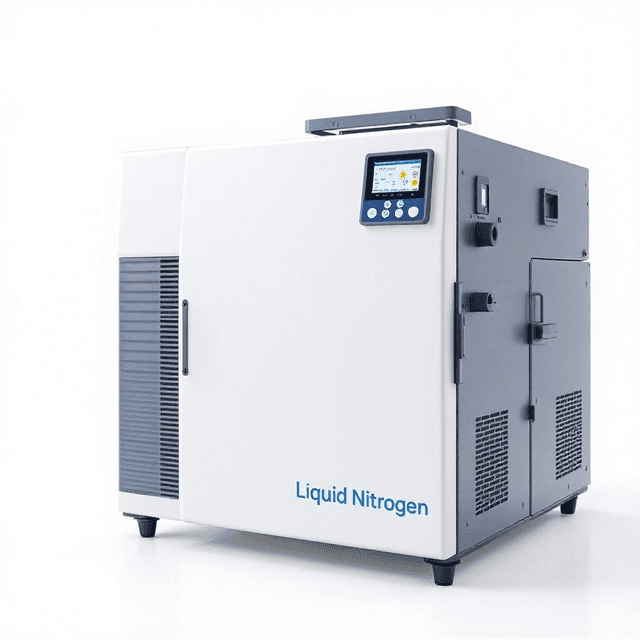
The Liquid Nitrogen Container for Storage and Transportation is a specialized cryogenic vessel designed for the safe storage and transport of biological samples, cell lines, and research materials at ultra-low temperatures. This container maintains temperatures of -196°C through liquid nitrogen immersion, providing the stable cryogenic environment essential for preserving cellular integrity and molecular stability in research applications.
Constructed with vacuum-insulated walls and appropriate safety features, this container supports various laboratory workflows requiring long-term sample preservation. The design facilitates both stationary storage and controlled transportation of temperature-sensitive materials between laboratory facilities, making it suitable for multi-site research collaborations and sample distribution protocols.
How It Works
Liquid nitrogen containers operate through vacuum insulation technology, creating a thermal barrier between the inner vessel containing liquid nitrogen and the external environment. The double-wall construction with vacuum space minimizes heat transfer through conduction and convection, while reflective surfaces reduce radiative heat gain. This design maintains liquid nitrogen at its boiling point of -196°C for extended periods.
Sample preservation occurs through rapid cooling and maintenance at cryogenic temperatures, which effectively halts enzymatic activity and prevents ice crystal formation that could damage cellular structures. Samples are typically stored in cryovials or specialized containers within the nitrogen vapor phase above the liquid level, providing uniform temperature distribution while avoiding direct liquid contact that could cause thermal shock.
The controlled evaporation rate allows for predictable holding times, with nitrogen consumption rates dependent on container size, insulation quality, and ambient conditions. Proper ventilation systems prevent pressure buildup during normal operation and transport.
Features & Benefits
Automation Level
- manual
Brand
- ConductScience
Research Domain
- Cancer Research
- Cell Biology
- Developmental Biology
- Immunology
- Microbiology
- Pharmaceutical QC
Weight
- 29.98 lbs
Dimensions
- L: 42.0 in
- W: 43.6 in
- H: 38.0 in
Comparison Guide
| Feature | This Product | Typical Alternative | Advantage |
|---|---|---|---|
| Insulation Technology | Vacuum-insulated construction | Basic models may use less efficient insulation systems | Superior thermal performance reduces nitrogen consumption and extends storage intervals between refills |
| Safety Features | Pressure relief systems included | Entry-level containers may have limited safety features | Enhanced laboratory safety through proper pressure management during normal operation and transport |
| Accessibility Design | Wide-mouth access configuration | Smaller access openings in compact models | Facilitates easier sample management and reduces nitrogen loss during routine laboratory procedures |
| Transportation Capability | Designed for both storage and transport | Storage-only containers require separate transport solutions | Single container solution supports both laboratory storage and inter-facility sample distribution workflows |
This container offers vacuum-insulated construction for efficient nitrogen use with safety features appropriate for laboratory environments. The design supports both stationary storage and transportation applications, providing flexibility for multi-site research operations.
Practical Tips
Always wear appropriate cryogenic PPE including insulated gloves and safety glasses when handling liquid nitrogen or accessing stored samples.
Why: Liquid nitrogen contact causes severe frostbite injuries and rapid evaporation can displace oxygen in enclosed spaces.
Monitor nitrogen consumption rates weekly to detect vacuum deterioration or insulation problems early.
Why: Increased consumption indicates reduced thermal performance that could compromise sample integrity and increase operating costs.
Pre-cool sample containers in vapor phase before submerging in liquid nitrogen to prevent thermal shock.
Why: Gradual cooling prevents container cracking and reduces rapid nitrogen boiling that wastes cryogen.
Maintain detailed logs of nitrogen levels, refill dates, and sample access events for quality assurance documentation.
Why: Temperature history documentation supports regulatory compliance and helps troubleshoot any sample integrity issues.
Verify nitrogen level indicators against actual measured volumes periodically to ensure accurate monitoring.
Why: Accurate level measurement prevents unexpected nitrogen depletion that could compromise stored samples.
If holding times decrease significantly, check for external ice formation indicating vacuum loss and contact manufacturer.
Why: Ice formation on the exterior surface indicates compromised insulation requiring professional vacuum restoration.
Setup Guide
What’s in the Box
- Liquid nitrogen storage container (typical)
- Safety relief valve system (typical)
- User manual and safety instructions (typical)
- Sample inventory tracking sheets (typical)
Warranty
ConductScience provides standard manufacturer warranty coverage for materials and workmanship defects. Technical support includes guidance on proper operation, maintenance procedures, and safety protocols for cryogenic storage applications.
Compliance
What is the typical nitrogen consumption rate and holding time for biological sample storage?
Consumption rates and holding times depend on container size, ambient conditions, and access frequency. Consult product datasheet for specific performance parameters and calculate nitrogen requirements based on your storage volume and refill schedule capabilities.
Can this container be used for both vapor phase and liquid phase sample storage?
Most containers support both storage methods. Vapor phase storage prevents direct liquid contact and provides more uniform temperatures, while liquid phase offers maximum cooling capacity. Choose method based on sample requirements and container design specifications.
What safety precautions are required for laboratory use and transportation?
Required precautions include adequate ventilation, personal protective equipment for cryogenic handling, pressure relief monitoring, and compliance with transportation regulations. Ensure proper training for all personnel handling cryogenic materials.
How do I determine the maximum sample capacity for my research needs?
Sample capacity depends on container internal volume, storage rack configuration, and sample tube dimensions. Calculate based on your typical sample sizes and include space for vapor circulation and safe nitrogen levels.
What maintenance procedures are required for optimal performance?
Regular maintenance includes checking vacuum integrity, monitoring nitrogen consumption patterns, inspecting safety valves, and cleaning external surfaces. Vacuum performance should be evaluated if consumption rates increase significantly.
Can the container be transported by commercial carriers for inter-laboratory sample sharing?
Transportation requires compliance with DOT and carrier-specific regulations for cryogenic materials. Verify container meets transportation specifications and obtain proper documentation and packaging requirements from your carrier.
Have a question about this product?
Accessories
Enhance your setup with compatible accessories
Frequently Bought Together