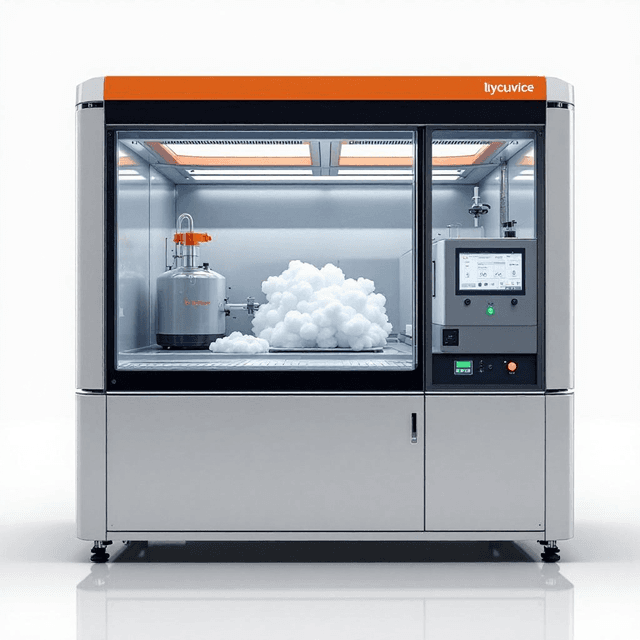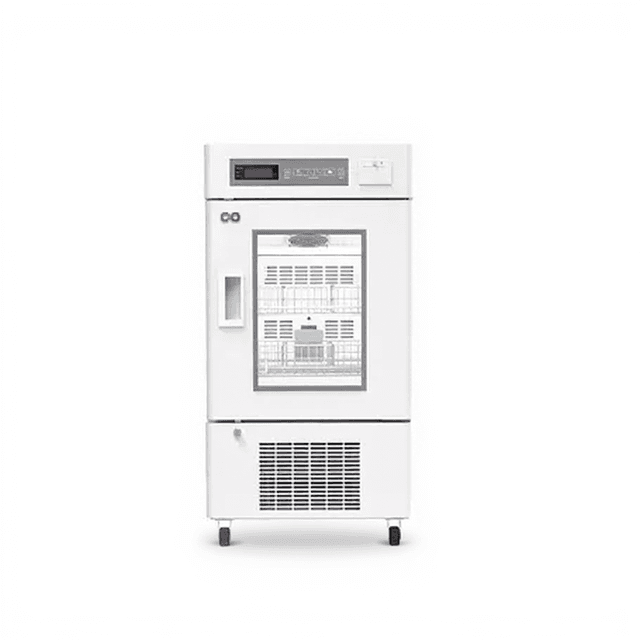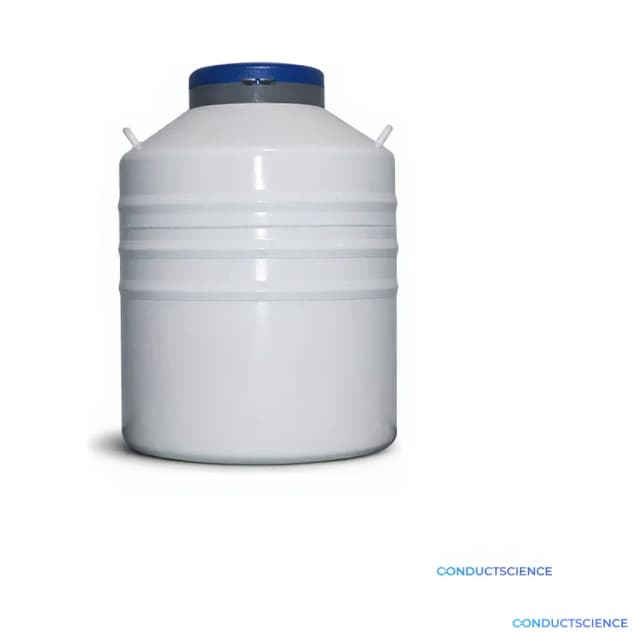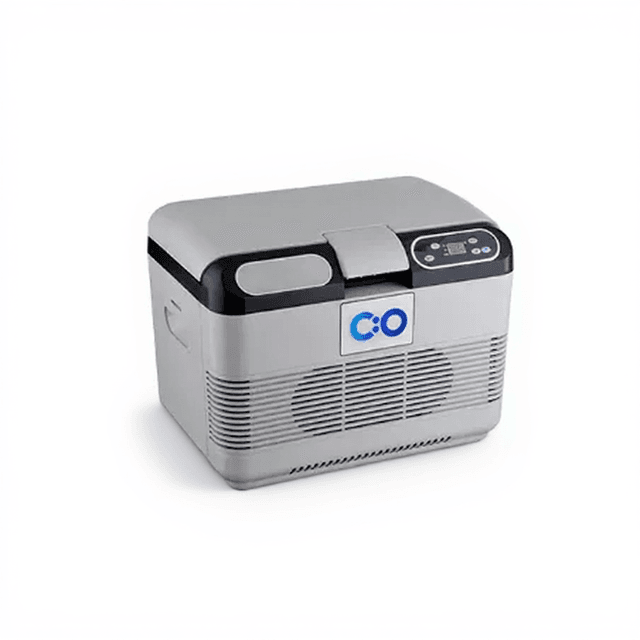
Liquid Nitrogen Container Accessories LN2
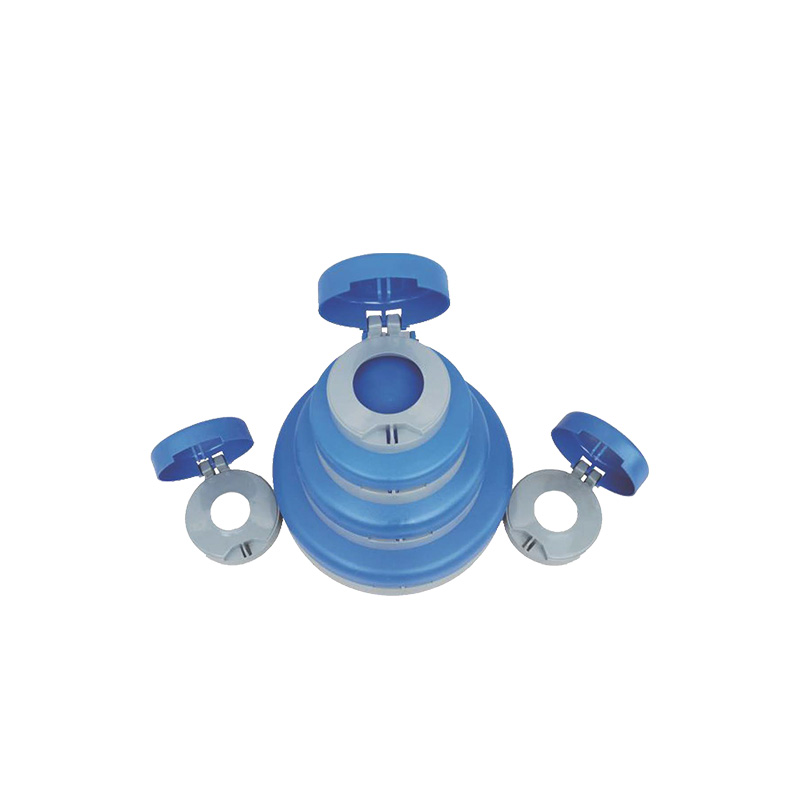
Complete accessory set for liquid nitrogen containers, including lockable lids, protective sleeves, 304 stainless steel canisters, liquid level rulers, and wheeled transport trolleys — designed for safe handling, storage, and transport of LN2 containers across laboratory and medical settings.

Louise Corscadden, PhD
Director of Science · ConductScience
Ask Louise about Liquid Nitrogen Container Accessories LN2 fit, setup, configuration, or quote prep.
Already working with us? Sign in to connect this with My Scientist.
Key Specifications
Full details →- Model fit
- Configured during quote
- SKU family
- BIO-0129
- Shipping box
- 42.0 x 43.6 x 38.0 cm
- Ordering
- Online checkout and quote request available
- Category
- Cold Storage
- Build notes
- 304 Stainless Steel
Liquid nitrogen container accessories extend the usability and safety of cryogenic storage systems. Each component is selected to complement standard LN2 containers, from lockable security lids that prevent unauthorized access to mobile trolleys that enable safe one-person transport of large containers.
Included Accessories
| Accessory | Models / Details |
|---|---|
| Lockable Lids | SG50 (50 L series), SG80 (80 L series), SG125 (125 L series), SG216 (216 L series) |
| Protective Sleeves | YDS-3 L, YDS-10 L, YDS-20 L, YDS-30/35 L, YDS-47/50 L series |
| Round Canisters | 304 stainless steel construction |
| Square Storage Shelf Canisters | 304 stainless steel construction |
| Level Rulers | YWC-60: 600 mm × 6 mm; YWC-100: 1000 mm × 6 mm; YWC-100-1: 1000 mm × 2.5 mm (201 SS) |
| Transport Trolleys | ZYC01: φ < 525 mm, fits 20–50 L containers, 5 universal wheels ZYC02: φ < 685 mm, fits 65–175 L containers, 5 universal wheels |
How It Works
Cryogenic storage accessories function by providing structured organization within liquid nitrogen dewars while maintaining thermal contact with the cryogenic medium. The 304 stainless steel construction exhibits minimal thermal expansion at liquid nitrogen temperatures, ensuring dimensional stability and consistent sample positioning during freeze-thaw cycles.
Round canisters accommodate cylindrical sample containers in vertical arrays, maximizing storage density while enabling individual sample retrieval. Square canisters provide horizontal shelf configurations for larger sample volumes or flat-bottom containers. Both designs facilitate rapid thermal equilibration with the liquid nitrogen environment while protecting samples from cross-contamination through physical separation.
The storage system operates through direct immersion in liquid nitrogen, where samples achieve temperatures of -196°C within minutes of insertion. This rapid cooling rate minimizes ice crystal formation and cellular damage, particularly critical for viable cell preservation and enzymatic activity maintenance.
Features & Benefits
Material
- 304 Stainless Steel
Compatible Container Sizes
- 3L–216L
Research Domain
- Analytical Chemistry
- Cell Biology
- Clinical Diagnostics
- Microbiology
- Pharmaceutical QC
Shipping weight
- 29.98 lb
Shipping box
- L: 42.0 cm
- W: 43.6 cm
- H: 38.0 cm
| Feature | This Product | Typical Alternative | Advantage |
|---|---|---|---|
| Material Construction | 304 stainless steel for both canister types | Entry-level systems often use aluminum or mixed materials | Provides superior corrosion resistance and enables standard laboratory sterilization protocols. |
| Canister Configuration | Dual system with round and square canisters | Single canister type or basic rack systems | Accommodates diverse sample container types and storage organization preferences within one system. |
| Temperature Compatibility | Designed for liquid nitrogen temperatures | Some systems limited to higher cryogenic temperatures | Enables storage at -196°C for maximum sample preservation and extended storage periods. |
| Construction Quality | 304 stainless steel throughout | Mixed material construction varies by model | Ensures consistent thermal properties and chemical compatibility across all storage components. |
The system provides 304 stainless steel construction in both round and square configurations for comprehensive cryogenic sample organization. The dual canister design accommodates diverse sample types while maintaining material consistency throughout the storage system.
Practical Tips
Pre-cool canisters gradually by partial immersion before full deployment to prevent thermal shock.
Why: Rapid temperature changes can cause material stress and potential structural damage.
Use appropriate cryogenic PPE including insulated gloves and face protection during canister handling.
Why: Direct contact with liquid nitrogen temperatures can cause severe frostbite injury.
Inspect canister surfaces regularly for signs of corrosion or mechanical damage from handling.
Why: Early detection prevents contamination issues and maintains storage integrity.
Maintain detailed sample position maps and implement standardized labeling systems.
Why: Organized documentation prevents sample mix-ups and enables efficient retrieval protocols.
Monitor liquid nitrogen levels regularly and establish refill schedules based on evaporation rates.
Why: Consistent temperature maintenance requires adequate liquid nitrogen coverage above sample level.
If samples show signs of temperature excursion, verify canister positioning and liquid nitrogen contact.
Why: Proper immersion is critical for maintaining cryogenic temperatures throughout the storage system.
Setup Guide
What’s in the Box
- Round stainless steel canister (typical)
- Square stainless steel canister (typical)
- Installation guide (typical)
- Material certification documentation (typical)
Warranty
ConductScience provides standard manufacturer warranty coverage for materials and workmanship. Technical support is available for installation and operational guidance.
Compliance
What is the maximum sample capacity for each canister type?
Sample capacity depends on container dimensions and configuration. Consult product datasheet for specific capacity specifications and dimensional compatibility charts.
How do I prevent cross-contamination between stored samples?
Use appropriate sample container sealing, maintain adequate spacing between containers, and implement sterile handling procedures during sample insertion and retrieval.
What maintenance is required for stainless steel canisters?
Regular cleaning with laboratory detergents, periodic inspection for structural integrity, and documentation of thermal cycling history for quality assurance protocols.
Can these accessories be used with different dewar manufacturers?
The system is designed for standard liquid nitrogen dewars. Verify dimensional compatibility with your specific dewar model before implementation.
How quickly do samples reach storage temperature?
Thermal equilibration time depends on sample volume and container material. Small samples typically reach liquid nitrogen temperature within minutes of immersion.
What documentation is needed for regulatory compliance?
Maintain storage temperature logs, sample inventory records, and equipment qualification documentation as required by your laboratory's quality management system.
Have a question about this product?
Have a question? Just ask.
Send it over and we'll email you a personalized answer — no call, no scheduling.
Prefer to talk it through?
Accessories
Enhance your setup with compatible accessories
Frequently Bought Together
Upgrade Options