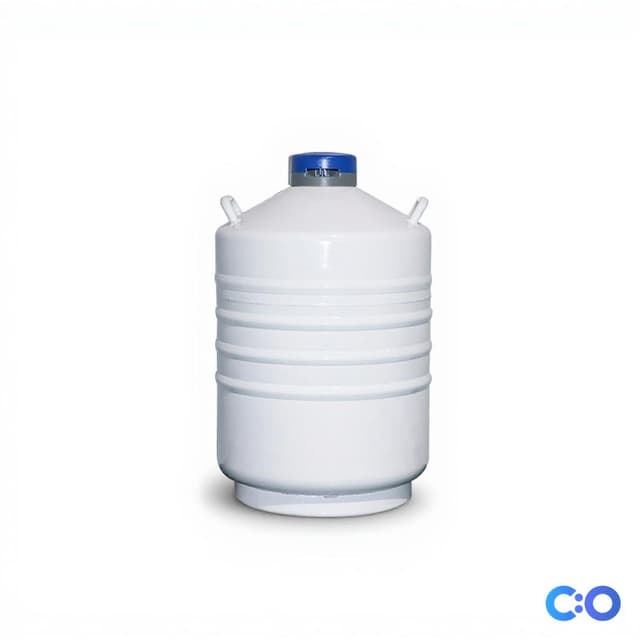
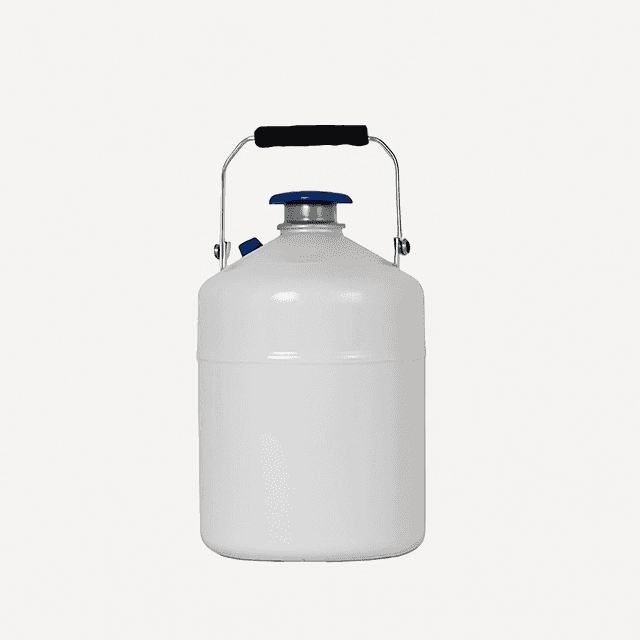
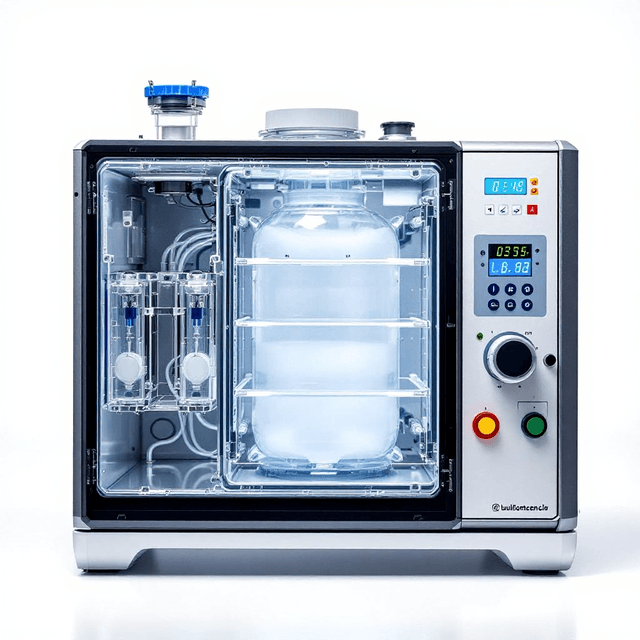
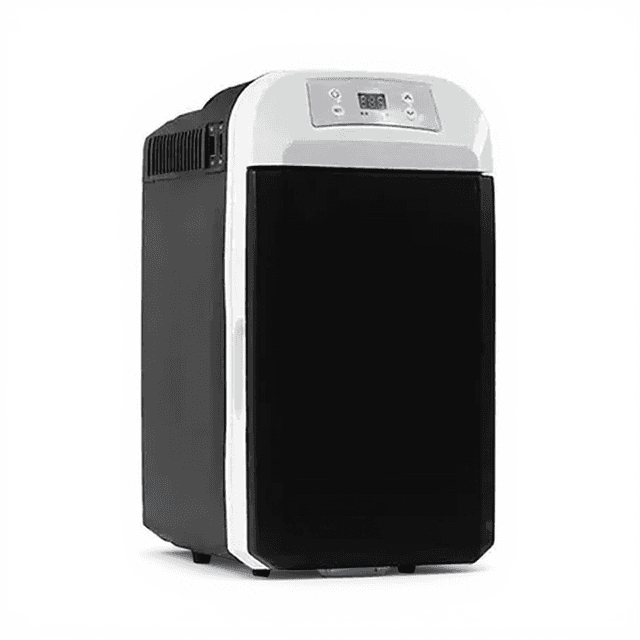
Large Caliber Liquid Nitrogen Container
Vacuum-insulated liquid nitrogen dewars providing cryogenic storage from 10L to 47L capacity for biological sample preservation at -196°C.

Louise Corscadden, PhD
Director of Science · ConductScience
Ask Louise about Large Caliber Liquid Nitrogen Container fit, setup, configuration, or quote prep.
Already working with us? Sign in to connect this with My Scientist.
Key Specifications
Full details →- Model fit
- Configured during quote
- SKU family
- BIO-0132
- Shipping box
- 42.0 x 43.6 x 38.0 cm
- Ordering
- Online checkout and quote request available
- Category
- Cold Storage
- Build notes
- Confirm accessories, station layout, and support needs before purchase
The Large Caliber Liquid Nitrogen Container series provides cryogenic storage capabilities for research laboratories requiring long-term preservation of biological samples, cell lines, and temperature-sensitive materials at -196°C. These dewars feature capacities ranging from 10L to 47L with varying neck configurations optimized for different storage and access requirements.
Each container utilizes vacuum-insulated construction to minimize nitrogen boil-off rates while maintaining consistent ultra-low temperatures. The series includes multiple models (LNC-10, LNC-30, LNC-35, LNC-47) with different geometric configurations to accommodate varying laboratory space constraints and sample access patterns. Empty weights range from 6.3 kg to 18.2 kg depending on capacity and construction specifications.
How It Works
Liquid nitrogen containers operate on the principle of vacuum insulation combined with multi-layer thermal barriers to minimize heat transfer from ambient environment to the cryogenic liquid. The double-walled construction creates a vacuum space that eliminates conductive and convective heat transfer, while reflective surfaces reduce radiative heat gain.
Liquid nitrogen at -196°C provides cryogenic storage through direct immersion or vapor-phase exposure. The containers maintain this temperature through controlled nitrogen boil-off, where heat input causes phase change from liquid to gas, effectively removing thermal energy from the system. The neck design controls the evaporation rate and provides access for sample containers while minimizing heat influx.
Sample preservation occurs through vitrification of cellular water, preventing ice crystal formation that would damage biological structures. This process effectively halts all metabolic and enzymatic activity, maintaining sample integrity for extended storage periods.
Features & Benefits
Automation Level
- manual
LNC-10
- LNC-30 -125
LNC-30 -125F
- LNC-35 -125
LNC-35 -125L
- LNC-35 -125F
LNC-47 -127L
- LNC-47 -127Y
10
- 31.5
31.5
- 35.5
35.5
- 35.5
47
- 47
Weight Empty
- kg
6.3
- 13
13
- 14.6
14.6
- 14.6
18.2
- 18.2
Brand
- ConductScience
Research Domain
- Cancer Research
- Cell Biology
- Developmental Biology
- Immunology
- Microbiology
- Pharmaceutical QC
Capacity
- L
Shipping weight
- 13.89 lb
Shipping box
- L: 42.0 cm
- W: 43.6 cm
- H: 38.0 cm
| Feature | This Product | Typical Alternative | Advantage |
|---|---|---|---|
| Capacity Range | 10L to 47L across four model configurations | Entry-level models often limited to single capacity options | Allows laboratories to select optimal capacity for their specific storage requirements and space constraints |
| Weight Specifications | 6.3 kg to 18.2 kg empty weight range | Heavier construction in comparable capacity ranges | Reduces laboratory infrastructure requirements and enables easier relocation when necessary |
| Neck Configuration Options | Multiple neck series (125, 127) with different geometric designs | Single neck design per capacity | Optimizes thermal performance and access patterns for different laboratory workflows |
| Model Variety | Four distinct models (LNC-10, LNC-30, LNC-35, LNC-47) with capacity scaling | Limited model selection in comparable price ranges | Enables precise matching of storage capacity to research program requirements |
The series provides comprehensive capacity scaling from 10L to 47L with optimized weight-to-capacity ratios and multiple neck configurations. The range accommodates diverse laboratory requirements from individual researcher storage to departmental biobanking applications.
Practical Tips
Pre-cool sample containers and handling tools before sample retrieval to minimize temperature fluctuations.
Why: Warm implements cause rapid nitrogen boil-off and may compromise sample temperature stability
Maintain adequate ventilation and never seal containers in confined spaces due to nitrogen displacement risk.
Why: Nitrogen displacement can create oxygen-deficient atmospheres leading to asphyxiation hazards
Check vacuum integrity annually by monitoring boil-off rates compared to manufacturer specifications.
Why: Vacuum degradation significantly increases nitrogen consumption and reduces storage efficiency
Maintain detailed logs of nitrogen levels, refill dates, and sample access frequency for trend analysis.
Why: Documentation enables prediction of refill schedules and identification of unusual boil-off patterns
Verify liquid nitrogen level measurements using calibrated dipsticks or electronic sensors.
Why: Accurate level monitoring prevents sample exposure due to insufficient nitrogen levels
If boil-off rates increase significantly, inspect neck seals and vacuum ports for potential breaches.
Why: Thermal leaks dramatically reduce efficiency and may indicate need for professional service
Setup Guide
What’s in the Box
- Liquid nitrogen container (specified capacity)
- Protective lid or cover (typical)
- User manual and safety instructions (typical)
- Sample inventory sheets (typical)
Warranty
ConductScience provides standard manufacturer warranty coverage for vacuum integrity and construction defects. Technical support available for proper handling procedures and maintenance requirements.
Compliance
What is the typical nitrogen boil-off rate for these containers?
Boil-off rates depend on capacity and neck design. Consult product datasheet for specific static evaporation rates for each model as these vary significantly with container geometry and insulation specifications.
Can these containers be used for both liquid and vapor-phase storage?
Yes, the containers accommodate both storage methods. Liquid-phase provides direct immersion at -196°C, while vapor-phase storage maintains temperatures around -150°C to -190°C depending on sample position relative to liquid level.
What sample accessories are compatible with these dewars?
Standard cryogenic storage accessories including aluminum canes, storage boxes, and inventory systems designed for the respective neck openings. Verify compatibility based on neck diameter and depth specifications.
How frequently do these containers require nitrogen refilling?
Refill frequency depends on capacity, ambient conditions, and access frequency. Larger models typically provide longer hold times. Monitor levels regularly and consult datasheet for static evaporation specifications.
Are there any restrictions on sample container materials?
Use only cryogenic-compatible materials such as polypropylene or specialized cryogenic vials. Standard glass and some plastics may crack under cryogenic conditions.
Can these dewars be transported when filled?
Transport filled dewars only with proper authorization and following institutional safety protocols. Consider dry shipping alternatives for sample transport to avoid liquid nitrogen handling during transit.
Have a question about this product?
Have a question? Just ask.
Send it over and we'll email you a personalized answer — no call, no scheduling.
Prefer to talk it through?
Upgrade Options