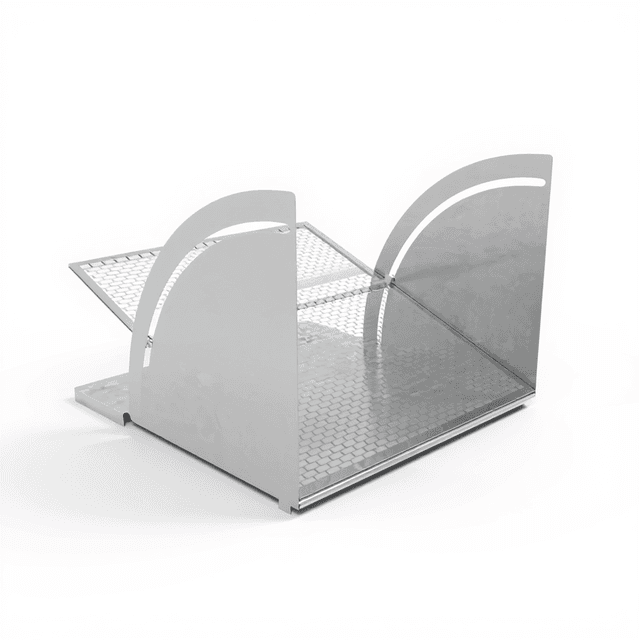
Meadow Vole T Maze
Specialized T-maze apparatus for spatial learning and memory assessment in meadow voles, supporting both spontaneous alternation and reinforcement-based behavioral protocols.

Louise Corscadden, PhD
Director of Science · ConductScience
Ask Louise about Meadow Vole T Maze fit, setup, configuration, or quote prep.
Already working with us? Sign in to connect this with My Scientist.
Key Specifications
Full details →- Model fit
- Mouse, Rat
- SKU family
- CS-958176
- Sizing
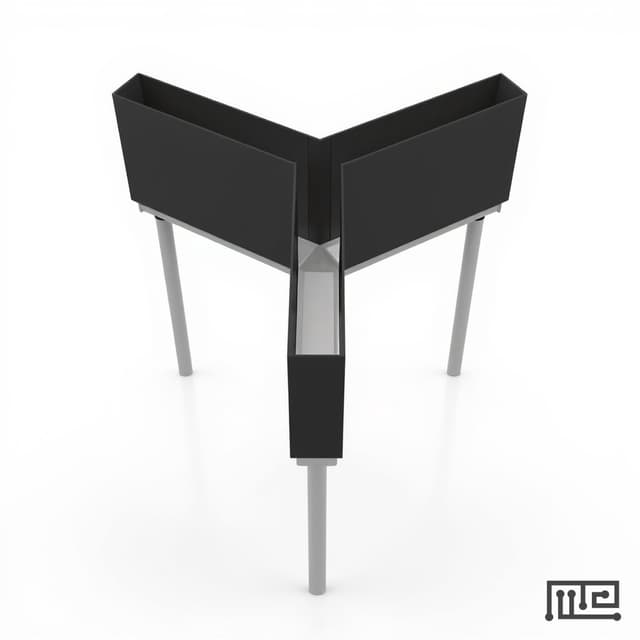
- Meadow Vole T Maze: Length of maze stem: 90cm; Width of maze stem: 10cm; Length of maze arm: 30cm; Width of maze arm: 45cm; Width of male investigation area: 15cm; Width of female living area: 30cm; Width of middle chamber: 20cm; Distance between middle chamber and maze arm: 15cm
- Ordering
- Online checkout and quote request available
- Category
- Behavioral Mazes
- Build notes
- Confirm accessories, station layout, and support needs before purchase
The Meadow Vole T Maze is a specialized behavioral testing apparatus designed for spatial learning and memory assessment in meadow voles (Microtus pennsylvanicus). This maze configuration presents subjects with a simple binary choice paradigm, allowing researchers to evaluate decision-making processes, spatial orientation, and learning acquisition in a controlled laboratory environment.
Constructed for durability and consistent performance, the T maze facilitates both spontaneous alternation studies and reinforcement-based learning protocols. The apparatus enables researchers to examine hippocampal-dependent spatial memory functions, working memory capacity, and cognitive flexibility in meadow voles under standardized testing conditions.
How It Works
The T maze operates on the principle of binary choice testing, where subjects navigate from a start arm to a choice point and select between two goal arms. The maze design exploits natural spatial exploration tendencies and can be configured for either spontaneous alternation (relying on innate novelty-seeking) or reward-based learning paradigms.
In spontaneous alternation protocols, cognitively intact voles typically alternate arm choices across trials, demonstrating functional working memory. This behavior reflects the animal's ability to remember recent spatial locations and avoid immediate repetition. For reinforcement-based studies, one arm contains a reward (food, nesting material) while the other remains empty, allowing assessment of learning acquisition rates and memory retention across training sessions.
The maze dimensions accommodate meadow vole locomotory patterns and body size, ensuring natural movement while preventing escape or injury. Data collection typically involves recording choice latencies, arm entries, and alternation patterns to quantify spatial learning performance and memory function.
Features & Benefits
Sizes by model
| Measurement | Meadow Vole T Maze |
|---|---|
| Size | Length of maze stem: 90cm; Width of maze stem: 10cm; Length of maze arm: 30cm; Width of maze arm: 45cm; Width of male investigation area: 15cm; Width of female living area: 30cm; Width of middle chamber: 20cm; Distance between middle chamber and maze arm: 15cm |
- Length of maze stem: 90cm
- Width of maze stem: 10cm
- Length of maze arm: 30cm
- Width of maze arm: 45cm
- Width of male investigation area: 15cm
- Width of female living area: 30cm
- Width of middle chamber: 20cm
- Distance between middle chamber and maze arm: 15cm
Behavioral Construct
- spatial learning
- working memory
- spontaneous alternation
- decision making
- spatial navigation
Automation Level
- manual
Research Domain
- Behavioral Pharmacology
- Learning and Memory
- Neurodegeneration
- Neuroscience
Species
- Mouse
- Rat
Compatible Tracking Software
- ConductVision
Shipping weight
- 6.06 lb
Shipping box
- L: 65.0 cm
- W: 36.0 cm
- H: 27.0 cm
| Feature | This Product | Typical Alternative | Advantage |
|---|---|---|---|
| Species Optimization | Specifically designed for meadow vole dimensions and behavior | Generic rodent mazes often use standard rat/mouse dimensions | Ensures natural locomotory behavior and reduces size-related stress artifacts in meadow vole subjects. |
| Arm Configuration | Fixed T-shaped design with removable barriers | Some mazes offer multiple arm configurations | Provides standardized testing conditions optimized for binary choice paradigms and spatial working memory assessment. |
| Construction Materials | Non-porous surfaces for easy decontamination | Entry-level mazes may use porous materials | Prevents scent accumulation and enables thorough cleaning between subjects to maintain experimental validity. |
| Start Box Integration | Integrated start chamber with controlled access | Simple mazes may lack dedicated start areas | Allows standardized trial initiation and subject acclimation, reducing behavioral variability across testing sessions. |
This maze provides species-specific optimization for meadow vole research with standardized binary choice testing capabilities. The apparatus offers consistent testing conditions through integrated start box design and non-porous construction materials suitable for repeated experimental use.
Practical Tips
Test barrier mechanisms and door operations before each experimental session to ensure smooth trial timing.
Why: Mechanical delays can introduce variability in choice latency measurements and affect data quality.
Inspect maze surfaces weekly for wear or damage that could create visual cues or safety hazards.
Why: Surface irregularities can bias animal choices and compromise experimental validity.
Rotate maze orientation periodically throughout the experimental series to control for room cues.
Why: External spatial references can override intended maze-based navigation and confound spatial memory assessment.
Record ambient temperature and lighting conditions for each testing session in experimental logs.
Why: Environmental factors can influence activity levels and choice behavior, affecting reproducibility of results.
If subjects show persistent side bias, verify maze alignment and check for asymmetric environmental cues.
Why: Unbalanced spatial cues can override cognitive choice behavior and mask treatment effects or individual differences.
Ensure all edges are smooth and no gaps exist where subjects could become trapped or injured.
Why: Subject injury can terminate experiments and create welfare concerns, while stress from entrapment can alter behavioral responses.
Allow subjects 2-3 habituation sessions before collecting experimental data to reduce novelty effects.
Why: Initial exploration behavior can mask cognitive performance and reduce sensitivity to experimental manipulations.
Setup Guide
What’s in the Box
- T-maze base platform (typical)
- Removable wall sections (typical)
- Start box with removable door (typical)
- Goal arm barriers (typical)
- Assembly hardware (typical)
- User manual with protocol guidelines (typical)
Warranty
ConductScience provides a standard one-year manufacturer warranty covering defects in materials and workmanship, with technical support for setup and protocol optimization.
Compliance
References
Background reading relevant to this product:
What trial parameters are recommended for meadow vole spontaneous alternation testing?
Typical protocols use 10-15 minute inter-trial intervals to assess working memory, with 8-12 trials per session. Consult species-specific literature for optimal timing parameters.
How should the maze be decontaminated between subjects?
Clean all surfaces with 70% ethanol and allow complete drying between subjects. Rotate maze orientation periodically to eliminate potential odor cues that could bias choice behavior.
Can this maze be used for reinforcement-based learning protocols?
Yes, the maze accommodates both spontaneous alternation and reward-based paradigms. Food rewards, nesting material, or social reinforcement can be placed in goal arms as appropriate.
What data should be collected during T-maze testing?
Record choice latencies, arm entries, alternation patterns, and any stereotypic behaviors. Video recording enables post-hoc analysis of locomotor patterns and decision-making behavior.
How does this compare to radial arm or water maze testing?
T-maze testing offers simpler binary choice assessment with reduced spatial complexity compared to radial arm mazes, and avoids swimming stress associated with water maze protocols.
What environmental factors can affect T-maze performance?
Lighting conditions, ambient noise, room temperature, and experimenter presence can influence results. Maintain consistent environmental conditions across all testing sessions.
Is this maze suitable for developmental studies?
The maze can accommodate juvenile meadow voles with appropriate protocol modifications for younger subjects. Consult developmental literature for age-appropriate testing parameters.
Have a question about this product?
Have a question? Just ask.
Send it over and we'll email you a personalized answer — no call, no scheduling.
Prefer to talk it through?
Accessories
Enhance your setup with compatible accessories