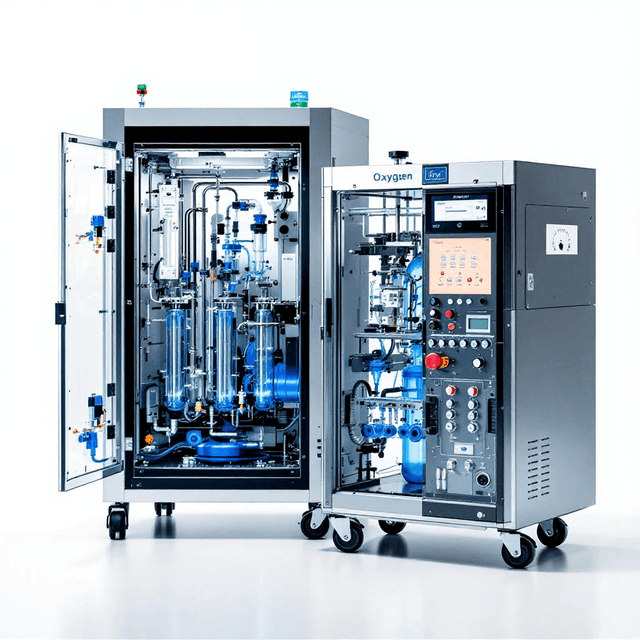
Nitrogen & Hydrogen & Air Generator
Multi-gas benchtop generator producing nitrogen (≥99.997%, 0–300 mL/min), hydrogen (≥99.999%, 0–300 mL/min), and compressed air on-demand for analytical instrumentation. Eliminates cylinder dependency with 0–0.5 MPa output pressure.
| Automation Level | semi-automated |
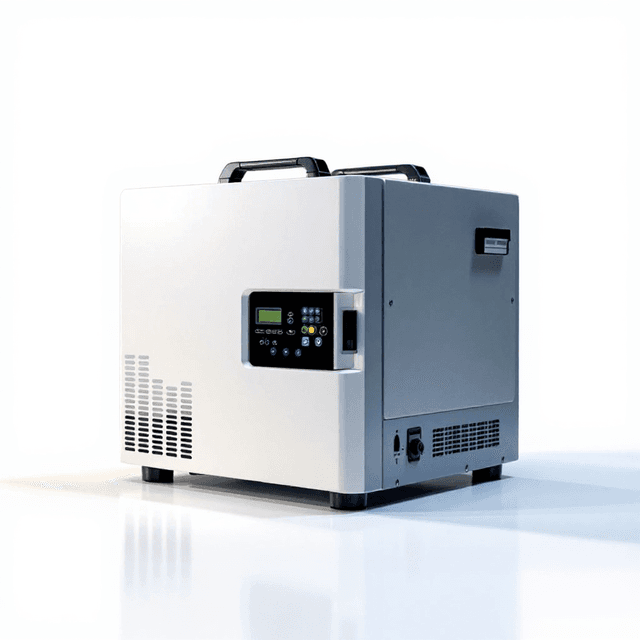
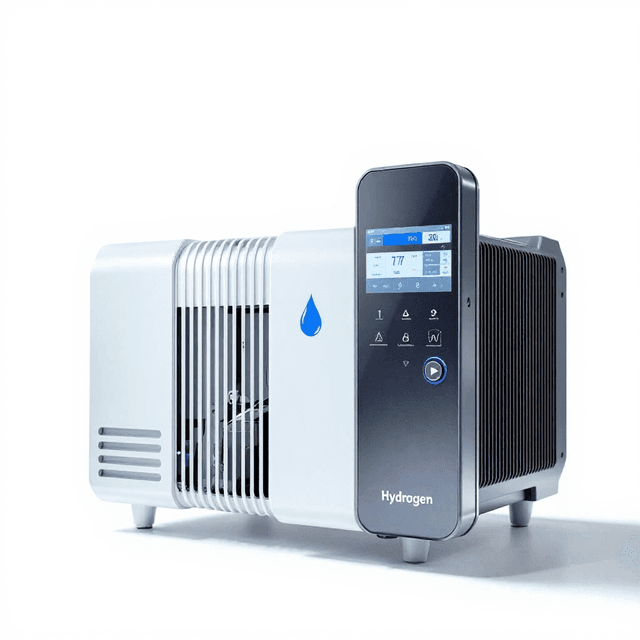
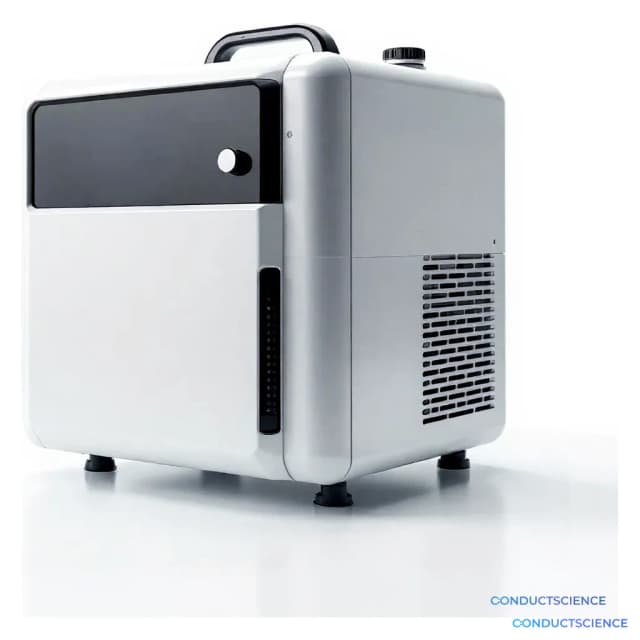
The Nitrogen, Hydrogen & Air Generator is a multi-gas generation system that produces three essential laboratory gases on-demand, eliminating the need for compressed gas cylinders. Designed for gas chromatography, mass spectrometry, and other analytical instrumentation, this benchtop unit combines electrolytic hydrogen generation, pressure swing adsorption (PSA) nitrogen production, and compressed air delivery in a single compact footprint.
Gas Output Specifications
- Nitrogen flow rate: 0–300 mL/min
- Nitrogen purity: ≥99.997%
- Hydrogen flow rate: 0–300 mL/min
- Hydrogen purity: ≥99.999%
- Output pressure (all gases): 0–0.5 MPa (factory setting 0.4 MPa)
Electrical & Physical
- Power consumption: 850 W
- Power supply: AC 220 V ± 10%, 50 Hz ± 5% (standard); AC 110 V, 60 Hz (optional)
- Instrument dimensions: 300 × 455 × 665 mm (W × D × H)
- Weight: 46 kg
- Operating environment: 10–40 °C, ≤85% relative humidity
How It Works
The nitrogen generation system employs pressure swing adsorption (PSA) technology, where compressed air passes through molecular sieve beds that selectively adsorb oxygen, water vapor, and other contaminants. The process alternates between adsorption and regeneration phases, producing high-purity nitrogen with oxygen levels typically below 10 ppm.
Hydrogen generation utilizes proton exchange membrane (PEM) electrolysis, where deionized water is split into hydrogen and oxygen through an electrochemical process. The PEM technology ensures high-purity hydrogen output with minimal maintenance requirements compared to alkaline electrolysis systems.
The compressed air system incorporates oil-free compression with multi-stage filtration to remove particulates, moisture, and hydrocarbon contaminants. All three gas streams are regulated through independent pressure control systems, allowing simultaneous operation at different delivery pressures as required by connected analytical instruments.
Features & Benefits
Automation Level
- semi-automated
Research Domain
- Analytical Chemistry
- Clinical Diagnostics
- Environmental Monitoring
- Food Science
- Materials Science
- Pharmaceutical QC
Weight
- 46.0 lbs
Dimensions
- L: 66.5 in
- W: 30.0 in
- H: 45.5 in
Comparison Guide
| Feature | This Product | Typical Alternative | Advantage |
|---|---|---|---|
| Gas Stream Variety | Generates nitrogen, hydrogen, and compressed air from single unit | Many systems provide only single gas type or require separate generators | Reduces equipment footprint and simplifies gas supply infrastructure for multi-technique laboratories |
| Benchtop Form Factor | Compact 66.5 × 30.0 × 45.5 cm footprint | Larger systems often require floor installation or multiple units | Maximizes valuable laboratory bench space while maintaining gas generation capacity |
| Weight and Portability | 46 kg total weight for benchtop installation | Floor units typically weigh significantly more | Enables flexible placement and potential relocation as laboratory needs change |
| Multi-Gas Integration | Three independent gas streams with integrated controls | Separate generators require individual monitoring and maintenance | Simplifies operation and maintenance protocols while reducing training requirements |
This generator combines three essential laboratory gases in a compact benchtop design, providing space-efficient gas generation for analytical laboratories. The integrated approach reduces complexity compared to multiple single-gas units while maintaining independent control of each gas stream.
Practical Tips
Verify gas purity using independent analytical methods during initial setup and after any maintenance procedures.
Why: Ensures gas quality meets analytical requirements and validates system performance.
Monitor water level in hydrogen generation reservoir daily and use only deionized water for refilling.
Why: Maintains electrolysis efficiency and prevents contamination that could affect hydrogen purity.
Install pressure relief valves and leak detection systems on all gas distribution lines.
Why: Provides safety protection and early warning of system integrity issues.
If gas purity degrades, check PSA bed condition and compressed air pre-filtration systems first.
Why: These components most commonly affect gas quality and are often user-serviceable.
Allow adequate warm-up time after power cycling before connecting to analytical instruments.
Why: Ensures stable gas composition and pressure before critical analyses begin.
Install hydrogen leak detectors in areas where the generator operates, particularly near electrical equipment.
Why: Hydrogen has wide flammability limits and requires early detection to prevent safety hazards.
Keep spare filtration elements and PSA bed materials on hand for scheduled replacements.
Why: Minimizes system downtime and maintains consistent gas quality throughout operational life.
Setup Guide
What’s in the Box
- Nitrogen, Hydrogen & Air Generator main unit
- Power cord (typical)
- Gas output fittings and connectors (typical)
- Water reservoir and filling accessories (typical)
- User manual and installation guide (typical)
- Startup documentation (typical)
Warranty
ConductScience provides comprehensive warranty coverage including technical support for installation, operation, and maintenance guidance. Standard coverage includes manufacturer warranty with access to replacement parts and service documentation.
Compliance
What purity levels can be expected from each gas stream?
Gas purity specifications vary with operating conditions and downstream pressure requirements. Consult product datasheet for specific purity levels achievable for nitrogen, hydrogen, and compressed air streams under your operating conditions.
Can the system supply multiple instruments simultaneously?
Yes, the generator can supply multiple instruments through appropriate gas distribution manifolds, though total flow capacity must not exceed system specifications. Individual pressure regulation may be required for each instrument.
What maintenance is required for continuous operation?
Routine maintenance includes water reservoir refilling for hydrogen generation, periodic filter replacement for compressed air system, and PSA bed regeneration monitoring. Specific intervals depend on operating conditions and usage patterns.
How does this compare to cylinder gas supply in terms of cost?
On-demand generation eliminates cylinder rental, delivery, and changeover costs while providing continuous supply. Operating costs include electricity and consumables, with break-even typically achieved within months of installation.
What power requirements are needed for installation?
Consult product datasheet for specific electrical requirements including voltage, current draw, and any special electrical connections needed for your installation environment.
Can gas quality be monitored during operation?
The system may include basic monitoring indicators, though external gas analyzers are recommended for critical applications requiring documented purity verification. Real-time monitoring capabilities should be confirmed in product specifications.
What is the startup time from power-on to stable gas delivery?
Initial startup requires conditioning time for PSA beds and electrolysis cell stabilization. Typical startup to stable operation ranges from minutes to hours depending on system design and environmental conditions.
What purity levels does each gas stream achieve?
The nitrogen stream reaches ≥99.997% purity via pressure swing adsorption (PSA), and the hydrogen stream reaches ≥99.999% purity via electrolysis. Both meet the requirements for most gas chromatography and mass spectrometry applications.
What are the maximum flow rates for nitrogen and hydrogen?
Both nitrogen and hydrogen are generated at 0–300 mL/min. The output pressure for all gas streams is adjustable from 0 to 0.5 MPa, with a factory default of 0.4 MPa.
What power supply does the generator require?
Standard configuration is AC 220 V ± 10%, 50 Hz ± 5%. An AC 110 V, 60 Hz option is available for North American laboratories. Total power consumption is 850 W.
How does on-site generation compare to cylinder gas supply?
On-demand generation eliminates cylinder rental, delivery scheduling, and changeover downtime. The unit produces all three gases from a single 300 × 455 × 665 mm footprint, drawing 850 W. Operating costs are limited to electricity and consumables such as distilled water.
Have a question about this product?
Accessories
Enhance your setup with compatible accessories
Upgrade Options