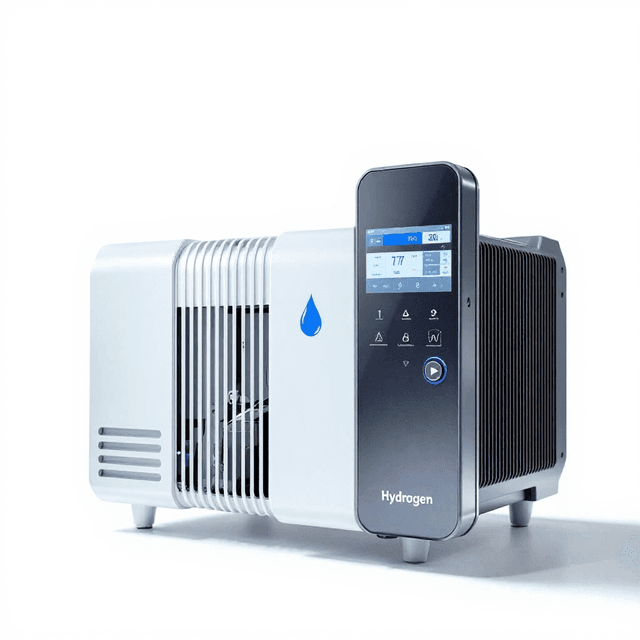
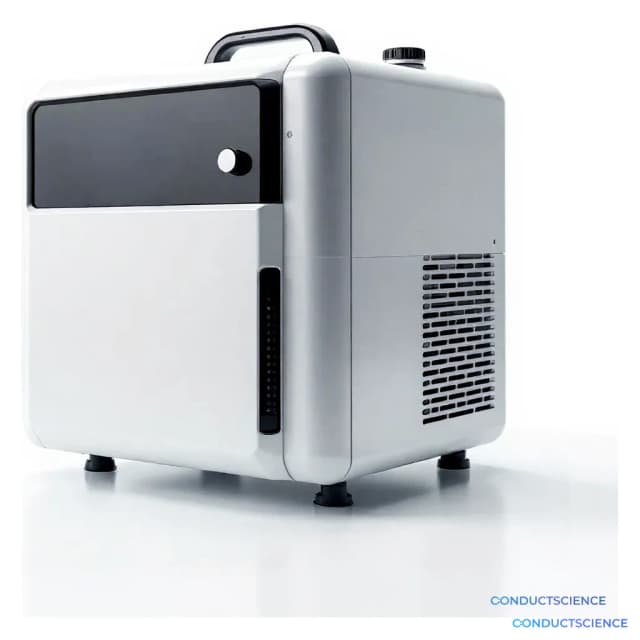
Laboratory Nitrogen Generator
Bench-top nitrogen generator delivering on-demand inert gas supply for analytical instrumentation and laboratory applications requiring consistent nitrogen atmosphere.

Louise Corscadden, PhD
Director of Science · ConductScience
Ask Louise about Laboratory Nitrogen Generator fit, setup, configuration, or quote prep.
Already working with us? Sign in to connect this with My Scientist.
Key Specifications
Full details →- Model fit
- 4 selectable configurations
- SKU family
- BIO-0743
- Shipping box
- 37.0 x 32.0 x 22.0 cm
- Ordering
- Online checkout and quote request available
- Category
- Gas Generators
- Build notes
- Confirm accessories, station layout, and support needs before purchase
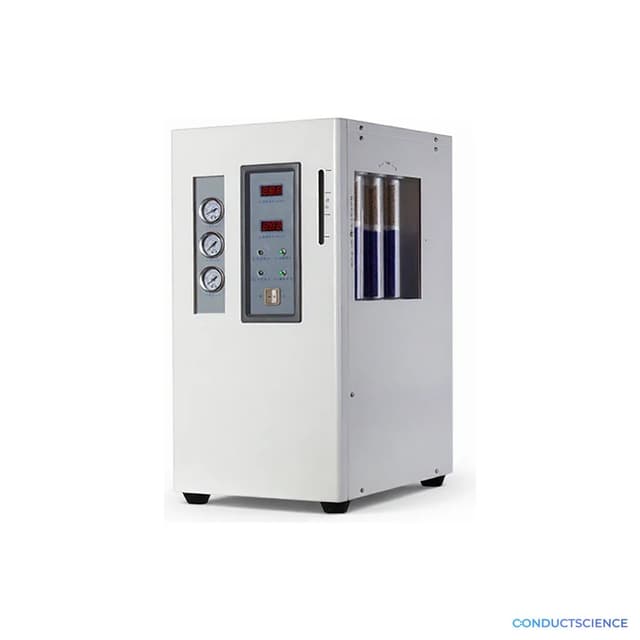
The Laboratory Nitrogen Generator provides on-demand nitrogen gas generation for analytical instrumentation and laboratory applications requiring inert atmospheres. This bench-top unit eliminates the need for nitrogen cylinders through electrolytic separation technology, using an improved double-cathode stainless steel electrolytic cell to produce high-purity nitrogen (>99.997%) for chromatography, mass spectrometry, and sample storage applications.
Available in four models (NG-300II, NG-500II, NG-300P, NG-500P), the compact design accommodates standard laboratory benches while providing continuous nitrogen supply at flow rates up to 500 ml/min. The II-series requires an external air source, while the P-series includes built-in oil-free compressors for standalone operation.
How It Works
This nitrogen generator employs electrolytic separation technology using an improved double-cathode stainless steel electrolytic cell. An electrolyte solution is circulated through the cell, where an applied electrical current drives the separation of nitrogen and oxygen from the feed air. Nitrogen is collected at the cathode side while oxygen is exhausted simultaneously, with unimpeded electrolyte circulation ensuring continuous operation.
The electrolysis separation cell features a large active area that maintains low cell temperatures during operation, enabling high gas production rates while achieving nitrogen purity exceeding 99.997%. A unique anti-liquid return device prevents electrolyte from entering the gas output lines, protecting downstream instrumentation.
Built-in voltage stabilization ensures consistent electrolysis performance, and an automatic gas circuit shutoff activates in the event of power failure to prevent backflow. The II-series models (NG-300II, NG-500II) require an external compressed air source, while the P-series models (NG-300P, NG-500P) incorporate oil-free compressors for fully self-contained operation.
Features & Benefits
Automation Level
- semi-automated
Research Domain
- Analytical Chemistry
- Environmental Monitoring
- Food Science
- Materials Science
- Microbiology
- Pharmaceutical QC
Output Pressure
- 0-0.5 MPa
Purity
- >99.997%
Shipping weight
- 15.0 lb
Shipping box
- L: 37.0 cm
- W: 32.0 cm
- H: 22.0 cm
| Feature | This Product | Typical Alternative | Advantage |
|---|---|---|---|
| Space Requirements | 320 x 220 x 370 mm (II-series) bench-top footprint | Larger units often require floor space or dedicated utilities | Bench-top installation maximizes laboratory space utilization |
| Weight | 15 kg (II-series) / 40 kg (P-series) | Floor-standing models typically weigh 50+ kg | Portable II-series allows easy repositioning |
| Generation Technology | Electrolytic separation (>99.997% purity) | PSA and membrane models may achieve lower purity levels | Electrolytic cell provides superior nitrogen purity for demanding analytical applications |
| Flow Rate | Up to 300 or 500 ml/min depending on model | Comparable bench-top units typically max at 300-500 ml/min | Multiple model options match exact flow requirements |
| Installation Options | II-series (external air) or P-series (built-in compressor) | Most generators require either external air or have compressor only | Flexibility to choose based on existing lab infrastructure |
This nitrogen generator uses electrolytic separation technology with a compact bench-top design, providing on-demand nitrogen at >99.997% purity. The NG-300II starts at just 15 kg and 80W, while the P-series models include built-in oil-free compressors for labs without existing compressed air infrastructure.
| Model | SKU | Listed price | Status | Shipping box |
|---|---|---|---|---|
| NG-500P | BIO-0743-NG-500P | $2,699.95 | Available | 40 x 30 x 64 cm |
| NG-300P | BIO-0743-NG-300P | $2,927.95 | Available | 40 x 30 x 64 cm |
| NG-500II | BIO-0743-NG-500II | $2,699.95 | Available | 32 x 22 x 37 cm |
| NG-300II | BIO-0743-NG-300II | $2,899.99 | Available | 32 x 22 x 37 cm |
Practical Tips
Verify nitrogen purity using an oxygen analyzer before connecting to sensitive analytical instruments.
Why: Initial purity confirmation ensures compatibility with downstream analytical requirements.
Check electrolyte levels and replace inlet air filters according to manufacturer schedule.
Why: Proper electrolyte maintenance and clean inlet air ensure consistent nitrogen purity and extend cell life.
Allow 30-minute stabilization period after power-on before using nitrogen for critical measurements.
Why: Thermal equilibration ensures stable operating conditions and consistent gas output characteristics.
Monitor output pressure and flow rate regularly; declining values may indicate electrolyte depletion or cell maintenance needs.
Why: Early detection of performance changes prevents analytical disruptions and extends equipment life.
Install pressure regulators at instrument connection points to maintain stable gas delivery pressure.
Why: Consistent pressure reduces baseline noise and improves measurement reproducibility in analytical methods.
Ensure adequate ventilation around the unit to prevent heat buildup during continuous operation.
Why: Proper airflow maintains optimal operating temperature and prevents thermal stress on internal components.
Setup Guide
What’s in the Box
- Laboratory Nitrogen Generator main unit
- Power cord (typical)
- Output gas tubing (typical)
- Pressure fittings and connectors (typical)
- User manual and technical documentation (typical)
- Warranty certificate (typical)
Warranty
ConductScience provides a standard one-year manufacturer warranty covering defects in materials and workmanship, with technical support available for installation and operational guidance.
Compliance
What nitrogen purity levels does this generator achieve?
All models achieve >99.997% nitrogen purity via electrolytic separation. This is consistent across the NG-300II, NG-500II, NG-300P, and NG-500P models at their rated flow rates.
Can this unit supply multiple analytical instruments simultaneously?
Yes, the generator can supply multiple instruments through appropriate flow splitting, provided total demand does not exceed the rated output (300 or 500 ml/min depending on model).
How does output purity compare to cylinder nitrogen?
At >99.997%, the electrolytic separation technology matches or exceeds many cylinder nitrogen grades, making it suitable for chromatography, mass spectrometry, and other demanding analytical applications.
What maintenance is required?
Routine maintenance includes checking electrolyte levels, periodic replacement of inlet air filters, and inspection of the electrolytic cell. Consult product documentation for recommended service intervals.
Does ambient humidity affect performance?
The unit is rated for operation at humidity up to 85% and temperatures of 10-40 degrees C. Optimal performance occurs within these ranges.
Can I monitor nitrogen purity continuously?
The unit provides operational indicators, but continuous purity monitoring requires external oxygen analyzers or similar detection equipment for critical applications.
What happens during power outages?
Built-in voltage stabilization handles minor fluctuations. During full power loss, the automatic gas circuit shutoff activates to prevent backflow. For critical applications, consider UPS or backup cylinders.
Have a question about this product?
Have a question? Just ask.
Send it over and we'll email you a personalized answer — no call, no scheduling.
Prefer to talk it through?
Accessories
Enhance your setup with compatible accessories