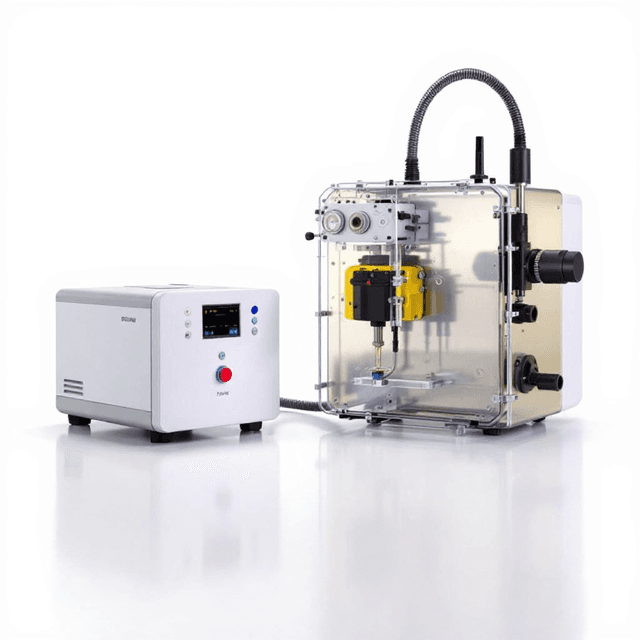
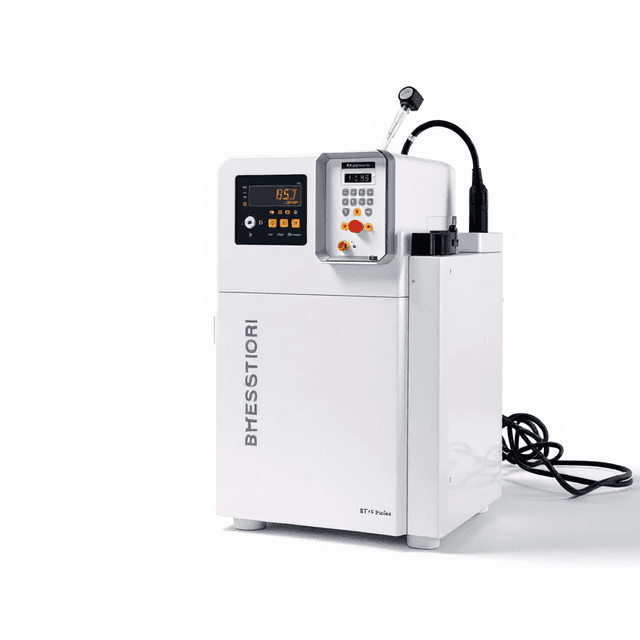
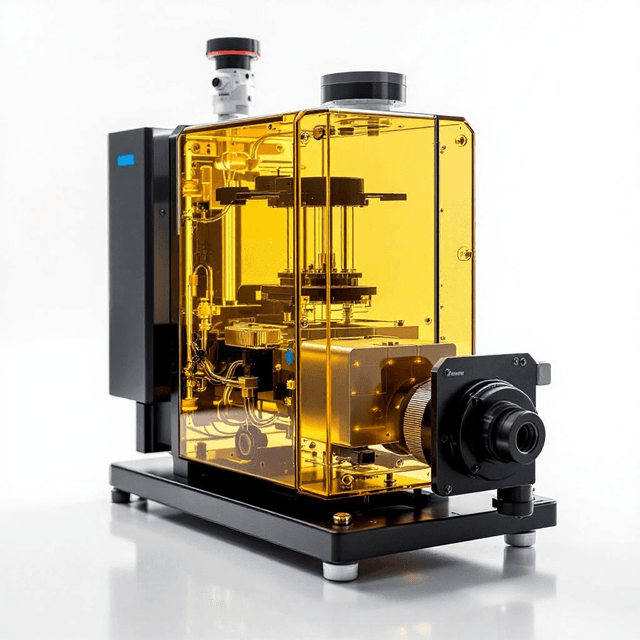
Standard Peristaltic Pump SPP Series
Laboratory peristaltic pump for contamination-free fluid transfer and precise liquid handling in research applications.

Louise Corscadden, PhD
Director of Science · ConductScience
Ask Louise about Standard Peristaltic Pump SPP Series fit, setup, configuration, or quote prep.
Already working with us? Sign in to connect this with My Scientist.
Key Specifications
Full details →- Model fit
- Configured during quote
- SKU family
- BIO-0740
- Sizing
- 14.3 x 23.4 x 15.4 cm
- Ordering
- Online checkout and quote request available
- Category
- Pumps
- Build notes
- Confirm accessories, station layout, and support needs before purchase
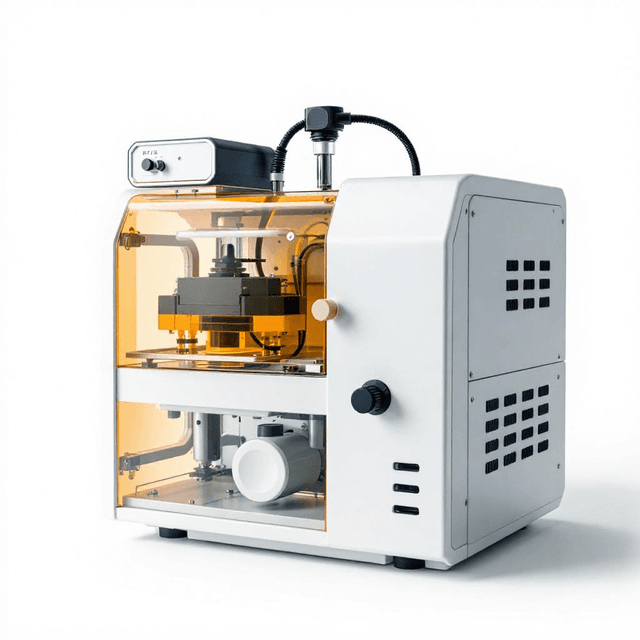
The Standard Peristaltic Pump SPP Series is a laboratory-grade fluid handling system designed for precise, pulsation-free liquid transfer in research applications. This pump utilizes peristaltic action to move fluids through flexible tubing without direct contact between the pump mechanism and the transferred liquid, ensuring contamination-free operation and easy cleaning between samples.
The compact design (14.3 × 23.4 × 15.4 cm) makes it suitable for benchtop integration in various laboratory settings where controlled fluid delivery is required. The peristaltic mechanism provides consistent flow rates while maintaining the integrity of sensitive biological samples and reagents through gentle, non-shearing fluid movement.
How It Works
Peristaltic pumps operate by compressing flexible tubing against a curved track using rotating rollers or shoes. As the rotor turns, the compression point moves along the tubing, creating a peristaltic wave that propels fluid forward. The occlusive action ensures that fluid only moves in one direction, preventing backflow and maintaining consistent pressure.
The key advantage of this mechanism is that the pumped fluid never contacts the pump internals, remaining confined within the replaceable tubing. This design eliminates cross-contamination between different fluids and simplifies cleaning protocols. Flow rate is directly proportional to rotor speed, allowing for precise flow control through motor speed adjustment.
The gentle pumping action minimizes shear forces on sensitive biological materials, making it ideal for handling live cells, proteins, and other fragile samples that could be damaged by centrifugal or gear pump mechanisms.
Features & Benefits
Automation Level
- semi-automated
Research Domain
- Analytical Chemistry
- Cell Biology
- Clinical Diagnostics
- Environmental Monitoring
- Microbiology
- Pharmaceutical QC
Weight
- 5.15 kg
Dimensions
- L: 14.3 mm
- W: 23.4 mm
- H: 15.4 mm
| Feature | This Product | Typical Alternative | Advantage |
|---|---|---|---|
| Contamination Control | Fluid contained within replaceable tubing | Basic models may have fluid contact with pump internals | Eliminates cross-contamination risk and simplifies cleaning protocols between different samples |
| Size and Footprint | 14.3 × 23.4 × 15.4 cm compact design | Larger units often require more bench space | Fits into crowded laboratory setups without requiring workspace reorganization |
| Weight and Portability | 5.15 kg lightweight construction | Industrial models typically heavier and less portable | Easy to relocate between experimental setups and transport to different lab locations |
| Speed Control | Variable speed adjustment capability | Fixed-speed models offer limited flow rate options | Allows optimization of flow rates for different experimental conditions and fluid properties |
The SPP Series combines contamination-free operation with compact design and variable speed control. The lightweight construction and small footprint make it suitable for diverse laboratory environments requiring precise fluid handling.
Practical Tips
Calibrate flow rates with the actual fluid you will be using, as viscosity affects pump performance.
Why: Different fluids have varying viscosities that directly impact flow rate accuracy.
Replace tubing before visible wear or cracking appears to prevent unexpected failures during experiments.
Why: Tubing degradation can cause flow rate drift or complete blockage mid-experiment.
Prime the system thoroughly and run for several minutes before starting time-critical experiments.
Why: Eliminates air bubbles and allows flow rate to stabilize for consistent performance.
If flow rate decreases over time, check for tubing compression or blockage before adjusting speed settings.
Why: Mechanical issues often mimic speed control problems but require different solutions.
Monitor and record actual flow rates periodically during long experiments using volumetric measurement.
Why: Tubing wear and pump performance can drift during extended operation affecting experimental accuracy.
Use appropriate tubing material for your specific chemicals and always check compatibility charts.
Why: Incompatible tubing can fail unexpectedly, causing chemical spills or experiment contamination.
Setup Guide
What’s in the Box
- SPP Series peristaltic pump main unit
- Power adapter
- Sample tubing set (typical)
- User manual and quick start guide
- Tubing installation tool (typical)
- Calibration verification instructions
Warranty
ConductScience provides a standard one-year manufacturer warranty covering defects in materials and workmanship, with technical support available for setup and operational questions.
Compliance
What tubing materials are compatible with organic solvents?
Tubing compatibility depends on the specific solvent and concentration. Consult the chemical compatibility chart in the product documentation for your specific application.
How do I calibrate flow rates for different tubing sizes?
Flow rate is proportional to tubing inner diameter cubed. Use volumetric measurement with a graduated cylinder to determine actual flow rate at various speed settings.
What is the typical tubing lifetime before replacement?
Tubing life varies with operating pressure, speed, and chemical exposure. Inspect regularly for wear, cracking, or swelling and replace when performance degrades.
Can this pump handle viscous solutions or suspensions?
Yes, peristaltic pumps can handle moderately viscous fluids. Flow rate will decrease with increasing viscosity; adjust speed accordingly and ensure adequate tubing wall thickness.
How precise is the flow rate control?
Flow rate precision depends on tubing quality, operating conditions, and speed stability. Typical variation is within ±2-5% under steady-state conditions.
What maintenance is required for long-term operation?
Regular tubing inspection and replacement, periodic cleaning of the pump head, and motor bearing lubrication as specified in the maintenance schedule.
Is the pump suitable for continuous 24/7 operation?
The pump is designed for extended operation. Monitor tubing wear more frequently during continuous use and ensure adequate ventilation around the motor.
Have a question about this product?
Have a question? Just ask.
Send it over and we'll email you a personalized answer — no call, no scheduling.
Prefer to talk it through?
Frequently Bought Together
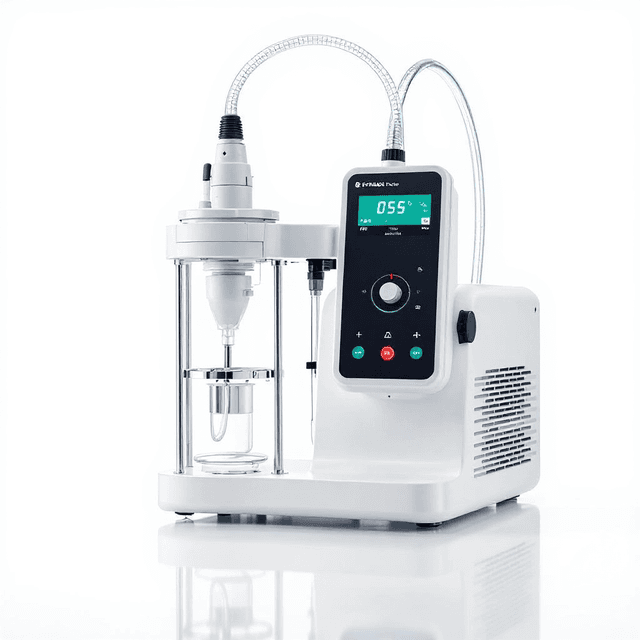
Upgrade Options