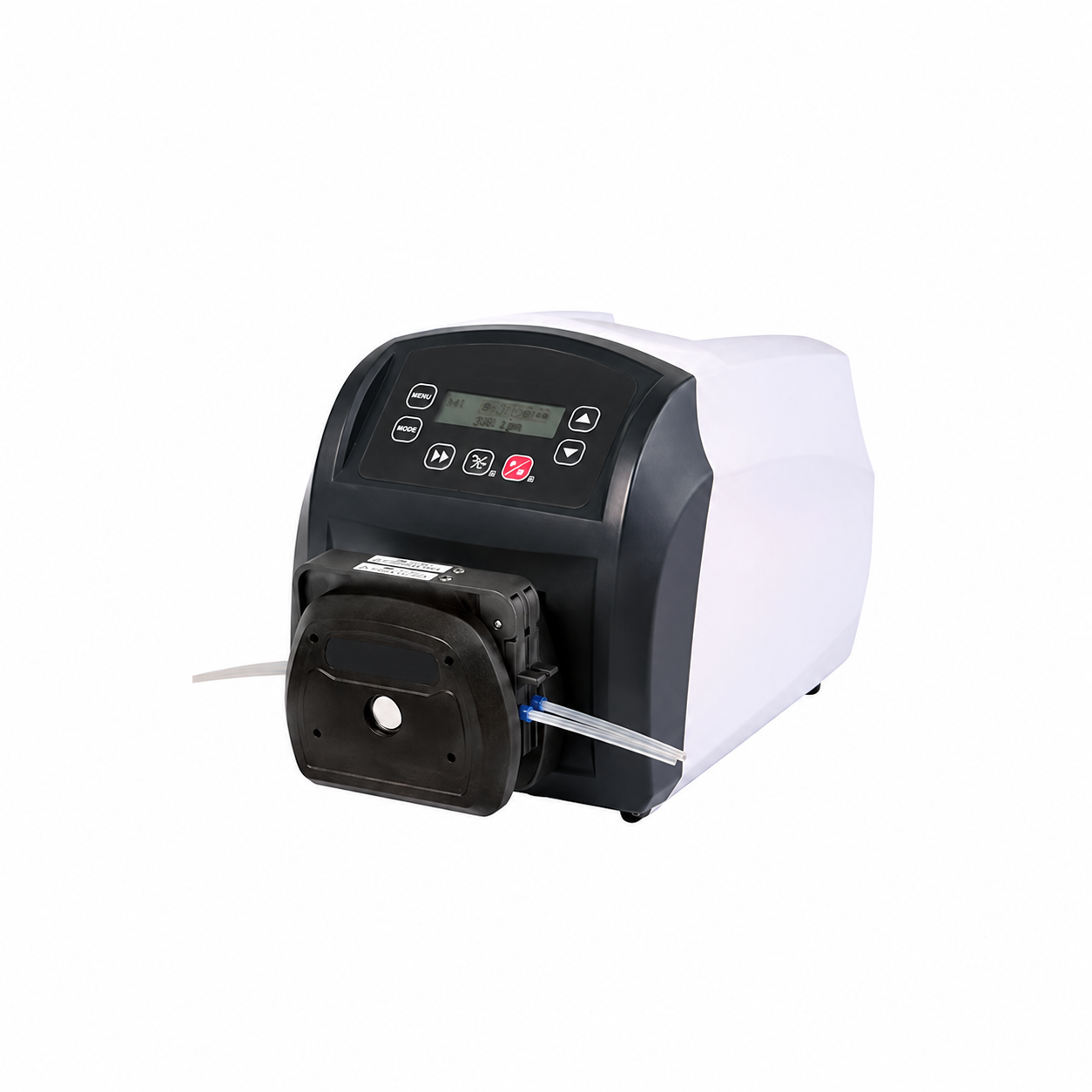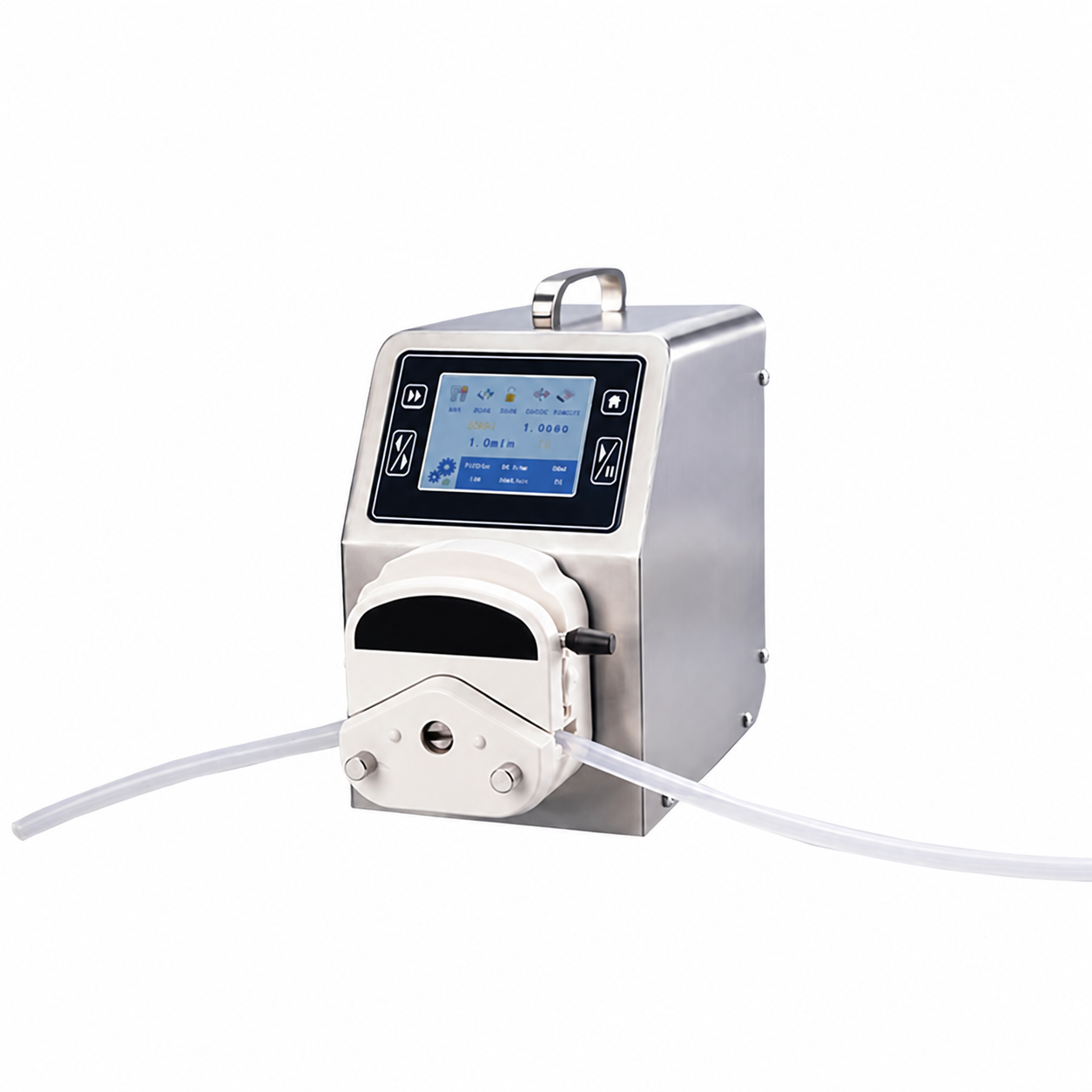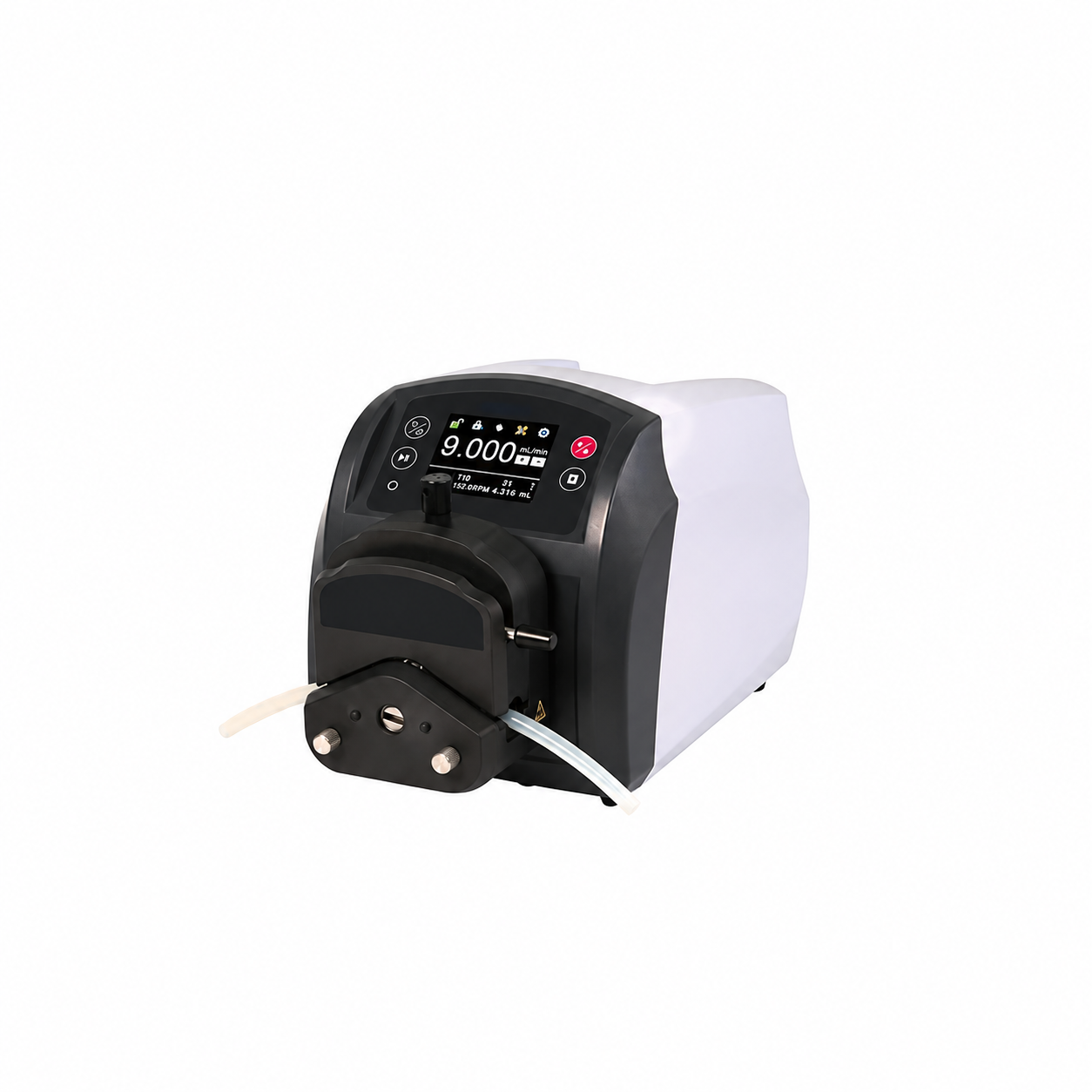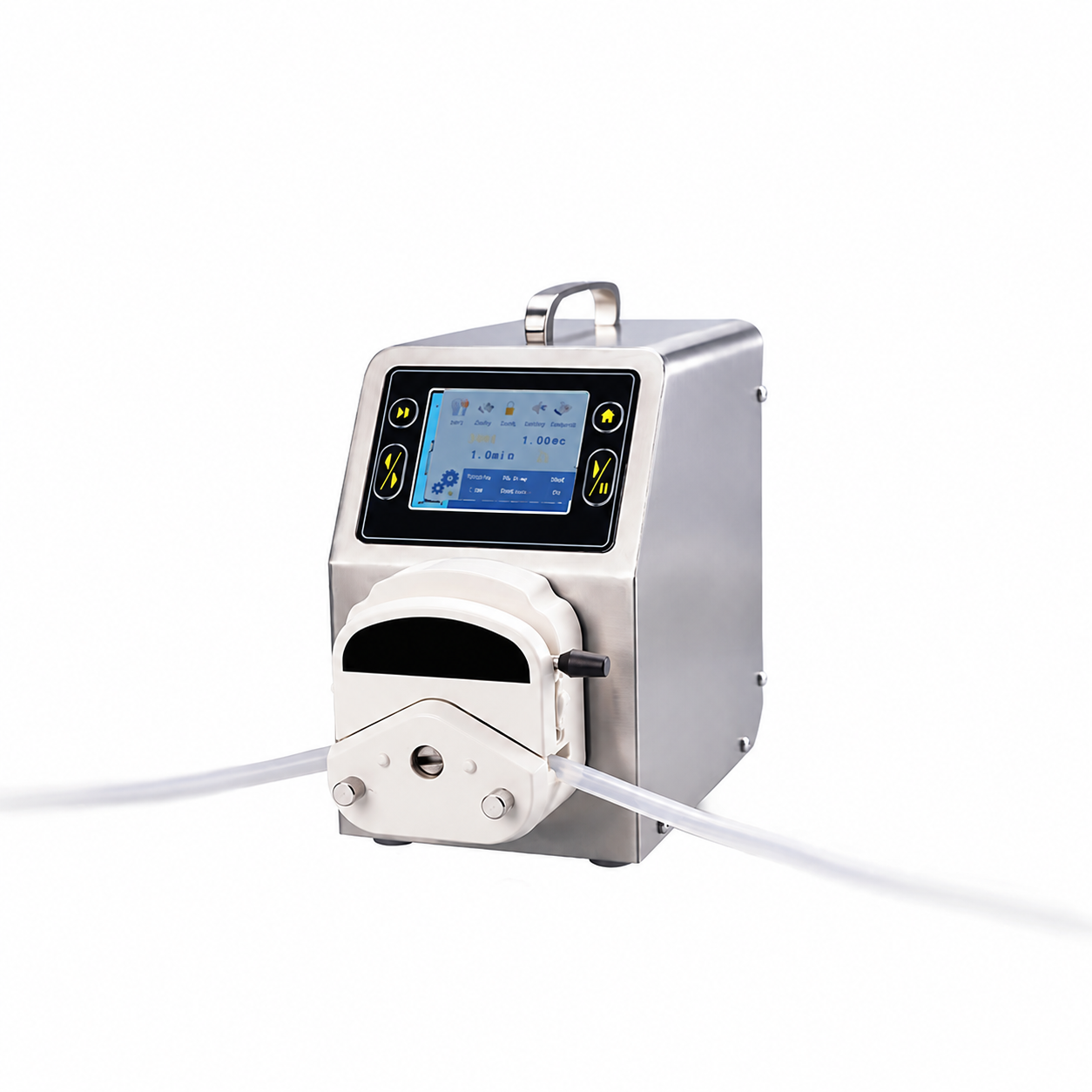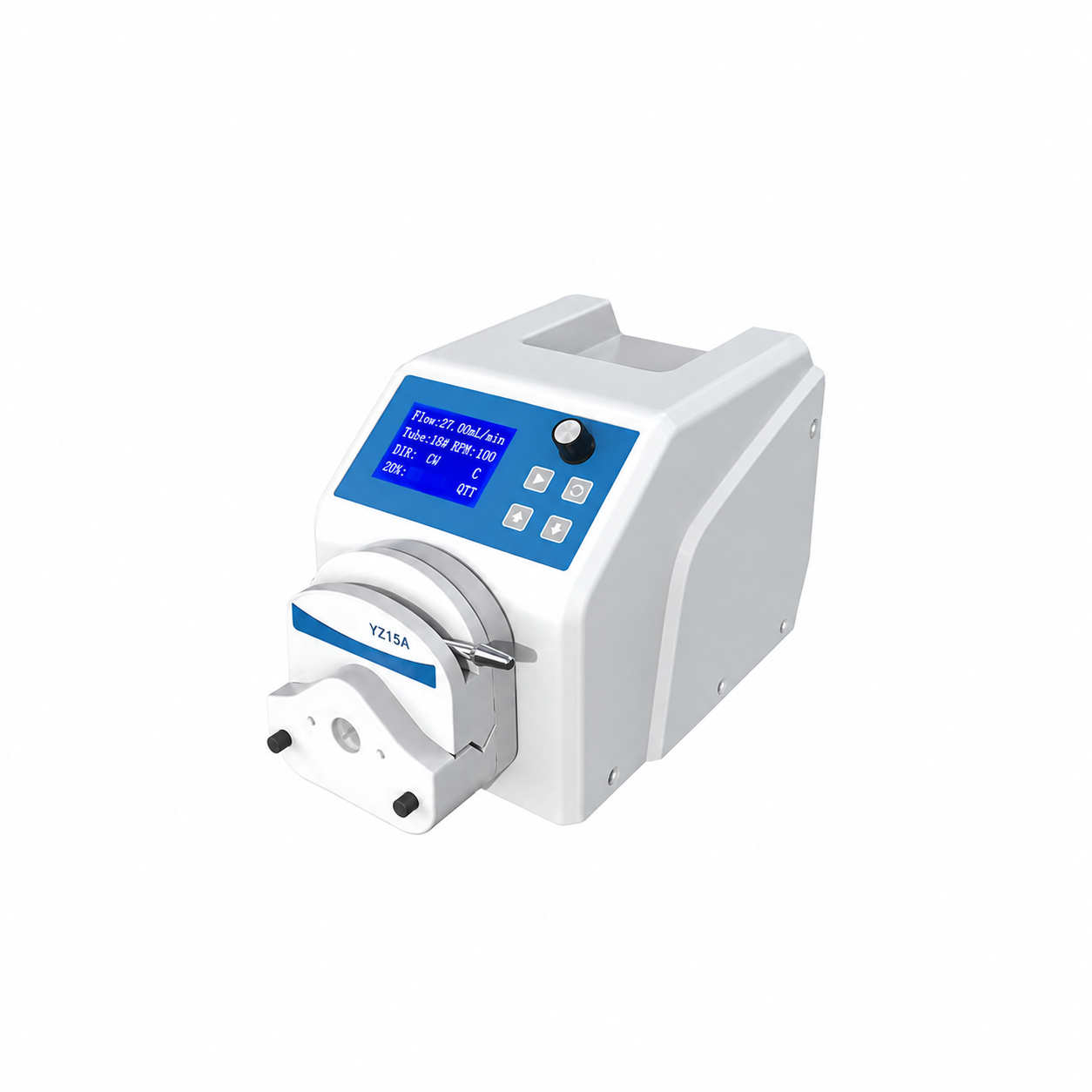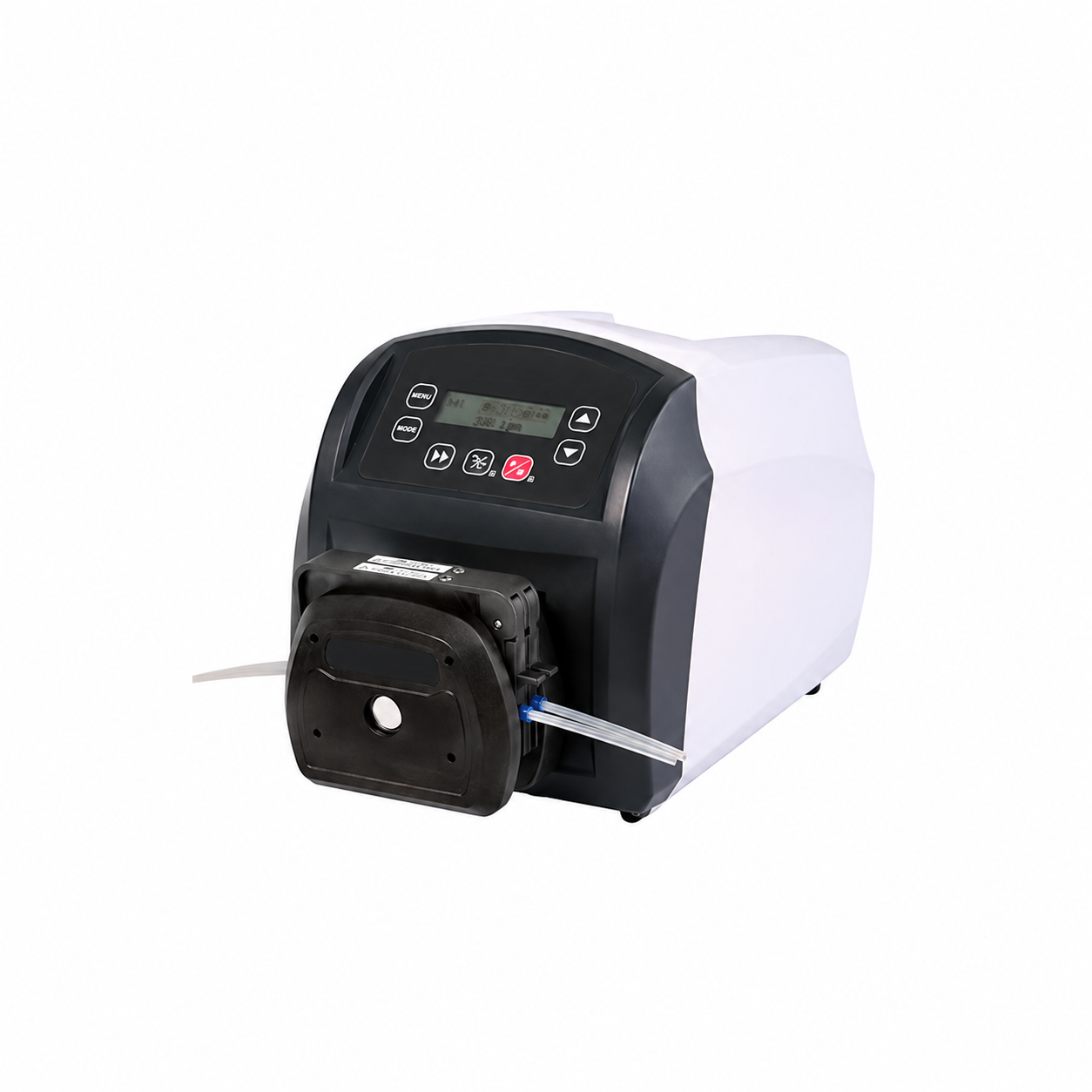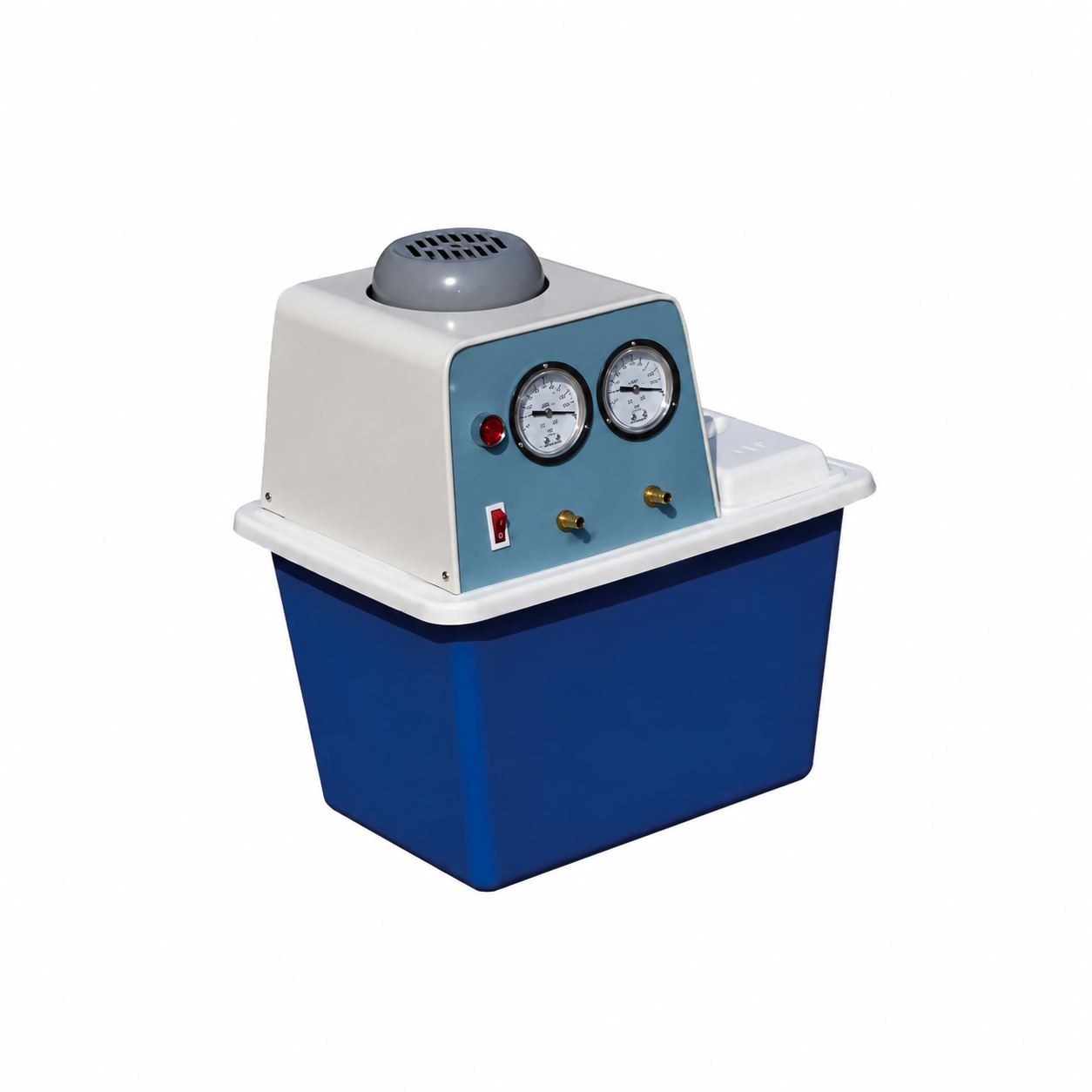
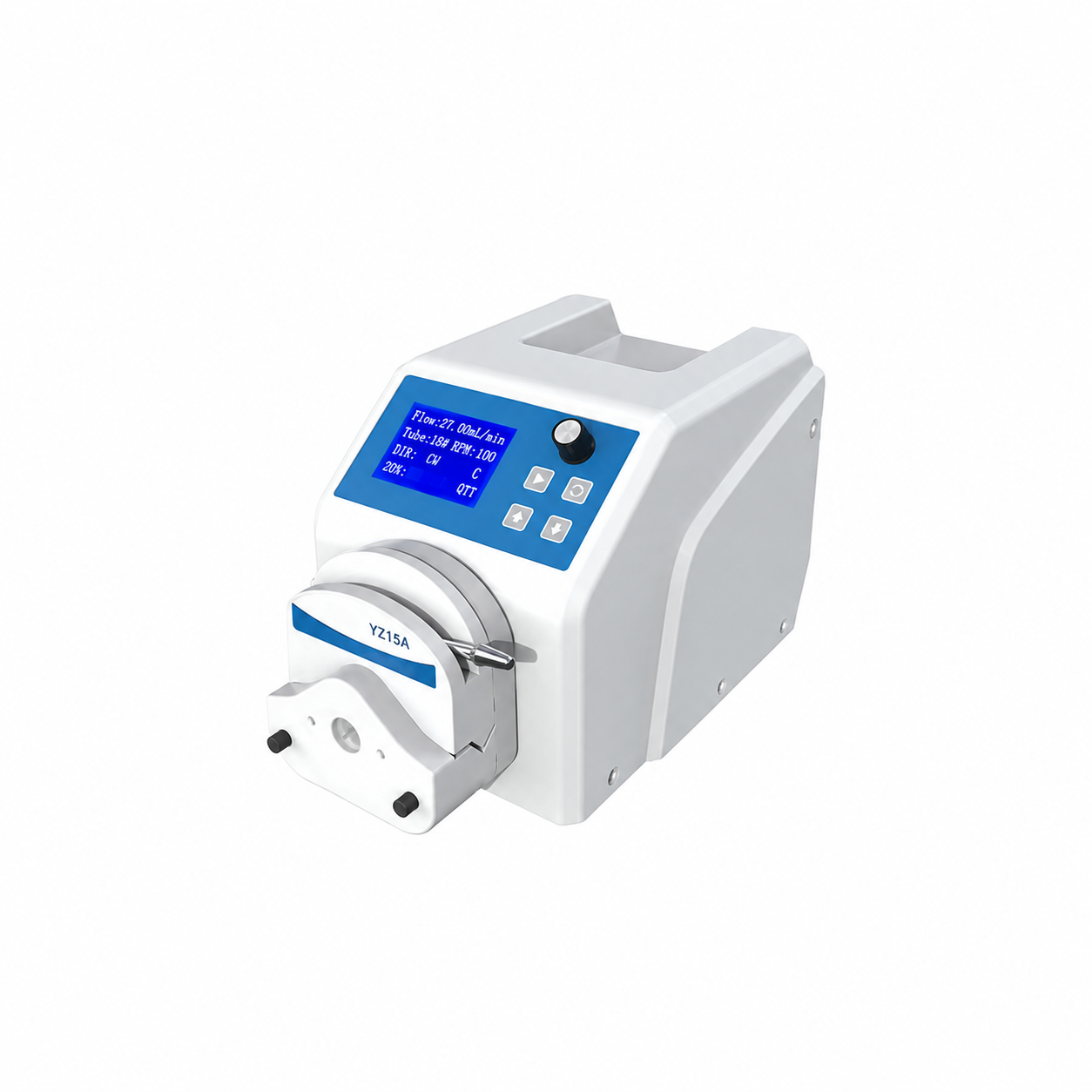
Dispensing Peristaltic Pump$2,899.99 · In stock
ConductScience Pumps
Syringe and peristaltic pumps for infusion, withdrawal, and continuous flow.

My Scientist
PhD, Director of Science. Talk to a scientist before you buy: product fit, protocol planning, and custom setups.
FAQ
Choose a syringe pump when you need near-pulseless flow, very low rates, or tight dosing accuracy over a bounded volume. Choose a peristaltic pump when you need continuous or unattended operation, high volumes, viscous fluids, or a sterile disposable-tubing fluid path.
It depends on the endpoint. Roller-driven flow oscillates, which is fine for media exchange, transfer, and most perfusion. It is a problem for microfluidic droplet generation, electrospinning, and any protocol where instantaneous flow rate is the measured variable. Those want a syringe pump.
Only for as long as the barrel holds fluid. Dual-channel pumps can alternate to approximate continuous delivery, but if the run is genuinely unattended or open-ended, a peristaltic pump has no volume ceiling.
Volumetric flow scales with the barrel cross-sectional area times the linear drive rate, so the same pump delivers very different rates with a 1 mL versus a 50 mL syringe. Use the calculator on this page to check the range before specifying a model.
Syringe pumps contact only the syringe and its needle or tubing, so chemical compatibility follows the syringe. Peristaltic pumps contact only the tubing, with PTFE, PEEK, silicone, Pharmed, and Tygon commonly available. Confirm compatibility on the product page or ask in the quote.
Decision workspace
Choose a tool for this category. Inputs and results stay in your browser, and the full tool remains available for methods, citations, and exports.
Convert a syringe inner diameter and linear drive rate into a volumetric flow range. Use it to check a pump covers the rate your protocol needs before you request a quote.
Calculator
Convert a syringe inner diameter and linear drive rate into a volumetric flow range. Use it to check a pump covers the rate your protocol needs before you request a quote.
Build your spec
Answer what you know. Every option below is backed by real pumps in this catalogue, so you can never narrow your way to nothing.
Pumps are quoted by fluid path and duty cycle. Give the delivery mode, volume range, accuracy need, and run length so the right family is specified.
Working equipment plan
Add products, set quantities, and separate listed costs from items that need a quote. Your plan stays in this browser until you copy it or continue to the quote.