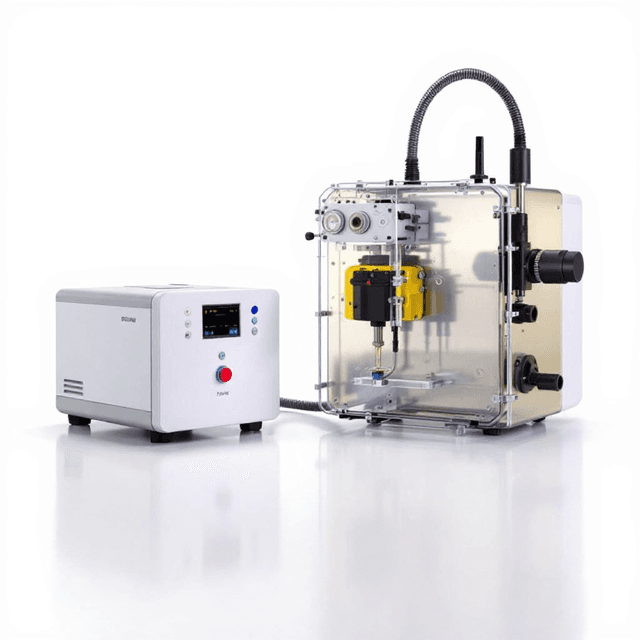
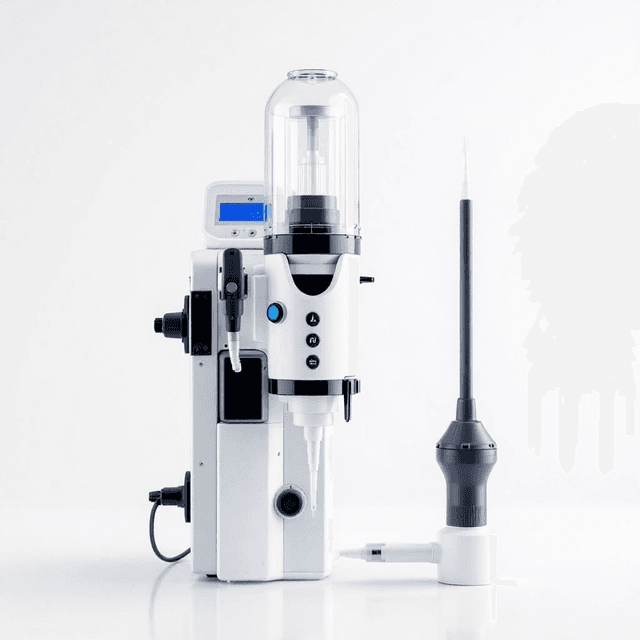
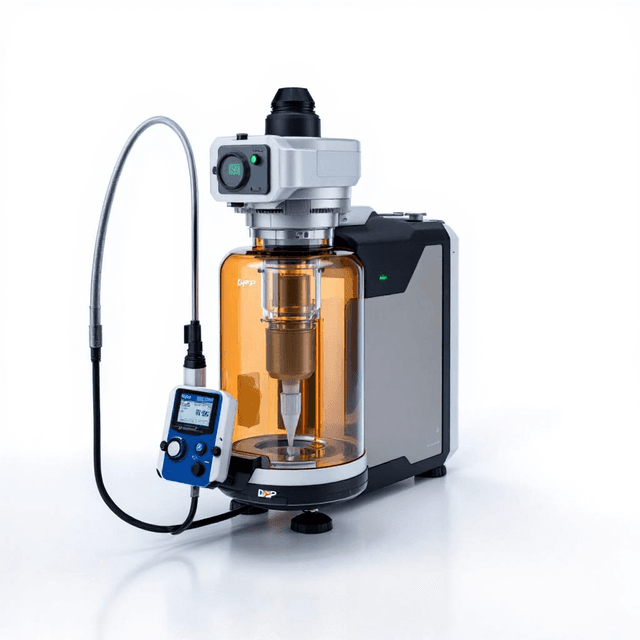
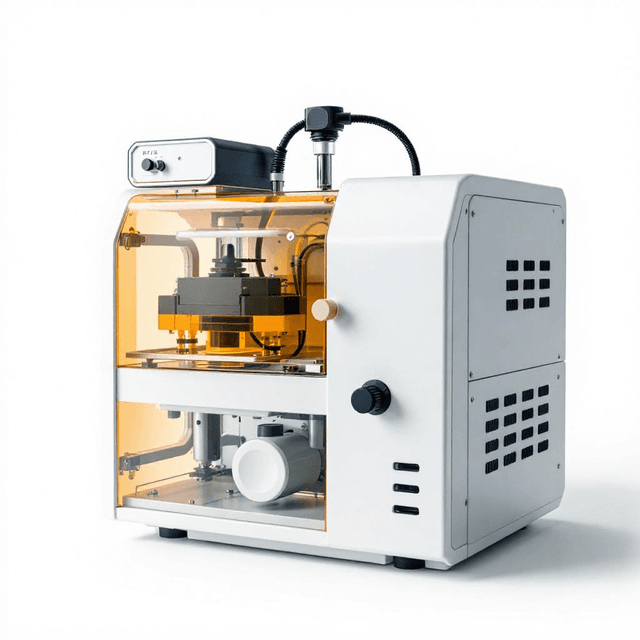
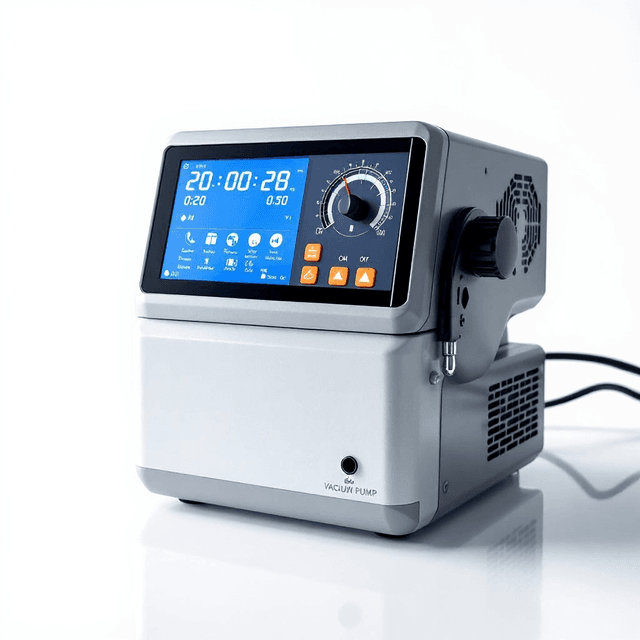
Standard Peristaltic Pump
Variable-speed peristaltic pump with 0.0002-380 ml/min flow range for contamination-free fluid transfer in analytical and research applications.

Louise Corscadden, PhD
Director of Science · ConductScience
Ask Louise about Standard Peristaltic Pump fit, setup, configuration, or quote prep.
Already working with us? Sign in to connect this with My Scientist.
Key Specifications
Full details →- Model fit
- Configured during quote
- SKU family
- BIO-0733
- Sizing
- 14.0 x 25.4 x 14.0 cm
- Ordering
- Online checkout and quote request available
- Category
- Pumps
- Build notes
- Confirm accessories, station layout, and support needs before purchase
The Standard Peristaltic Pump (Model YZ15A) delivers precise fluid transfer for laboratory applications requiring accurate flow control and contamination-free sample handling. Operating on peristaltic principles, this pump compresses flexible tubing to create flow without fluid contact with internal components, eliminating cross-contamination between samples.
With variable speed control from 0.1 to 100 rpm and flow rates spanning 0.0002 to 380 ml/min, the pump accommodates diverse experimental protocols from microfluidic applications to bulk liquid transfer. The LED display provides real-time speed feedback, while membrane button controls enable continuous speed adjustment during operation. Compatible with multiple pump hose sizes (13# through 25#), the system adapts to various tubing diameters for specific flow requirements.
How It Works
Peristaltic pumps operate by sequential compression of flexible tubing using rotating rollers or shoes. As the rotor turns, rollers compress the tubing against a curved track, creating a moving occlusion that pushes fluid forward. The compressed section travels along the tubing length, generating positive displacement flow proportional to rotor speed and tubing diameter.
This mechanism ensures fluid remains isolated within the tubing, preventing contamination of pump internals and eliminating cross-contamination between different fluids. Flow rate depends on tubing inner diameter, wall thickness, and rotor speed, with the relationship remaining linear across the operational range. The self-priming design enables pumping of viscous fluids, suspensions, and gas-containing liquids without cavitation issues common in centrifugal pumps.
Features & Benefits
Automation Level
- semi-automated
Speed Range
- 0.1~100rpm
Speed Resolution
- 0.1rpm
Adjusting Method
- Membrane button continuous adjustment
Flow Range
- 0.0002~380ml/min
External Size
- 254*140*140mm
Protection Class
- IP31
Pump Model
- YZ15A
Suitable Pump Hose
- 13# 14# 19# 16# 25# 17# 18#
Ambient Temperature
- 10℃~40℃
Relative Humidity
- ≤80%
Atmosphere Pressure
- 860hPa~1060hPa
Brand
- ConductScience
Research Domain
- Analytical Chemistry
- Cell Biology
- Environmental Monitoring
- Food Science
- Microbiology
- Pharmaceutical QC
Display Type
- LED displays current speed
Power/Voltage
- 100~240V, 50/60Hz
Weight
- 3.3 kg
Dimensions
- L: 14.0 mm
- W: 25.4 mm
- H: 14.0 mm
| Feature | This Product | Typical Alternative | Advantage |
|---|---|---|---|
| Flow Rate Range | 0.0002-380 ml/min across compatible tubing sizes | Entry-level models often limited to narrower ranges or single tubing diameters | Wide range accommodates both microfluidic and bulk transfer applications in a single instrument |
| Speed Resolution | 0.1 rpm increments from 0.1-100 rpm | Basic models often provide 1 rpm or coarser resolution | Fine speed control enables precise flow rate optimization for critical applications |
| Display System | LED display showing current speed | Simple analog dials or no display feedback | Real-time speed monitoring improves experimental reproducibility and troubleshooting |
| Speed Adjustment | Continuous membrane button adjustment during operation | Step-wise adjustment or requiring operation stop for changes | Allows protocol modifications without interrupting ongoing experiments |
| Tubing Compatibility | Multiple hose sizes (13# through 25#) | Fixed tubing size or limited compatibility options | Flexibility to optimize flow characteristics and chemical compatibility for diverse applications |
| Power Requirements | ≤30W consumption with universal input (100-240V) | Higher power consumption or fixed voltage requirements | Energy efficient operation with global power compatibility reduces operational costs |
This peristaltic pump combines wide flow rate capability with fine speed resolution and continuous adjustment features. The LED display and multiple tubing compatibility provide operational flexibility for diverse laboratory applications.
Practical Tips
Calibrate flow rate with the actual fluid and tubing you will use in experiments, as viscosity and tubing properties affect accuracy.
Why: Water-based calibrations may not reflect performance with different fluid viscosities or chemical interactions with tubing.
Inspect tubing at roller contact points regularly and replace when flattening or cracking becomes visible.
Why: Worn tubing reduces flow accuracy and increases risk of failure during critical experiments.
Prime the system slowly and verify complete air removal before starting experimental protocols.
Why: Air bubbles cause flow irregularities and affect volumetric accuracy in analytical applications.
If flow appears irregular, check for tubing kinks, improper seating in pump head, or worn roller surfaces.
Why: Mechanical issues in the pump head directly translate to flow variations that compromise experimental results.
Record ambient temperature and pump speed settings with experimental data for reproducibility.
Why: Temperature affects tubing properties and fluid viscosity, influencing actual flow rates at given speed settings.
Ensure tubing chemical compatibility before pumping aggressive solvents or corrosive solutions.
Why: Incompatible tubing materials can degrade rapidly, causing system failure and potential chemical exposure.
Use pulsation dampeners downstream for applications requiring steady flow without pump-induced variations.
Why: Peristaltic pumps inherently produce pulsatile flow that may interfere with sensitive analytical measurements.
Clean external surfaces with laboratory-appropriate disinfectants, avoiding moisture ingress at control panel areas.
Why: IP31 rating protects against vertical water drops but not direct spray or submersion cleaning methods.
Setup Guide
What’s in the Box
- Standard Peristaltic Pump (Model YZ15A)
- Power cord
- User manual
- Quick-start guide (typical)
- Warranty documentation (typical)
Warranty
ConductScience provides a standard one-year manufacturer warranty covering defects in materials and workmanship. Technical support includes application guidance and troubleshooting assistance.
Compliance
References
Background reading relevant to this product:
What factors determine the actual flow rate for a given speed setting?
Flow rate depends on tubing inner diameter, wall thickness, and material properties. Each hose size (13# through 25#) will produce different flow rates at the same RPM setting, requiring calibration for precise volumetric applications.
How do I select appropriate tubing for my application?
Consider chemical compatibility with your fluid, required flow rate range, and pressure requirements. Consult tubing manufacturer specifications for chemical resistance and select diameter based on desired flow rate at available pump speeds.
What maintenance is required for consistent performance?
Regularly inspect tubing for wear, cracks, or deformation at roller contact points. Replace tubing when elasticity decreases or visible wear appears, as this affects flow accuracy and can cause tubing failure.
Can the pump handle viscous fluids or suspensions?
Yes, peristaltic pumps are well-suited for viscous fluids and particle suspensions since the pumping mechanism does not rely on fluid properties. Flow rate will remain proportional to speed regardless of viscosity.
How accurate is the flow rate across the operating range?
Flow accuracy depends on tubing consistency and calibration. For critical applications, calibrate flow rate at your operating speed using graduated cylinders or flow meters to establish actual delivery rates.
What is the maximum pressure this pump can generate?
Maximum pressure capability depends on tubing selection and pump head design. Consult product datasheet for specific pressure ratings with recommended tubing types.
How does ambient temperature affect pump performance?
Operating temperature range is 10°C to 40°C. Temperature affects tubing elasticity and fluid viscosity, which can influence flow rate consistency. Maintain stable ambient temperature for most accurate results.
Have a question about this product?
Have a question? Just ask.
Send it over and we'll email you a personalized answer — no call, no scheduling.
Prefer to talk it through?
Accessories
Enhance your setup with compatible accessories
Upgrade Options