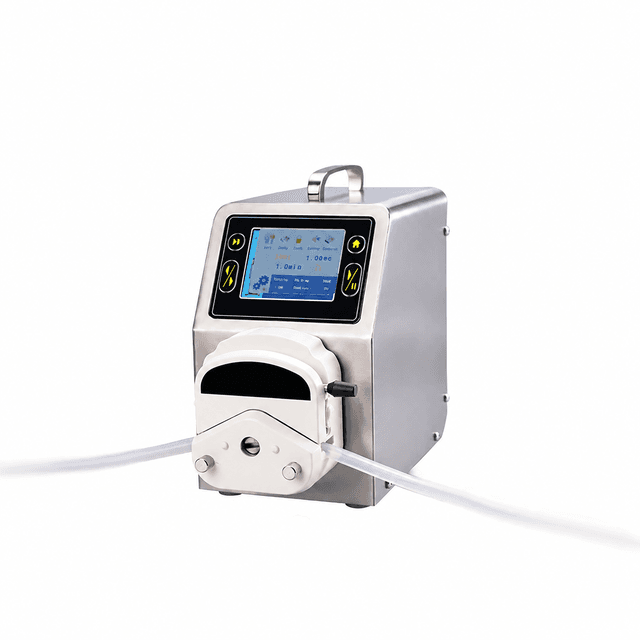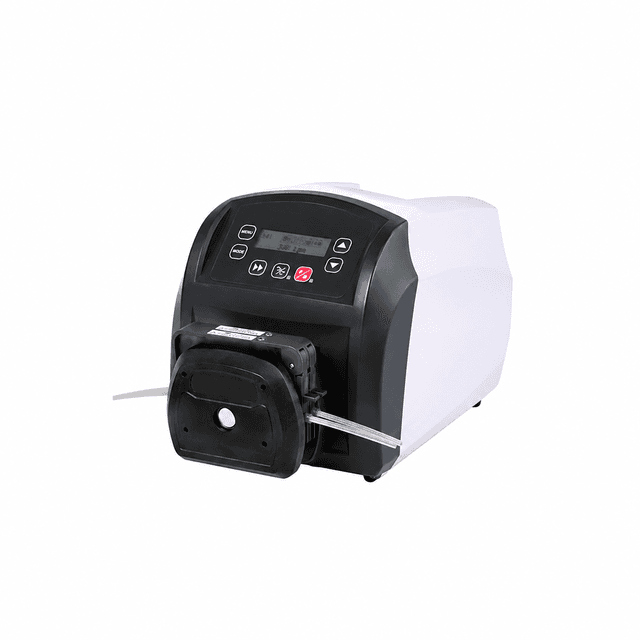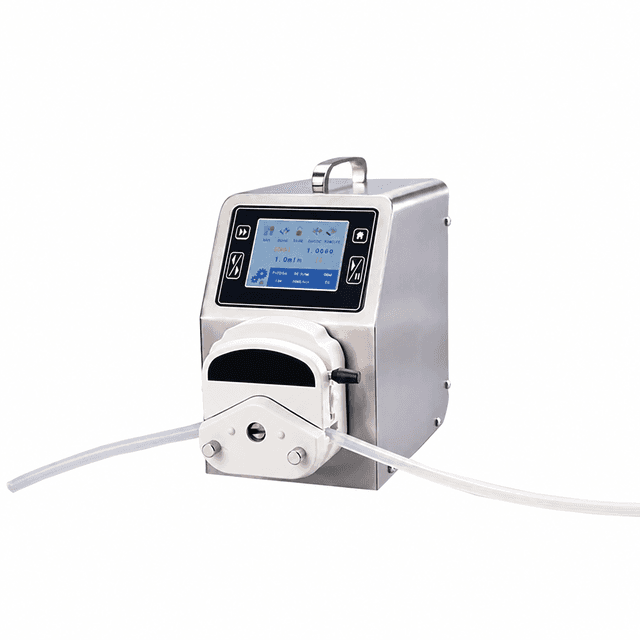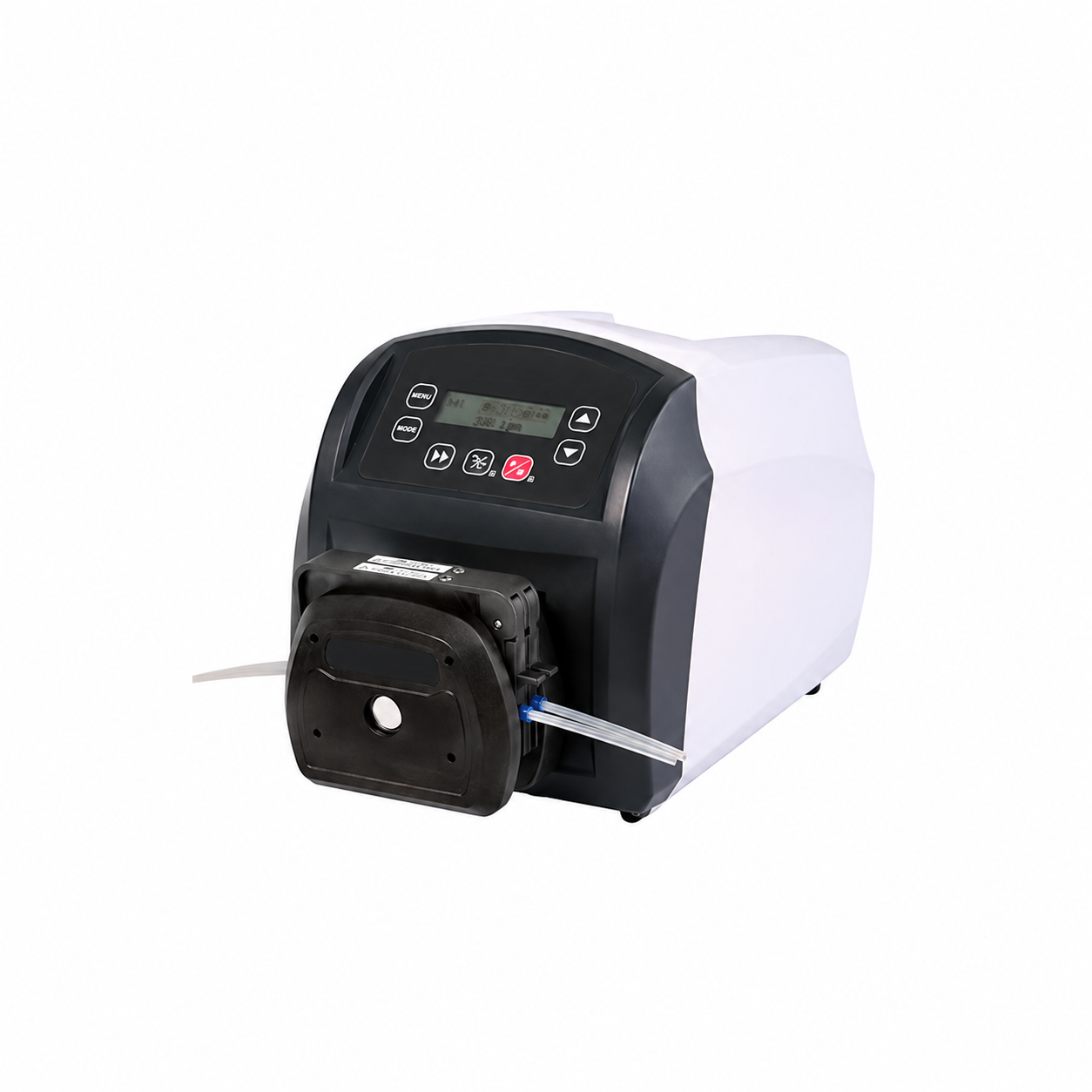
Standard Peristaltic Pump BT-S Series
Precision peristaltic pump for controlled fluid delivery in laboratory applications, featuring contamination-free pumping and easy tube changeover capabilities.

Louise Corscadden, PhD
Director of Science · ConductScience
Ask Louise about Standard Peristaltic Pump BT-S Series fit, setup, configuration, or quote prep.
Already working with us? Sign in to connect this with My Scientist.
Key Specifications
Full details →- Model fit
- Configured during quote
- SKU family
- BIO-0735
- Shipping box
- 19.7 x 26.1 x 18.0 cm
- Ordering
- Online checkout and quote request available
- Category
- Pumps
- Build notes
- Confirm accessories, station layout, and support needs before purchase
Description
Advanced Standard Peristaltic Pump (BT-S Series) for precise fluid dispensing and transfer in laboratory settings.
Specifications
• Speed: //cdn.bootcss.com/video.js/7.5.4/alt/video-js-cdn.min.css" rel="stylesheet">
• Power: 1.75em;">
• Voltage: 1.75em;">
Key Features
• Precision engineering for accurate measurements
• Durable construction for long-term laboratory use
• Reliable performance under various conditions
• Easy operation and maintenance
• Suitable for a wide range of fluids
Model Comparison
• DPP-100-BF
• BT-F
• BT-L
• BT-S
• BT101S
• DPP-600-BF">
• DPP-600-BF
• BT601S
Applications
• Laboratory fluid handling and dispensing
• Research and scientific analysis
• Sample preparation and transfer
• Chromatography applications
• Biotechnology and pharmaceutical research
Physical Specifications
14px;line-height:20px;margin-top:5px;} | 14px;width:25%;display:inline-block;vertical-align:top;} | 78.42%;padding: 5px 10px;border-left: none;border-right-width: 1px;border-top: none;border-bottom-width: 1px;background: rgb(247, 250, 255)">
Setup & Support
For setup instructions and troubleshooting, please refer to the product documentation or contact our technical support team.
Documentation
Complete product documentation is available from our support team.
Q&A
Have questions? Contact our support team for assistance.
How It Works
Peristaltic pumps operate through rotary compression of flexible tubing against a rigid pump head. As the rotor turns, compression rollers sequentially compress sections of tubing, creating a moving wave of occlusion that propels fluid forward. This mechanism ensures that pumped fluid never contacts pump internals, eliminating contamination risk and enabling sterile operation.
Flow rate is directly proportional to rotor speed and tubing inner diameter. The pulsatile nature of flow can be minimized through multi-roller head designs and appropriate tubing selection. The self-priming action allows the pump to handle fluids containing air bubbles and start pumping from dry conditions without manual priming.
Tubing wear occurs gradually at compression points, requiring periodic replacement based on operating hours and fluid compatibility. Different tubing materials enable handling of corrosive solutions, organic solvents, and biological fluids while maintaining chemical compatibility throughout the fluid path.
Features & Benefits
Automation Level
- manual
Research Domain
- Analytical Chemistry
- Cell Biology
- Environmental Monitoring
- Materials Science
- Microbiology
- Pharmaceutical QC
Shipping weight
- 4.5 lb
Shipping box
- L: 19.7 cm
- W: 26.1 cm
- H: 18.0 cm
| Feature | This Product | Typical Alternative | Advantage |
|---|---|---|---|
| Pumping Mechanism | Peristaltic design with rotary compression | Entry-level models may use simpler single-roller designs | Multi-roller configurations provide smoother flow with reduced pulsation for sensitive applications |
| Physical Footprint | 26.1 × 19.7 × 18.0 cm compact design | Larger laboratory pumps often require more bench space | Compact size maximizes available workspace while maintaining full functionality |
| Weight and Portability | 4.5 kg total weight | Industrial pumps are typically heavier and less portable | Lightweight design enables easy relocation between workstations and experimental setups |
| Tubing Compatibility | Universal standard tubing acceptance | Some models require proprietary tubing sets | Standard tubing compatibility reduces operating costs and provides flexible sourcing options |
| Control Interface | Manual speed control system | Basic models may have limited speed adjustment ranges | Variable speed control enables precise flow rate optimization for diverse experimental protocols |
The BT-S Series combines compact benchtop design with reliable peristaltic pumping technology, offering contamination-free fluid handling in a space-efficient package. The universal tubing compatibility and manual control interface provide operational flexibility for diverse laboratory applications.
Practical Tips
Calibrate flow rates using the actual fluid you'll be pumping, as viscosity affects delivery rates.
Why: Different fluids can significantly alter flow characteristics compared to water-based calibrations
Replace tubing when compression marks become visible to maintain flow consistency and prevent tube failure.
Why: Worn tubing reduces pumping efficiency and increases risk of unexpected failures during experiments
Run pump at lowest speed that achieves required flow rate to extend tubing life and improve flow stability.
Why: Lower speeds reduce mechanical stress on tubing and minimize flow pulsation effects
Always verify chemical compatibility between your solutions and tubing material before operation.
Why: Incompatible chemicals can cause tubing degradation and potential safety hazards
If flow becomes irregular, check for air leaks in inlet connections and verify proper tubing seating in pump head.
Why: Air infiltration is the most common cause of erratic flow patterns in peristaltic systems
Allow pump to stabilize for 2-3 minutes after speed changes before collecting flow-dependent data.
Why: Thermal and mechanical stabilization improves flow rate consistency and measurement repeatability
Keep spare tubing sets of your standard sizes to minimize experimental downtime during tubing replacement.
Why: Quick tubing changeover maintains experimental momentum and prevents protocol delays
Setup Guide
What’s in the Box
- Standard Peristaltic Pump BT-S Series main unit
- Power cord (typical)
- User manual and operation guide (typical)
- Basic tubing set for initial setup (typical)
- Warranty documentation (typical)
Warranty
ConductScience provides a standard one-year manufacturer warranty covering defects in materials and workmanship, with technical support available for setup assistance and troubleshooting guidance.
Compliance
What tubing materials are compatible with this pump for biological applications?
The pump accommodates standard peristaltic tubing including silicone, PVC, and specialized biocompatible materials. Consult product datasheet for specific chemical compatibility charts and recommended tubing specifications for your fluid types.
How do I determine the appropriate flow rate for my application?
Flow rate depends on tubing inner diameter, pump speed setting, and fluid viscosity. Start with manufacturer's flow rate charts, then calibrate using graduated cylinder measurements to achieve precise flow rates for your specific protocols.
What maintenance schedule is recommended for continuous operation?
Inspect tubing weekly for wear and replace when compression marks become pronounced. Clean pump head monthly and verify flow rate calibration. Replace drive components according to operating hour specifications in the user manual.
Can this pump handle viscous solutions or suspensions?
Peristaltic pumps can handle moderately viscous fluids, though flow rates decrease with increasing viscosity. Test your specific solutions at low speeds initially and verify consistent flow before extended operation.
How precise is the flow rate control and repeatability?
Flow rate precision depends on tubing quality, speed control stability, and calibration accuracy. Typical precision is within 2-5% for consistent tubing and regular calibration, though specific performance should be verified for critical applications.
What is the pressure capability for downstream restrictions?
Consult product datasheet for maximum pressure specifications. Peristaltic pumps typically handle modest back-pressure but performance varies with tubing selection and pump head design.
Have a question about this product?
Have a question? Just ask.
Send it over and we'll email you a personalized answer — no call, no scheduling.
Prefer to talk it through?