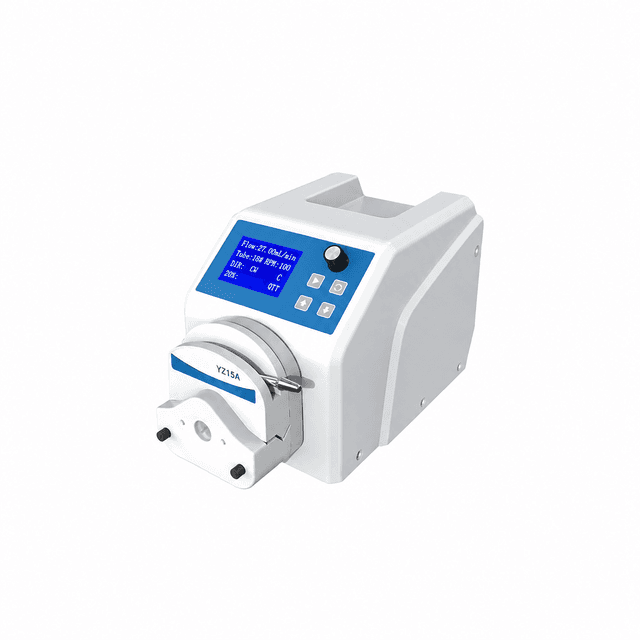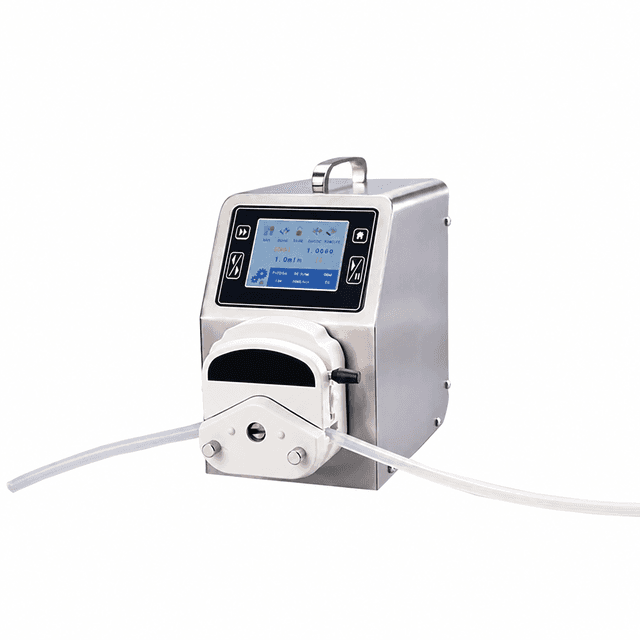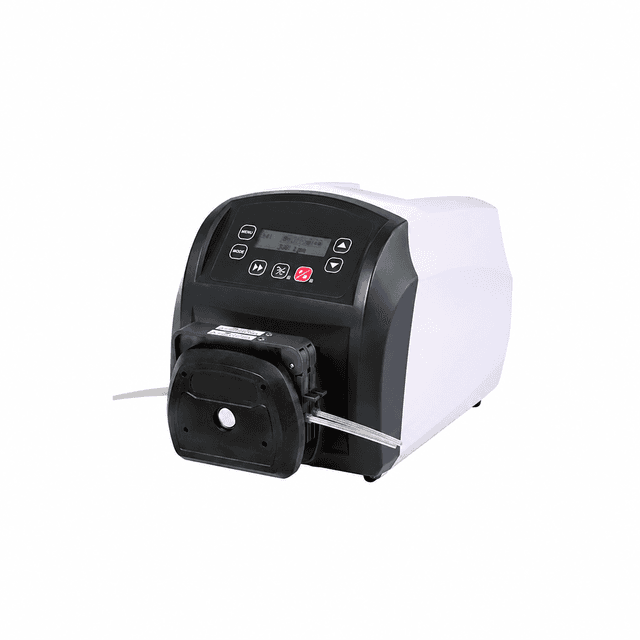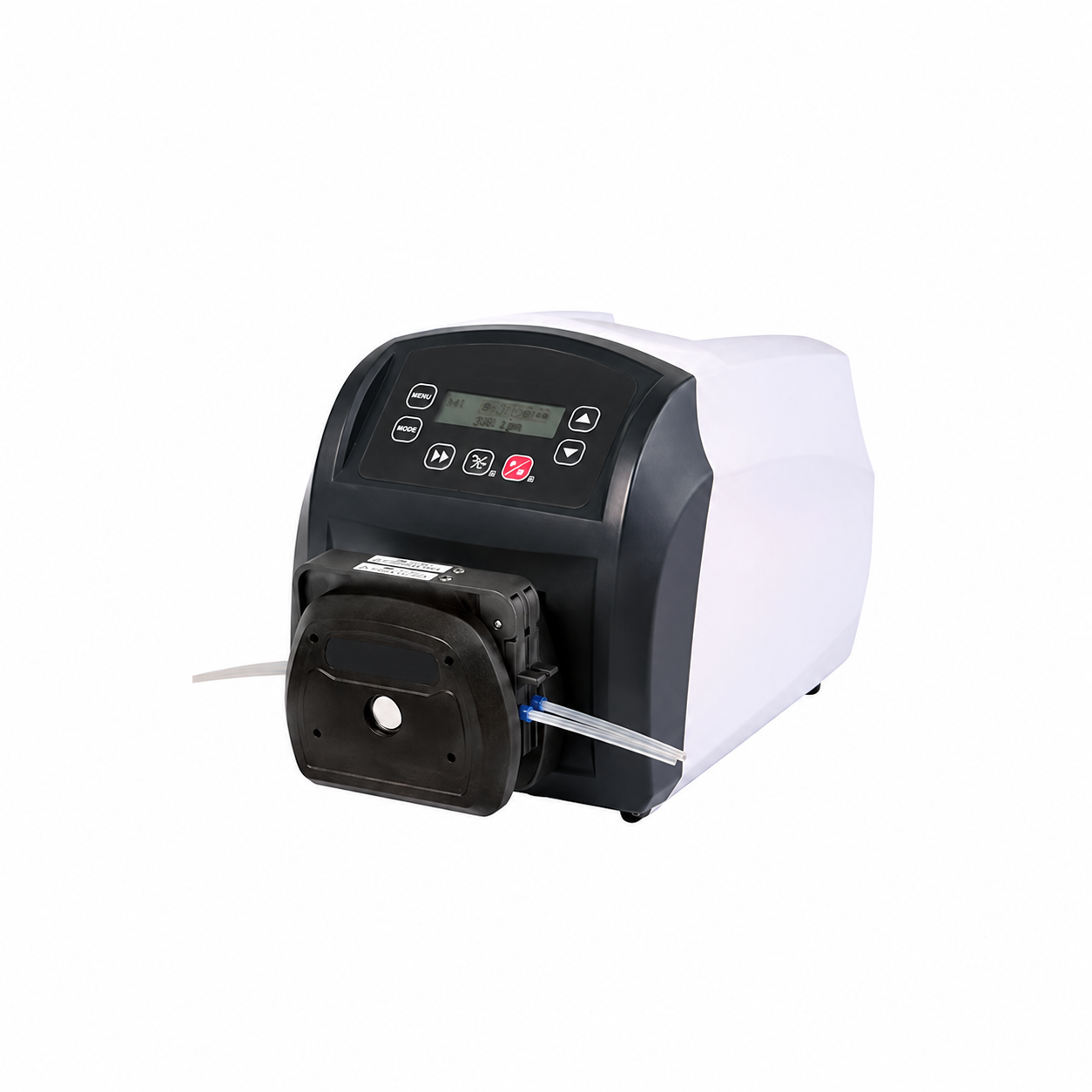
Dispensing Peristaltic Pump BT-F Series
Compact peristaltic pump providing contamination-free fluid dispensing and transfer for laboratory applications requiring precise flow control and chemical compatibility.

Louise Corscadden, PhD
Director of Science · ConductScience
Ask Louise about Dispensing Peristaltic Pump BT-F Series fit, setup, configuration, or quote prep.
Already working with us? Sign in to connect this with My Scientist.
Key Specifications
Full details →- Model fit
- Configured during quote
- SKU family
- BIO-0737
- Shipping box
- 19.7 x 26.1 x 18.0 cm
- Ordering
- Online checkout and quote request available
- Category
- Pumps
- Build notes
- Confirm accessories, station layout, and support needs before purchase
Description
Advanced Dispensing Peristaltic Pump (BT-F-Series) for precise fluid dispensing and transfer in laboratory settings.
Specifications
• Speed: //cdn.bootcss.com/video.js/7.5.4/alt/video-js-cdn.min.css" rel="stylesheet">
Key Features
• Precision engineering for accurate measurements
• Durable construction for long-term laboratory use
• Reliable performance under various conditions
• Easy operation and maintenance
• Suitable for a wide range of fluids
Model Comparison
• BT301F
• DPP-100-BF
• BT-F
• BT101F
• BT-S
• BT-L
• BT601F
• DPP-600-BF">
Applications
• Laboratory fluid handling and dispensing
• Research and scientific analysis
• Sample preparation and transfer
• Chromatography applications
• Biotechnology and pharmaceutical research
Physical Specifications
14px;line-height:20px;margin-top:5px;} | 14px;width:25%;display:inline-block;vertical-align:top;} | 83.44%;padding: 5px 10px;border-left: none;border-right-width: 1px;border-top: none;border-bottom-width: 1px;background: rgb(252, 252, 252)">
Setup & Support
For setup instructions and troubleshooting, please refer to the product documentation or contact our technical support team.
Documentation
Complete product documentation is available from our support team.
Q&A
Have questions? Contact our support team for assistance.
How It Works
Peristaltic pumps operate through a compression mechanism that sequentially squeezes flexible tubing against a rigid housing using rotating rollers or shoes. As the rotor assembly turns, the compression point moves along the tubing, creating a wave-like action that propels fluid forward while maintaining a sealed chamber behind each compression point. This mechanism ensures that the pumped fluid never contacts the pump internals, eliminating contamination risks.
The peristaltic action creates a positive displacement effect, where the volume of fluid moved per revolution remains constant regardless of discharge pressure variations within the pump's operating range. Flow rate control is achieved by adjusting the rotational speed of the compression mechanism, providing linear flow rate response over the pump's operating range.
The flexible tubing serves as both the pumping chamber and the only wetted component, allowing for easy cleaning, sterilization, or replacement between different fluids. Different tubing materials can be selected based on chemical compatibility requirements, temperature tolerance, and pressure specifications for the specific application.
Features & Benefits
Automation Level
- semi-automated
Research Domain
- Analytical Chemistry
- Cell Biology
- Clinical Diagnostics
- Environmental Monitoring
- Microbiology
- Pharmaceutical QC
Shipping weight
- 4.5 lb
Shipping box
- L: 19.7 cm
- W: 26.1 cm
- H: 18.0 cm
| Feature | This Product | Typical Alternative | Advantage |
|---|---|---|---|
| Contamination Control | Peristaltic mechanism with fluid contacting only disposable tubing | Gear or diaphragm pumps require cleaning between different fluids | Eliminates cross-contamination risks and reduces cleaning time between different reagents. |
| Footprint | 19.7 × 26.1 × 18.0 cm compact design | Larger pumps often require more bench space | Fits in space-constrained laboratory environments while maintaining full functionality. |
| Weight | 4.5 kg operating weight | Higher-capacity pumps typically weigh more | Provides portability for flexible laboratory positioning while ensuring stable operation. |
| Priming Requirements | Self-priming peristaltic action | Many pump types require manual priming procedures | Reduces setup time and eliminates need for additional priming equipment or procedures. |
The BT-F Series combines contamination-free operation with a compact design suitable for diverse laboratory environments. The peristaltic mechanism provides reliable fluid handling while the space-efficient footprint accommodates bench space limitations common in research facilities.
Practical Tips
Create flow rate calibration curves for each tubing type and size by measuring dispensed volume over multiple time intervals.
Why: Tubing elasticity and internal diameter variations affect actual flow rates compared to pump speed settings.
Inspect tubing weekly for wear patterns, cracking, or chemical swelling, particularly at roller contact points.
Why: Early detection of tubing degradation prevents unexpected flow rate changes or system failures during experiments.
Allow tubing to rest in an uncompressed state when not in use to extend service life.
Why: Continuous compression can cause permanent deformation and affect pumping accuracy over time.
If flow rate becomes erratic, check for air bubbles in tubing and ensure all connections are secure.
Why: Air bubbles compress differently than liquids and cause irregular flow patterns that affect experimental reproducibility.
Record tubing batch numbers and replacement dates to track performance consistency across experiments.
Why: Tubing manufacturing variations can affect flow rate reproducibility between different production lots.
Use chemical-resistant secondary containment when pumping hazardous or volatile chemicals.
Why: Tubing failure or disconnections can release chemicals, and secondary containment protects personnel and equipment.
Start pumping at low speeds and gradually increase to desired flow rate to minimize pressure transients.
Why: Sudden speed changes can cause pressure spikes that stress tubing and connections, potentially causing leaks.
Clean external surfaces with mild detergent and avoid solvents that might damage pump housing materials.
Why: Proper cleaning maintains professional appearance and prevents chemical residue buildup that could affect operation.
Setup Guide
What’s in the Box
- BT-F Series peristaltic pump main unit
- Power cord (typical)
- User manual and operation guide (typical)
- Sample tubing segments (typical)
- Tubing installation tool (typical)
Warranty
ConductScience provides a standard one-year manufacturer warranty covering defects in materials and workmanship, with technical support available for operational questions and troubleshooting assistance.
Compliance
What tubing materials are compatible with this pump for aggressive solvents?
Tubing compatibility depends on chemical resistance requirements. Common options include silicone for general use, Viton for organic solvents, and PTFE for aggressive chemicals. Consult chemical compatibility charts for specific solvent-tubing combinations.
How accurate is the flow rate control and what factors affect precision?
Flow rate accuracy depends on tubing inner diameter tolerance, speed control resolution, and discharge pressure. Temperature changes affect tubing elasticity and may require recalibration. Consult product specifications for accuracy ratings.
Can the pump handle particulate suspensions or only clear fluids?
Peristaltic pumps can handle particulate suspensions if particle size is significantly smaller than tubing inner diameter. Large particles may cause tubing wear or flow irregularities. Filter suspensions when particle size approaches tubing diameter.
What maintenance is required and how often should tubing be replaced?
Regular inspection of tubing for wear, cracking, or swelling is essential. Replacement frequency depends on operating hours, pressure, and chemical exposure. Lubricate roller mechanisms according to manufacturer schedule.
How do I calibrate flow rates for different tubing sizes?
Calibration requires measuring actual dispensed volume over time at various speed settings. Create calibration curves for each tubing type and size used. Recalibrate when changing tubing or after extended operation.
What is the maximum pressure this pump can work against?
Maximum pressure depends on tubing material, wall thickness, and inner diameter. Silicone tubing typically handles lower pressures than reinforced materials. Consult tubing specifications and pump datasheet for pressure limits.
Can the pump run continuously for extended periods?
Peristaltic pumps are designed for continuous operation but require monitoring of tubing condition. Extended continuous use may accelerate tubing wear and require more frequent replacement intervals.
Have a question about this product?
Have a question? Just ask.
Send it over and we'll email you a personalized answer — no call, no scheduling.
Prefer to talk it through?