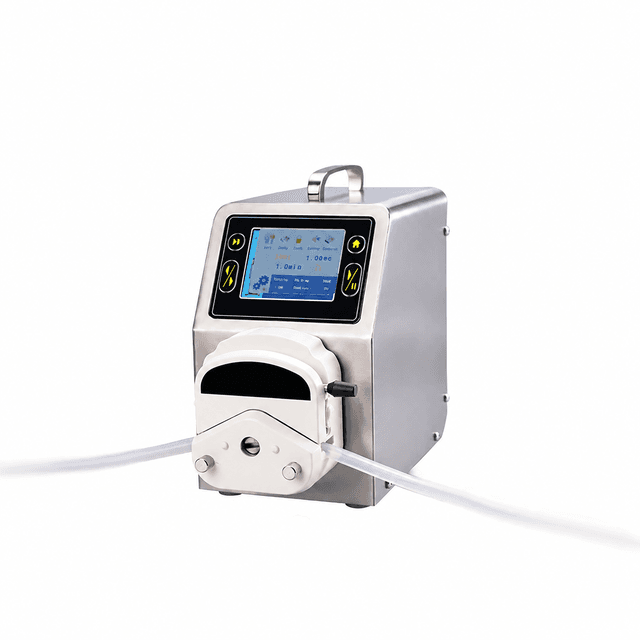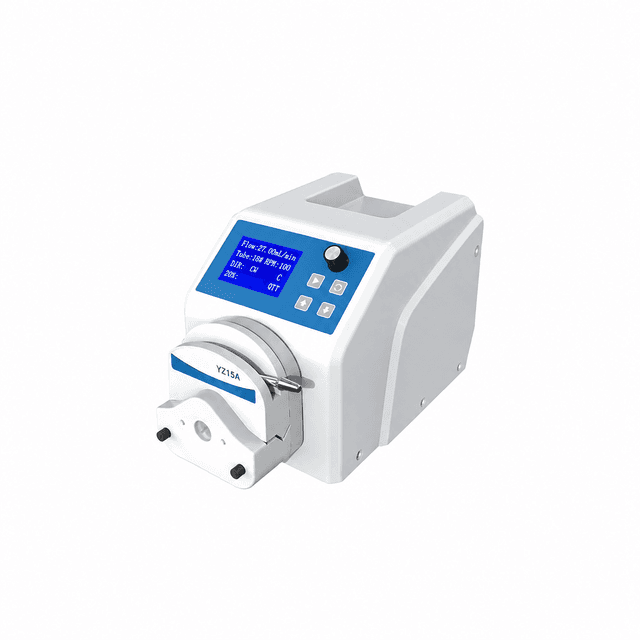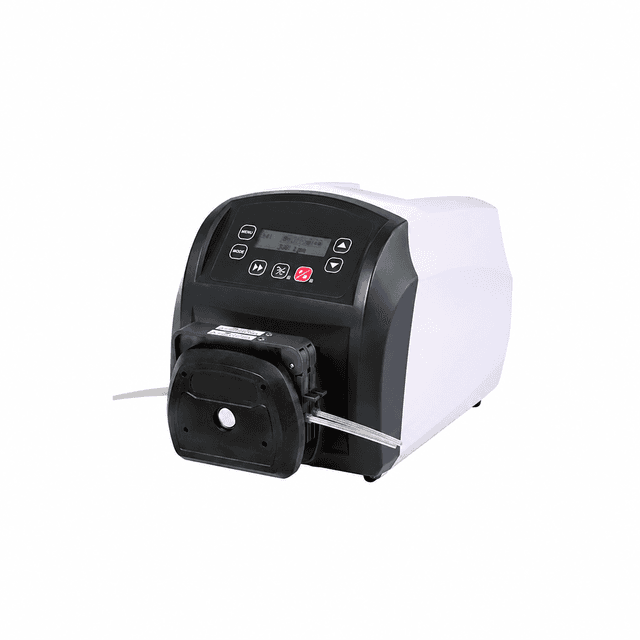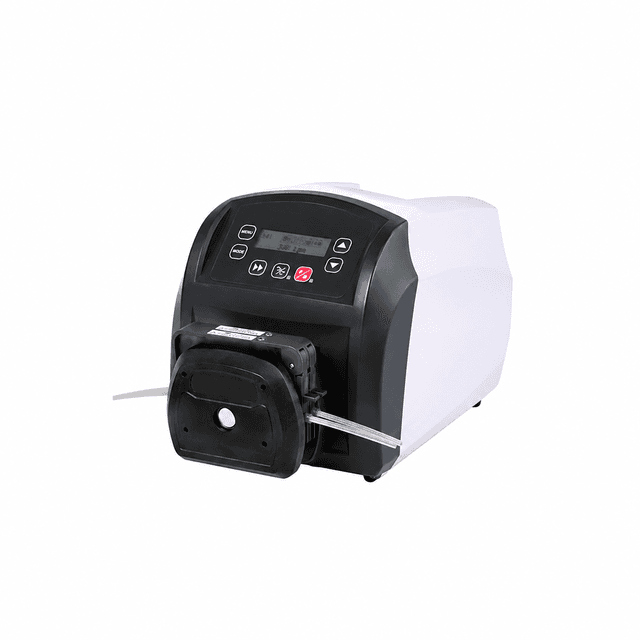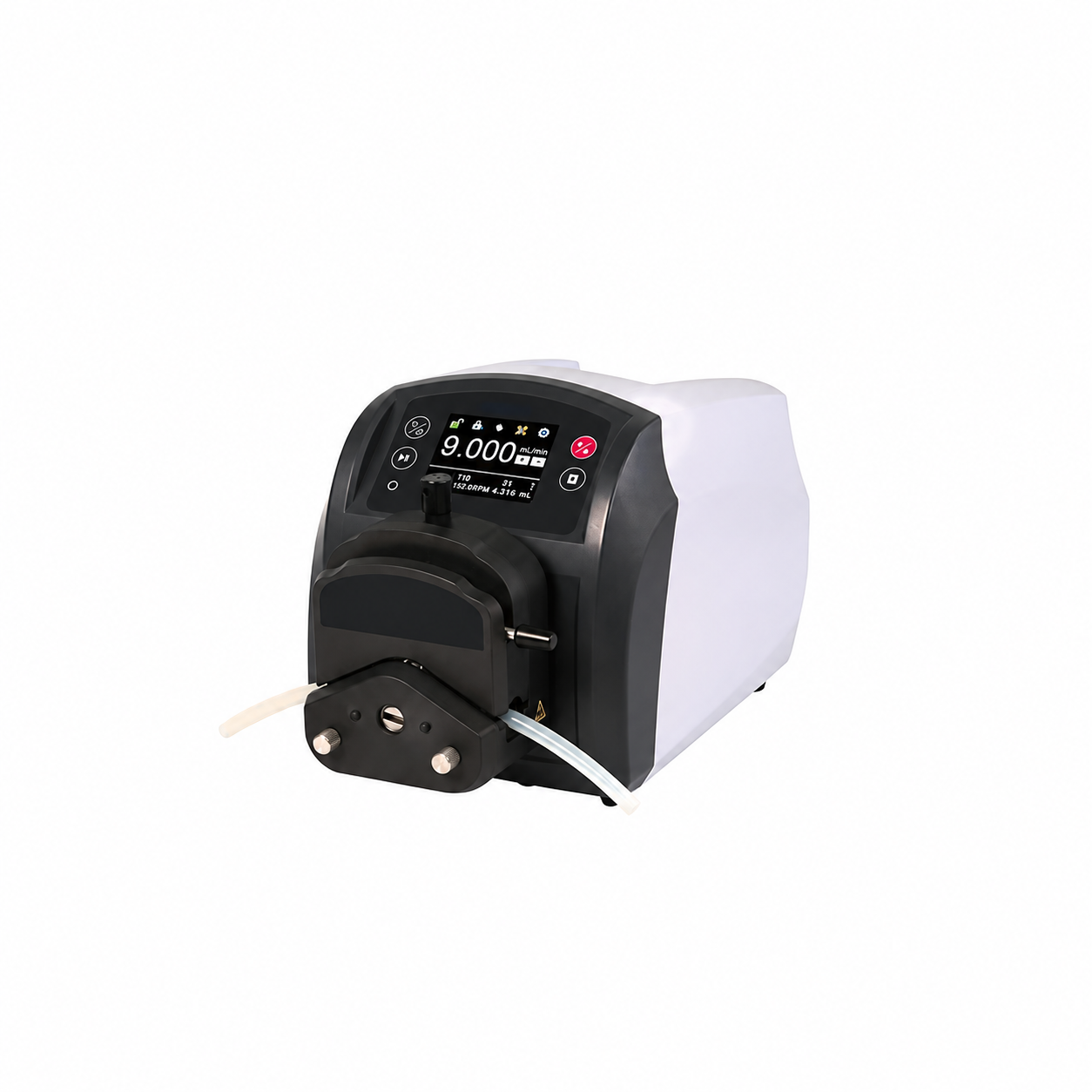
Flow Rate Peristaltic Pump BT-L Series
Compact peristaltic pump for precise fluid transfer and flow rate control in analytical and biological applications with contamination-free operation.

Louise Corscadden, PhD
Director of Science · ConductScience
Ask Louise about Flow Rate Peristaltic Pump BT-L Series fit, setup, configuration, or quote prep.
Already working with us? Sign in to connect this with My Scientist.
Key Specifications
Full details →- Model fit
- Configured during quote
- SKU family
- BIO-0736
- Shipping box
- 19.7 x 26.1 x 18.0 cm
- Ordering
- Online checkout and quote request available
- Category
- Pumps
- Build notes
- Confirm accessories, station layout, and support needs before purchase
Description
Advanced Flow Rate Peristaltic Pump (BT-L Series) for precise fluid dispensing and transfer in laboratory settings.
Specifications
• Speed: //cdn.bootcss.com/video.js/7.5.4/alt/video-js-cdn.min.css" rel="stylesheet">
• Power: 1.75em;">4. Speed resolution 0.1rpm.
• Voltage: 1.75em;">13. ABS plastic housing, creative streamlined appearance, concise and beautiful.
Key Features
• Precision engineering for accurate measurements
• Durable construction for long-term laboratory use
• Reliable performance under various conditions
• Easy operation and maintenance
• Suitable for a wide range of fluids
Model Comparison
• DPP-100-BF
• BT101L
• BT-L
• BT-S
• BT301L
• BT-F
• DPP-600-BF">
• DPP-600-BF
Applications
• Laboratory fluid handling and dispensing
• Research and scientific analysis
• Sample preparation and transfer
• Chromatography applications
• Biotechnology and pharmaceutical research
Physical Specifications
14px;width:25%;display:inline-block;vertical-align:top;} | 80.72%; padding: 5px 10px; border-left: none; border-right-width: 1px; border-top: none; border-bottom-width: 1px; background: rgb(247, 250, 255); " align="left"> | 80.72%;padding: 5px 10px;border-left: none;border-right-width: 1px;border-top: none;border-bottom-width: 1px;background: rgb(247, 250, 255)" align="left">
Setup & Support
For setup instructions and troubleshooting, please refer to the product documentation or contact our technical support team.
Documentation
Complete product documentation is available from our support team.
Q&A
Have questions? Contact our support team for assistance.
How It Works
Peristaltic pumps operate through rotary compression of flexible tubing by a series of rollers or shoes mounted on a rotating head. As the rotor turns, these compression elements sequentially squeeze the tubing against a curved track, creating a moving seal that propels fluid through the tube. The fluid remains completely isolated within the tubing, with no contact between pump components and the transferred medium.
Flow rate is directly proportional to rotor speed and tubing internal diameter. The occlusive action creates discrete fluid segments between compression points, resulting in pulsatile flow that can be smoothed using dampeners or pulse suppressors when continuous flow is required. The self-priming design allows the pump to draw fluids from below the pump head level and can run dry without damage.
Tubing selection determines chemical compatibility, with materials ranging from silicone for general applications to specialized polymers for aggressive solvents. The peristaltic mechanism provides inherent flow reversibility and can handle fluids containing particulates or air bubbles without operational disruption.
Features & Benefits
Automation Level
- semi-automated
Research Domain
- Analytical Chemistry
- Cell Biology
- Clinical Diagnostics
- Environmental Monitoring
- Microbiology
- Pharmaceutical QC
Shipping weight
- 4.5 lb
Shipping box
- L: 19.7 cm
- W: 26.1 cm
- H: 18.0 cm
| Feature | This Product | Typical Alternative | Advantage |
|---|---|---|---|
| Contamination Control | Complete fluid isolation within disposable tubing with no pump contact | Basic models may have wetted pump components requiring cleaning between samples | Eliminates cross-contamination risk and reduces cleaning validation requirements in analytical workflows. |
| Maintenance Requirements | Tube-only replacement with no internal wetted components to service | Many pump types require seal, valve, or diaphragm replacement with fluid contact cleaning | Minimizes downtime and reduces total cost of ownership through simplified maintenance procedures. |
| Flow Reversibility | Inherent bidirectional operation through motor direction control | Some pump designs require additional valving or cannot reverse flow direction | Enables system backflushing and cleaning protocols without additional plumbing components. |
| Dry Running Capability | Can operate without fluid without damage to pump components | Many pump types require continuous fluid lubrication to prevent seal damage | Prevents costly repairs during automated operation when fluid sources may become depleted. |
The BT-L Series emphasizes contamination-free operation and simplified maintenance through its peristaltic design. The 4.5 kg weight and compact 19.7 × 26.1 × 18.0 cm footprint suit standard laboratory benchtop integration while providing the reliability needed for continuous analytical and biological applications.
Practical Tips
Perform flow rate calibration with the actual fluid you will be pumping, as viscosity differences can significantly affect flow rates compared to water calibration.
Why: Fluid properties directly impact the pump's volumetric efficiency and accuracy.
Inspect tubing regularly for wear patterns, particularly at the compression points where the rollers contact the tube.
Why: Early detection of tubing wear prevents unexpected flow rate changes or tube failure during critical experiments.
Allow tubing to relax for several minutes between high-pressure operations to extend service life.
Why: Continuous compression stress can cause permanent deformation and reduced pumping efficiency.
If flow rate decreases unexpectedly, check for air leaks in connections and verify proper tubing installation tension.
Why: Air infiltration reduces pumping efficiency and can cause erratic flow patterns.
Document tubing type, installation date, and cumulative operating hours to track performance trends over time.
Why: Systematic record keeping enables predictive maintenance and ensures consistent experimental conditions.
Use secondary containment when pumping hazardous or valuable fluids to contain potential tubing failures.
Why: Tubing failure can result in significant fluid loss or exposure risks depending on the transferred material.
Select tubing diameter based on both flow rate requirements and the balance between pumping accuracy and tubing lifetime.
Why: Smaller diameter tubing provides better flow resolution but may require more frequent replacement under continuous use.
Setup Guide
What’s in the Box
- BT-L Series peristaltic pump main unit
- Power adapter and cord (typical)
- Tubing installation guide (typical)
- Operating manual (typical)
- Basic tubing starter set (typical)
Warranty
ConductScience provides a standard one-year manufacturer warranty covering mechanical and electrical components with technical support for installation and operational questions.
Compliance
What tubing materials are compatible with aggressive solvents like chloroform or acetone?
Tubing compatibility depends on specific chemical resistance requirements. Consult the chemical compatibility chart in the product datasheet for recommended tubing materials for your specific solvents, as standard silicone tubing may not be suitable for all organic solvents.
How do I calibrate the flow rate for different tubing diameters?
Flow rate calibration requires measuring actual output using graduated cylinders or flow meters, then adjusting pump speed settings accordingly. Each tubing diameter and material will have a unique flow rate curve that should be established empirically for your specific application.
Can this pump handle particulate-containing samples?
Yes, peristaltic pumps can handle particulates within reasonable size limits relative to tubing diameter. However, large or abrasive particles may accelerate tubing wear and affect flow consistency over time.
What is the typical tubing replacement frequency?
Tubing lifetime varies significantly based on fluid type, flow rate, operating pressure, and duty cycle. Monitor tubing for wear, cracking, or flow rate degradation as indicators for replacement rather than following a fixed schedule.
How do I minimize pulsation in applications requiring smooth flow?
Pulsation can be reduced using larger tubing diameters, multiple pump heads, or external pulse dampeners. The inherent pulsatile nature of peristaltic pumps should be considered when selecting this technology for applications requiring continuous flow.
What maintenance is required beyond tubing replacement?
Routine maintenance typically involves cleaning external surfaces, checking rotor alignment, and verifying motor performance. The peristaltic mechanism requires minimal lubrication or internal service compared to other pump types.
Can I run multiple pumps in parallel for higher flow rates?
Yes, multiple pumps can be operated in parallel, though flow balancing between units may require individual calibration. Consider whether a single larger pump might be more appropriate for your total flow requirements.
Have a question about this product?
Have a question? Just ask.
Send it over and we'll email you a personalized answer — no call, no scheduling.
Prefer to talk it through?