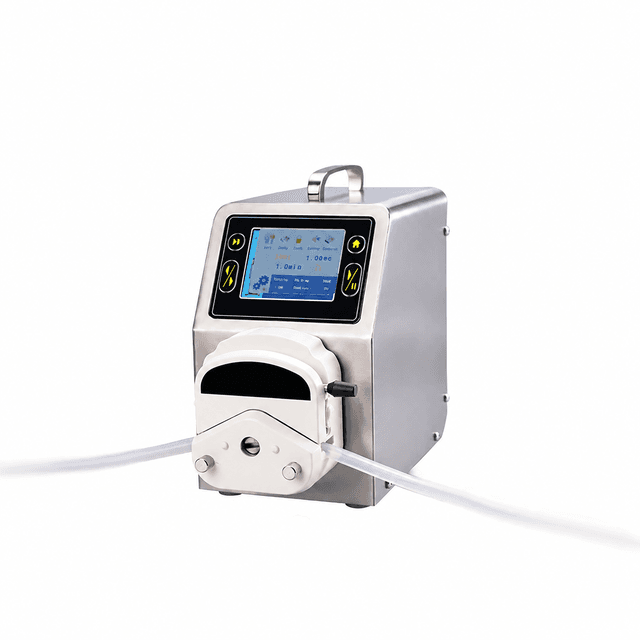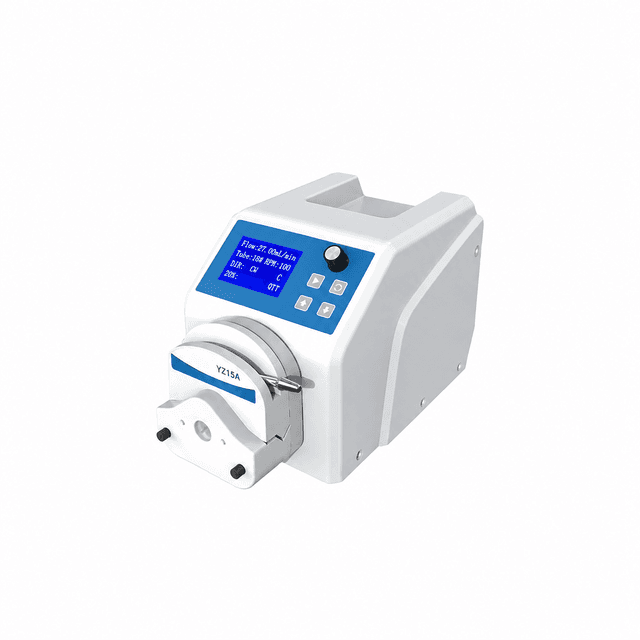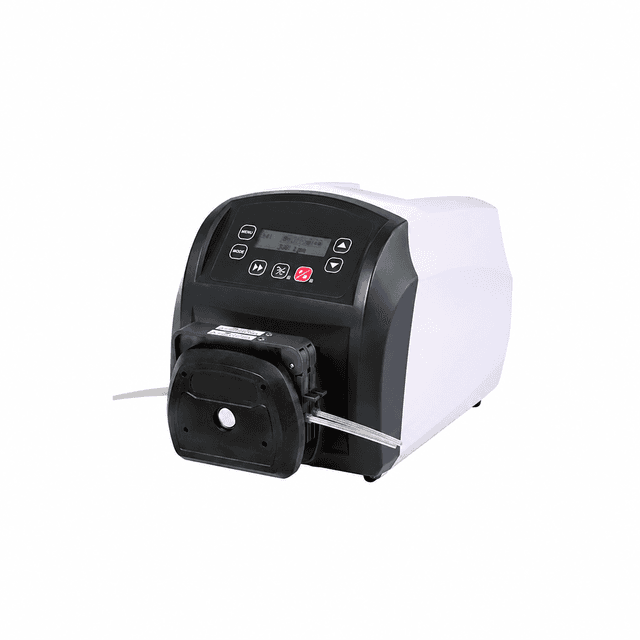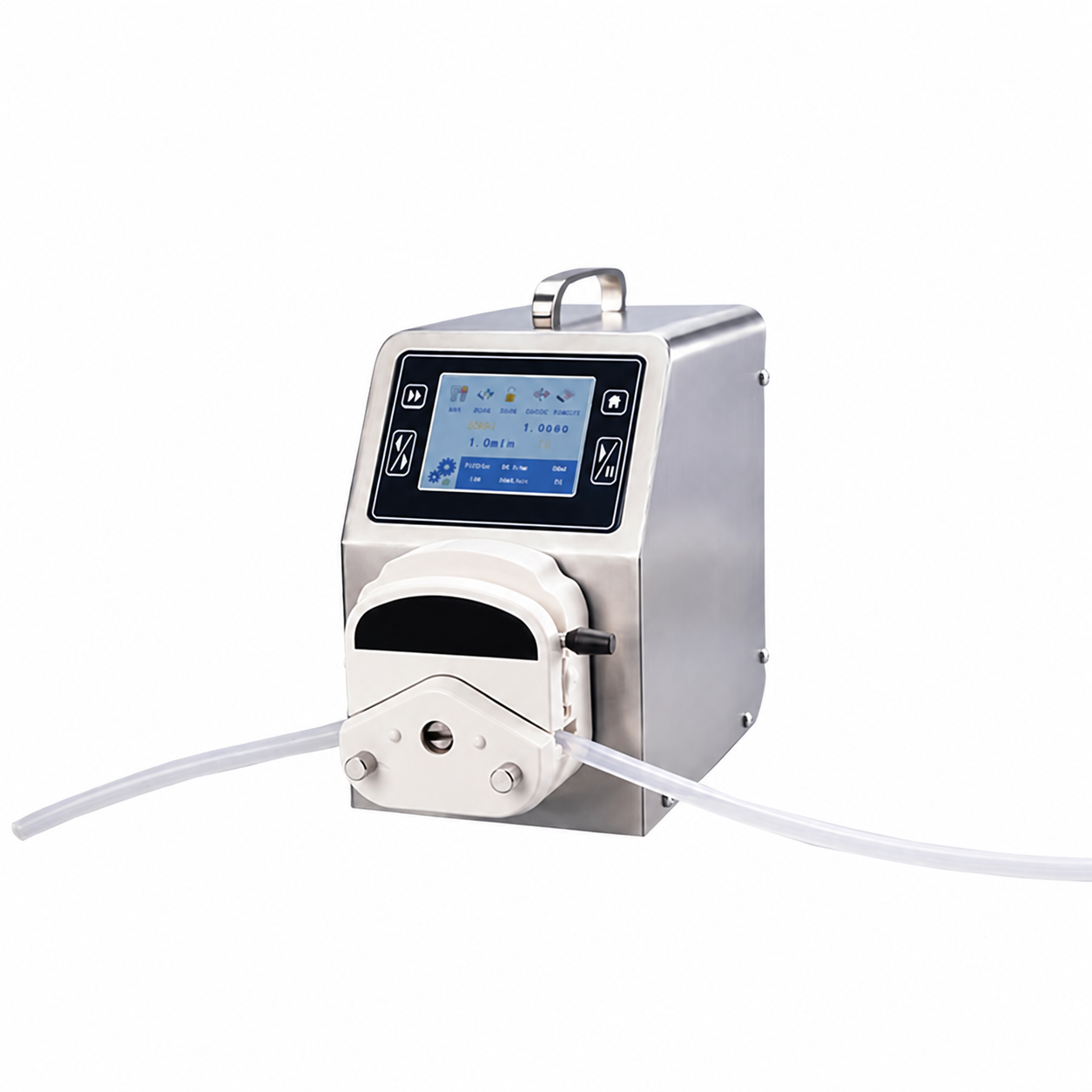
Dispensing Peristaltic Pump DPP Series
Compact peristaltic pump providing contamination-free fluid dispensing for laboratory applications with precise flow control and sterile sample handling capabilities.

Louise Corscadden, PhD
Director of Science · ConductScience
Ask Louise about Dispensing Peristaltic Pump DPP Series fit, setup, configuration, or quote prep.
Already working with us? Sign in to connect this with My Scientist.
Key Specifications
Full details →- Model fit
- Configured during quote
- SKU family
- BIO-0738
- Shipping box
- 24.0 x 21.2 x 14.0 cm
- Ordering
- Online checkout and quote request available
- Category
- Pumps
- Build notes
- Confirm accessories, station layout, and support needs before purchase
Description
Advanced Dispensing Peristaltic Pump (DPP Series) for precise fluid dispensing and transfer in laboratory settings.
Specifications
• Speed: //cdn.bootcss.com/video.js/7.5.4/alt/video-js-cdn.min.css" rel="stylesheet">
Key Features
• Precision engineering for accurate measurements
• Durable construction for long-term laboratory use
• Reliable performance under various conditions
• Easy operation and maintenance
• Suitable for a wide range of fluids
Model Comparison
• DPP-BT600FC
• BT-F
• BT-L
• BT-S
• DPP-BT100FC
• SPP Series
• DPP-BT300FC
• DPP-BT100FC)
Applications
• Laboratory fluid handling and dispensing
• Research and scientific analysis
• Sample preparation and transfer
• Chromatography applications
• Biotechnology and pharmaceutical research
Physical Specifications
14px;width:25%;display:inline-block;vertical-align:top;} | 85.9%;padding: 5px 10px;border-left: none;border-right-width: 1px;border-top: none;border-bottom-width: 1px;background: rgb(247, 250, 255)"> | 14px;line-height:20px;margin-top:5px;}
Setup & Support
For setup instructions and troubleshooting, please refer to the product documentation or contact our technical support team.
Documentation
Complete product documentation is available from our support team.
Q&A
Have questions? Contact our support team for assistance.
How It Works
Peristaltic pumps operate through sequential compression of flexible tubing using rotating rollers or shoes mounted on a rotor assembly. As the rotor turns, these compression elements create a traveling wave of occlusion that propels fluid through the tubing without direct contact between pump components and the transferred medium.
The peristaltic action generates consistent flow rates independent of downstream pressure variations within the pump's operating range. Flow rate is directly proportional to rotor speed, enabling precise volumetric control through motor speed regulation. The squeeze-and-release action creates slight pulsation in flow, which can be minimized through appropriate tubing selection and dampening mechanisms.
This pumping mechanism provides inherent self-priming capability and can handle fluids containing suspended particles or gas bubbles. The only consumable component is the pump tubing, which can be selected based on chemical compatibility requirements and desired flow characteristics.
Features & Benefits
Shipping weight
- 6.0 lb
Shipping box
- L: 24.0 cm
- W: 21.2 cm
- H: 14.0 cm
| Feature | This Product | Typical Alternative | Advantage |
|---|---|---|---|
| Contamination Prevention | Complete fluid isolation through peristaltic tubing | Basic models may use shared fluid pathways requiring cleaning between samples | Eliminates cross-contamination risks critical for sensitive analytical and biological applications |
| Footprint Efficiency | Compact 24.0 x 21.2 x 14.0 cm dimensions | Entry-level units often have similar compact designs | Maximizes available bench space in crowded laboratory environments |
| Weight and Portability | 6.0 kg operational weight | Comparable units typically range from 4-8 kg | Balanced between stability during operation and ease of laboratory repositioning |
| Self-Priming Capability | Inherent self-priming through peristaltic action | Some pump types require manual priming or external priming systems | Simplifies startup procedures and handles fluids with entrained gas or particles |
The DPP Series combines contamination-free fluid handling with compact laboratory footprint and reliable peristaltic pumping technology. The system provides consistent performance for analytical and biological applications requiring precise fluid control without sample integrity compromise.
Practical Tips
Calibrate flow rates with actual working fluids rather than water, as viscosity differences significantly affect pumping performance.
Why: Ensures accurate volume delivery for specific experimental conditions and fluid properties.
Inspect tubing regularly for wear patterns, particularly at roller contact points where repeated compression occurs.
Why: Prevents unexpected flow rate changes and potential tubing failure during critical experiments.
Run cleaning solution through tubing between different fluids, even when using dedicated tubing sets.
Why: Removes residual contamination that could affect subsequent measurements or sample integrity.
If flow becomes erratic, check for air bubbles in tubing and verify proper seating in the pump head mechanism.
Why: Air entrainment disrupts consistent flow patterns and reduces volumetric accuracy.
Document tubing type, age, and calibration data for each experimental setup to maintain measurement traceability.
Why: Enables reproducible results and troubleshooting when flow characteristics change over time.
Select tubing material based on chemical compatibility charts and consider temperature ratings for heated applications.
Why: Prevents chemical degradation of tubing that could contaminate samples or create safety hazards.
Allow system to reach thermal equilibrium before critical measurements, especially in temperature-controlled environments.
Why: Temperature variations affect fluid viscosity and tubing elasticity, impacting flow rate precision.
Setup Guide
What’s in the Box
- Peristaltic pump main unit
- Power adapter and cord
- Sample pump tubing set (typical)
- User manual and quick start guide
- Tubing installation tool (typical)
- Flow rate calibration chart (typical)
Warranty
ConductScience provides a standard 1-year manufacturer warranty covering defects in materials and workmanship, with technical support available for installation, calibration, and troubleshooting assistance.
Compliance
What tubing materials are compatible with aggressive solvents?
Tubing compatibility depends on specific solvent properties. Fluoropolymer tubes handle most aggressive chemicals, while silicone works for aqueous solutions. Consult chemical compatibility charts for specific solvent-tubing combinations.
How do I calibrate flow rates for different viscosities?
Calibrate each fluid type separately using volumetric measurement over timed intervals. Viscosity affects flow rate at given pump speeds, requiring fluid-specific calibration curves for accurate dispensing.
What flow rate range can I expect with different tubing sizes?
Flow rate is proportional to tubing internal diameter cubed and pump speed. Smaller bore tubing (0.5-1 mm ID) provides microliters per minute, while larger tubing (3-6 mm ID) delivers milliliters per minute at typical speeds.
How often should pump tubing be replaced?
Replace tubing when visible wear, cracking, or flow rate deviations occur. Typical lifetime ranges from weeks to months depending on fluid compatibility, operating pressure, and usage frequency.
Can the pump handle fluids with suspended particles?
Yes, peristaltic action accommodates particles up to approximately 30% of tubing internal diameter. Larger particles may cause tubing wear or flow restrictions requiring more frequent tubing replacement.
What is the minimum dispensing volume achievable?
Minimum volume depends on tubing diameter and pump control resolution. Micro-bore tubing with slow speed control can achieve sub-microliter dispensing, though accuracy decreases at very small volumes.
How do I minimize flow pulsation for sensitive applications?
Use larger diameter tubing, add downstream dampening chambers, or select multi-roller pump heads to reduce pulsation amplitude. Some applications benefit from pulsation dampening reservoirs.
Have a question about this product?
Have a question? Just ask.
Send it over and we'll email you a personalized answer — no call, no scheduling.
Prefer to talk it through?