Hydrogen Generator
Laboratory hydrogen generator using PEM or AWE electrolysis technology.
Available in 300 mL/min and 600 mL/min flow rates. On-demand hydrogen supply for GC, carrier gas, and atomic emission spectrometry applications.

Louise Corscadden, PhD
Director of Science · ConductScience
Ask Louise about Hydrogen Generator fit, setup, configuration, or quote prep.
Already working with us? Sign in to connect this with My Scientist.
Key Specifications
Full details →- Model fit
- 2 selectable configurations
- SKU family
- BIO-0747
- Shipping box
- 42.0 x 43.6 x 38.0 cm
- Ordering
- Online checkout and quote request available
- Category
- Gas Generators
- Build notes
- Confirm accessories, station layout, and support needs before purchase
Description
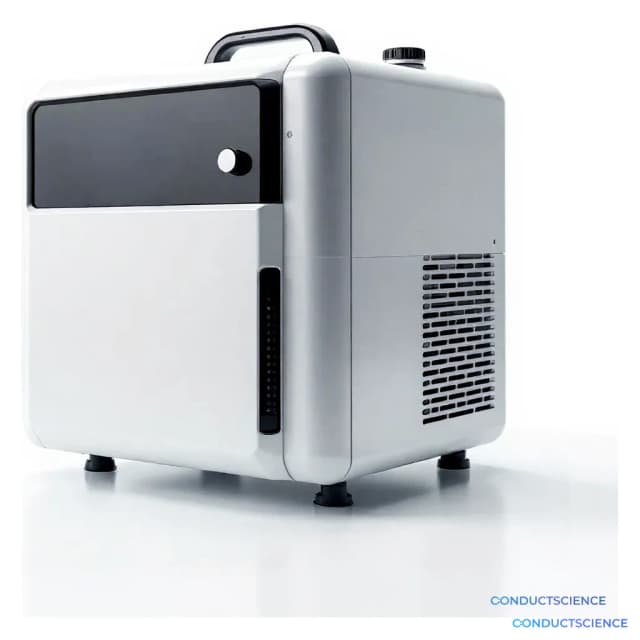
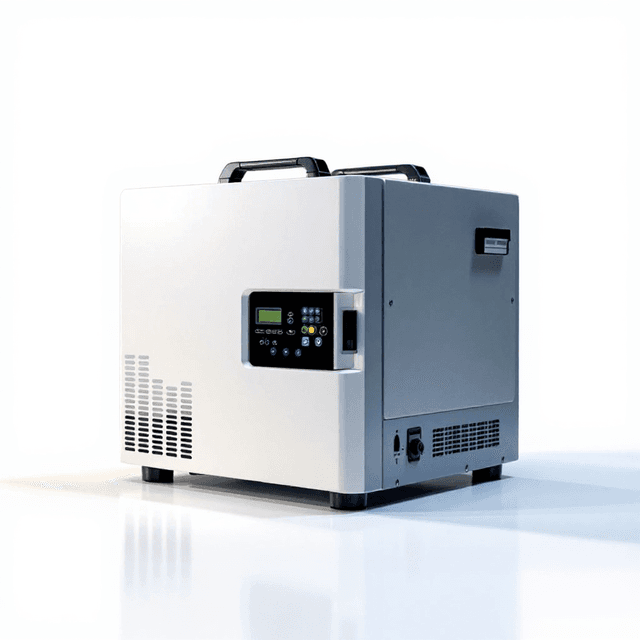
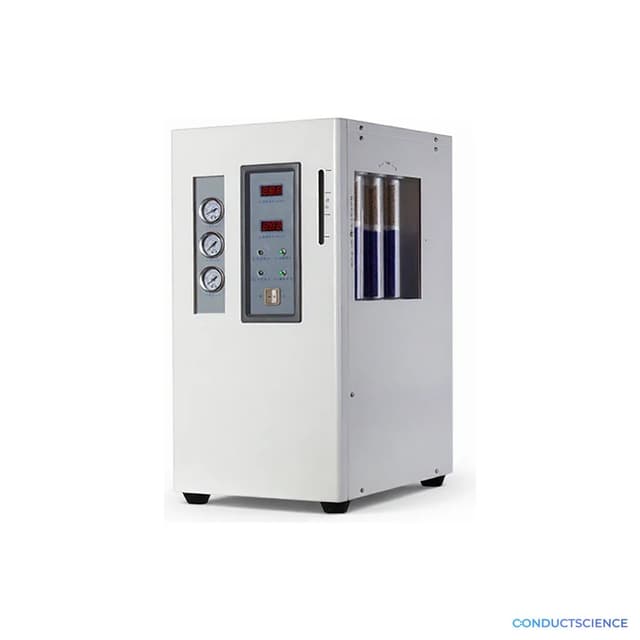
The Hydrogen Generator produces hydrogen by electrolyzing water using PEM or AWE electrolysis technology. It integrates a water tank, electrolytic cell, power supply, gas-water separator, drying pipe, pressure controller, and associated components.
The generator provides an on-demand laboratory hydrogen supply without requiring frequent replacement of hydrogen cylinders. Two flow configurations are available: 300 mL/min and 600 mL/min.
Applications
- Fuel gas for gas chromatography (GC)
- Carrier gas for gas chromatography
- Reaction gas for ELCD conductance detection
- Reaction gas for atomic emission spectrometry detection
- Continuous laboratory hydrogen source
Features
- Produces hydrogen without preheating
- Water-shortage shutdown protection
- Overpressure shutdown protection
- One-button startup and shutdown
- Operating display shows flow status
- Fault-status indication
- Automatic constant-pressure control
- Generates hydrogen on demand
- Reduces the need for hydrogen-cylinder replacement
- Uses purified water during operation
- Electrolysis produces hydrogen and oxygen without other stated emissions
How It Works
The hydrogen generator operates through controlled electrochemical processes to produce high-purity hydrogen gas from water. The system employs water electrolysis to generate hydrogen on demand, eliminating the storage and handling requirements of pressurized gas cylinders.
Internal purification systems remove trace impurities and moisture from the generated hydrogen stream, ensuring gas purity suitable for sensitive analytical applications. Pressure regulation and flow control systems maintain consistent delivery conditions, while safety features monitor system parameters and provide automatic shutdown capabilities if operating conditions exceed safe limits.
Features & Benefits
- On-demand hydrogen production: Eliminates cylinder storage requirements and provides continuous gas supply for extended analytical runs
- Integrated purification system: Delivers high-purity hydrogen suitable for sensitive analytical applications without external purification
- Pressure regulation controls: Maintains consistent delivery pressure for stable instrument performance across varying demand conditions
- Safety monitoring systems: Provides automatic shutdown and alarm functions to ensure safe operation in laboratory environments
- Compact laboratory design: Fits standard laboratory bench space while providing full-scale hydrogen generation capabilities
- Flow rate adjustment: Accommodates varying instrument requirements from low-flow detectors to high-consumption applications
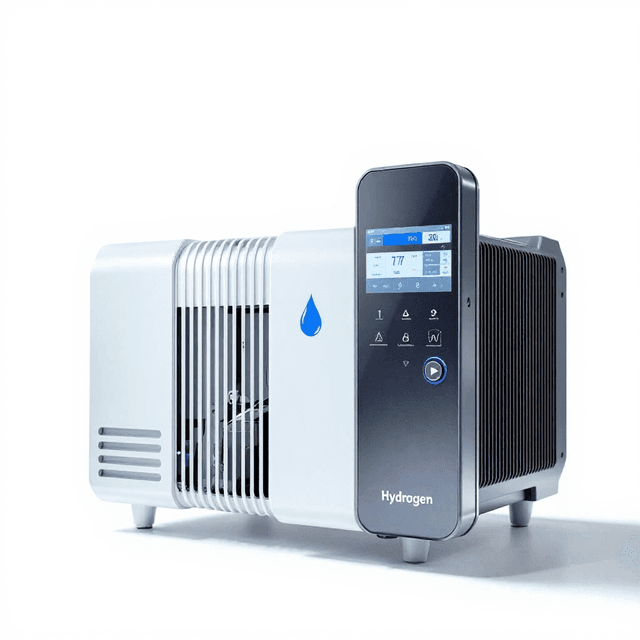
- Digital display interface: Enables real-time monitoring of system parameters including pressure, flow rate, and operational status
Specifications
| Specification | 300P Model | 600P Model |
|---|---|---|
| Internal model reference | BK-HYG-300P | BK-HYG-600P |
| Hydrogen purity | 99.999% | ≥99.999% |
| Hydrogen output | 0-300 mL/min | 600 mL/min rated |
| Output pressure | Approximately 0.4 MPa | 0-0.4 MPa |
| Pressure stability | <0.001 MPa | Not stated |
| Safety-valve release pressure | Not stated | 0.5 MPa ±0.05 MPa |
| Working noise | Not stated | ≤55 dB |
| Operating temperature | 1-40°C | Not stated |
| Relative humidity | <85% | Not stated |
| Power consumption | 150 W | Not stated |
| Power supply | 110/220 V, 50/60 Hz | AC 110/220 V, 50/60 Hz |
| External dimensions | 410 × 370 × 220 mm | 430 × 220 × 330 mm |
| Package dimensions | 460 × 430 × 270 mm | 670 × 470 × 630 mm |
| Net weight | 10 kg | 11 kg |
| Gross weight | 14 kg | 20 kg |
Comparison Guide
300P Model vs 600P Model: Choose based on your laboratory needs and hydrogen consumption rates.
- 300P Model: Best for adjustable, lower-flow applications with precise pressure control (±0.001 MPa). Ideal for instruments requiring up to 300 mL/min flow rate with consistent pressure delivery and lower power consumption (150 W).
- 600P Model: Best for higher-flow, continuous applications. Delivers rated output of 600 mL/min with safety-valve protection and operates quietly (≤55 dB), suitable for demanding analytical workloads.
Model Comparison
| Feature | 300P | 600P | Best For |
|---|---|---|---|
| Flow Rate | 0-300 mL/min (adjustable) | 600 mL/min (rated) | 600P higher flow |
| Pressure Stability | <0.001 MPa (precise) | Not specified | 300P more stable |
| Power Consumption | 150 W (lower) | Not specified | 300P more efficient |
| Noise Level | Not specified | ≤55 dB (quieter) | 600P quieter |
| Purity | 99.999% | ≥99.999% | Both excellent |
Setup & Support
The Hydrogen Generator is designed for straightforward laboratory integration:
- Simple connection to standard AC power supply (110/220 V, 50/60 Hz)
- Water inlet connection for feedstock with integrated tank capacity
- Hydrogen gas outlet with regulated pressure delivery
- One-button operation for easy startup and shutdown
- Digital display for real-time monitoring of system status
- Automatic safety shutdowns prevent operator error
- Compact footprint fits standard laboratory workspaces
For installation, operation, or troubleshooting assistance, refer to the Documentation section or contact technical support.
Documentation
Complete documentation is available for the Hydrogen Generator, including:
- User manual with setup instructions and operational guidelines
- Technical specifications and performance data
- Maintenance and care procedures for optimal performance
- Troubleshooting guide for common issues
- Safety information and regulatory compliance details
- Warranty and service information
Note: The manual prints the 300P model's pressure as "4 kg/cm³ (about 0.4 MPa)." Because kg/cm³ appears to be a typographical error, the specifications above retain only the explicitly provided approximate value of 0.4 MPa.
Q&A
Q: How often do I need to replace parts?
A: Regular maintenance includes water tank refilling and periodic cleaning of the electrolytic cell. Consumable parts have typical service lives of 1-2 years depending on usage intensity.
Q: Can I use tap water in the generator?
A: Purified or distilled water is recommended for optimal performance and longevity. Tap water may reduce component lifespan due to mineral buildup.
Q: What is the warm-up time?
A: The hydrogen generator produces hydrogen without preheating, enabling rapid startup and immediate use.
Q: Is the noise level important for my laboratory?
A: The 600P model operates at ≤55 dB (quiet office level). If noise is a concern, the 600P model is recommended.
Q: Can I adjust the hydrogen flow rate?
A: The 300P model offers adjustable flow from 0-300 mL/min. The 600P model delivers rated output of 600 mL/min.
Q: What safety features are included?
A: Features include water-shortage shutdown, overpressure shutdown, safety-valve protection, and fault-status indication for safe laboratory operation.
How It Works
The hydrogen generator operates through controlled chemical or electrochemical processes to produce high-purity hydrogen gas from feedstock materials. The system typically employs either water electrolysis or chemical hydrolysis reactions to generate hydrogen on demand, eliminating the storage and handling requirements of pressurized gas cylinders.
Internal purification systems remove trace impurities and moisture from the generated hydrogen stream, ensuring gas purity suitable for sensitive analytical applications. Pressure regulation and flow control systems maintain consistent delivery conditions, while safety features monitor system parameters and provide automatic shutdown capabilities if operating conditions exceed safe limits.
Features & Benefits
Shipping weight
- 29.98 lb
Shipping box
- L: 42.0 cm
- W: 43.6 cm
- H: 38.0 cm
| Feature | This Product | Typical Alternative | Advantage |
|---|---|---|---|
| Gas Generation Method | Consult product datasheet for generation technology | Entry-level systems may use simple electrolysis while advanced models employ chemical processes | Different generation methods offer varying purity levels and maintenance requirements for specific applications |
| Output Pressure Range | Consult product datasheet for pressure specifications | Basic generators often provide fixed pressures | Adjustable pressure output accommodates different analytical instrument requirements without external regulators |
| Safety Integration | Integrated safety monitoring systems | Lower-cost models may have minimal safety features | Comprehensive safety systems reduce operational risks in laboratory environments |
| Purity Control | Integrated purification system | Basic systems may require external purification | Built-in purification eliminates additional equipment needs and ensures consistent gas quality |
This hydrogen generator provides integrated safety and purification systems for laboratory applications requiring consistent, high-purity hydrogen supply. The system eliminates pressurized cylinder storage while delivering hydrogen suitable for analytical instrumentation.
| Model | SKU | Listed price | Status | Shipping box |
|---|---|---|---|---|
| 600P | BIO-0747 | $1,690.00 | Available | 42.0 x 43.6 x 38.0 cm |
| 300P | BIO-0747 | $1,190.00 | Available | 42.0 x 43.6 x 38.0 cm |
Practical Tips
Verify hydrogen purity meets analytical requirements before connecting to sensitive instruments.
Why: Trace contaminants can interfere with detector performance and analytical accuracy
Monitor water quality and replace filtration components according to manufacturer schedules.
Why: Water impurities directly affect hydrogen purity and system component longevity
Allow adequate warm-up time before beginning analytical runs to ensure stable gas output.
Why: System stabilization ensures consistent flow rate and pressure for reproducible analytical results
Install in well-ventilated areas with adequate clearance around gas connections and electrical components.
Why: Proper ventilation prevents hydrogen accumulation and enables safe system operation
Check water levels and system pressures if output flow becomes inconsistent.
Why: Low water levels or pressure fluctuations indicate maintenance needs before system shutdown
Monitor system status indicators during analytical runs to identify potential supply interruptions.
Why: Early detection of system issues prevents data loss during extended analytical sequences
Setup Guide
What’s in the Box
- Hydrogen generator main unit (typical)
- Power supply adapter (typical)
- Gas outlet tubing and fittings (typical)
- User manual and safety documentation (typical)
- System startup and maintenance guide (typical)
- Warranty registration materials (typical)
Warranty
ConductScience provides standard 1-year manufacturer warranty covering defects in materials and workmanship. Technical support includes installation guidance, operational troubleshooting, and maintenance scheduling assistance.
Compliance
References
Background reading relevant to this product:
What purity levels can this hydrogen generator achieve for analytical applications?
Consult product datasheet for specific purity specifications. Most laboratory hydrogen generators provide purity suitable for GC and analytical applications, with trace contaminant levels well below detector sensitivity limits.
How does the generator handle varying flow rate demands from different instruments?
The system includes flow rate adjustment controls to accommodate different instrument requirements. Output can typically be adjusted from low-flow detector applications to higher-consumption flame ionization detectors.
What maintenance schedule is required for consistent performance?
Regular maintenance includes water reservoir refilling or cartridge replacement, filter changes, and periodic system purging. Specific intervals depend on usage frequency and local water quality conditions.
Can the generator operate continuously for extended analytical runs?
Yes, the system is designed for continuous operation during analytical sequences. Monitor consumable levels and system parameters to ensure uninterrupted hydrogen supply during long runs.
What safety features protect against hydrogen leaks or system malfunctions?
Integrated safety systems typically include leak detection, automatic shutdown capabilities, pressure monitoring, and alarm functions. Ensure proper ventilation and follow manufacturer safety protocols.
How does this compare to using pressurized hydrogen cylinders?
On-demand generation eliminates cylinder storage, reduces pressure hazards, and provides consistent supply without delivery scheduling. Operating costs depend on usage patterns and local utility rates.
Have a question about this product?
Have a question? Just ask.
Send it over and we'll email you a personalized answer — no call, no scheduling.
Prefer to talk it through?