Hydrogen Generator
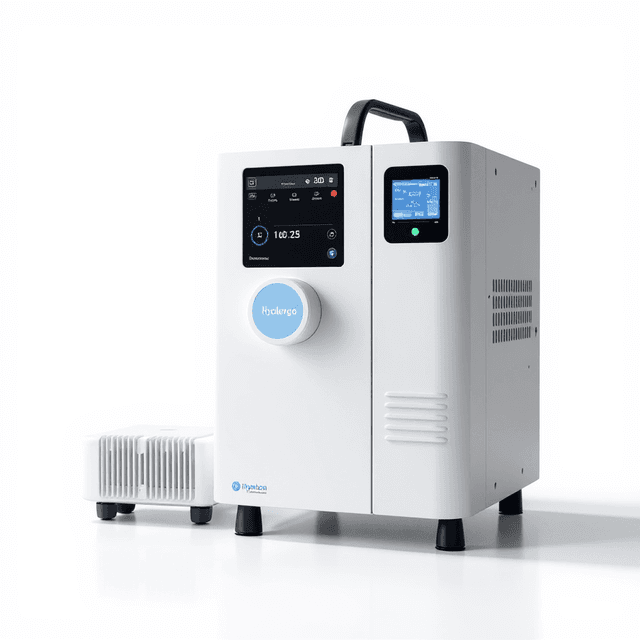
Benchtop electrolytic hydrogen generator producing ultra-pure hydrogen (≥99.999%) at 600 ml/min flow rate for analytical instrumentation and research applications.

Louise Corscadden, PhD
Director of Science · ConductScience
Ask Louise about Hydrogen Generator fit, setup, configuration, or quote prep.
Already working with us? Sign in to connect this with My Scientist.
Key Specifications
Full details →- Model fit
- Configured during quote
- SKU family
- Assigned during quote
- Shipping box
- 38.0 x 43.0 x 22.0 cm
- Ordering
- Online checkout and quote request available
- Category
- Gas Generators
- Build notes
- Confirm accessories, station layout, and support needs before purchase
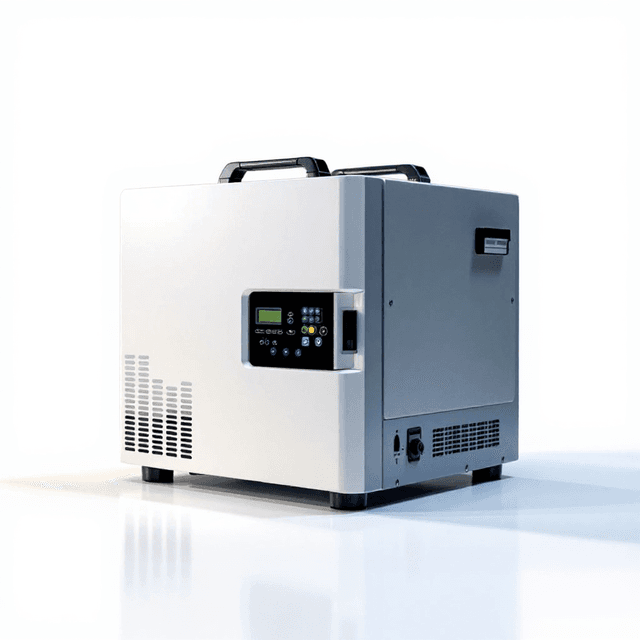
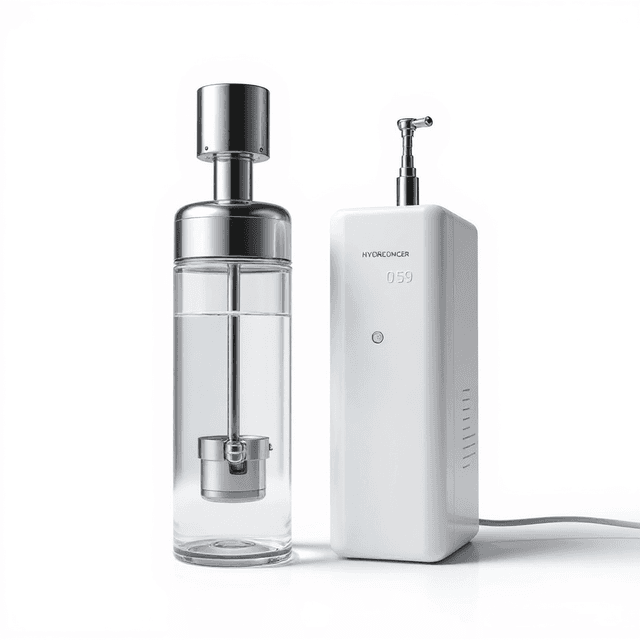
The ConductScience Hydrogen Generator provides on-demand hydrogen gas production through electrolytic water splitting for analytical instrumentation and research applications. This benchtop unit delivers ultra-pure hydrogen (≥99.999%) at a continuous flow rate of 600 ml/min with precise pressure control from 0 to 0.4 MPa.
Engineered for laboratory environments, the system operates at low noise levels (≤55 dB) while maintaining consistent gas purity and flow characteristics. The compact design (430×220×380 mm) integrates safety features including automatic pressure relief at 0.5±0.05 MPa to ensure reliable operation in analytical workflows requiring carrier gas or fuel applications.
How It Works
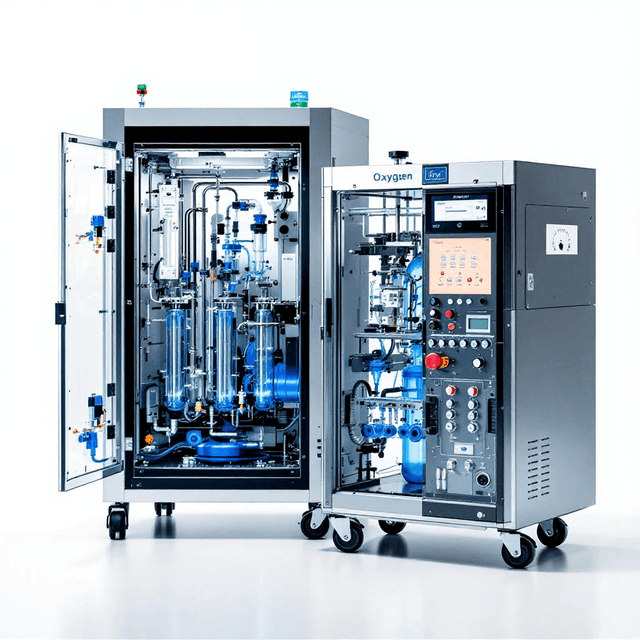
The hydrogen generator employs polymer electrolyte membrane (PEM) electrolysis to split deionized water into hydrogen and oxygen gases. An applied electrical current drives the electrochemical reaction at the cathode (2H₂O + 2e⁻ → H₂ + 2OH⁻) producing ultra-pure hydrogen gas. The proton exchange membrane selectively allows hydrogen ions to pass while blocking other gases and contaminants.
Internal pressure regulation maintains output pressure between 0-0.4 MPa through automated control valves. A safety relief system activates at 0.5±0.05 MPa to prevent overpressurization. The electrolytic cell design eliminates the need for external hydrogen storage while providing continuous on-demand gas generation.
Integrated purification removes trace moisture and oxygen contaminants, achieving hydrogen purity levels of ≥99.999%. The system operates on standard laboratory power (AC220V/110V, 50Hz/60Hz) with low acoustic output (≤55 dB) suitable for analytical laboratory environments.
Features & Benefits
Shipping weight
- 11.0 lb
Shipping box
- L: 38.0 cm
- W: 43.0 cm
- H: 22.0 cm
| Feature | This Product | Typical Alternative | Advantage |
|---|---|---|---|
| Hydrogen Purity | ≥99.999% | Entry-level generators often provide 99.9-99.99% purity | Higher purity reduces baseline noise and improves analytical sensitivity in gas chromatography applications |
| Flow Rate | 600 ml/min continuous | Basic models typically offer 300-500 ml/min | Higher flow rate supports multiple instruments or high-consumption analytical methods simultaneously |
| Pressure Range | 0-0.4 MPa adjustable | Lower-cost units often limited to 0.2-0.3 MPa maximum | Extended pressure range accommodates various analytical instrument requirements without external pressure boosting |
| Operating Noise | ≤55 dB | Standard laboratory generators typically operate at 50-65 dB | Low noise operation suitable for sensitive analytical environments without acoustic interference |
| Safety Systems | Automatic relief at 0.5±0.05 MPa | Basic models may lack precision pressure relief | Precise pressure control prevents instrument damage and ensures safe unattended operation |
This hydrogen generator offers ultra-high purity (≥99.999%) with 600 ml/min flow rate and precise pressure control up to 0.4 MPa. The low-noise operation (≤55 dB) and compact design make it suitable for analytical laboratories requiring continuous, high-quality hydrogen supply.
Practical Tips
Verify hydrogen purity periodically using gas chromatography or dedicated purity analyzers to ensure specifications are maintained.
Why: Purity verification confirms electrolytic cell performance and identifies potential contamination sources.
Replace deionized water regularly and monitor water quality to prevent electrolytic cell contamination.
Why: Water quality directly affects hydrogen purity and system longevity by preventing mineral buildup in the electrolytic cell.
Allow 10-15 minutes warm-up time before connecting to analytical instruments to achieve stable flow and pressure.
Why: System stabilization ensures consistent gas delivery and prevents pressure fluctuations during critical analytical runs.
Install hydrogen detectors in the laboratory area and ensure adequate ventilation around the generator.
Why: Hydrogen safety monitoring provides early warning of potential leaks and maintains safe laboratory conditions.
Check all gas connections for leaks if pressure drops or flow rates decrease unexpectedly during operation.
Why: Leak detection prevents gas loss and ensures consistent instrument performance while maintaining safety standards.
Monitor system pressure and flow rates during analytical runs to identify potential issues affecting measurement reproducibility.
Why: Consistent gas delivery parameters are critical for maintaining analytical precision and method validation requirements.
Keep spare gas line fittings and tubing available for quick replacement during routine maintenance.
Why: Ready availability of replacement parts minimizes analytical downtime and maintains laboratory productivity.
Setup Guide
What’s in the Box
- Hydrogen generator main unit
- Power cord (region-specific)
- Gas output fittings and tubing (typical)
- User manual and technical documentation
- Water reservoir filling accessories (typical)
- Safety and installation guide
Warranty
ConductScience provides a standard one-year manufacturer warranty covering defects in materials and workmanship. Technical support includes installation guidance and troubleshooting assistance for optimal system performance.
Compliance
References
Background reading relevant to this product:
What is the hydrogen purity specification and how is it maintained?
The generator produces hydrogen at ≥99.999% purity through polymer electrolyte membrane electrolysis with integrated purification to remove trace moisture and oxygen contaminants.
Can the flow rate and pressure be adjusted for different analytical instruments?
Output pressure is adjustable from 0 to 0.4 MPa with a fixed flow rate of 600 ml/min, suitable for most GC and analytical applications requiring hydrogen carrier gas.
What type of water is required for operation?
The system requires deionized or distilled water to prevent contamination of the electrolytic cell and maintain hydrogen purity specifications.
How does the noise level compare to laboratory requirements?
Operating noise is ≤55 dB, making it suitable for analytical laboratories without interfering with sensitive measurements or normal laboratory activities.
What safety features are included for unattended operation?
The system includes automatic pressure relief at 0.5±0.05 MPa and integrated safety systems to prevent overpressurization during continuous operation.
How does electrolytic generation compare to cylinder-supplied hydrogen?
Electrolytic generation provides continuous on-demand production without cylinder storage, inventory management, or potential contamination from cylinder impurities.
What is the power consumption and electrical requirements?
The unit operates on standard laboratory power (AC220V/110V, 50Hz/60Hz) with dual voltage compatibility for international installations; specific power consumption should be consulted in the product datasheet.
What maintenance is required for continuous operation?
Routine maintenance includes water reservoir refilling, periodic system leak checks, and replacement of consumable components according to the maintenance schedule in the user manual.
Have a question about this product?
Have a question? Just ask.
Send it over and we'll email you a personalized answer — no call, no scheduling.
Prefer to talk it through?