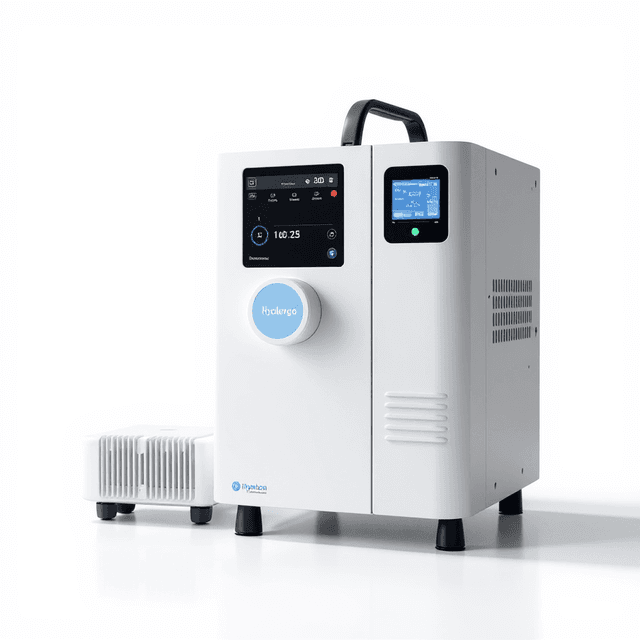
Laboratory Hydrogen Generator
Compact laboratory hydrogen generator providing on-demand high-purity hydrogen gas for analytical instrumentation and research applications.

Louise Corscadden, PhD
Director of Science · ConductScience
Ask Louise about Laboratory Hydrogen Generator fit, setup, configuration, or quote prep.
Already working with us? Sign in to connect this with My Scientist.
Key Specifications
Full details →- Model fit
- 2 selectable configurations
- SKU family
- BIO-0742
- Shipping box
- 37.0 x 32.0 x 18.0 cm
- Ordering
- Online checkout and quote request available
- Category
- Gas Generators
- Build notes
- Confirm accessories, station layout, and support needs before purchase
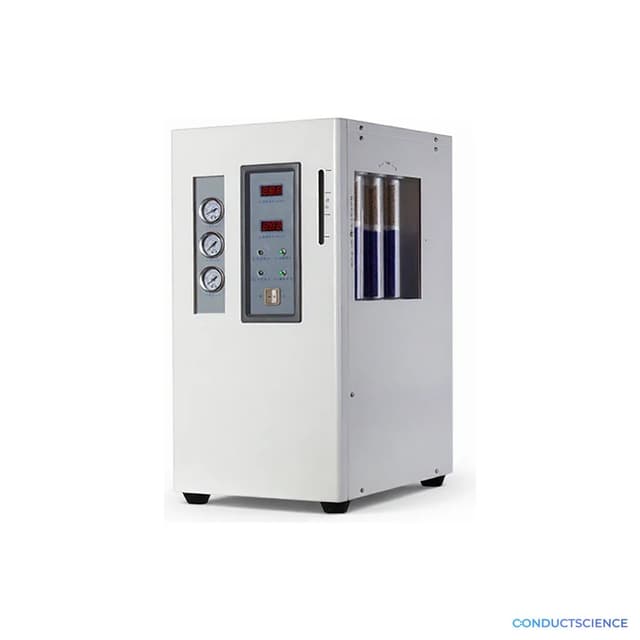
The Hydrogen Generator (BIO-0742) provides reliable on-demand hydrogen gas production for laboratory applications requiring high-purity hydrogen. This compact benchtop unit generates hydrogen gas through controlled electrochemical or chemical processes, eliminating the need for high-pressure gas cylinders and associated storage concerns.
Designed for continuous operation in research environments, the generator delivers consistent gas purity and flow rates suitable for analytical instrumentation, fuel cell research, and chemical synthesis applications. The system incorporates safety features and monitoring capabilities essential for laboratory hydrogen generation protocols.
How It Works
Laboratory hydrogen generators typically operate through electrolytic decomposition of water or controlled chemical hydrolysis reactions. In electrolytic systems, direct current is applied across electrodes immersed in an electrolyte solution, splitting water molecules into hydrogen and oxygen gases at the cathode and anode respectively.
The generated hydrogen is typically purified through membrane separation or molecular sieves to remove moisture and trace contaminants. Pressure regulation and flow control systems maintain consistent output parameters for downstream analytical instruments. Safety interlocks monitor pressure, flow rates, and gas purity to ensure safe operation within laboratory environments.
Features & Benefits
Automation Level
- semi-automated
Research Domain
- Analytical Chemistry
- Environmental Monitoring
- Materials Science
- Microbiology
- Pharmaceutical QC
Output Pressure
- 0-0.5 MPa
Purity
- >99.999%
Shipping weight
- 10.0 lb
Shipping box
- L: 37.0 cm
- W: 32.0 cm
- H: 18.0 cm
| Feature | This Product | Typical Alternative | Advantage |
|---|---|---|---|
| Physical Footprint | 37.0 × 32.0 × 18.0 cm compact design | Entry-level models may have larger footprints or require external components | Fits within standard laboratory bench space without requiring dedicated equipment areas |
| Weight and Portability | 10.0 kg total weight | Larger systems often exceed 20-30 kg | Enables relocation between laboratory workstations as analytical needs change |
| Installation Requirements | Benchtop operation with standard electrical connection | Some systems require dedicated electrical circuits or water connections | Simplifies laboratory integration without infrastructure modifications |
| Gas Generation Method | Controlled on-demand generation system | Basic models may lack sophisticated control systems | Provides stable output parameters required for sensitive analytical measurements |
The BIO-0742 offers compact laboratory installation with controlled hydrogen generation capabilities. Its benchtop design and moderate weight facilitate laboratory integration while providing on-demand gas production for analytical applications.
| Model | SKU | Listed price | Status | Shipping box |
|---|---|---|---|---|
| HG-500II | BIO-0742-HG-500II | $2,496.95 | Available | 32 x 18 x 37 cm |
| HG-300II | BIO-0742-HG-300II | $2,899.99 | Available | 32 x 18 x 37 cm |
Practical Tips
Allow adequate warm-up time before connecting to sensitive analytical instruments to ensure stable gas output parameters.
Why: Initial operation may show parameter fluctuations that could affect analytical reproducibility.
Verify all gas connections are properly sealed using appropriate leak detection methods before system operation.
Why: Hydrogen leaks pose fire and explosion hazards in laboratory environments.
Monitor consumable levels and replace according to manufacturer schedules to maintain gas purity specifications.
Why: Depleted consumables can compromise hydrogen purity and affect analytical results.
Verify output flow rates and pressures periodically using calibrated measurement devices.
Why: Flow rate accuracy directly affects analytical instrument performance and measurement precision.
Document generator operating parameters when recording analytical data for traceability purposes.
Why: Gas supply conditions can influence analytical results and may be required for regulatory documentation.
Check electrical connections and power supply if the generator fails to start or maintain stable operation.
Why: Power supply issues are common causes of operational problems in electronic gas generators.
Setup Guide
What’s in the Box
- Hydrogen generator main unit
- Power cord and adapter (typical)
- Gas outlet tubing and fittings (typical)
- User manual and safety documentation
- Calibration certificate (typical)
Warranty
ConductScience provides a standard one-year manufacturer warranty covering defects in materials and workmanship, with technical support for installation and operational guidance.
Compliance
References
Background reading relevant to this product:
What hydrogen purity level does this generator achieve for analytical applications?
Consult product datasheet for specific purity specifications. Laboratory hydrogen generators typically provide purity levels suitable for gas chromatography and analytical instrumentation requirements.
What are the typical flow rate and pressure output ranges?
Output parameters vary by model configuration. Check product specifications for flow rates and pressure ranges compatible with your analytical instrument requirements.
How frequently does the system require maintenance or consumable replacement?
Maintenance intervals depend on usage patterns and operating conditions. Consult user manual for recommended service schedules and consumable replacement procedures.
Can this generator supply multiple analytical instruments simultaneously?
Multi-instrument capability depends on total flow demand and pressure requirements. Verify generator output capacity against cumulative instrument consumption rates.
What safety features are included for hydrogen gas handling?
Laboratory hydrogen generators typically include pressure monitoring, leak detection, and emergency shutdown capabilities. Refer to safety documentation for complete feature descriptions.
Is the unit compatible with existing laboratory gas distribution systems?
Compatibility depends on connection types and pressure ratings. Check gas outlet specifications against existing laboratory infrastructure requirements.
Have a question about this product?
Have a question? Just ask.
Send it over and we'll email you a personalized answer — no call, no scheduling.
Prefer to talk it through?
Accessories
Enhance your setup with compatible accessories